Chroma Squad gets much easier once you stop treating it like a straightforward damage race. The winning formula is simple: keep actors close enough for teamwork attacks, protect your Support and Techie, spend resources before the episode ends, and chase the episode objectives instead of blindly deleting enemies. These 10 tips will help you build a stronger first season, earn better rewards, and avoid the expensive mistakes that trap new players.
Developed by Behold Studios, Chroma Squad mixes turn-based tactics, TV-production management, crafting, and a wonderfully silly sentai fantasy. The official Steam page is still the best place to check the current PC version and system details, while the developer’s official site has more information about Behold’s design work.
1. Build a balanced five-actor team
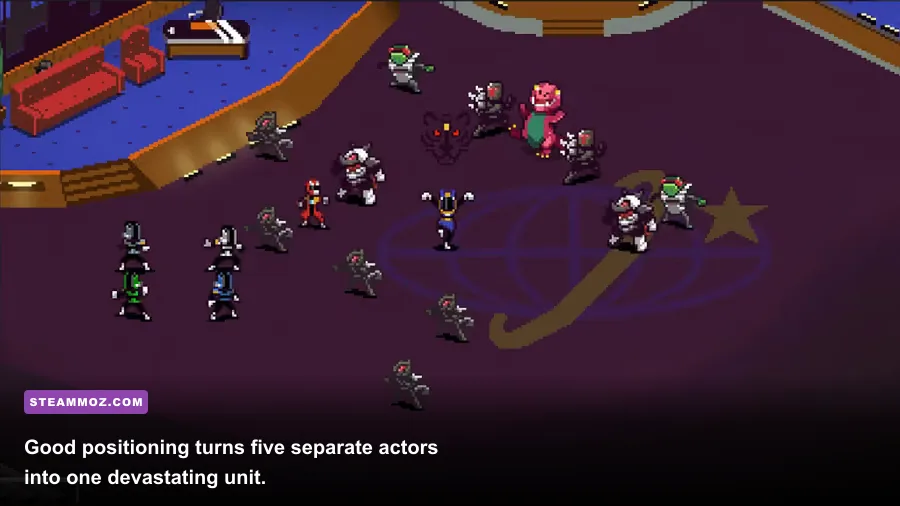
Your squad always has five actors, and the five class roles are Leader, Assault, Support, Scout, and Techie. You can experiment with class assignments, but a new save benefits enormously from covering every job. Assault supplies reliable close-range damage, Scout handles mobility and ranged pressure, Support keeps injured actors functional, Techie controls utility and technical effects, and Leader improves the team’s overall rhythm.
That balance matters because Chroma Squad’s objectives often pull your actors in different directions. A pure damage lineup may destroy the first wave, then collapse when an episode asks you to survive, rescue a target, use a particular action, or finish with a special move. Support also saves you from wasting turns on emergency healing items, while Techie gives you tools for enemies that are awkward to reach or punish predictable movement.
| Class | Primary job | Best beginner use | Common mistake |
|---|---|---|---|
| Leader | Team support and formation control | Stay near the center of the group | Sending the Leader ahead alone |
| Assault | Close-range damage | Finish isolated enemies | Ignoring defensive positioning |
| Support | Healing and recovery | Maintain the squad’s action economy | Waiting until an ally is nearly defeated |
| Scout | Mobility and ranged pressure | Reach objectives and exposed targets | Overextending for one attack |
| Techie | Utility and battlefield control | Disrupt dangerous clusters | Saving every ability for a future turn |

🎮 Chroma Squad
Looking to experience this game? Grab your digital key directly on our store for $2.24.
View on Steammoz Store →2. Treat positioning as your strongest weapon
Chroma Squad rewards actors who fight as a formation. Before moving, check which allies can participate in a teamwork attack and whether the target can retaliate. The extra damage from coordinated actions is only half the benefit: clustered actors can protect fragile members, share support effects, and respond to enemies appearing from unexpected directions.
Keep your Support one step behind the front line rather than at the extreme rear. That small gap usually lets them heal without spending an entire turn crossing the map. Put Assault and Leader on the edges of the formation when you need to block a route, but don’t create a gap so wide that your Scout or Techie can’t reconnect next turn.
The safest turn usually starts with movement, not an attack. Move the actor who has the least useful angle first, then preserve the central spaces for your Support and Leader. If an enemy is one hit from defeat, don’t scatter five actors to chase it. Let the nearest damage dealer finish the job while everyone else keeps a strong formation.
3. Learn the difference between damage and progress
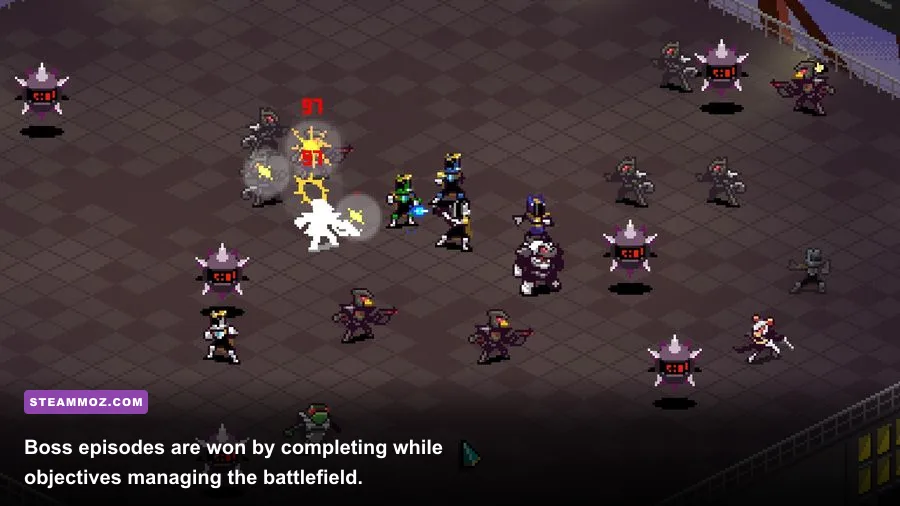
Winning an episode is not always the same as earning its best result. Objectives can ask you to use teamwork, perform special actions, protect civilians, defeat enemies in a particular way, or finish with a cinematic attack. Read the objective panel before committing to the first turn. If you complete the battle but miss the objective, you may lose rewards, audience momentum, or valuable crafting materials.
Think of every episode as having two checklists. The first is survival: keep the team alive and clear the threat. The second is production quality: satisfy the required action and close the episode in style. You can usually set up the second checklist while handling the first. For example, weaken an enemy without killing it, move the squad into formation, then use the required teamwork action on the following turn.
Don’t restart immediately after a small mistake. Many objectives can still be repaired if you stop chasing damage and deliberately create the right setup. The exception is a failed protection objective or a dead actor when the scenario demands survival. Save your restarts for genuinely lost objectives, not merely imperfect turns.
4. Spend audience momentum instead of worshipping the meter
The audience system is Chroma Squad’s signature pressure valve. Flashy actions and successful teamwork build excitement, while taking damage and playing cautiously can make the show feel flat. New players often hold the meter forever, hoping for a flawless late-game moment. That usually wastes the resource. Use audience momentum when it prevents damage, secures an objective, or creates a safe finishing sequence.
A strong pattern is to build momentum during the opening turns with movement, teamwork, and efficient attacks, then spend it when a dangerous enemy reaches the formation. Removing a high-damage target is better than saving the meter for an attractive but unnecessary finishing move. You’re producing a television show, but the camera can’t save a squad that has been wiped out.
When an episode specifically asks for a special or spectacular finish, plan two turns ahead. Leave one enemy alive at low health, gather the team, heal anyone who might be knocked out, and reserve enough actions to trigger the required attack. Killing the final target too early is one of the most common ways to miss a good episode result.
5. Upgrade equipment on a schedule
Crafting is not a side activity. It is the game’s most reliable way to keep your actors competitive as enemy health and damage rise. Check the workshop after every episode and compare new equipment against what each actor is actually doing. A stronger weapon on Assault is obvious, but improved armor on Support can be even more valuable because it prevents the healer from becoming the emergency patient.
Don’t spread every upgrade evenly across five actors. Prioritize the actors who start most battles in danger or who perform the most actions. Your main damage dealer should receive the first meaningful weapon improvement, followed by Support’s survivability and the class whose utility scales best with better gear. Replace outdated equipment when the gain is clear instead of filling the workshop with materials you never use.
| Upgrade priority | Why it matters | Who benefits first | When to delay it |
|---|---|---|---|
| Weapon damage | Shortens enemy turns and improves objective control | Assault or Scout | When armor is causing knockouts |
| Armor and health | Creates room for positioning mistakes | Support and Leader | When the current episode is easy |
| Utility equipment | Improves control and special-action setups | Techie | When basic damage is badly behind |
| Mobility-focused gear | Helps reach objectives without abandoning formation | Scout | When maps are compact |
For broader upgrade-planning habits, Steamoz’s weapon tier-list breakdown and beginner build guide offer useful comparisons, even though their games use different systems.
6. Spend your money on the studio before cosmetics
The studio-management layer affects your combat performance, so treat production upgrades as strategic investments. New rooms, facilities, and upgrades can improve crafting, resources, or the benefits you receive between episodes. Cosmetics are fun, but an early purchase that expands your operational options usually pays back over several episodes.
Before buying anything, ask what problem it solves. If your team routinely runs out of healing options, improve the part of the studio that supports recovery or equipment. If objectives are failing because actors lack damage, direct your resources toward crafting materials and weapons. The best purchase is the one that fixes a repeated failure, not the one with the flashiest description.
7. Use class abilities to create turns, not just numbers
Every class becomes stronger when its abilities create a better next turn. Support actions should happen before an ally reaches critical health, because preventive healing keeps the squad attacking. Techie utility is strongest against clustered enemies or targets that would otherwise force a dangerous approach. Scout mobility should open a route to an objective, not merely move one square farther for a weak attack.
Leader actions are most valuable when several allies can benefit at once. Don’t activate a team-support effect while the formation is split across the map. Likewise, Assault’s ideal target is often the enemy that threatens your back line, not necessarily the enemy with the lowest health. The right ability removes future problems rather than maximizing the current damage number.
8. Control the enemy turn with target priority
Chroma Squad’s enemy groups are manageable when you decide who gets to act. Prioritize ranged attackers, enemies with area damage, and anything positioned to surround your Support. A heavily armored melee enemy can often wait one turn if it is far from the formation. A weaker ranged enemy that can hit three actors may deserve immediate attention.
Use terrain and map edges to reduce the number of directions enemies can attack from. If you can force a group through one approach, your Assault and Leader can hold the front while Scout and Techie work safely behind them. Don’t split damage across four targets unless an objective demands it. Focus fire turns enemy actions into a predictable sequence and makes healing far easier to manage.
9. Prepare before boss and giant-robot episodes
Boss encounters punish improvisation. Before starting one, repair the squad’s equipment, craft the best available upgrades, and confirm that every actor has a useful role. Bosses often combine high health with disruptive positioning, summoned enemies, or objective requirements. Walking in with half-upgraded weapons because you were saving materials is rarely worth it.
| Battle stage | Main danger | Best response | Resource rule |
|---|---|---|---|
| Opening turns | Formation collapse | Group up and identify ranged threats | Build momentum carefully |
| Enemy reinforcement | Back-line pressure | Use Scout mobility and Techie control | Spend momentum if Support is exposed |
| Boss damage window | Overcommitting near the target | Focus fire, then retreat into formation | Keep healing available |
| Final objective | Accidental early victory | Set up the required special action first | Reserve the finishing resource |
For a broader look at preparing a new character before difficult encounters, see Steamoz’s starting-build guide. The same principle applies here: build for the next challenge, not the battle you already cleared.
10. Restart intelligently and keep your season moving
Chroma Squad is designed around experimentation, so a failed turn isn’t a disaster. Restart when you have lost a required objective, exposed the Support beyond recovery, or spent a major resource before understanding the encounter. Don’t restart because an actor took one hit. Learning the map’s enemy entrances and objective timing is part of the campaign’s tactical curve.
After each episode, review what actually caused the problem. Was your formation too wide? Did you buy the wrong equipment? Did you save audience momentum until it was too late? Write down the answer mentally and change one thing in the next attempt. That approach is much faster than rebuilding the entire squad after every mistake.
If the PC version stutters or behaves oddly during longer sessions, Steamoz’s guides to maximizing PC performance and reducing stutter cover useful general troubleshooting steps. Chroma Squad is lightweight, but stable input and clean turn transitions still make tactical play more comfortable.
Master those 10 habits and the campaign’s chaos starts working in your favor. Keep all five actors connected, solve the episode objective before chasing the final knockout, upgrade equipment consistently, and spend audience momentum with purpose. Chroma Squad rewards players who understand that every battle is both a tactical puzzle and a television production—and the best shows are the ones where the whole team gets its moment.