
The best beginner build in Anachronox is a balanced, gun-focused party built around Sly Boots, Stiletto Anyway, and a rotating specialist. Keep Sly on his strongest accurate firearm, use Stiletto as your dependable physical attacker, save healing items for emergencies instead of burning them every round, and swap companions whenever a new character offers better damage or utility. The game does not have a modern skill-tree respec system, so smart equipment choices and careful turn economy matter far more than chasing an imagined perfect stat spread.
That distinction is important. Anachronox is a 2001 Ion Storm RPG with a deliberately odd combat system, a huge cast, and a progression curve that rewards experimentation but punishes wasting scarce credits. Its battles are turn-based, yet they are not passive. Accuracy, action order, status effects, weapon range, ammunition, and the opportunity cost of using an item all shape a fight. This starting build keeps those decisions simple while still scaling into the game’s stranger planets and tougher encounters.
If you want the original release, the Anachronox Steam listing remains the easiest modern starting point. It is also worth checking the DRM-free GOG edition before installing, since classic PC RPGs can behave differently depending on your operating system and display setup.
The beginner build at a glance
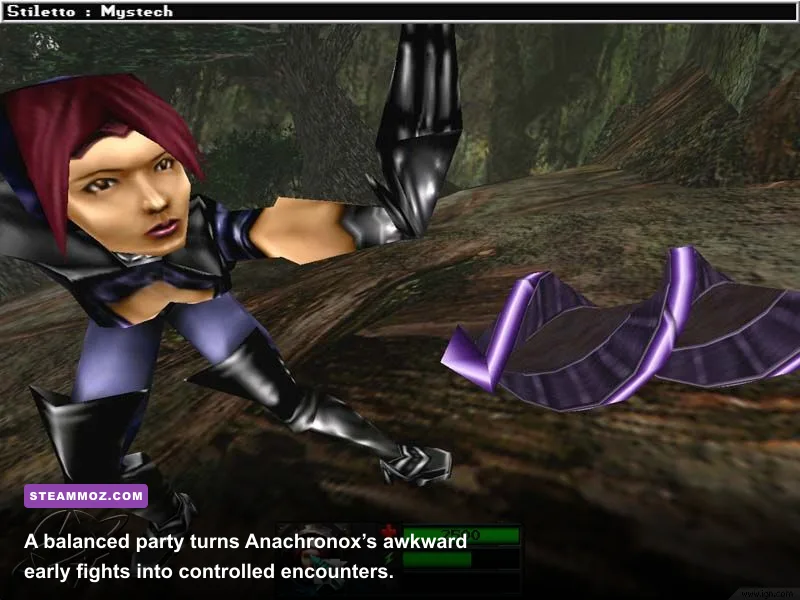
Your early-game plan is straightforward: let Sly handle reliable ranged damage, make Stiletto your close-range finisher, and keep one flexible slot for the newest recruit. Do not force every character into the same role. Anachronox is at its best when each party member does one job well.
| Build element | Recommended choice | Why it works | Beginner mistake to avoid |
|---|---|---|---|
| Lead damage dealer | Sly Boots | Reliable firearm damage from a safer distance | Spending every turn on low-value item use |
| Physical finisher | Stiletto Anyway | Strong direct damage against weakened targets | Sending her into every fight without healing support |
| Third slot | Newest specialist | Adapts the party to the current planet and enemy types | Keeping an outdated companion out of habit |
| Core combat command | Attack, Skills, Defend, Items | Preserves action economy and keeps turns purposeful | Using Run as a panic button in every difficult battle |
| Resource priority | Weapons first, consumables second | Permanent damage upgrades improve every encounter | Buying novelty gear before checking current weapons |
What to prioritize when the game starts
On Sly, prioritize the firearm that gives you the best dependable damage rather than the weapon with the flashiest description. In the opening areas, a weapon that lands consistently is more valuable than a theoretically harder-hitting option that misses against quick enemies. Sly’s job is to remove one target every round or finish whatever Stiletto has already softened.
Stiletto should usually attack the same target as Sly. Focus fire is the hidden difficulty setting in Anachronox: two characters reducing one enemy to zero is much safer than spreading mediocre damage across three targets. A dead opponent cannot inflict status effects, consume a turn, or force you to spend a recovery item.
For the third slot, use whoever the story currently gives you unless a specific fight clearly rewards a specialist. The roster changes frequently, and the game expects you to experiment. The right choice is not always the character with the largest damage number. A companion who can exploit an enemy weakness, contribute a useful skill, or survive the local damage type can outperform a nominally stronger attacker.

🎮 Anachronox
Looking to experience this game? Grab your digital key directly on our store for $0.97.
View on Steammoz Store →How to spend credits and upgrade weapons

Credits are tight enough early on that shopping discipline matters. Before buying anything, inspect every character’s current equipment and compare the actual damage output, accuracy, and usable range. The strongest beginner habit is to upgrade Sly’s primary firearm first, then improve Stiletto’s weapon, and only afterward spend on luxury consumables or equipment for a temporary party member.
Do not sell an old weapon the second a new one appears. Keep one backup firearm and a few useful items in reserve. Anachronox occasionally changes the party available for a mission, and a character who rejoins after an absence may need something immediately usable. The inventory can feel generous until a mandatory encounter strips away your preferred lineup.
| Purchase priority | What to buy | When it pays off | Why it is not first |
|---|---|---|---|
| S-Tier | Best current firearm for Sly | Every combat round after purchase | Nothing; this is the foundation of the build |
| S-Tier | Reliable weapon for Stiletto | Bosses and armored targets | Needs Sly’s upgrade first if credits are scarce |
| A-Tier | Healing and status-clearing items | Long missions and difficult story fights | Consumables disappear after one use |
| B-Tier | Equipment for temporary companions | Only when that character is required | Party turnover makes the return smaller |
| C-Tier | Novelty or duplicate weapons | Testing unusual strategies | Fun, but rarely better than a direct upgrade |
Use the same logic for ammunition and special attacks. If a skill costs a rare item, reserve it for an enemy that threatens the whole party or resists normal attacks. Burning a premium consumable to save one round in a routine battle creates a worse problem later. Conversely, do not hoard everything so aggressively that you reach a boss carrying a full inventory and never use it. The correct rhythm is ordinary attacks for ordinary enemies, specialist skills for dangerous targets.
Save before shopping and before major story transitions. This is not a cheat; it is sensible maintenance for a game from the pre-autosave era. If a weapon performs poorly against the next area’s enemies, you want the option to redirect your credits without replaying an hour.
Combat rotation and turn-order tricks

A good opening round usually looks like this: identify the enemy with the most dangerous status effect, have Sly attack it, let Stiletto follow up on that same target, and use the third character either to finish it or disrupt the most threatening survivor. If the opponent is already near defeat, do not waste a powerful skill. Attack the damaged target and bank the specialist ability for the next wave.
Step-by-step routine for difficult encounters
- Scan the field. Note enemies with ranged attacks, area damage, poison, paralysis, or unusually fast turn order. The first target is usually the enemy that can remove your next action, not the one with the largest health pool.
- Choose one target. Mark the priority enemy mentally and commit Sly and Stiletto to it. Splitting damage makes the encounter longer and gives every hostile more chances to act.
- Use Skills with a purpose. A skill should kill, disable, exploit a weakness, or protect the party. If it does none of those things, use Attack or Defend instead.
- Defend before a telegraphed hit. Defend is not wasted time when an enemy is preparing a heavy strike. Losing one modest attack is cheaper than spending multiple turns recovering a badly damaged character.
- Heal between threats, not after every scratch. Items are most valuable when they prevent a knockout or remove a disabling status. Do not interrupt a winning focus-fire sequence to restore trivial damage.
- Reassess after each defeat. The next priority may change when the strongest attacker is gone. Repeating the same command without checking the field is how easy fights become resource drains.
Use Run only when the encounter is genuinely unfavorable or you have entered combat while underprepared. Failed escape attempts can cost turns and leave the party exposed. If the battle is a required story encounter, running simply delays the solution and may consume more healing items than fighting.
The most common beginner error is treating every character as a damage dealer. A support action that preserves Sly’s next turn can be worth more than a weak attack. Likewise, a low-health Stiletto should not remain in melee range just because her damage is excellent. The build is balanced because it protects its damage dealers, not because every member posts identical numbers.
Party choices as the roster expands

Stiletto is the safest early partner because she gives the party an immediate second source of practical damage. Keep her equipped and let her attack targets already damaged by Sly. When the story introduces other companions, test them for three fights rather than judging them from their first animation or joke-heavy dialogue. Anachronox often hides a character’s value in the matchup.
Rho Bowman is particularly important to evaluate as a ranged specialist. She can make encounters easier when the battlefield punishes close-range attacks, but she does not automatically replace Sly. Compare her accuracy, damage, and available skills against the current area. If Sly’s weapon is substantially better, keep Sly as the anchor and use Rho when her specialist tools matter.
PAL-18 is another character beginners can misread. A robot companion may look like a straightforward tank, but you should judge PAL-18 by survivability, utility, and matchup value rather than assuming he can absorb unlimited damage. Put him in the party when his tools solve a specific problem, then rotate back to the highest-output lineup for routine fights.
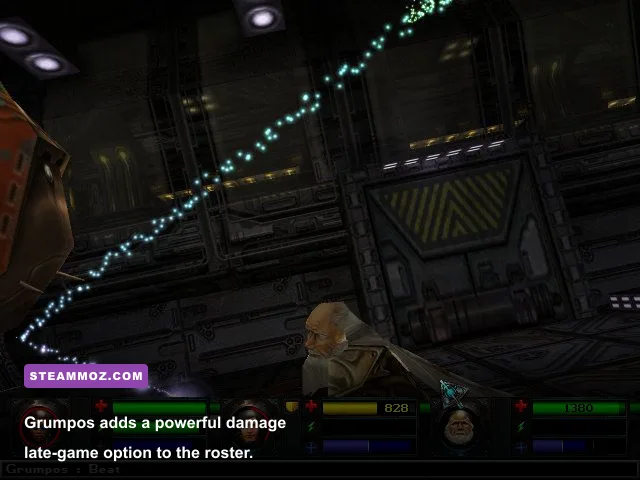
Grumpos Matavastros is worth serious attention once he becomes available. His presence changes the party’s damage profile, and he can be an excellent answer to encounters where raw power matters more than subtle utility. Still, do not abandon Stiletto automatically. The best three-person group depends on equipment, enemy defenses, and whether the mission restricts your roster.
| Party member | Recommended role | Best use case | Rotation note |
|---|---|---|---|
| Sly Boots | Primary ranged attacker | Focus-firing priority enemies | Keep him active unless another character clearly outperforms his firearm |
| Stiletto Anyway | Physical finisher | Cleaning up weakened targets | Protect her from unnecessary status effects and concentrated fire |
| Rho Bowman | Ranged specialist | Areas where distance and matchup tools matter | Compare real damage before replacing Sly |
| PAL-18 | Utility and durability option | Encounters requiring a different defensive profile | Do not assume robot durability makes him immortal |
| Grumpos Matavastros | Heavy damage option | Long fights and high-health targets | Use when power is more valuable than flexibility |
This rotation philosophy also makes the game’s narrative interruptions less painful. Save equipment for the active party, but keep enough spare gear that an unexpected character does not enter a mandatory battle empty-handed. The story is deliberately chaotic; your inventory should be the stable part of the build.
Settings and quality-of-life fixes for modern PCs
Anachronox is not demanding by modern standards, but running an old DirectX-era game is less about raw horsepower than compatibility. Start with the official Steam or GOG build, run at a sensible 4:3 resolution, and only raise the resolution after confirming that menus, cutscenes, and mouse input behave correctly. A perfect 1440p screenshot is not worth broken interface scaling.
| Setting or fix | Recommended value | Performance impact | Practical note |
|---|---|---|---|
| Display ratio | 4:3 or carefully tested widescreen | Minimal | Preserves the original presentation and avoids stretched characters |
| Resolution | Native 1080p first | Low on modern GPUs | Test menus and pre-rendered scenes before going higher |
| Frame rate | Stable capped output | Minimal | Consistency matters more than chasing very high refresh rates |
| Compatibility mode | Use only if required | None when stable | Adding random wrappers can create more problems than it solves |
| Save management | Multiple rotating saves | None | Protects against crashes, bad purchases, and awkward story transitions |
If you run into crashes, corrupted saves, or display glitches, consult the game’s Steam Community discussions and the PCGamingWiki Anachronox troubleshooting page. Those resources are more useful than blindly installing several compatibility layers at once. Change one thing, test the same save, and keep a backup of your working configuration.
The mistakes that quietly ruin a first playthrough
First, do not spread upgrades evenly across the entire roster. Characters rotate, equipment costs money, and a shallow investment in five weapons produces less combat power than two excellent weapons. Second, do not ignore status effects. A poisoned or disabled character can waste more healing resources than a character who simply took direct damage. Third, do not treat every boss-like encounter as a damage race. Defend, heal, and control the order of threats when the game gives you room to do so.
Finally, explore without turning every corridor into a shopping spree. Anachronox rewards talking to people, checking unusual spaces, and revisiting locations, but wandering does not mean purchasing every item. Keep a credit reserve for a sudden weapon upgrade and maintain at least one save before entering a new major area.
For another old-school build-focused RPG read, Steamoz’s Daymare 1998 starting build guide applies the same useful principle: spend early resources on dependable tools, not flashy options. Our Dark weapon tier list is also a good reminder that synergy beats raw item rarity, while the Cossacks 3 upgrade guide covers a very different combat system with the same focus-fire mindset.
Follow the Sly-and-Stiletto core, upgrade weapons before luxuries, focus every attack on one dangerous target, and rotate the third slot according to the mission. That is the strongest Anachronox starting build for beginners because it stays effective without demanding perfect knowledge of the roster. More importantly, it leaves room for the game’s weirdest ideas to surprise you—which is exactly what this wonderfully strange RPG wants.