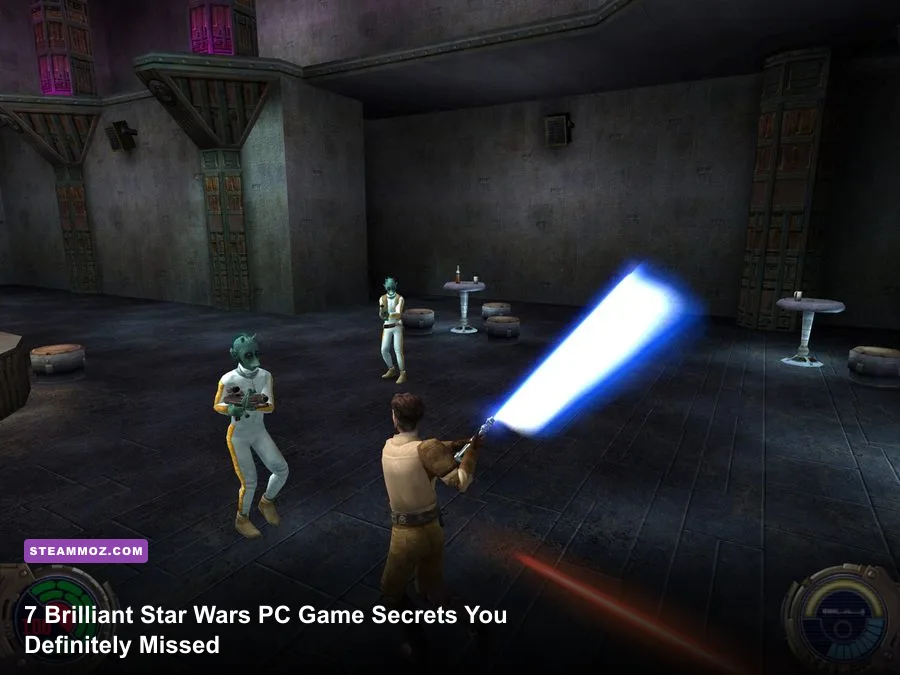
Decades of Star Wars PC gaming hold far more than cinematic space dogfights and precision lightsaber combat; they conceal developer gags, hidden rooms, and bizarre lore anomalies buried behind fake walls, obscure noclip commands, and hyper-specific quest triggers. Whether it is Kyle Katarn running into a homicidal cartoon rabbit in 1995 or Cal Kestis finding battle droids posing for a renaissance painting on Koboh, developers like LucasArts, Raven Software, BioWare, and Respawn Entertainment have always rewarded players curious enough to poke around outside the level geometry. If you have only played through these campaigns on the critical path, you have missed some of the most creative, hilarious, and mechanically wild content ever printed to disc or downloaded from Steam.
The Sam & Max Infiltration: LucasArts' Favorite Homicidal Lagomorph
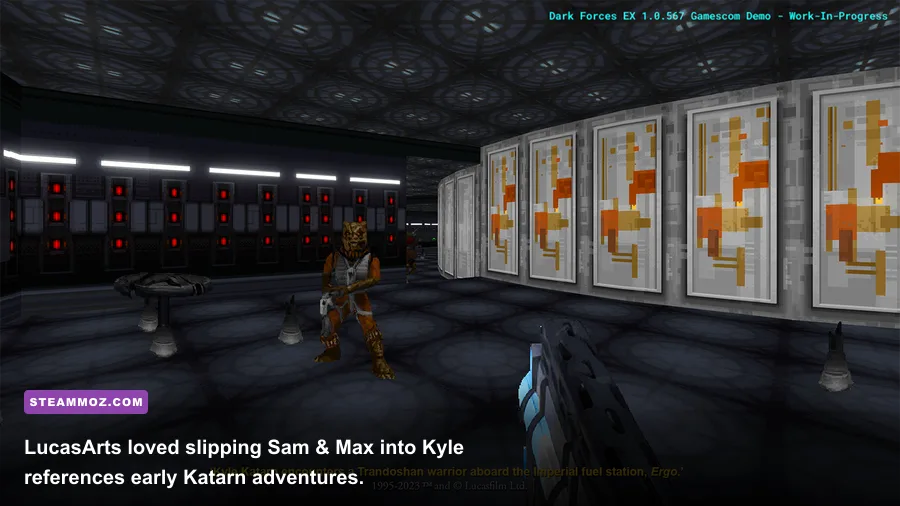
Long before cross-franchise cameos became an everyday corporate marketing strategy, LucasArts treated its stable of adventure and shooter franchises like a shared universe of inside jokes. The prime star of these clandestine crossovers was Max, the grinning, unhinged rabbit from Steve Purcell’s Sam & Max Hit the Road. Max didn't just appear in LucasArts point-and-click titles; he aggressively infiltrated the galaxy far, far away across the entire early run of first-person Star Wars PC shooters.
Your first encounter with this manic rabbit dates back to 1995's genre-defining Star Wars: Dark Forces. In Mission 1 (The Secret Base on Danuta), you can discover a massive, pixelated texture of Max's face staring right back at you. Reaching it requires surviving the initial blaster firefight, navigating the sub-level conduits, and jumping through a seemingly blank texture wall located deep within the Imperial installation's secondary access tunnels. But LucasArts didn't stop there. By the time 1997's Star Wars Jedi Knight: Dark Forces II arrived, the studio doubled down on Max's cameos.
During Level 4, "The Barons Hed," you can find a fully rendered, miniature 3D model of Max stashed behind a waterfall near the city's aqueduct system. Reaching this spot without cheats is a brutal test of late-90s platforming physics: you must execute an awkward strafe-jump across the churning water current, hug the slippery collision box of the left cliffside, and squeeze into a dark crevice. If you prefer to poke behind the curtain via modern hardware, dropping the console backtick key and inputting freecam or coordinate teleports confirms that the developers built an entire secluded cubby solely to hold this single polygon rabbit.
Similar to the satisfying thrill of tracking down secret locations and hidden rewards in deep-cut PC titles, hunting down LucasArts' mascot became an obsession for nineties gaming forums. Max also surfaced in Star Wars: Rebel Assault II - The Hidden Empire during the flight simulation sequences, where hitting precise keyboard keybinds during the FMV sequences triggers an alternate cutscene replacing cockpit dials with Max’s chaotic grin. It serves as a reminder that the early days of Star Wars game development were driven by rebellious, cheeky software engineers who treated billion-dollar IP rules like loose suggestions.
🎮 1bitHeart
Looking to experience this game? Grab your digital key directly on our store for $2.99.
View on Steammoz Store →Jedi Knight II & Jedi Academy: Secret Rave Rooms and Cutscene Gags
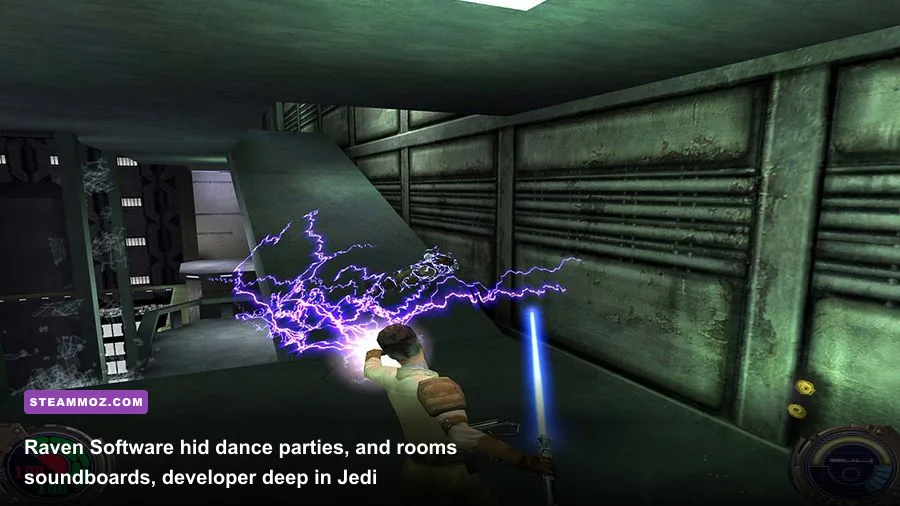
Raven Software’s 2002 masterpiece Star Wars Jedi Knight II: Jedi Outcast and its 2003 follow-up Jedi Academy are rightfully celebrated for delivering the finest lightsaber combat engine in PC history. Powered by id Tech 3 (the modified Quake III Arena engine), both titles featured incredibly intricate level designs loaded with developer rooms, bizarre voice clips, and breakable environmental triggers that mainstream players blew right past.
The crown jewel of Jedi Outcast secrets sits inside Mission 2: Nar Shaddaa Streets. As Kyle Katarn winds through the vertical neon grime of the Smuggler's Moon, you encounter a notoriously confusing courtyard surrounded by Rodian snipers and Gran thermal-detonator throwers. If you pull down the Quake-style console (Shift + ~), type helpusobi 1, and toggle noclip through the heavy blast doors near the cantina entrance, you bypass the normal mission trigger and enter an untextured box containing dancing stormtroopers and an ambient audio loop of Imperial comm chatter played at triple speed.
However, Raven Software built plenty of non-cheat secrets straight into the world geometry. In the Bespin Mining Facility levels, sharp-eyed players who use Force Jump Level 3 to leap across the carbonite processing vats can discover a cracked grate. Smashing it with a lightsaber reveal a hidden lounge room complete with Imperial officers sitting around a holographic Sabacc table, surrounded by floating health shields and an energy blaster ammo cache. What makes this room brilliant is the AI behavior: if you sheath your lightsaber (using the holstering keybind) and do not attack, the officers don't trigger combat state immediately. Instead, they play an unused audio dialogue sequence questioning if Kyle is the new relief shift from Cloud City.
Meanwhile, in Star Wars Jedi Knight: Jedi Academy, the single-player map t1_sour (the Acid Rain mission on Yalara) contains an infamous developer Easter egg. By navigating to the highest comm-array antenna before disabling the cloaking device, you can hop across the structural support struts to find a glowing, neon-blue panel inscribed with the initials of the level designers, paired with infinite-use Force Boon generators. If your frame rates stutter while rendering these dense older id Tech geometry corridors on modern display panels, checking our recommendations for optimizing PC game frame rates will keep your retro gaming sessions silky smooth at 144Hz.
Knights of the Old Republic: The Secret Gizka Protocol and Cut Content Rooms
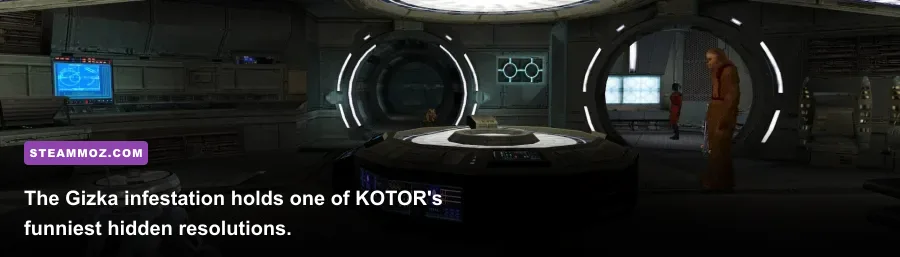
BioWare’s 2003 magnum opus, Star Wars: Knights of the Old Republic, is an RPG masterclass, but its internal scripting holds some of the strangest experimental features on PC. Beyond the dialogue choices and dark side corruption paths, the Ebon Hawk itself serves as a hotbed of mechanical anomalies, none more famous than the dreaded Gizka infestation.
While on Tatooine, an alien merchant named Jurgan Kal-falq "accidentally" loads a delivery crate filled with Gizka—small, reptilian, hopping pests—onto your ship. Most players simply buy the Gizka Poison from the docking bay vendor or hand them over to a collector on Manaan for a small credit payout. But BioWare scripted a secret, hilarious third outcome that almost nobody sees naturally.
If you ignore the merchant on Manaan and refuse to use the poison, the Gizka population inside the Ebon Hawk dynamically multiplies based on in-game mission clock cycles. If you allow the count to hit its hard internal cap (roughly 15 Gizka models roaming between the cockpit and the main hold), you can trigger an obscure dialogue line with Mission Vao. By taking Mission and Zaalbar into your party while talking to the alpha Gizka, Zaalbar lets out a terrified Wookiee shriek, prompting an undocumented script that causes the Gizka to form a synchronized hopping line directly into the ship's storage bay door, automatically despawning them while awarding Kyle and Revan 500 hidden XP.
For PC modders and curious console command users, the real secrets lie in BioWare's debug coordinates. Using the game's internal console by modifying the swkotor.ini file (adding EnableCheats=1 under Game Options), pressing backtick and typing warp danm13 teleports the player directly into a deleted Jedi testing chamber on Dantooine. Here, you can spawn unfinished droid variants and trigger unused cutscenes featuring Master Vandar discussing combat balance changes that never made it into the retail retail release. If you love discovering obscure hidden mechanics, exploring these cut areas mirrors the rush of tackling hunting down secret areas in open-world space epics.
Definitive Ranking: The Best Star Wars PC Secrets & Easter Eggs

To understand which secrets are truly worth your time, we have evaluated and ranked the top discoveries across PC Star Wars history. The rankings below balance discovery difficulty, fun factor, mechanical reward, and historical importance within the community.
| Game Title | Secret / Easter Egg | Discovery Method / Trigger | Obscurity Tier | Historical / Gameplay Reward |
|---|---|---|---|---|
| Jedi Knight II: Jedi Outcast | Bespin Sabacc Lounge | Force Jump 3 over vats; smash cracked ventilation grate | S-Tier (Elite) | Unused Imperial voice dialogue & infinite shield recharge |
| Jedi: Survivor | The Droid Art Gallery | Crawl through false rock seam in Harvest Ridge / Untamed Downs | S-Tier (Elite) | Bizarre scene of B1 droids painting an oil portrait |
| Republic Commando | The Ghost Ship Lightsaber | Shoot explosive canister behind maintenance cage on the RAS Prosecutor | A-Tier (High) | Glowing green lightsaber Easter egg in a tactical FPS |
| Dark Forces II: Jedi Knight | 3D Max the Rabbit Model | Strafe-jump behind the aqueduct waterfall in Level 4 (Barons Hed) | A-Tier (High) | Classic LucasArts cross-franchise mascot discovery |
| The Force Unleashed (PC) | Guybrush Threepkiller Skin | Enter cheat code "LIBERTINE" or unlock holocron on Cloud City | B-Tier (Moderate) | Playable Guybrush Threepwood skin with cloth physics |
| Knights of the Old Republic | Dantooine Debug Chamber | Console command: warp danm13 via modified swkotor.ini |
B-Tier (Moderate) | Access to cut dialogues, prototype droids, and test items |
| Dark Forces (1995) | Pixelated Danuta Max Face | Walk through illusory wall texture in sub-level conduit Mission 1 | C-Tier (Standard) | Visual developer gag; first instance in Star Wars history |
The Bespin Sabacc Lounge in Jedi Outcast takes our top spot because it combines clever spatial design with bespoke environmental storytelling that respects the player's pacing. Contrast that with modern secrets, which often rely on simple map markers; older PC titles expected players to scrutinize every shadow, test every wall collision, and manipulate the game engine itself.
Republic Commando: The Ghost Ship Lightsaber and Battle Droid Graffiti
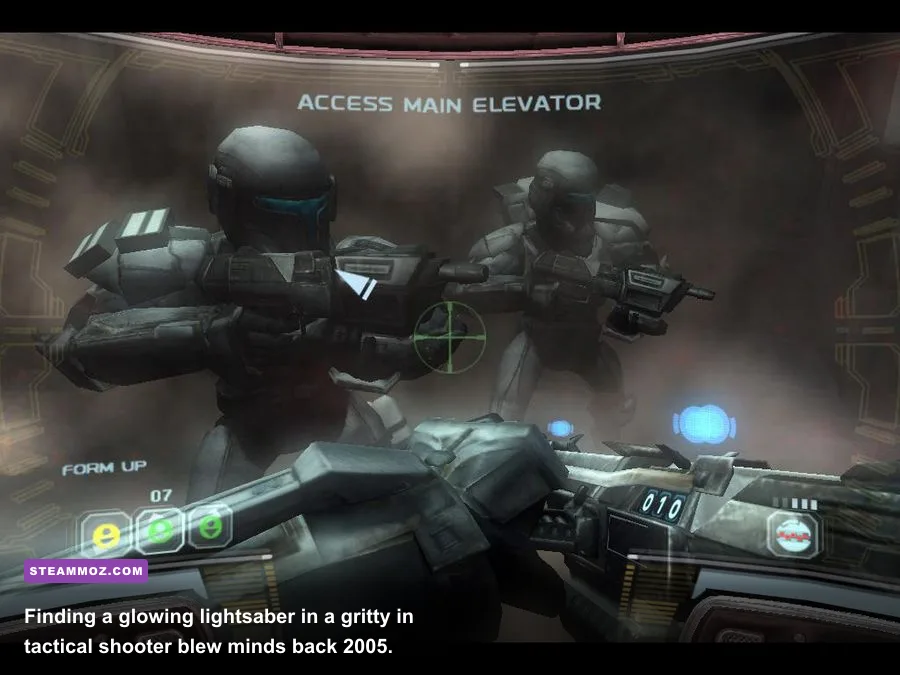
Released in 2005, Star Wars: Republic Commando abandoned the mysticism of the Force to deliver a grounded, gritty squad-based tactical shooter. You played as RC-1138 ("Boss"), leading Delta Squad through grim, pitch-black corridors. Because the game deliberately stripped away the Jedi fantasy—putting heavy DC-17m blaster rifles in your hands instead of glowing plasma swords—the appearance of an actual lightsaber is one of the most shocking hidden moments in the game.
During the chilling derelict campaign aboard the RAS Prosecutor, an Acclamator-class assault ship that went silent in deep space, Delta-38 is separated from his squadmates. In the lower cargo and maintenance decks, you encounter scavenging Trandoshan mercenaries and deactivated battle droids. In one particular maintenance room filled with stacked cargo crates and flickering hazard lights, there is a locked chain-link security cage.
Most players run past this cage while fighting off Trandoshan slavers carrying concussion rifles. But if you look through the reinforced wire mesh, you can spot a small, red-glowing thermal cylinder resting near a pipe. Bouncing a thermal detonator over the top partition or angling an anti-armor sniper shot through the mesh detonates the canister, blowing open the cage door. Inside lies the shattered armor of an unknown Republic officer, and resting on a worktable beside him is a pristine, ignited green lightsaber humming silently.
You cannot equip the weapon—RC-1138 remarks with trademark stoicism, "An elegant weapon for a more civilized time... well, times have changed"—before your visor HUD recalculates your tactical route. It’s an incredible piece of environmental storytelling that acknowledges the Clone Wars' tragic reality while rewarding attentive players. For fans who appreciate the raw, punchy combat design of vintage PC titles, looking back at our analysis of retro action classics highlights why games from this era felt so mechanically punchy and unapologetic.
Elsewhere on the Geonosis campaign, players who order Delta-07 ("Sev") to breach sub-level ventilation passages can discover walls adorned with scratched-in counting tallies and humorous battle droid graffiti, showcasing that the B1 series battle droids possessed far more existential dread about their battlefield life expectancy than the films ever showed.
The Force Unleashed: Carbonite Easter Eggs and Guybrush Threepwood
When Aspyr brought Star Wars: The Force Unleashed: Ultimate Sith Edition to the PC in 2009, it brought alongside it an uncapped Havok physics engine and uncompressed cinematic assets. The game let players live out unchecked dark side power fantasies, but developers at LucasArts packed the campaign levels with sly, tongue-in-cheek callbacks to Star Wars lore and vintage LucasArts adventure games.
The most iconic Easter egg in The Force Unleashed is found during the Cloud City infiltration. As Starkiller tears through the carbonite-freezing facility, using Force Grip to hurl Imperial stormtroopers into the molten machinery, you can explore the storage bays flanking the main processing chamber. Hidden behind a row of industrial pressure tanks is a carbonite block hanging from the ceiling. When illuminated by your lightsaber blade, the silhouette frozen in the metal is none other than Jar Jar Binks, frozen mid-shriek with his elongated ears splayed in sheer terror.
LucasArts took the self-referential comedy even further in Star Wars: The Force Unleashed II on PC. By finding a secret Jedi Holocron hidden inside a casino maintenance shaft on the planet Cato Neimoidia—or by simply typing the cheat code LIBERTINE into the pause menu—you unlock the legendary "Guybrush Threepkiller" costume.
This skin replaces Starkiller's brooding, dual-lightsaber-wielding model with Guybrush Threepwood, the bumbling pirate protagonist of The Secret of Monkey Island. What makes this secret unforgettable on the PC version is that the developers didn't just slap a low-res head on Starkiller; they fully rigged Guybrush's cartoonish coat, floppy hair, and oversized facial animations to match the physics engine. Tearing apart AT-STs and vaporizing Sith acolytes while dressed as an aspiring Caribbean pirate remains one of the most surreal spectacles you can experience on modern PC hardware.
If you encounter performance issues or physics bugs running older games like this on modern Windows 11 rigs, applying simple legacy engine stability fixes often clears up frame-rate locking issues and eliminates micro-stuttering.
Modern Marvels: Jedi: Fallen Order and Survivor's Best-Kept Secrets
Respawn Entertainment revitalized Star Wars single-player gaming by borrowing heavily from the Metroidvania and souls-like design playbooks. In both Star Wars Jedi: Fallen Order and its massive 2023 sequel, Star Wars Jedi: Survivor, maps are dense, multi-layered mazes designed specifically to reward exploration, backtrack gating, and spatial awareness.
In Jedi: Fallen Order, the most charming hidden moment involves the Bogling companion. While exploring the windswept hills of Bogano, sharp-eyed players can drop beneath the Mantis landing pad using Force Push on a damaged metal sphere to solve a ball-puzzle mechanism. Cracking this door does not give you an overpowered perk or a legendary lightsaber emitter; instead, it rescues an orphaned Bogling creature. If you return to your ship, you can occasionally spot this little critter poking its head out from under the holo-table, peeking through air vents in the engine room, or chewing on Greez's kitchen pantry supplies.
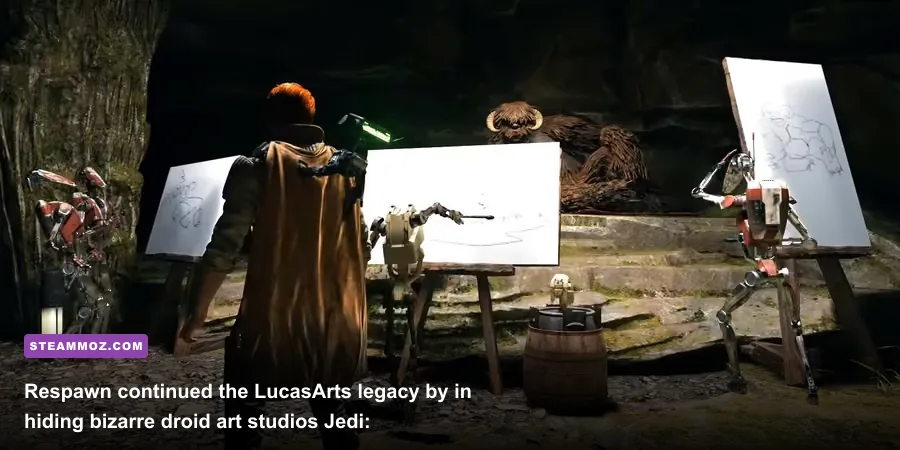
However, Jedi: Survivor pushed the secret hunting formula into absurd, hilarious territory on the planet Koboh. Deep within the Harvest Ridge region, hidden behind the Untamed Downs, there is an unassuming, razor-thin fissure in a cliff face that doesn't display as an explorable path on your holographic Holomap. Squeezing Cal Kestis through this crack requires a grueling two-minute crawl through pitch-black subterranean rocks.
When you emerge on the other side, you don't enter an Imperial garrison or an ancient High Republic meditation chamber. Instead, you walk into a sunlit cave studio where a B1 battle droid sits quietly on a stool, paintbrush in hand, carefully painting a portrait of a BX Commando Droid posing seductively on an ornate velvet sofa. Classical ambient music plays softly in the background. The droids do not attack you; they simply continue their artistic session while Cal stands there in stunned disbelief. It is an extraordinary homage to the developer-room traditions established by LucasArts decades earlier.
Finding these secrets requires more than just following the main quest marker—it demands that you explore every cranny, exploit movement physics, and experiment with game engines built by developers who genuinely loved what they were making. So, fire up your PC, boot up your classic Star Wars library or Respawn's newest entries, and start swinging at those suspicious walls. The galaxy has plenty of secrets left for you to uncover.