
If you feel exhausted by formulaic $70 blockbusters packed with seasonal battle passes, cookie-cutter quest markers, and bloated open worlds, you aren’t alone. The greatest interactive experiences on PC rarely enjoy multi-million-dollar marketing campaigns; instead, they hide quietly on Steam, driven by fanatical indie developers pushing gameplay systems to heights AAA studios wouldn’t dare touch. From simulated retro-futuristic dystopias with mathematical combat models to atmospheric dungeon crawlers that trust your intellect, these titles represent pure game design wizardry. If you crave genuine discovery, punishing tactical stakes, and mechanical depth you can chew on for hundreds of hours, here are six astonishing PC hidden gems that deserve a permanent spot on your SSD.
Caves of Qud: The Deepest Sci-Fi RPG on Steam
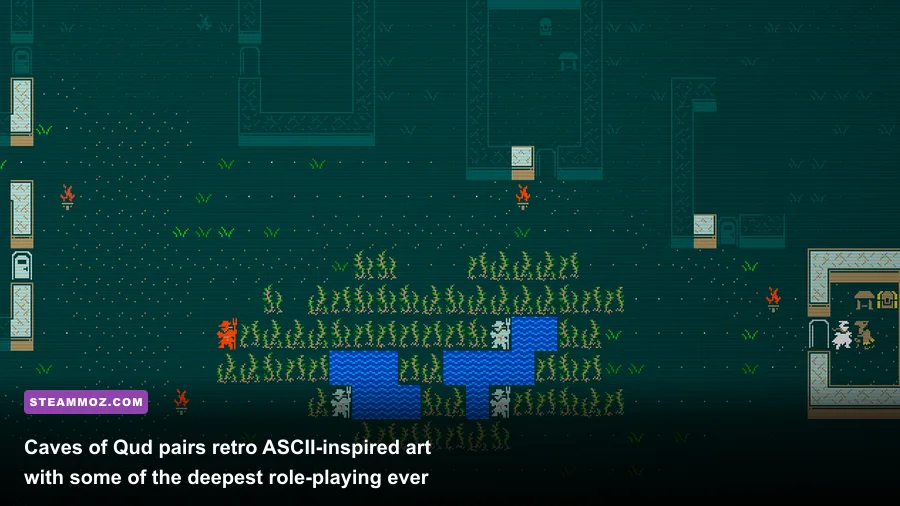
To dismiss Freehold Games' Caves of Qud based on its traditional tile-based visuals is to lock yourself out of what might be the most wildly systemic science-fantasy RPG ever constructed. Set millions of years in the future among the salt marshes, chrome ruins, and irradiated jungles of a dying Earth, Qud feels less like a video game and more like an alternate reality running on hyper-complex tabletop math.
Character creation alone exposes the staggering depth here. You can roll as a True Kin—a genetically pure cybernetic aristocrat grafting biometric implants like motorized joints and dermal plating directly into your anatomy—or a Mutant carrying unpredictable physical and mental alterations. Pick mutations like Temporal Fugue (which summons temporal clones of yourself that cast your exact loadout in real time) paired with Flaming Rays and Multiple Arms, and you suddenly wield four plasma daggers while your alternate timeline duplicates immolate half the screen.
Combat resolves through microscopic simulation checks. Attacks do not simply deplete health pools; they calculate Armor Value (AV) versus penetration rolls using dynamic dice curves:
Penetration Formula: (1d10 - 2) + Strength Modifier vs Target AVEvery single penetration success re-rolls the die to inflict bonus damage multipliers, meaning a heavily fortified turret can either shrug off a buckshot blast completely or suffer structural failure when a lucky hit pierces its internal hydraulic routing. When an enemy cuts off your character's arm in Qud, you don't just take an arbitrary debuff; you physically drop the weapon held in that severed limb onto the muddy tile below, losing the gear until you cauterize the wound, track down a rare tube of Regeneration Mist, or develop mutant cloning glands to regrow the appendage. You can dive straight into this wild sandbox via the official Caves of Qud Steam page.
If you love meticulously unraveling obscure map systems much like hunting hidden routes in Everspace 2 secret locations and hidden rewards, Qud's procedural subterranean ruins will consume your life. It is brilliant, completely merciless, and functionally infinite in scope.
Underrail: The Brutal Post-Nuclear Tactical Masterwork
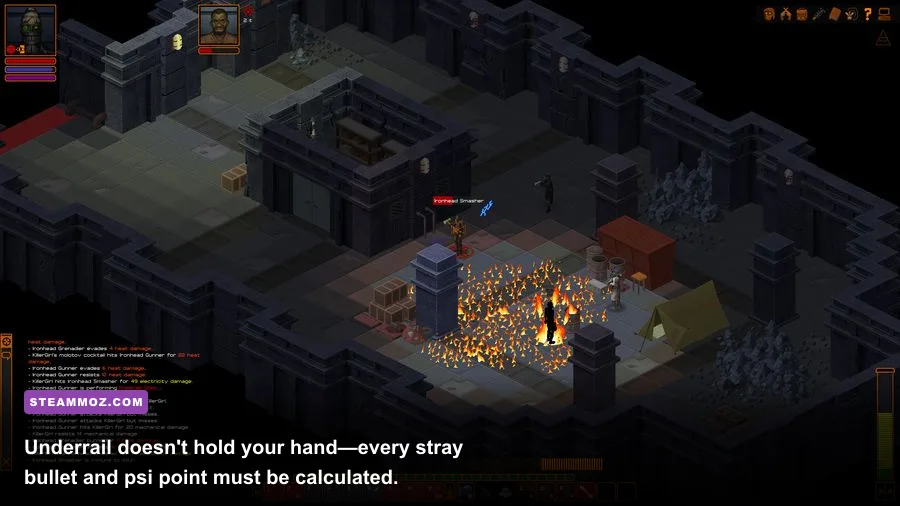
When gamers lament that nobody makes isometric tactical turn-based RPGs like the original 1997 Fallout anymore, it's usually because they have never stepped foot into the claustrophobic metro tunnels of Underrail. Developed by Stygian Software, this is an uncompromising, mathematically tight isometric survival RPG that treats modern conveniences like forgiving quest markers and rubber-band difficulty with complete disdain.
Set within a subterranean metro network where surviving human factions battle over oxygen, water, and fungal scrap, Underrail's tactical combat runs on an ironclad Action Point (AP) and Movement Point (MP) system. Your turn budget is non-negotiable: 50 base AP, modified by your Agility score, feats, and equipment weight penalty. You cannot stumble your way through combat encounters through sheer level scaling. Walk into the infamous early-game crucible of Depot A without a min-maxed build, tactical crowd control items, or an understanding of damage resistances, and mutant acid dogs will dissolve you within two rounds flat.
The Art of Lethal Build Crafting
Survival in Underrail hinges on your build synergy. Pure psionic builds harness four divergent schools:
- Thought Control: Bypasses armor entirely by targeting the nervous system with Neural Overload and Mental Breakdown.
- Metathermics: Manipulates kinetic thermal energy through Cryokinesis and devastating Thermal Fields.
- Psychokinesis: Deploys heavy telekinetic stuns, force fields, and explosive electro-implants.
- Temporal Manipulation: Distorts turn economies, shaving AP costs and resetting cooldowns.
If you stray from the psychic path, the game's bespoke crafting system lets you salvage weapon frames, barrels, and electronic components graded on a 1-to-160 Quality scale. A custom-built 9mm Synergistic SMG slotted with a Rapid Reloader and customized barrel muzzle will fire multiple bursts per round at half the action point cost of standard military gear. Much like the jagged, unforgiving European post-apocalyptic design seen in the cult RPG classic explored in our Elex PC fixes and FPS optimization guide, Underrail requires patience, precision, and grit. You can study its comprehensive mechanical breakdowns on the official Underrail developer portal.
Lunacid: A Dreamlike King’s Field Revival Done Right
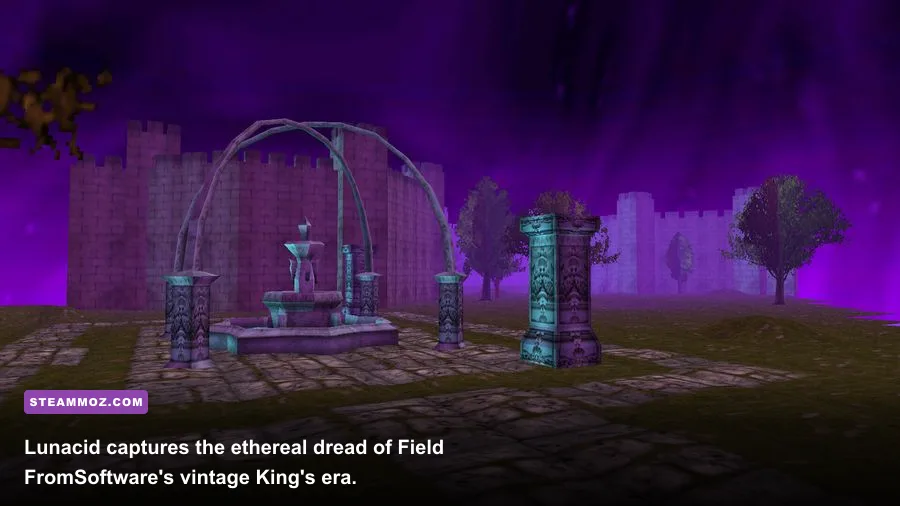
Long before Hidetaka Miyazaki conquered global sales charts with Elden Ring, FromSoftware made its name with King's Field and Shadow Tower—deliberate, slow-burning, first-person dark fantasy dungeon crawlers dripping with melancholy. Solo developer KIRA spent years building Lunacid as a love letter to that forgotten design philosophy, delivering an eerie, low-poly masterpiece that feels like a long-lost PS1 CD found buried in a crumbling cathedral.
You play as an exile cast down into the Great Well, an underworld abyss where forgotten civilizations decay beneath an accursed, eternal moon. There are no frantic dodge-rolls or hyperactive parry windows here. Combat in Lunacid is deliberate, measured, and heavily spatial. Weapon reach, elevation angles, recovery frames, and elemental affinities dictate every skirmish.
Equipping weapons like the Death Scythe or the obsidian-forged Moonlight Sword isn't just an exercise in raising flat DPS numbers. Weapons draw scaling bonuses across distinct character attributes: Strength, Dexterity, Intelligence, Wisdom, and Resistance. Leveling up Speed increases your raw strafing momentum, turning a sluggish sword swing into a rhythmic, floating dance where you bait an enemy's telegraph, step back out of reach, and thrust forward into their exposed hit box.
What elevates Lunacid above a simple nostalgia trip is its mastery of environmental mystery. Secret walls dissolve under specific elemental spells, alchemy benches reward experimentation with cryptic potion mixtures, and silent NPCs whisper fragments of lore that never insult your intelligence. For players who love unraveling arcane environmental puzzles—much like the lateral-thinking cable networks in our Filament settings and puzzle performance guide—Lunacid offers one of the most rewarding, evocative dungeon crawls available on modern hardware. Check out the community feedback on the Lunacid Steam storefront to see why it maintains an overwhelmingly positive user rating.
Shadows of Doubt: The Fully Simulated Noir Detective Immersive Sim

Most detective games are glorified interactive novels: you sweep a room, click the glowing magnifying glass icons, and the game’s protagonist solves the mystery for you in a pre-rendered cutscene. ColePowered Games took that tired trope, threw it into a woodchipper, and delivered Shadows of Doubt—a fully simulated, procedural noir immersive sim that operates with zero safety nets.
When a murder happens in this rainy, voxel-rendered 1980s alternate-reality city, the game does not script a narrative path. The killer is a real, simulated citizen who lives in an actual apartment, punches an actual timecard at a local factory, has an identifiable blood type, buys lockpicks from black-market vending machines, and slips through alleyways when their shift ends. Every single citizen among hundreds has daily routines, relationships, fingerprints, medical histories, and computer terminals with passwords you can crack.
How an Investigation Actually Unfolds
You receive an anonymous payphone tip about an execution in an 8th-floor penthouse. You arrive on scene, but the door is locked:
- Do you use hairpin lockpicks on the deadbolt while avoiding hallway cameras?
- Do you crawl through the air ventilation shaft from the maintenance closet next door?
- Or do you bribe the building superintendent 500 Crows to hand over a master keycard?
Once inside, you dust the door handle for fingerprints, examine spent 9mm shell casings, check the victim's address book, and cross-reference shoe prints left in the drying blood puddle using your forensic scanner. You manually drag evidence cards onto your in-game corkboard, connecting yarn between CCTV timestamps, apartment blueprints, and telephone call logs until you pinpoint a suspect. If you enjoy managing meticulous micro-level systems and resource tracking like those found in Empires of the Undergrowth progression systems, the procedural complexity in Shadows of Doubt will leave your jaw on the floor.
Brigador: Up-Armored Edition: Pure Tactical Isometric Carnage
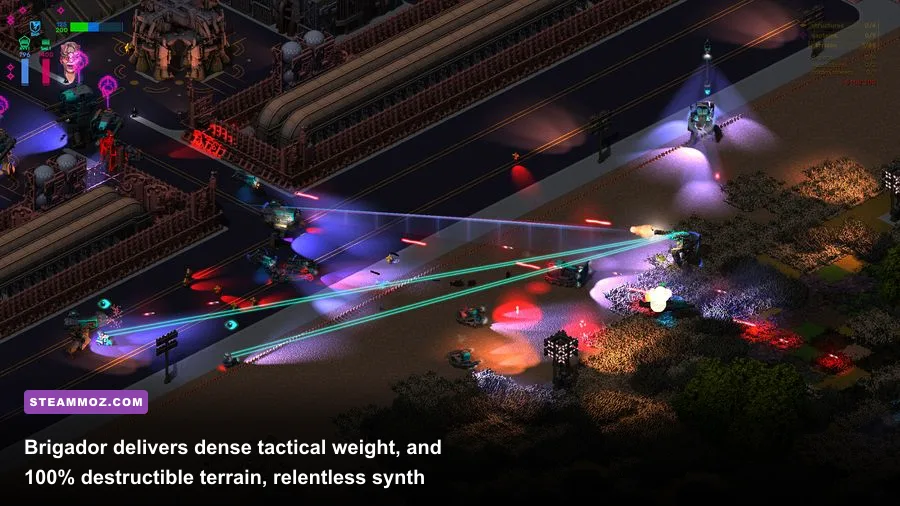
If you think twin-stick and isometric shooters are mindless arcade romps, Stellar Jockeys' Brigador: Up-Armored Edition is here to recalibrate your expectations. Set on the neon-drenched colonial world of Solo Nobre on the night of a catastrophic government collapse, you play as a traitorous freelance pilot taking wetwork contracts for the invading corporate cartel.
Brigador’s core strength lies in its astonishing destruction engine and deliberate vehicle physics. Every wall, civilian high-rise, military bunker, and neon billboard in the game can be pulverized into smoking concrete dust. But mindlessly firing your heavy ordnance will get you wiped out in seconds. The game features three distinct chassis categories, each with radically different handling profiles:
| Vehicle Class | Handling Physics | Armor Ceiling | Optimal Combat Tactics |
|---|---|---|---|
| Mechs (Walkers) | Torso-twist aiming, moderate momentum | Medium to High | Peeking over barricades, rapid target realignment |
| Tanks (Treads) | Heavy hull traversal, zero-radius turn | Maximum | Plowing directly through structures to flank lines |
| Agravs (Hover) | Inertial drift, momentum skating | Fragile to Light | Kiting heavy artillery, hit-and-run strafing runs |
Ammo economics are ruthlessly tight. Heavy railguns like the Otomo can punch through three commercial skyscrapers to core an enemy siege tank, but the acoustic signature immediately alerts every alarm outpost within a four-block radius. When you hear the pounding, synth-heavy soundtrack kicking into overdrive, it triggers the same nostalgic adrenaline rush as ranking up devastating retro arsenal loadouts in our Far Cry 3: Blood Dragon weapons tier guide. Grab the definitive version on the Brigador Steam page to experience isometric destruction at its peak.
Comparing the Mechanical Depth: Which Hidden Gem Fits Your Playstyle?

Not every gamer approaches their PC setup with the same goals in mind. Some nights you want cold, calculated spreadsheet mastery where every turn demands a risk-reward matrix; other nights, you want total sensory immersion and spatial deduction. To help you match your gaming preferences with the right underground masterpiece, the following breakdown maps out the technical complexity, learning curves, and hardware demands of these overlooked triumphs.
| Game Title | Primary Genre Focus | Mechanical Complexity | System Tax (PC Load) | Primary Player Draw |
|---|---|---|---|---|
| Caves of Qud | Science-Fantasy Roguelike RPG | Extreme (Deep Math/Systems) | Very Low (CPU Bound only) | Procedural storytelling, emergent roleplaying |
| Underrail | Turn-Based Isometric RPG | Hardcore (Strict Build Economics) | Very Low (Runs on potato rigs) | Brutal tactical combat, complex item crafting |
| Lunacid | First-Person Dungeon Crawler | Moderate (Spatial & Lore Heavy) | Low (PS1 aesthetic, low GPU draw) | Eerie exploration, King's Field nostalgia |
| Shadows of Doubt | Procedural Detective Sim | High (Systemic Logic & AI) | Medium-High (Voxel lights & CPU cycles) | Total emergent freedom, unscripted sleuthing |
| Brigador | Tactical Isometric Action | Moderate-High (Physics & Loadouts) | Low-Medium (High-density sprite physics) | Destruction sandbox, incredible synth vibes |
Why You Should Broaden Your Steam Horizon
It’s easy to get trapped in the loop of playing the same three live-service shooters or eagerly waiting three years for the next over-hyped AAA sequel that launches with day-one performance stutters and hollow progression. Yet, as each of these hidden gems proves, the true golden age of PC gaming is happening right now under the radar.
Whether it’s the jaw-dropping systemic simulation of Shadows of Doubt, the razor-sharp tactical balance of Underrail, or the surreal, poetic sci-fi weirdness of Caves of Qud, these games don't treat your intelligence as a liability. They challenge your tactical planning, celebrate your curiosity, and give you control over systems that react dynamically to every choice you make. If your gaming library has started to feel stale, pull the trigger on any of these titles. You won't just discover your next obsession—you’ll remember why you fell in love with PC gaming in the first place.