If you want survival games on PC that offer more than another familiar zombie sandbox, start with Vintage Story, Cataclysm: Dark Days Ahead, CryoFall, The Infected, and Necesse. These are genuinely overlooked survival games with distinctive systems: realistic food preservation, simulation-heavy disasters, industrial research, escalating base attacks, and settlement management.
None of these games is simply a cheaper copy of Minecraft or Rust. They each demand a different kind of attention, and that is exactly why they are easy to miss. Some look modest in screenshots, while others bury their best mechanics under old-school interfaces. Give them a few hours, though, and they can become far more absorbing than the latest big-budget survival release.
Vintage Story is survival crafting with actual consequences
Vintage Story is the strongest recommendation here if you want a survival game that treats preparation as gameplay rather than busywork. It uses a voxel world, but its systems are much closer to a slow, atmospheric survival simulation than a relaxed building sandbox.
The first major difference is food. You don't just click a recipe and receive a meal. Grain must be harvested, threshed, ground into flour, mixed, and baked. Vegetables decay according to storage conditions, while crocks can preserve meals for much longer. A cellar isn't decorative: underground storage genuinely helps manage temperature and spoilage. That makes your first winter a logistical problem, not a cosmetic change.
Metalworking is equally tactile. You begin with loose stones and crude tools, then move through copper, bronze, iron, and steel. Smithing requires heating metal in a forge and shaping it with a hammer on an anvil. Prospecting with a pick and a copper-tin reading is essential because ore distribution is region-dependent. If you rush underground without enough food, torches, and a way to handle drifters, the game punishes you quickly.
The hidden danger is temporal stability. Temporal storms and unstable areas can distort the atmosphere and make the world much more hostile. Wolves, locusts, drifters, and deep underground enemies each require different preparation. The best early goal is not a giant mansion; it is a defensible dirt-and-stone home with a cellar, a firepit, a small crop field, and enough food to survive the first seasonal turn.
| Early Priority | Why It Matters | Practical Target |
|---|---|---|
| Food preservation | Fresh food spoils quickly | Build a cellar and several crocks |
| Prospecting | Metal veins are not guaranteed nearby | Carry a pick and prospecting tools |
| Leather | Needed for bags and progression | Hunt animals before winter |
| Defenses | Night enemies can overwhelm weak shelters | Use walls, lighting, and a fallback room |
Vintage Story is also a good choice if you enjoy tinkering with settings. Lowering view distance and shadow quality helps older CPUs, while keeping texture quality high preserves the game's earthy visual detail. For more PC troubleshooting ideas, Steamoz's ELEX performance fixes are useful when a demanding open-world game starts stuttering.
Cataclysm: Dark Days Ahead makes every decision dangerous

Cataclysm: Dark Days Ahead is one of the deepest survival games ever made, and it is also one of the least welcoming. The interface looks like a traditional roguelike, but beneath it is a staggering simulation of injuries, morale, nutrition, vehicles, crafting, weather, diseases, mutations, and hostile factions.
Your survivor can begin in scenarios ranging from a stranded evacuee to a lab escapee. A broken arm changes combat. Wet clothing affects warmth. Bad morale slows certain actions. A vehicle with a dead battery is not useless, but getting it running may require tools, fuel, mechanics skill, and a safe place to work. Even a simple grocery-store raid can go wrong when noise attracts zombies from several blocks away.
The strongest early strategy is restraint. Pick a safe house away from the center of town, gather a crowbar, water container, lighter, basic food, and medical supplies, then spend time reading. Skill books are crucial, but reading can consume hours and leave you vulnerable. Establish a routine: scout during daylight, close curtains before resting, and never fight a pack when you could lure one enemy away at a time.
Vehicles are the turning point. A working car lets you haul furniture, water, tools, and scrap metal, but noise and fuel consumption create new risks. Later, you can build deathmobiles with mounted weapons, solar panels, storage, and reinforced frames. Character builds can become equally strange: bionics, mutations, martial arts styles, and specialized proficiencies let two survivors approach the same ruined town in completely different ways.
How to survive your first seven in-game days
On day one, avoid the city center and secure water. On day two, search isolated houses for tools and books. By day three, you should have a reliable melee weapon and a place to sleep. Spend days four through seven improving tailoring, cooking, and mechanics instead of chasing every gunshot. If you find a working vehicle, mark the location and return only after you have enough fuel and repair equipment.
The game is free, community-driven, and constantly updated through its official Cataclysm: Dark Days Ahead site. It is not a casual evening game, but if you want survival mechanics with almost absurd depth, nothing else on this list comes close.
CryoFall turns survival into a sci-fi production race
CryoFall is an isometric multiplayer survival RPG set on a hostile alien planet. It stands out because progression isn't only about finding better loot. You research technologies, build production chains, specialize characters, and eventually operate a small industrial society.
The early game feels familiar: collect wood and stone, craft basic tools, hunt, and place a shelter. The pace changes once you unlock workbenches, generators, cooking stations, and better resource processing. Fuel, electricity, ammunition, and medical items become connected problems. If your group rushes weapons but ignores food production, you can still collapse. If you invest in farming and logistics, another faction may outpace you in territorial control.
Character specialization matters in a way many survival games skip. One player can focus on cooking and farming, another on engineering, and a third on weapons or exploration. The technology tree contains multiple tiers, so a team should decide whether it wants efficient agriculture, stronger combat equipment, or faster industrial output first. Randomly unlocking everything usually creates a broad but inefficient base.
| Playstyle | Best Focus | Key Advantage | Main Risk |
|---|---|---|---|
| Solo explorer | Weapons and medical crafting | Independent map access | Slow production |
| Base engineer | Power and refining | Faster resource chains | Vulnerable while gathering |
| Farmer-cook | Crops and food bonuses | Stable long-term survival | Weak combat progression |
| Faction fighter | Armor and ammunition | Strong territorial pressure | High material consumption |
CryoFall works best with friends, but its systems still provide plenty to do alone. Check the CryoFall Steam page before buying because server populations and update conditions matter more here than in a purely solo survival title.
The Infected is a brutal base-defense curveball
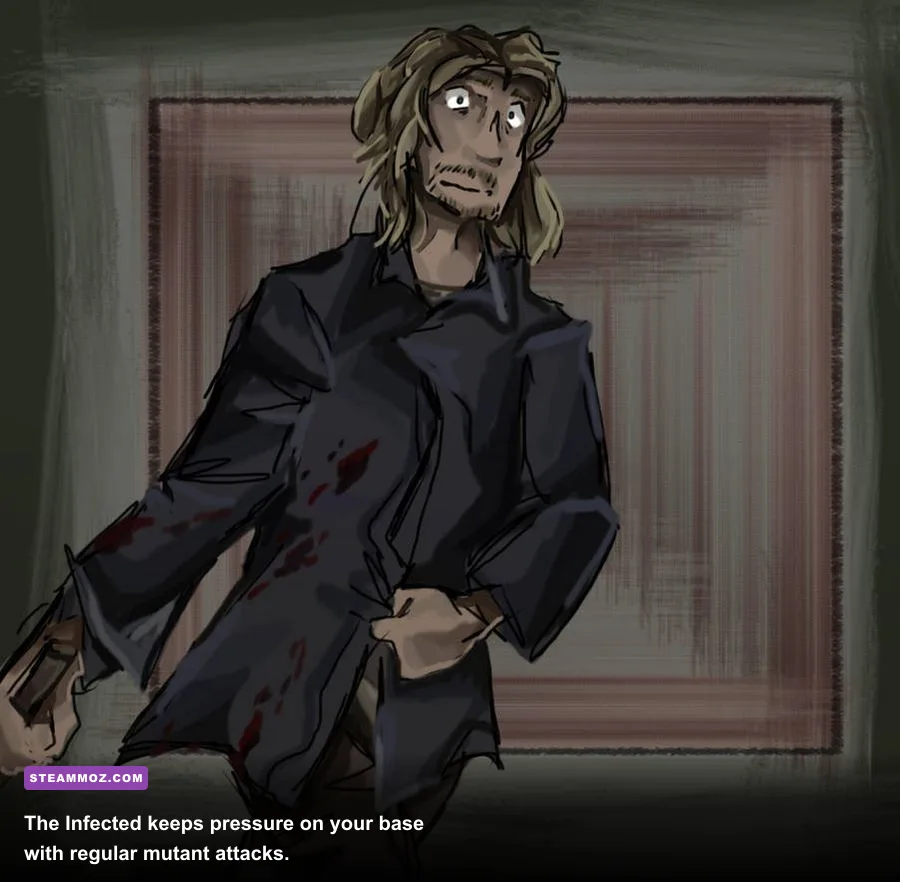
The Infected begins like a quiet first-person forest survival game, then gradually turns your carefully arranged homestead into a target. You gather logs, mine stone, hunt deer, grow crops, build water systems, and craft tools while infected creatures become a bigger threat.
Its most interesting system is the escalating attack pressure. Vambies—fast, aggressive infected enemies—can appear during regular exploration, while larger attacks test the defenses around your base. That changes how you build. A beautiful open-sided cabin may look great, but it is a liability if enemies can reach workstations and storage from multiple directions. Walls, gates, elevated firing positions, and clear sight lines matter more than decorative furniture.
Energy management is another early trap. Solar panels and batteries improve your quality of life, but they shouldn't be your first obsession. Build a forge, mineral extractor, storage, and food supply before expanding the electrical network. Mining nodes and water access should influence your base location. Moving later is possible, but dismantling a large structure wastes time and materials.
For combat, keep distance whenever possible. Spears and bows are safer than trying to trade hits with a vambie in a doorway. Use terrain to funnel attackers, repair your walls after every major assault, and keep spare weapons in a chest near the entrance. The game's forgiving options and sandbox settings also make it easy to tune enemy frequency if the default pressure feels too aggressive.
The Infected is rough around the edges, but that roughness is part of its appeal. It delivers the satisfying loop of seeing a wilderness camp become a functioning compound, then realizing the compound needs a moat, a watch platform, and much better lighting. If performance becomes an issue in similar open-world games, Steamoz's Far Cry 6 FPS settings guide covers the same practical priorities: shadows, view distance, and volumetric effects.
Necesse is the sleeper pick for builders and dungeon crawlers
Necesse looks like a charming top-down sandbox, but it quietly combines survival crafting, procedural islands, NPC settlement management, fishing, farming, boss fights, and dungeon exploration. It is the easiest game on this list to recommend to players who want depth without an intimidating interface.
You begin on a small island with basic tools and a simple shelter. Soon, friendly settlers can join your colony and take jobs such as farming, crafting, hauling, and defending. That creates a satisfying division of labor: you explore dangerous islands while your settlement produces food and materials. NPC happiness, housing requirements, and work assignments turn the base into something more useful than a collection of crafting stations.
Combat is more deliberate than the bright visuals suggest. Weapons have different ranges and attack patterns, while bosses force you to read movement and create room to maneuver. The Evil's Guardian, for example, pressures you with projectiles and area denial, so a cramped arena can be more dangerous than the boss itself. Prepare healing items, clear obstacles, and bring equipment suited to your preferred distance instead of relying on one sword for everything.
Necesse's progression also encourages exploration. Each island can provide different resources, dungeons, shops, and enemies. Bring spare inventory space and return regularly to upgrade your settlement. Don't overbuild at the start; a compact colony with assigned workers is more valuable than a giant empty hall. Once production is stable, expand into defensive walls, storage rooms, and dedicated crafting areas.
| Game | Best For | Difficulty | Solo Value |
|---|---|---|---|
| Vintage Story | Detailed crafting and seasons | High | Excellent |
| Cataclysm: Dark Days Ahead | Simulation and emergent stories | Very high | Exceptional |
| CryoFall | Technology and multiplayer factions | Medium | Good |
| The Infected | Base defense and first-person building | Medium | Excellent |
| Necesse | Colony management and dungeon crawling | Medium | Excellent |
Which hidden gem survival game should you play first?
Choose Vintage Story if you want Minecraft-like freedom with demanding food, metallurgy, and seasonal systems. Pick Cataclysm: Dark Days Ahead if simulation depth matters more than presentation. CryoFall is the best fit for a group that enjoys research trees and production planning, while The Infected is ideal for players who want their base tested by increasingly dangerous attacks. Choose Necesse if you want a smoother, more approachable mix of settlement management and action RPG exploration.
These games aren't hidden because they lack ideas. They are hidden because their best systems take time to reveal themselves. The first hour may involve mud bricks, a broken car, a slow research queue, a wooden fence, or a tiny settlement. Stick with that opening, and you'll find survival games with more personality—and often more mechanical ambition—than far bigger releases.
If you enjoy hunting for overlooked PC experiences, Steamoz's guides to secret locations and hidden rewards, Everspace 2 discoveries, and fast progression in Empires of the Undergrowth are worth adding to your reading list. The next great survival obsession may already be sitting quietly in your Steam wishlist.