If you want upcoming PC games with genuinely different gameplay hooks—not just prettier graphics—these ten deserve your wishlist. The Witcher 4, Crimson Desert, Fable, Hollow Knight: Silksong, Subnautica 2, Resident Evil Requiem, Pragmata, Control Resonant, Directive 8020, and The Alters each target a different kind of obsession: open-world role-playing, precision combat, survival, horror, or systems-heavy decision-making. Release dates can move, so treat the schedule as provisional, but the mechanics shown so far already separate these projects from ordinary sequel bait.
This list ranks games by gameplay promise rather than brand size. A huge franchise lands lower if its new systems remain unproven, while a smaller project gets credit for showing a strong playable identity. For performance expectations, remember that Unreal Engine 5 features such as Nanite and Lumen can make a midrange PC work much harder than a conventional rasterized game.
The ten upcoming PC games worth watching

These are not ten interchangeable open-world adventures. Each one has a clear reason to exist, whether that is Ciri's sign-based combat, Hornet's silk economy, or the frightening possibility of managing multiple copies of yourself in The Alters.
| Rank | Game | Core gameplay hook | Best fit for |
|---|---|---|---|
| 1 | The Witcher 4 | Ciri-led monster hunting and RPG choices | Players who want a huge narrative RPG |
| 2 | Crimson Desert | Action combat, traversal, and cinematic bosses | Open-world action fans |
| 3 | Hollow Knight: Silksong | Fast platforming and tool-based exploration | Metroidvania specialists |
| 4 | Fable | Reactive fantasy quests and expressive melee | Choice-driven adventure fans |
| 5 | Subnautica 2 | Alien-ocean survival with optional co-op | Builders and explorers |
| 6 | Resident Evil Requiem | Perspective-switching survival horror | Players who value tension over loot |
| 7 | Pragmata | Combat mixed with hacking and puzzle interaction | Experimental sci-fi fans |
| 8 | Control Resonant | Paranormal abilities and reality-bending exploration | Remedy-style action fans |
| 9 | Directive 8020 | Branching sci-fi horror and social deduction | Interactive thriller players |
| 10 | The Alters | Base management through alternate selves | Strategy-minded story players |
1. The Witcher 4
CD Projekt Red has confirmed that Ciri is the protagonist, and that shift matters mechanically. Ciri is faster and more mobile than Geralt, so the combat fantasy can move beyond the old rhythm of Quen, dodge, light attack, and repeat. The official Witcher 4 page shows the project being built with Unreal Engine 5, while the studio's tech demo introduced a Ciri-centered hunt involving a monster called the Bauk and a village ritual.
Expect the strongest gameplay to come from the tension between preparation and improvisation. Witcher fans should watch for how Ciri's signs, swordplay, potions, and supernatural abilities interact rather than assuming Geralt's exact skill tree returns. The key warning is hardware: the 2025 tech demo ran on a high-end PC with an NVIDIA GeForce RTX 5090, but that was a showcase, not a final system requirement. Don't buy a GPU for a demo number.
2. Crimson Desert
Crimson Desert is the most immediately convincing action game here. Pearl Abyss has shown protagonist Kliff using a sword, shield, bow, grappling hook, and environmental traversal in the continent of Pywel. Its combat is built around guard breaks, counters, launchers, aerial follow-ups, and enormous bosses. The fight against Hexe Marie, for example, emphasizes reading attack patterns while using movement tools to control distance—not simply circling an enemy and attacking its glowing weak point.
The game also lets Kliff climb, glide, ride, fish, and move through settlements with far more physical freedom than a standard quest hub. That variety could prevent open-world fatigue, although the final balance between story missions and side activities remains untested. Check the official Crimson Desert site for current footage instead of relying on old trailers.
3. Hollow Knight: Silksong
Hornet changes the entire feel of Team Cherry's formula. She jumps higher, moves faster, uses a needle as her primary weapon, and creates silk that can power healing and special techniques. Pharloom is not simply Hallownest with new paint; its vertical routes, mechanical structures, hostile guards, and tool-based progression push you to think about movement before damage.
The most exciting design choice is the emphasis on tools and quests. Hornet can collect materials, craft items, and accept objectives that make exploration feel more directed without turning the map into a checklist. Precision players should expect fewer safe pauses than in Hollow Knight because Hornet's mobility invites aggressive play. The official Silksong site remains the safest place to track confirmed information.
Four games built around choice, consequence, and atmosphere

4. Fable
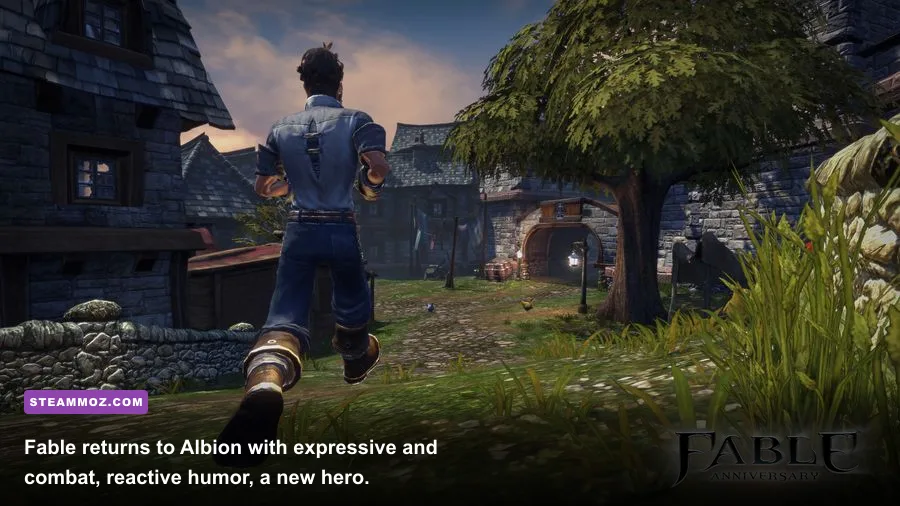
Playground Games' Fable reboot has a difficult job: preserve Albion's sarcastic fairy-tale personality while making combat feel current. Trailers show a new hero using melee weapons, ranged attacks, and magic in fluid combinations against enemies including Hobbes and larger fantasy creatures. The game also leans into Fable's old promise that your behavior changes how the world treats you, from appearance and reputation to the kinds of conversations and opportunities you encounter.
Fable's strongest potential lies in quest design. The series has always been better when it lets you solve a problem in a ridiculous, selfish, heroic, or catastrophically stupid way. Don't expect every moral decision to create a different campaign, but do expect Albion's humor to work best when the game reacts to your choices instead of merely presenting blue and red dialogue options. It is being developed for PC and Xbox Series X|S, with day-one PC availability expected through Steam and the Xbox app.
5. Resident Evil Requiem
Resident Evil Requiem stars FBI analyst Grace Ashcroft, a character connected to Raccoon City's history, and brings the series back toward investigation-heavy survival horror. Capcom has also shown Leon S. Kennedy, suggesting a deliberate contrast between Grace's vulnerability and Leon's combat experience. That duality could create two distinct gameplay tempos: cautious room clearing and resource management for Grace, then more confident action when Leon takes over.
The valuable design question is how the game handles perspective and resource scarcity. A horror game loses its teeth when every room becomes a shooting gallery, so the best version of Requiem will make you decide whether to spend ammunition, search for clues, or retreat through a route you already know is unsafe. Track announcements through Capcom's official Requiem website. Until final specifications arrive, use the RE Engine's recent PC releases as a rough performance reference rather than guessing from console footage.
6. Directive 8020
Supermassive Games takes The Dark Pictures Anthology into space with Directive 8020. The setting is the colony ship Cassiopeia, where the crew faces a hostile organism capable of copying human forms. That premise naturally supports the studio's familiar mix of exploration, dialogue decisions, quick-time actions, and fatal branching outcomes—but the imitation mechanic could make trust itself part of the gameplay.
The best way to play will probably be with a small group that agrees not to reload every death. The Dark Pictures games are designed around imperfect decisions, and a suspected impostor is much scarier when nobody knows whether a character is injured, panicking, or no longer human. Expect short, cinematic chapters rather than a 30-hour campaign, with replay value coming from different survivors and altered relationships.
Three worlds where movement and systems do the heavy lifting
7. Subnautica 2
Subnautica 2 expands the survival formula with a new alien ocean, advanced crafting, base construction, and optional four-player co-op. The important word is optional: the game still needs to work as a lonely expedition where every deeper dive forces a choice between collecting resources and returning before oxygen, food, or battery power becomes a crisis.
Co-op should change planning rather than simply multiply gathering speed. One player can scout a trench, another can manage the base, and a third can transport titanium, copper, or biological samples. The danger is that shared play makes the ocean feel safe, so Unknown Worlds needs creatures and environmental hazards that can split a team apart. The official Subnautica news hub is worth watching because systems and release plans are still subject to change.
8. Pragmata
Capcom's Pragmata remains mysterious, but its trailers establish a useful gameplay relationship between astronaut Hugh and the android Diana. Combat is paired with hacking-style interactions, and Diana appears able to manipulate hostile machines or alter the battlefield. That two-character structure could turn every encounter into a quick decision: shoot the target, disrupt its systems, or use the environment to create an opening.
Pragmata will succeed if its puzzles interrupt combat in meaningful ways rather than becoming a separate minigame. The ideal version lets you weaken a robot with Hugh, take control of its defenses through Diana, then use the hacked machine against the remaining group. Since Capcom has not published final PC requirements, don't trust speculative minimum specs circulating on social media. Wait for an official Steam listing or hardware announcement.
9. Control Resonant
Control Resonant is the next major Remedy Entertainment project set in the Control universe, with Dylan Faden at its center. That immediately suggests a more unstable perspective than Jesse Faden's first game. The appeal is not simply telekinesis returning; it is the possibility of exploring altered spaces where rooms, objects, and narrative rules change in response to paranormal resonance.
Control's best combat came from switching between Launch, Service Weapon forms, Shield, and Levitate instead of hiding behind one overpowered trick. Resonant needs that same pressure to keep moving. On PC, players should eventually look for separate ray-tracing controls, volumetric lighting options, and a scalable crowd or effects setting. Remedy's games can look spectacular while becoming CPU-heavy in busy scenes, so a stable 60 frames per second will matter more than maxing every reflection.
The strategy picks that could consume your weekends

10. The Alters
11 bit studios' The Alters turns alternate versions of one worker, Jan Dolski, into both a narrative device and a management system. Each Alter represents a different life decision and brings distinct skills, memories, needs, and conflicts to a mobile base on a hostile planet. You are not just assigning workers to rooms; you are maintaining relationships between versions of the same person who may resent the choices that created them.
The strategic pressure comes from limited time and resources. Jan needs the right Alter for research, construction, mining, or maintenance, but every new personality adds another set of conversations and emotional problems. A theoretically efficient crew can become impossible to manage if you ignore morale. Players who enjoy Frostpunk's harsh prioritization and narrative consequences should keep this near the top of their list. The official The Alters website has developer material explaining the clone-based progression system.
Bonus watch: performance and release-risk reality
Upcoming games are exciting partly because their rough edges remain hidden. A trailer cannot tell you whether shader compilation will stutter, whether traversal will stream smoothly, or whether a co-op survival game will hold 60 fps when four players trigger large effects. Use the table below as a sensible target profile for a modern 1440p gaming PC, not as official system requirements.
| Setting | Recommended value | Likely performance impact | Visual trade-off |
|---|---|---|---|
| Resolution | 2560x1440 | High GPU load | Sharper image than 1080p |
| Upscaling | Quality mode | Usually saves 15–30% GPU time | Minor reconstruction artifacts |
| Ray tracing | Off or medium | Can reduce performance 20–45% | Less accurate reflections and lighting |
| Textures | High, if VRAM allows | Mostly VRAM-limited | Better surfaces and asset detail |
| Shadows | High | Moderate GPU and CPU cost | Lower settings soften contact shadows |
| Motion blur | Off | Minimal FPS change | Cleaner image during fast turns |
Which upcoming PC game should you wishlist first?

Choose The Witcher 4 if you want a giant story-driven RPG and can wait for CD Projekt Red to reveal the full combat and progression systems. Pick Crimson Desert if responsive melee, traversal, and spectacle matter more than traditional party-based role-playing. Silksong is the obvious choice for players who enjoy learning enemy patterns and earning every shortcut through execution rather than gear level.
Fable is the wild card for players who miss playful moral choices, while Subnautica 2 has the clearest weekend-destroyer potential for builders and co-op groups. Horror fans should watch both Resident Evil Requiem and Directive 8020: Capcom is aiming for survival-horror tension, while Supermassive is betting on shared paranoia and branching consequences.
Finally, Pragmata, Control Resonant, and The Alters are the games to follow if familiar genres are starting to blur together. Their hooks are specific: hacking during firefights, paranormal spaces that refuse to behave, and a workforce made from alternate versions of one person. That is exactly what makes this upcoming PC lineup so promising. You are not waiting for ten more games that play like the last one; you are waiting for ten different reasons to lose an entire evening.
For practical PC preparation, our guides covering crash fixes and FPS troubleshooting, graphics settings for maximum FPS, stutter and crash diagnosis, and efficient progression planning are useful before these demanding releases arrive. Wishlist the games that match your preferred kind of friction, then wait for verified system requirements before upgrading hardware.