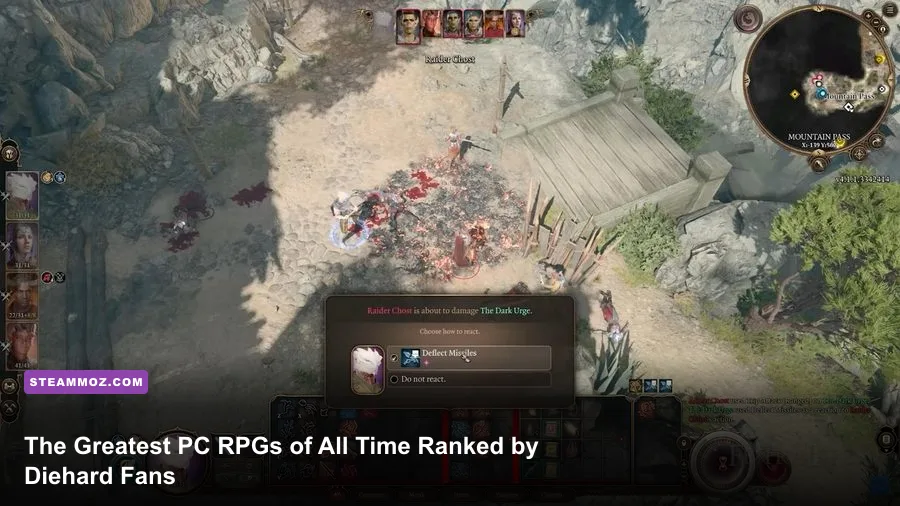
If you ask a thousand PC gamers to name the single greatest role-playing game ever coded, you won't get a consensus—you'll trigger a civil war. Yet across tens of thousands of community polls, Steam user reviews, and forum debates, a clear pantheon emerges: Baldur's Gate 3 stands as the consensus modern king of reactivity and systems freedom, narrowly sharing the top podium with the unmatched psychological depth of Disco Elysium, the world-class narrative pacing of The Witcher 3: Wild Hunt, and the pure branching brilliance of Fallout: New Vegas. The PC platform has always been the true frontier of the RPG genre, offering the mouse-and-keyboard precision, massive memory headroom, and unfettered modding support necessary for complex systems to breathe.
The Definitive PC RPG Tier List: At a Glance
Ranking the best PC RPGs of all time requires looking past surface-level nostalgia and dissecting the mechanics that actually move the needle: player agency, mechanical depth, quest design, build variety, and world responsiveness. Games that hold your hand down linear corridors with minimal stat impact don't cut it here. The titles below earned their legendary status because their underlying code respects your intellect and adapts to your choices, whether you're min-maxing combat turns or talking your way out of a hostile shootout.
Before breaking down the technical nuances and game-defining moments of each entry, take a look at how the undisputed masters of the genre stack up against one another in our exhaustive community-calibrated rankings:
| Game Title | Tier Rating | Defining Mechanic | Combat Architecture | Avg. Completion Time |
|---|---|---|---|---|
| Baldur's Gate 3 | S-Tier (God Tier) | Immersive sim physics & dice-roll reactivity | Turn-Based (D&D 5e modified) | 105 Hours |
| Disco Elysium: The Final Cut | S-Tier (God Tier) | Thought Cabinet & psychological skill checks | Pure Narrative / Non-combat | 25 Hours |
| The Witcher 3: Wild Hunt | S-Tier (God Tier) | Branching quest ethics & prep-heavy alchemy | Real-Time Action (Stamina/Dodge) | 110 Hours |
| Fallout: New Vegas | S-Tier (God Tier) | Multi-faction reputation & dialogue branching | Real-Time / V.A.T.S. Hybrid | 65 Hours |
| Divinity: Original Sin 2 | A-Tier (Masterclass) | Elemental surface manipulation & AP economy | Turn-Based (Armor split system) | 90 Hours |
| The Elder Scrolls V: Skyrim | A-Tier (Masterclass) | Unrivaled sandbox freedom & mod architecture | Real-Time First/Third-Person | 115 Hours |
| Mass Effect 2 | A-Tier (Masterclass) | Suicide Mission squad calculus & companion loyalty | Cover-Based Third-Person Shooter | 35 Hours |
| Dark Souls: Remastered | A-Tier (Masterclass) | Interconnected level geometry & stamina management | Precision Action-RPG | 45 Hours |
| Dragon Age: Origins | B-Tier (Cult Great) | Tactical companion AI scripting & origin prologues | Real-Time with Pause (RTwP) | 60 Hours |
| Deus Ex (2000) | B-Tier (Cult Great) | Multi-path level routing & emergent objective solutions | Immersive Sim / FPS-RPG | 30 Hours |
🎮 1bitHeart
Looking to experience this game? Grab your digital key directly on our store for $2.99.
View on Steammoz Store →The God-Tier Heavyweights: Why These 4 Titles Sit at the Absolute Top

Achieving S-Tier status isn't just about scoring 90+ on review aggregators; it demands creating an ecosystem where the player's brain dictates the story rather than scripted rails. These four games altered the course of PC gaming history through sheer technical ambition and uncompromising mechanical confidence.
Baldur's Gate 3: Redefining Agency and D&D Combat
Larian Studios didn't just digitize Dungeons & Dragons 5th Edition—they built a sprawling simulation where every candle, crate, and cliff face is a legitimate tactical weapon. Want to eliminate an Act 1 goblin boss without rolling initiative? You can stack explosive smokepowder barrels across the rafters, coat the stone floor in grease, push their lieutenant down an abyss using a bonus action shove, or simply deceive them into wandering straight into a spider pit. The sheer verticality and environmental logic reward out-of-the-box tactical thinking better than any RPG since original pen-and-paper sessions.
From a character-building perspective, the multiclass synergies are staggering. Pairing an Oathbreaker Paladin with a Pact of the Blade Warlock yields triple-attack potential on standard difficulty rulesets, while combining Tavern Brawler with a Berserker Barbarian lets you fling heavy tridents—or enemy goblins themselves—across entire arenas for absurd single-target bludgeoning damage. If you're tackling Honor Mode, every single dice roll carries permanent weight, demanding meticulous preparation with elixirs like Bloodlust and Cloud Giant Strength to survive legendary boss reactions. For players who love tracking progress across multiple platforms, exploring Baldur's Gate 3 on Steam reveals why its user review counts sit among the highest in PC history.
Disco Elysium: The Narrative Masterpiece That Ditched Combat Completely
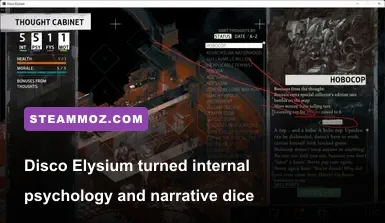
Most RPGs define your character by how effectively they swing a broadsword or fire a railgun. Disco Elysium: The Final Cut threw out physical combat entirely, replacing weapons with 24 distinct psychological voices bickering inside an amnesiac detective's ruined skull. Your primary stats—Intellect, Psyche, Physique, and Motorics—aren't passive damage modifiers; they are active personalities that interrupt your thoughts, give you horrible advice, or detect subtle micro-expressions on suspects across the decaying coastal city of Revachol.
The game's signature engine mechanic is the Thought Cabinet. By engaging with NPCs, you unlock existential concepts—like 'The Col Do Ma Ma Daqua' or 'Jamais Vu'—which you internalize inside your brain slots over real-time hours. Internalizing these thoughts temporarily penalizes certain stats while rewarding you with permanent game-altering perks, alternative dialogue paths, or fresh ways to gain experience points. Failing a dice roll in Revachol is rarely a fail-state; more often than not, botching a Red Check produces the funniest, most heartbreaking narrative developments in modern gaming fiction.
The Witcher 3: Wild Hunt: The Benchmark for Moral Ambiguity
Where most open-world titles treat side content as glorified grocery lists, CD Projekt Red's official Witcher portal proved that auxiliary contracts could rival the main plot. The Bloody Baron storyline in Velen remains the definitive case study in modern narrative design: a gut-wrenching tale of domestic abuse, alcoholism, and ancient forest spirits where there is zero unequivocally "good" choice. You're constantly picking the lesser evil, and the devastating fallout frequently doesn't reveal itself until 15 hours later when you stumble back through a ruined village.
Combat hits its stride on Death March difficulty, where hacking and slashing gets you killed in two hits by drowners. You're forced to lean hard into witcher preparation: brewing Swallow and White Raffard's potions, applying Necrophage Oil to your silver blade, and matching signs like Quen for survivability and Yrden for slowing ethereal wraiths. With the Next-Gen update overhaul, alchemy builds centered around the Euphoria mutation allow players to ingest multiple decoctions simultaneously—like Water Hag and Ekimmara—boosting sword damage and Sign Intensity by over 150% as toxicity thresholds max out. Much like hunting down Everspace 2 secret locations and hidden rewards, scouring the sun-drenched rolling hills of Toussaint for Grandmaster Witcher gear schematics provides some of the most satisfying exploration loops on PC.
Fallout: New Vegas: Obsidian's Masterclass in Choice and Consequence
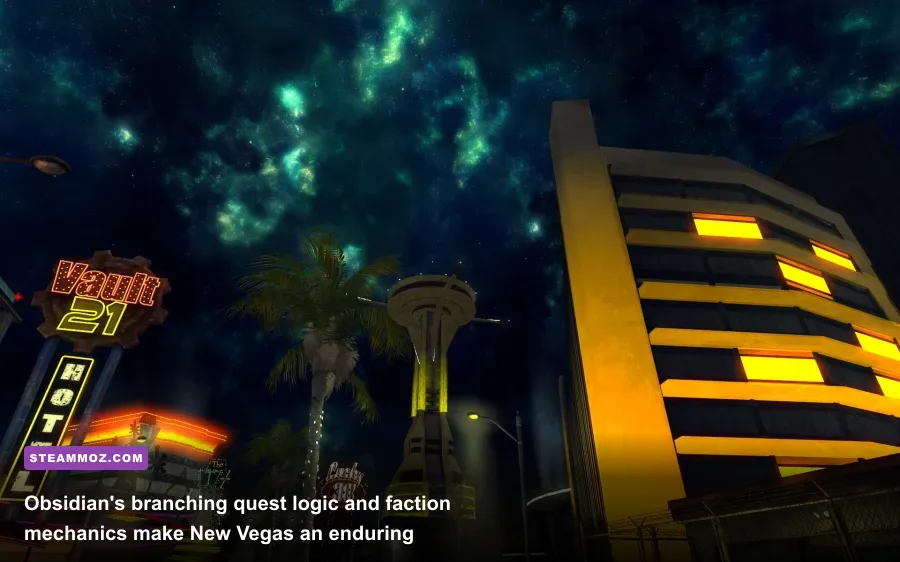
Constructed by Obsidian Entertainment in just 18 months on Bethesda's clunky Gamebryo engine, Fallout: New Vegas remains the high-water mark for branching faction warfare. The battle for the Mojave Desert isn't a binary good-versus-evil dichotomy; it's an ideological war between the bureaucratic, overstretched New California Republic, the brutal totalitarian slave state of Caesar's Legion, the calculating corporate autocracy of Mr. House, and an anarchic Wild Card independence route governed by the player and Yes Man.
What sets New Vegas apart mechanically is its ruthless dedication to skill-checks and the Damage Threshold (DT) system. Rather than bullet-sponge scaling, enemy armor flatly subtracts damage from your weapons unless your rounds penetrate the target's DT rating. This forces tactical ammunition swapping: AP rounds for heavily armored Brotherhood of Steel paladins, and Hollow Point rounds to shred unarmored Cazadores before their neurotoxin ends your run. Every quest line features half a dozen distinct resolutions based on Barter, Science, Medicine, or Explosives checks. Just as crafting the best beginner build in Far Cry 6 gives you early momentum, dialling in your early-game perks in the Mojave—like picking up Jury Rigging at Repair 90 to fix high-tier anti-materiel rifles using cheap varmint rifles—completely transforms your gameplay efficiency.
The Mechanical Benchmarks: Deep Systems, Modding, and Tactical Combat
Below the god-tier sits a tier of RPGs that might lack one specific narrative or technical element compared to the absolute leaders, but make up for it with unrivaled combat mechanics or community-driven longevity. These games are PC staples because they leverage the hardware's open ecosystem to deliver experiences consoles could never fully replicate.
Divinity: Original Sin 2: Environmental Physics and Elemental Chaos
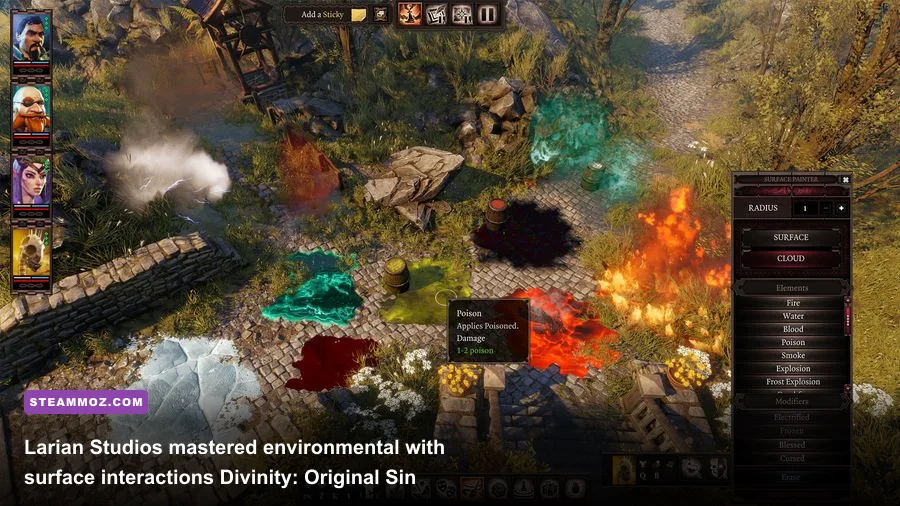
Before Larian made Baldur's Gate 3, they perfected turn-based systemic chaos with Divinity: Original Sin 2. The core combat engine revolves around physical vs. magic armor bars and volatile surface interactions. Cast rain on an enemy squad, hit the puddle with an electric wand, and you electrify the entire surface, permanently stun-locking their frontliners. Coat the ground in poison, cast a fireball, and the resulting chemical explosion obliterates physical armor while igniting the arena into cursed Necrofire.
The game's Action Point (AP) economy demands strict tactical discipline. Running a two-character 'Lone Wolf' setup boosts your starting AP to 6 and grants a massive 70% boost to base vitality, turning encounters on Tactician difficulty into deadly chess matches. The mobility mechanics—like Tactical Retreat and Cloak and Dagger—allow rogue builds to cross entire battlefields in a single turn, teleporting priority enemy casters right into the swinging path of your two-handed warfare warrior.
The Elder Scrolls V: Skyrim: The Infinite Modding Playground
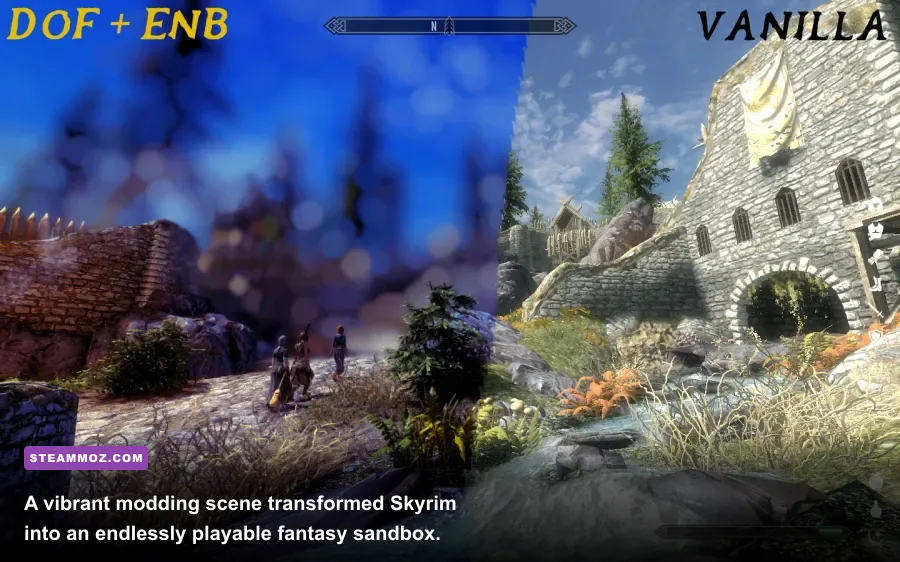
Judged purely by its vanilla 2011 mechanics, Skyrim is a flawed masterpiece: its melee combat lacks weight, radiant quests feel repetitive, and the stealth archer archetype is so wildly overpowered it practically pulls your hands toward the bowstrings. Yet, on PC, Skyrim isn't just a game; it's a living software platform. Thanks to the Nexus Mods repository and tools like the Skyrim Script Extender (SKSE64), players have spent over a decade transforming the game into whatever they desire.
Through community overhauls like Requiem or modern combat frameworks like MCO (Modern Combat Overhaul), Skyrim sheds its floaty combat for precision parries, directional stamina management, and Souls-like dodge mechanics. Graphic modlists powered by ENB presets, 8K texture packs, and parallax shaders push high-end RTX 4080 and 4090 GPUs to their absolute thermal limits. No other PC RPG in history offers this degree of granular personalization.
Mass Effect 2: High-Stakes Character Writing and Kinetic Cover Shooting
BioWare's middle chapter in the Shepard trilogy trimmed away the clunky inventory screens and planetary vehicle cruising of the original to deliver laser-focused character writing. Assembling a dirty dozen of mercenaries, assassins, and biotic prodigies to undertake an apparent one-way suicide mission against the Collectors remains one of gaming's greatest structural achievements.
Combat shifted into a tight, kinetic cover-shooter where power combos dictate crowd control. Tossing an enemy airborne with Pull, followed instantly by your squadmate's Warp, creates a devastating biotic detonation that clears entire clusters of heavily shielded troops on Insanity difficulty. But the real masterstroke is the finale: the Suicide Mission. If you didn't earn your crew's loyalty through difficult dialogue confrontations, or if you failed to purchase ship upgrades like the Thanix Heavy Cannon and Silaris Armor, beloved companions die permanently in real-time sequences without a second chance.
Hardcore Character Building: Systems Breakdown and Stat Scaling Compared
The hallmark of a legitimate PC RPG lies in its progression math. When you invest 60 hours into a campaign, leveling up should alter the way you navigate the digital world, unlocking fresh mechanical synergies while punishing thoughtless stat distribution. If you enjoy the rhythm of min-maxing, similar to how you level fast and farm currency in Kakarot, mastering the intricate resource flows of western PC RPGs provides immense satisfaction.
To highlight the diverse mechanics driving these masterclasses, the table below dissects their primary progression engines, end-game build goals, and the classic beginner traps that ruin first-time playthroughs:
| Game | Core Progression Metric | Optimal End-Game Build Archetype | Common Beginner Stat Trap |
|---|---|---|---|
| Baldur's Gate 3 | D&D 5e Feats & Spell Slots | Paladin 7 / Warlock 5 (Smite Stacking) or Throw Barbarian | Spreading ability points evenly into odd numbers (no bonus modifier) |
| The Witcher 3 | Mutagen Synergy & Toxicity Thresholds | Euphoria Alchemy / Fast Attack Whirlwind hybrid | Investing heavily in Signs for late-game Death March (poor damage scaling) |
| Fallout: New Vegas | S.P.E.C.I.A.L. & Skill Thresholds (0-100) | Crit-focused Gunslinger with Anti-Materiel / Ratslayer | Dumping points into Charisma (speech checks rely on raw Speech skill) |
| Divinity: Original Sin 2 | Combat Abilities & Attribute Multipliers | Pure Physical Necromancer or Aero/Hydro Stun-Mage | Splitting damage types across a single hybrid damage character |
| Skyrim | Skill Usage Leveling & Perk Trees | Crafting Trinity (Alchemy / Enchanting / Smithing Loop) | Leveling non-combat skills too early, triggering aggressive enemy scaling |
Notice how titles like Fallout: New Vegas actively reward counter-intuitive character setups. Putting your Charisma stat to 1 seems suicidal in a dialogue-heavy RPG, yet veteran wastelanders know that dialogue checks in the Mojave read your flat Speech and Barter numerical ratings directly—making Charisma points virtually wasted compared to boosting Intelligence for larger skill-point pools per level. Meanwhile, in Divinity: Original Sin 2, trying to make an all-around warrior who casts fire spells dilutes your attribute scaling into oblivion, leaving you incapable of breaking either the physical or magical armor bars of basic enemy fodder.
For purists who crave uncompromising European RPG design, crunchy action RPGs like Piranha Bytes' Elex offer similar unforgiving progression curves, where our Elex crash and performance fix guide solves early-game stability hurdles so you can survive the brutal early hours. Whether you're tracking obscure quest paths or chasing hidden secrets—akin to discovering Eternal Destiny hidden rewards and secret locations—these deep systems reward patience and tactical forethought above pure twitch reflexes.
Hardware Demands and How to Play These Classics on Modern PC Rigs
Running legendary PC RPGs on a modern Windows 11 machine with modern high-refresh monitors isn't always plug-and-play. Older 32-bit game engines have hard-coded memory constraints that cause immediate crashes, while newer titles like Baldur's Gate 3 chew through CPU threads during busy urban chapters.
Taming Legacy Engine Limitations: New Vegas and Skyrim
If you launch an unmodded copy of Fallout: New Vegas on modern multi-core hardware, expect crashes to desktop every 45 minutes. The engine was originally designed for Windows 7 with a 2GB Virtual Address Space ceiling. To achieve rock-solid 144 FPS stability:
- Install the 4GB Patch: This simple executable flag allows the game process to utilize 4GB of system RAM, instantly curing 90% of memory-leak crashes when traversing between Mojave cells.
- Run New Vegas Tick Fix (NVTF): Windows 10 and 11 break the internal physics clock of older Gamebryo titles when running above 60 FPS. NVTF decouples physics calculations from your frame rate, allowing smooth 120Hz and 144Hz gameplay without physics objects vibrating into space.
- Utilize DXVK: Wrapping the game's native DirectX 9 calls into modern Vulkan API drivers eliminates driver-level pipeline hitches on modern AMD and Nvidia GPUs, delivering flat frame-time lines.
Optimizing Baldur's Gate 3 and The Witcher 3 Next-Gen
Modern masterpieces bring different hardware bottlenecks. In Baldur's Gate 3, Act 1 and Act 2 run effortlessly on budget hardware, but entering the densely populated Lower City of Act 3 hammers your CPU. Every single background civilian runs pathfinding and sight-cone calculations in real time. To maintain smooth 60+ FPS performance without sacrificing visual splendor:
- Switch between DirectX 11 and Vulkan: If your system runs an older CPU, DirectX 11 offers more consistent frame pacing; however, if you are running modern Intel 13th/14th Gen or AMD Ryzen 7000/9000 processors, the Vulkan launcher toggle dramatically reduces micro-stuttering in dense crowds.
- Tune Crowd Density: Lowering this single setting from High to Medium in Act 3 reduces CPU draw calls by up to 22% while leaving the city streets feeling lively and occupied.
- Leverage DLSS / FSR Quality Modes: In The Witcher 3: Wild Hunt Next-Gen, ray-traced global illumination is breathtaking, but brutally demanding. Running DLSS Quality at 1440p or 4K with Frame Generation enabled transforms an unplayable 38 FPS crawl into a butter-smooth 95 FPS showcase.
Final Verdict: Which Legendary PC RPG Should You Install First?
Your ideal starting point depends on what you value most when sitting down at your desk. If your priority is unfettered tactical creativity, jaw-dropping cinematic presentation, and an adventure where every combat encounter plays like an interactive tabletop session, Baldur's Gate 3 is the undisputed champion that justifies every penny. It represents the absolute summit of modern role-playing design.
If you prefer an intoxicating literary journey that challenges your political convictions and personal morality without ever firing a single bullet, launch Disco Elysium. For an unforgettable, sprawling open-world journey steeped in rich folklore and mature storytelling, load up The Witcher 3: Wild Hunt. And if you demand deep mechanical buildcrafting where your dialogue skills and faction choices reshape an entire territory's destiny, fire up a modded copy of Fallout: New Vegas. Each of these games isn't just a phenomenal pastime—they are the definitive masterpieces that prove the PC is the ultimate canvas for role-playing art.