
The best Detroit: Become Human starting build for beginners is a spoiler-light, evidence-first playstyle: keep all three protagonists alive, explore every room before advancing, favor blue-blood clues and calm dialogue, and choose a peaceful Markus route on your first run. There are no weapons, skill trees, armor sets, or numerical character stats to optimize. Your real build is the set of habits you bring to the branching story.
That distinction matters. Detroit: Become Human looks like an action game in places, but its most important upgrades are information, relationships, and optional scene outcomes. Connor is your investigation specialist, Kara is your survival-and-protection route, and Markus is your public-opinion and leadership route. Treat those roles differently and the game becomes far more manageable.

Start with the right settings and mindset

Before launching a new story, choose Experienced difficulty if you’re comfortable with gamepad prompts, or Casual if you mainly want to experience the narrative. Experienced uses more demanding QTE inputs and gives you less room for mistakes. It’s the better first-playthrough setting for most players because it makes action scenes tense without turning every missed prompt into an instant disaster.
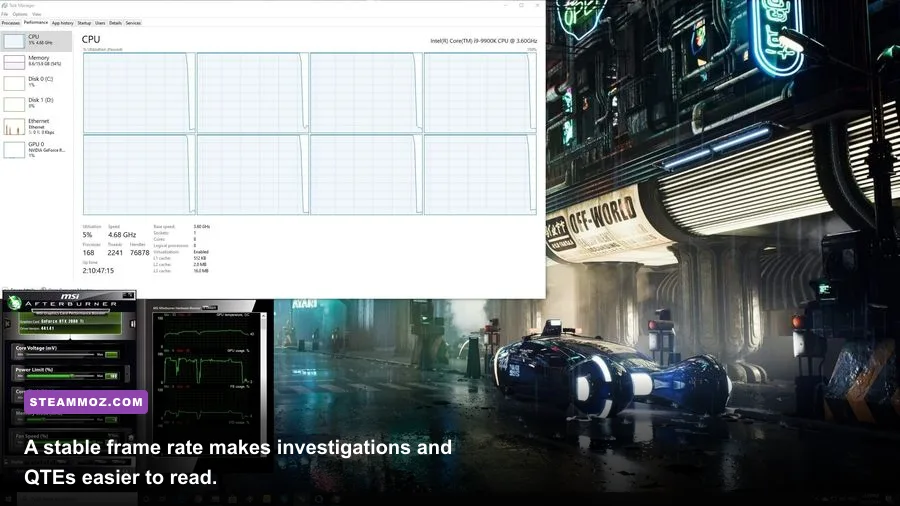
Use a controller if possible. The game was designed around analog movement, quick button prompts, and timed directional inputs. On PC, enable subtitles, keep dialogue audio high enough to distinguish overlapping conversations, and use a stable frame rate rather than chasing maximum image quality. Detroit’s cinematic camera can hide incoming prompts when performance stutters, especially during crowded chapters such as Capitol Park and Battle for Detroit.
| Choice | Beginner recommendation | Why it works |
|---|---|---|
| Difficulty | Experienced | Preserves meaningful QTE pressure without changing the story rules |
| Difficulty for accessibility | Casual | Best when missed prompts should not decide a character’s fate |
| Subtitles | On | Useful during noisy police, street, and household scenes |
| First-run goal | Keep everyone alive | Lets you learn the branching structure before chasing dramatic failures |
Don’t reload after every mistake. The game’s flowcharts are built around consequences, and repeatedly rewinding removes the tension that makes later chapters land. If you make a choice you dislike, write it down and continue. You can use chapter select after finishing the story, but replaying a chapter usually won’t preserve later changes unless you play forward from that point.
For a useful comparison with more traditional build planning, see Steamoz’s Knightica starting build guide. Detroit is the opposite kind of design: preparation is behavioral, not statistical.
🎮 Detroit: Become Human
Looking to experience this game? Grab your digital key directly on our store for $7.99.
View on Steammoz Store →Build Connor as a meticulous investigator

Connor’s strongest “stats” are the clues you collect and the information you unlock through reconstruction. In The Hostage, don’t rush toward the rooftop confrontation. Examine the victim, inspect the fish tank, find the broken window, question witnesses, and search for the deviant’s path. Every clue improves your understanding of the scene and opens more dialogue options.
His core loop is simple: scan, reconstruct, interrogate, then act. Hold the analysis button to highlight interactive objects. Rotate around bodies and crime scenes instead of stopping at the first glowing prompt. When the reconstruction sequence appears, test the timeline in your head. The game often gives you several pieces of evidence, but only one sequence explains how the incident unfolded.
Connor’s priority order
- Secure the scene. Look for immediate threats and interactable evidence before speaking to everyone.
- Collect physical clues. Blood, fingerprints, weapons, photographs, and damaged objects can unlock new reconstruction paths.
- Build the suspect profile. During investigations, choose questions that reveal motive rather than merely repeating known facts.
- Protect the mission only when it protects people. A high mission score is not automatically the best narrative result.
At the Eden Club, for example, Connor can investigate the androids involved in the murder while Hank’s attitude changes based on your conduct. Be professional, but don’t play him like a machine with no social awareness. Hank’s relationship is a major route modifier. Empathy, restraint, and attention to his comments can matter more than squeezing out one additional clue.
| Connor situation | Best beginner action | Common mistake | Payoff |
|---|---|---|---|
| The Hostage | Search the house and rooftop before advancing | Running straight to the deviant | More negotiation information and safer options |
| Partners | Inspect the crime scene completely | Ignoring Hank’s comments | Better Hank relationship and expanded dialogue |
| The Interrogation | Balance pressure with empathy | Maxing aggression immediately | More useful testimony and less unstable behavior |
| Public Enemy | Investigate the kitchen and surrounding rooms | Following the first obvious clue | Additional evidence and stronger deductions |
Connor’s software instability is not a normal level meter you can spend points on. It reflects his developing conflict between programmed orders and personal judgment. Don’t chase a specific percentage or assume a single dialogue line determines his ending. His route is shaped by repeated behavior: how you treat deviants, whether you value Hank, and whether you choose evidence over blind obedience.
Build Kara around survival, trust, and exploration
Kara’s route is the most forgiving when you slow down and inspect environments. Her central objective is protecting Alice, so the beginner build is straightforward: search for food, money, clothing, shelter, and escape routes before starting the next major interaction. Kara has fewer investigation mechanics than Connor, but her optional objects often reveal practical choices that become important minutes later.
In A New Home, explore the house instead of treating cleaning tasks as the whole chapter. Learn Todd’s mood, inspect Alice’s room, and pay attention to the locked areas. The key decision is not simply whether Kara obeys; it’s whether you understand the danger building around Alice. When the situation turns violent, hesitation can close routes permanently.
During Stormy Night, movement speed matters less than knowing where to go. Check the upstairs rooms, identify Alice’s location, and use the command prompts quickly once the confrontation begins. If Kara becomes a deviant, prioritize Alice’s safety over optional exploration. This is one of the clearest examples of Detroit’s hidden rule: an excellent completion percentage is worthless if your character cannot reach the next chapter.
How to handle the high-risk Kara chapters
Zlatko: Search the mansion and remember where the exits are. Helping the captive androids can change later events, but every extra room also increases the danger of being discovered. Freeing everyone is a generous choice, not always the safest one.
On the Run: Scout before crossing. The police search patterns and environmental options reward patience. Don’t assume the most direct path is safest.
Crossroads: Protecting Luther and Alice creates a more stable group, but it also increases the number of people who can be placed in danger later. Make decisions based on the family you want to build, not a theoretical perfect ending.
Battle for Detroit: Keep track of tickets, passports, bus routes, and who is traveling with Kara. Small inventory decisions from earlier chapters can become escape options. If you’re trying to keep everyone alive, don’t treat these objects as disposable flavor text.
Kara has no inventory screen where you can equip better gear. Her “equipment build” is really resource awareness. Pick up every legal-looking travel item, inspect shelters, and remember that Alice’s trust is more valuable than a short-term convenience.
Build Markus as a peaceful public-opinion leader

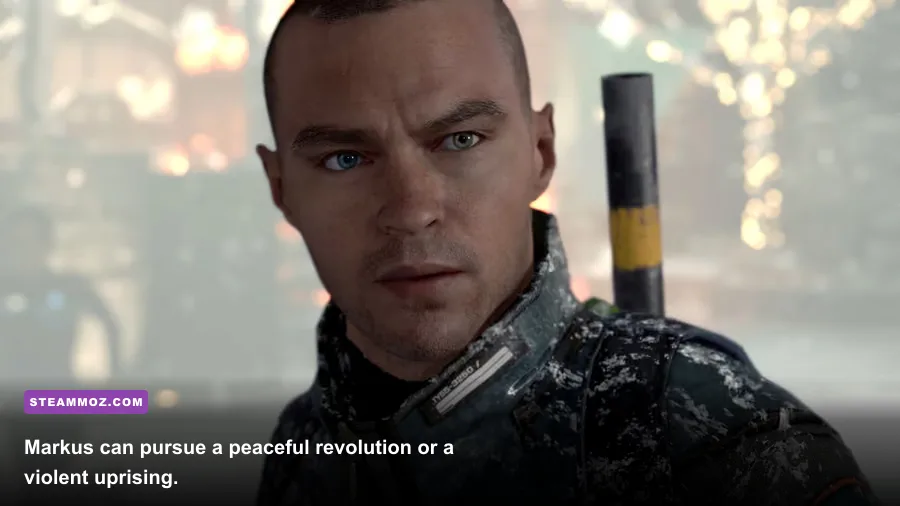
Markus controls the game’s largest strategic choice: whether the android uprising becomes peaceful or violent. For a beginner-friendly first run, choose demonstrations, avoid unnecessary destruction, and build public sympathy before the final chapters. This route gives you more opportunities to resolve confrontations through dialogue and keeps several survival paths open.
Markus’s route begins with physical exploration in The Painter and Spare Parts, then shifts into planning and public performance. At Jericho, inspect supplies and listen to North, Simon, and Josh. Their advice represents different priorities: confrontation, caution, and moral restraint. You don’t need to agree with every character, but understanding their position helps you predict relationship changes.
In Stratford Tower, move deliberately. The broadcast sequence combines stealth, combat prompts, and irreversible choices. If your goal is a peaceful build, avoid killing humans when alternatives appear and don’t confuse a dramatic action with an effective one. In Capitol Park, vandalism can energize the revolution but may damage public opinion. A restrained march usually gives beginners a clearer understanding of how the public meter responds.
| Markus route | Tier | Key choices | Best situation |
|---|---|---|---|
| Peaceful leader | S-Tier beginner | Demonstrate, spare enemies, prioritize public opinion | First playthrough and survival-focused endings |
| Assertive protester | A-Tier | Use some destruction while avoiding needless deaths | Players who want tension without full escalation |
| Revolutionary assault | B-Tier beginner | Attack heavily and accept major casualties | Second run or players intentionally seeking darker branches |
There is no universally correct Markus build. A violent route can be compelling, and a peaceful route can still fail if relationships collapse or you make a late mistake. The peaceful recommendation simply gives new players more room to learn the public-opinion system. Think of it as the game’s most readable tutorial path.
For another Steamoz guide focused on decision-heavy progression, check Laxius Force III tips that save your run. The genres differ, but the same rule applies: preserve options early, then commit once you understand the system.
Use the flowchart as your real progression screen
Detroit’s chapter flowchart is more useful than any conventional skill menu. It shows whether you found optional scenes, which characters survived, and where branches split. After each chapter, scan the chart for major unopened nodes, but don’t obsess over reaching 100 percent on the first attempt. Some hidden branches require a failure, a specific relationship, or a choice you cannot reasonably know in advance.
Relationships are the game’s closest equivalent to character attributes. Connor has Hank, Markus has Jericho allies and the public, and Kara has Alice and Luther. These relationships shift through repeated behavior rather than a single “correct” answer. A respectful Connor can still lose Hank after a long pattern of cold decisions. A peaceful Markus can still alienate allies if he ignores every warning.
| Progression target | What to do | What not to do |
|---|---|---|
| Keep protagonists alive | Explore before triggering major prompts | Assume every quick-time event is cosmetic |
| Improve relationships | Stay consistent across chapters | Reload after every awkward conversation |
| Find more branches | Replay completed chapters with one deliberate change | Expect chapter select to rewrite later chapters automatically |
| Understand endings | Track public opinion, evidence, and allies | Judge a choice only by its immediate result |
For your first replay, change one protagonist at a time. Try a colder Connor, a more independent Kara, or a militant Markus, then watch how those choices collide in the final act. This method teaches causality far better than randomly selecting opposite dialogue options and hoping the flowchart explains everything.
PC performance settings that protect your decisions
Detroit: Become Human is a demanding PC port, and stable performance matters because QTE prompts are timed. Start with the official Detroit: Become Human Steam page requirements, then use the Quantic Dream game page for current platform information. If your hardware struggles, lower resolution or volumetric effects before dropping texture quality.
| Setting | Recommended value | FPS impact | Visual note |
|---|---|---|---|
| Resolution | Native, or 1080p on weaker GPUs | Very high | Most direct performance lever |
| Texture quality | High if VRAM allows | Low to medium | Preserves faces, clothing, and environments |
| Volumetric effects | Medium | High | Improves busy scenes with limited cinematic loss |
| Shadow quality | Medium to high | Medium | Lower this before textures if frame pacing is poor |
| Anti-aliasing | High or the game default | Medium | Helps facial edges and thin environmental detail |
| Frame cap | Stable 60 FPS target | Stability gain | Better than an erratic uncapped frame rate |
Close browser tabs and overlays if you see hitching, especially on older CPUs. A consistent 30 FPS is playable, but 60 FPS makes cursor movement, camera turns, and prompt timing feel considerably cleaner. If the game crashes or stutters, the Steam community hub and Quantic Dream support are better starting points than blindly deleting save data.
For broader PC optimization ideas, Steamoz’s Back 4 Blood FPS settings guide covers the same performance-first approach, while the Rogue Escape PC stutter guide is useful if you’re troubleshooting unstable frame pacing.
Your first-playthrough build, chapter by chapter
Use this compact route as your practical checklist. It doesn’t force a single ending; it keeps the most options available while you learn Detroit’s systems.
- The Hostage: investigate thoroughly and learn Connor’s reconstruction controls.
- A New Home and Stormy Night: explore Kara’s spaces, then prioritize Alice when danger starts.
- The Painter and Partners: absorb Markus’s world and improve Connor’s relationship with Hank.
- Fugitives and On the Run: search for shelter and transportation instead of rushing through prompts.
- Stratford Tower and Capitol Park: favor controlled action and peaceful public messaging.
- Midgame investigations: keep collecting evidence, but don’t sacrifice a relationship for a perfect score.
- Crossroads: decide which allies matter most, then act consistently with that priority.
- Battle for Detroit: use every item, relationship, and public-opinion advantage you created earlier.
This is the best starting build because it teaches every major system without demanding encyclopedic knowledge. Connor gathers truth, Kara preserves a family, and Markus manages a movement. Explore first, commit second, and let the consequences stand. Once the credits roll, the flowchart will show you exactly where your next build can break the story open.