
Stellaris becomes dramatically easier once you understand five fundamentals: expand toward chokepoints, specialize planets, protect your economy before chasing fleet power, treat empire size as a real cost, and design your campaign around a clear win condition. The game isn't won by clicking every available upgrade; it's won by building an empire whose research, alloys, food, unity, diplomacy, and military all reinforce one another.
That sounds straightforward until your first campaign collapses because your science ships stopped surveying, your planets produced the wrong jobs, or a rival declared war while your monthly alloy income was negative. Stellaris hides a huge amount of strategy behind friendly-looking menus. These are the crucial things to know before you start playing Stellaris, whether you're launching the base game or jumping in with expansions.
Build an Empire That Can Survive Its Opening

The empire creator is not just a role-playing screen. Your origin, ethics, civics, species traits, and starting ship design determine how forgiving your first 30 years will be. For a first campaign, avoid stacking several complicated mechanics at once. A standard organic empire with the Prosperous Unification origin gives you a stable economic start, while United Nations of Earth is a useful preset because its familiar democratic setup teaches diplomacy without forcing an extreme gimmick.
For a reliable custom build, consider Fanatic Xenophile with Materialist, the Diplomatic Corps civic, and Prosperous Unification. Xenophile improves your diplomatic options and makes early contacts less hostile. Materialist supports a technology-focused economy and unlocks useful research-oriented policies. If you want a more aggressive tutorial, Militarist works, but it can teach the wrong lesson: winning one early war doesn't repair a weak alloy economy.
Species traits are long-term modifiers, not decorations. Intelligent improves research output, Rapid Breeders improves population growth, and Adaptive makes more planets productive without expensive habitability penalties. Negative traits such as Unruly can be manageable because the extra empire size from pops is a percentage problem rather than an immediate disaster, but don't pick drawbacks blindly. A trait that saves points at creation can slow every colony for decades.
| Choice | Beginner-Friendly Option | Why It Helps | What to Avoid First |
|---|---|---|---|
| Origin | Prosperous Unification | Strong, uncomplicated homeworld opening | Origins that demand specialized timing |
| Ethics | Materialist plus Xenophile | Research and diplomacy remain flexible | Extreme isolation or forced conquest |
| Civic | Diplomatic Corps | Easier early relations and federation play | Civics that require precise economy setups |
| Traits | Intelligent, Rapid Breeders | Better research and faster colonization payoff | Several severe negative traits together |
Choose Cadet difficulty for your first serious run, keep the default galaxy size, and leave advanced AI starts disabled. You can raise difficulty later. Stellaris has enough hidden pressure from exploration, anomalies, factions, and diplomacy without giving every neighboring empire a head start.
Your First Decades Are About Territory, Not Conquest
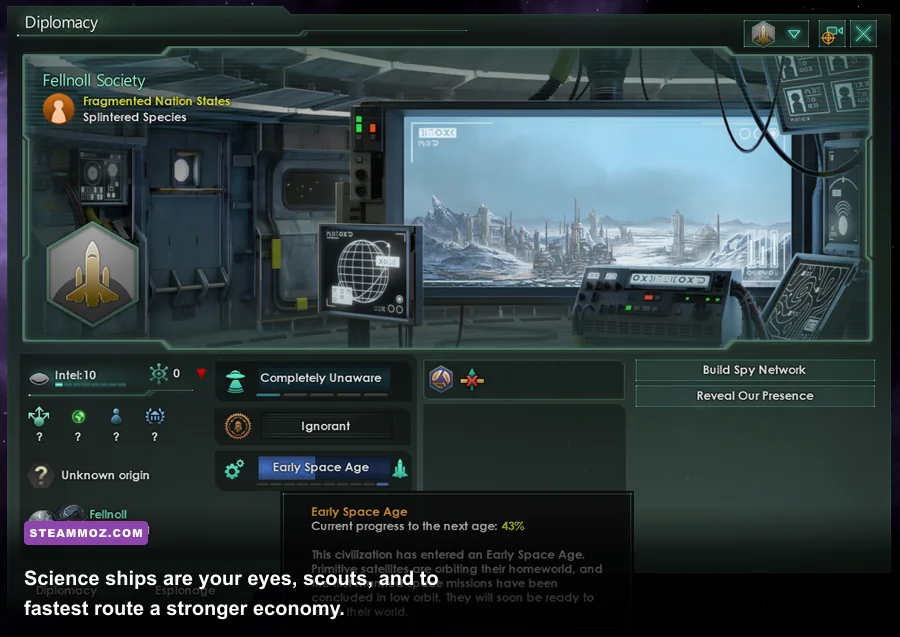
Pause immediately after the game begins. Queue a second science ship, assign an available scientist, and start surveying in two different directions. Your starting construction ship should build an outpost only after the star system has been surveyed. Outposts cost alloys and influence, so expanding randomly can leave you unable to claim a strategically important system later.
Look for chokepoints: systems connected to multiple routes that can control access to a large pocket of the galaxy. Claim those before filling every nearby resource system. A chokepoint with a starbase, defense platforms, and a fleet behind it is worth more than three isolated systems that an enemy can bypass. The Hyperlane Registrar starbase building can extend sensor range, while a Listening Post helps reveal movement when diplomatic tension rises.
Your first three science ships should have clear jobs. One surveys outward, one investigates anomalies and archaeological sites, and one follows the safest route toward likely chokepoints. Don't investigate every anomaly immediately. An anomaly that is several levels above your scientist can consume time, produce casualties, and delay the surveys that determine your expansion route. Early information is often more valuable than a small mineral deposit.
Colonize as soon as you can support a colony ship without wrecking your alloy stockpile. Habitability matters because low habitability increases upkeep and reduces job output. A 60 percent habitability world can be useful if it secures territory, but it should not become your main industrial planet. Your homeworld remains the economic engine while new colonies specialize.
Keep an eye on influence. Rival declarations, diplomatic agreements, factions, and claims all compete for the same resource. If you spend influence on every available claim, your outpost network will stall. A strong opening usually prioritizes two or three chokepoints, then expands inward to collect resources after your borders are secure.
For more PC strategy troubleshooting, Steamoz's ELEX PC fixes guide is a useful reminder that strategy games still need a stable frame-time baseline when menus and galaxy maps get busy.
Planet Specialization Beats Random Buildings
The biggest beginner mistake in Stellaris is turning every planet into a miniature version of your capital. Planetary districts and buildings should answer a specific economic problem. A world with many generator districts should become an energy planet; a world with mining districts should produce minerals; a planet with city districts and building slots can support research or unity.
Jobs only matter when pops work them. Building a Research Lab does not instantly create technology; it creates researcher jobs that require pops and consume consumer goods. Likewise, an Alloy Foundry turns metallurgist jobs into alloys but increases consumer goods pressure through its industrial economy. If your new colony has only four pops, filling every slot creates unemployment, upkeep, or inefficient specialists.
Use the planet designation system deliberately. A Generator World improves energy production, a Mining World supports minerals, and a Forge World focuses industrial output toward alloys. Designations are often stronger than a small collection of mixed buildings because they improve the jobs you actually want. Check the colony's available districts before committing; a planet with two mining districts is a poor long-term mining world no matter how attractive the designation sounds.
Early colonies should usually build a Holo-Theatres or an Alloy Foundry only when their population can work the jobs. Amenities affect stability, and stability affects output. A planet with 35 stability is not merely unhappy; it's wasting the economic potential you invested in developing it. Keep amenities positive, avoid unnecessary crime, and use the planetary automation tools only after you understand what your designations and job priorities are doing.
| Planet Type | Core Districts | Useful Buildings | Best Role |
|---|---|---|---|
| Generator World | Generator Districts | Energy Grid | Energy credits and market spending |
| Mining World | Mining Districts | Mineral Purification Plant | Minerals for districts and construction |
| Forge World | Industrial Districts | Alloy Foundry, Ministry of Production | Fleet, starbase, and megastructure alloys |
| Tech World | City Districts | Research Labs, Research Institute | Technology at consumer-goods cost |
| Unity World | City Districts | Autochthon Monument, temples or equivalents | Traditions, edicts, and ascension progress |
When a planet is full, don't panic. Upgrade the capital building when eligible, add housing, or move unemployed pops to a world that needs workers. Resettlement costs energy credits, but one productive metallurgist is worth more than an unemployed clerk sitting on a crowded colony.
Research, Traditions, and Empire Size Change the Pace
Stellaris research is semi-random, so you need a direction rather than a rigid shopping list. Early technologies that improve research output, starbase capacity, building slots, pop growth, and alloy production are usually stronger than narrow military upgrades. The exact card draw varies, but the principle doesn't: choose technologies that increase the number of future choices available to you.
Physics, society, and engineering research progress separately. Engineering is especially important because it contains ship hulls, industrial technologies, mining improvements, and many economy upgrades. Don't let engineering fall behind while you chase a flashy weapon technology. A new cruiser is useless if you can't afford to build or maintain it.
Traditions should follow your strategic shape. Expansion is excellent for a wide opening because it reduces the cost of new colonies and helps you claim territory. Discovery supports a science-heavy start and makes exploration more efficient. Supremacy is the obvious military tree, but opening it too early can be wasteful if your economy can't sustain the fleet capacity and alloy demand. Finishing a tradition tree grants an ascension perk, so a partially completed tree can delay a more valuable long-term choice.
Empire size comes from systems, colonies, districts, pops, and certain other holdings. Going over the base limit doesn't instantly kill your empire, but it raises the cost of technologies, traditions, campaigns, and edicts. The right response isn't always to stop expanding. A large empire can outproduce a compact one if its planets are specialized and its economy scales faster than those penalties. The wrong response is expanding into empty space while leaving colonies underdeveloped.
Use leaders and council positions to amplify your plan. A scientist with expertise in a research field can shorten crucial technology paths, while governors and commanders become more valuable as your empire grows. Leaders have levels and can die, so don't build an entire strategy around a single irreplaceable candidate unless you're prepared for the setback.
Fleet Power Is an Economy You Must Budget
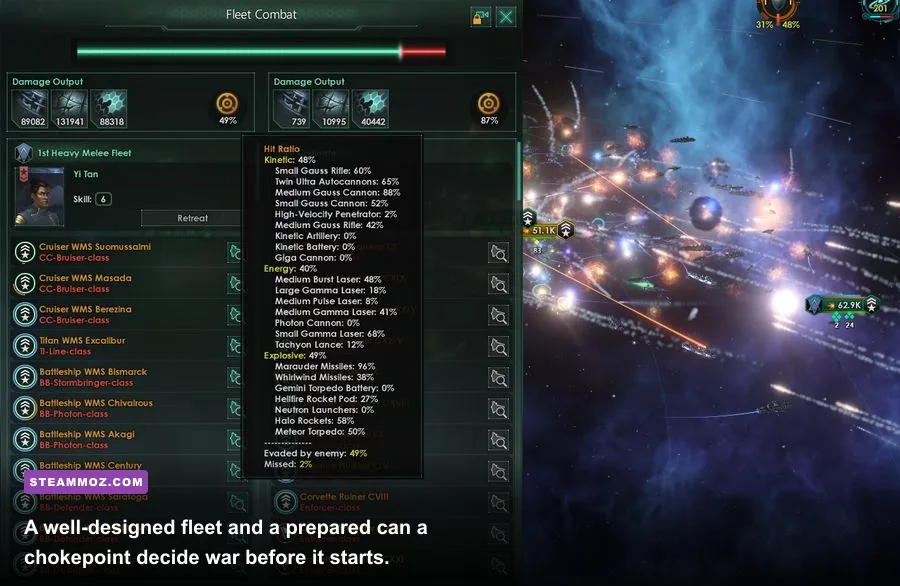
Never judge military readiness by fleet power alone. Check naval capacity, monthly alloy income, ship upkeep, starbase defenses, and the quality of your admiral. A fleet sitting above naval capacity can drain energy credits and reduce your ability to replace losses. Before starting a war, stockpile alloys, confirm that your shipyards can reinforce the fleet, and reserve enough energy credits for emergency market purchases.
Corvettes are fast and cheap, making them excellent for early patrols and raids, but they are not automatically the best answer forever. Destroyers can mount point-defense weapons and add durability, while cruisers offer more weapon slots and stronger mid-game staying power. Ship design matters because the AI's default designs are not always efficient against the enemy you are facing.
Use the Fleet Manager to maintain a target composition instead of manually rebuilding every damaged fleet. Keep your ships near a starbase with a crew quarters building when possible; the upkeep reduction matters over a long campaign. A starbase's shipyard modules increase construction capacity, while anchorages increase naval capacity. Don't fill every starbase with shipyards and then wonder why your fleet cap is tiny.
War exhaustion is not a score you can ignore. It rises through losses, occupied systems, and battles, and reaching 100 percent doesn't automatically mean surrender, but it unlocks a forced status quo after the relevant timer. Set a realistic war goal. If you only need a border system, don't spend ten years trying to occupy an enemy capital behind three fortified chokepoints.
| Military Element | Early Priority | Common Mistake | Practical Fix |
|---|---|---|---|
| Corvettes | Fast response and early defense | Using them unchanged into late game | Refit designs as counters appear |
| Starbases | Secure chokepoints | Building upgrades everywhere | Concentrate defenses at key routes |
| Shipyards | Reinforcement speed | Ignoring naval capacity | Add anchorages to rear systems |
| Admirals | Fleet bonuses and combat levels | Splitting fleets into weak groups | Use one strong fleet near the threat |
For a useful contrast, check Steamoz's Everspace weapon guide. Stellaris is slower and more systemic, but the same rule applies: your weapon choice only matters when it fits the encounter and the resources behind it.
Diplomacy and Crisis Planning Start Before the Crisis
First contact is a strategic tool, not background flavor. Assign an envoy to improve relations with a neighbor you want as a friend, or use first-contact operations to gather information before committing to a rivalry. A non-aggression pact can buy time, but it also consumes influence. Treat every diplomatic agreement as part of your economy.
Federations are powerful because they turn diplomatic trust into shared military and economic strength, but joining one too early can drag you into wars you can't afford. Watch the federation's cohesion and laws. A federation partner with a reckless war policy can become your most expensive neighbor.
Keep an eye on factions inside your own empire. Factions produce unity and approval, and their demands reveal whether your policies match the population you created. Suppressing every faction is rarely worth the influence cost. Sometimes changing a policy or granting citizenship creates more stability and unity than coercion ever could.
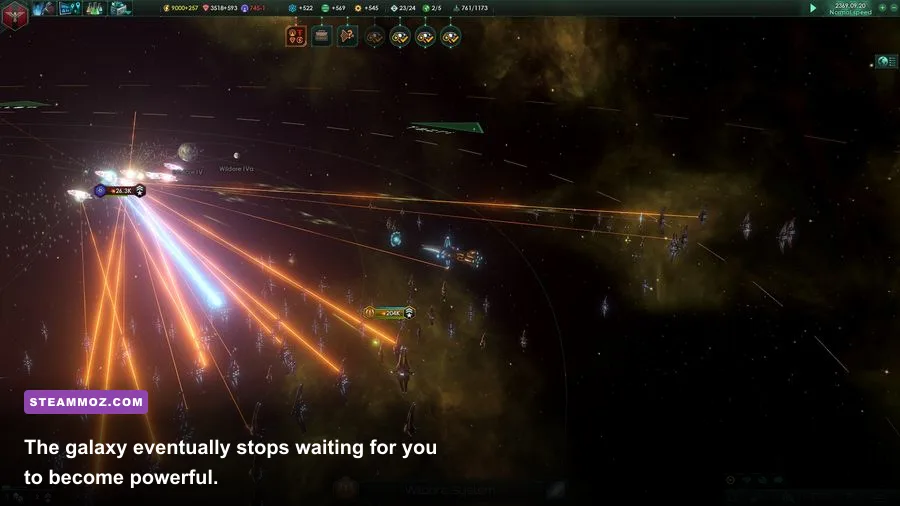
The endgame crisis is why you should not spend the entire campaign hovering just above bankruptcy. Maintain a reserve of alloys, upgrade key starbases, research repeatable technologies, and keep fleets near likely invasion routes. The Contingency, Prethoryn Scourge, and Unbidden demand different responses, but all punish an empire that has no reinforcement pipeline.
Set your victory plan early. Conquest, federation leadership, technology, population, and score victories reward different investments. You don't need to lock yourself into one path on day one, but you do need to recognize what your empire is good at. A xenophile trade empire should not suddenly try to become a galaxy-spanning exterminator in 2350 without rebuilding its economy, ethics, and fleet structure.
Before launching your next campaign, read the official Stellaris Steam page, browse the Stellaris Wiki, and check Paradox's official Stellaris forums for current patch changes. Expansion mechanics and balance can shift, but the core lesson stays intact: explore with purpose, build planets around jobs, protect your alloy economy, and never assume a quiet border means a safe one.
Stellaris rewards patience, but it doesn't reward passivity. Every survey route, building slot, tradition, diplomatic pact, and starbase is a vote for the kind of empire you'll become. Make those choices deliberately, and the galaxy stops feeling like an opaque spreadsheet. It starts feeling like yours.
If your wider PC library is also giving you performance trouble, Steamoz's guides to crash and low-FPS fixes and optimized graphics settings can help keep the rest of your backlog running smoothly.