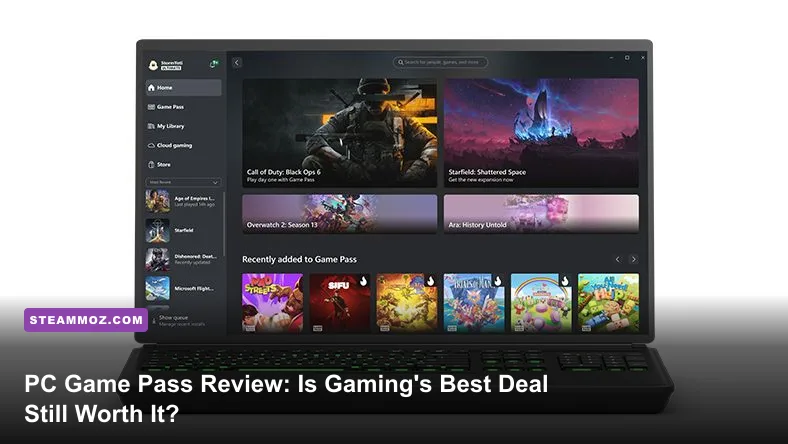
If you purchase and complete just two full-priced $70 releases a year, Microsoft PC Game Pass easily pays for itself before you even touch its back catalogue. At $11.99 per month, an annual investment sits right at $143.88, which breaks even the moment you play a couple of day-one blockbusters like Doom: The Dark Ages, Avowed, or the latest Call of Duty entry. However, if your gaming habits lean toward endless live-service grinds like Counter-Strike 2 or you refuse to play games without comprehensive Steam Workshop integration, paying an ongoing monthly toll amounts to pure financial waste. Navigating whether to subscribe comes down to software ownership habits, catalogue turnover rates, and the technical quirks of the Windows Xbox client.
The Real Cost: Tiers, Conversions, and Hidden Value

Subscription pricing across the industry has crept up steadily, and Microsoft's PC offering hasn't been immune. At $11.99 per month for the dedicated standalone PC tier, Microsoft avoided pushing PC players into the steeper $19.99 monthly cost demanded by Game Pass Ultimate. This price separation is critical for desktop players: unless you actively stream games to a handheld or own an Xbox Series X in the living room, Ultimate is largely a waste of eight extra dollars every single billing cycle. The dedicated PC tier delivers the exact same day-one first-party library, the full EA Play basic membership, and member discounts on digital purchases without charging you for cloud streaming servers you might never touch.
Veteran subscribers will remember the days when you could stack three years of cheap Xbox Live Gold codes and convert them directly to Game Pass for a solitary one-dollar transaction. Microsoft officially closed that loophole, nerfing conversion ratios down to a 3:2 rate using Xbox Game Pass Core codes. While discounted retail keys from verified sellers still shave a few dollars off the annual cost, the days of securing three full years of unlimited PC gaming for $120 are firmly behind us. You have to assess the service based on its actual retail sticker price of roughly $144 a year.
To understand the genuine monetary spread between subscription and outright ownership, take a look at the feature and cost balance across the primary ways to access the ecosystem:
| Subscription Tier / Model | Standard Price | Day-One First-Party | EA Play Included | Cloud Gaming Access | Best Suited For |
|---|---|---|---|---|---|
| PC Game Pass | $11.99 / mo | Yes (Full Access) | Yes (Standard Vault) | No | Dedicated desktop and laptop PC players |
| Game Pass Ultimate | $19.99 / mo | Yes (Full Access) | Yes (Console + PC) | Yes (1080p/60fps streams) | Cross-platform gamers and handheld cloud users |
| Game Pass Core | $9.99 / mo | No (Curated ~25 games) | No | No | Console-only online multiplayer legacy users |
| A La Carte Ownership (Steam) | $69.99 per title | N/A (Full Purchase) | No | No (Local hardware) | Long-term collectors, modders, single-game loyalists |
The financial ledger shows that skipping two full retail box purchases via the official Xbox Game Pass portal completely covers twelve months of service. Everything else you install during those 365 days—from sixty-hour RPG adventures to short bite-sized indie experiences—is essentially played for zero marginal cost.
Day-One First-Party Hits vs. The $70 Box Price

The real engine driving the service's value proposition is Microsoft's massive first-party studio collective. Following the historic integrations of ZeniMax Media and Activision Blizzard, the pipeline of major tentpole games landing on day one has solidified. When you can wake up on launch morning, bypass a $70 checkout screen, and immediately download the newest releases from Bethesda, Obsidian, id Software, and Treyarch, traditional game purchasing feels fundamentally obsolete.
Take massive campaigns like Call of Duty: Black Ops 6, Indiana Jones and the Great Circle, and Obsidian's high-fantasy RPG Avowed. Under the traditional storefront model on platforms like the Steam storefront, grabbing those three titles upon release demands a punishing $210 investment plus local sales tax. With a PC Game Pass membership active, all three drop straight into your storage drive on minute one. For players who finish a campaign once, explore the side quests, and rarely revisit the world down the road, purchasing games outright at full price is a massive luxury tax.
The service also excels at delivering mid-budget, genre-bending standouts that players might hesitate to buy at retail. High-octane space combat titles like Everspace 2 show how subscription drops give mechanically deep games an immediate, thriving audience. Instead of spending weeks weighing review scores and waiting for holiday sales, you download the game, experiment with ship loadouts, and determine whether it clicks with your playstyle entirely risk-free.
Catalogue Quality: Curated Blockbusters and Hidden Gems
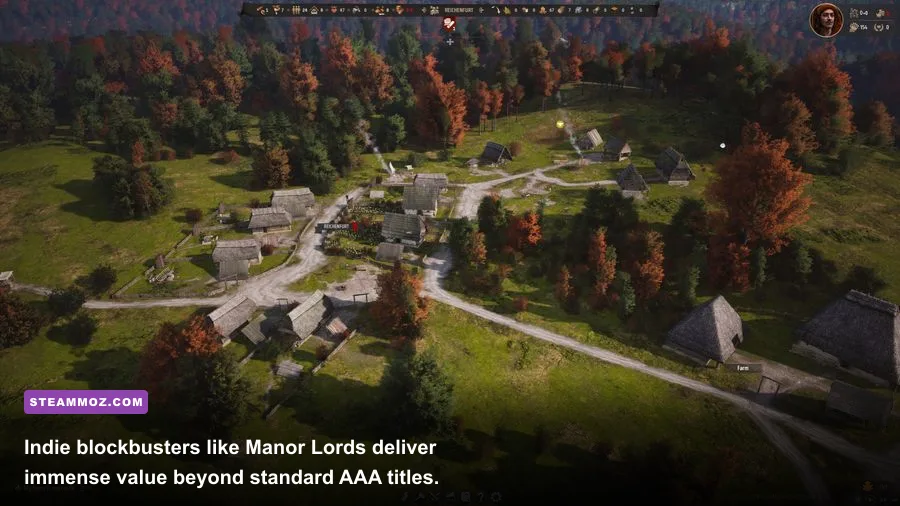
A massive library means nothing if it is stuffed with digital shovelware. Fortunately, the PC Game Pass catalogue maintains a surprisingly high signal-to-noise ratio. The catalog hovers around 400 to 450 titles at any given moment, and the curation balances massive open-world RPGs with genre-defining indie discoveries. The churn rate is predictable: first-party titles published under Xbox Game Studios, Bethesda, and Activision Blizzard stay permanently, while third-party acquisitions usually operate on 12-to-18-month contracts before rotating out.
If you're looking for deep progression, sprawling skill trees, and intensive grinds, games rotating through the catalogue provide hundreds of gameplay hours. Action-RPG enthusiasts who enjoy maximizing stats and combat efficiency—much like the deep character leveling found in our Dragon Ball Z: Kakarot leveling and Zeni guide—will find an enormous sandbox in titles like Monster Hunter Rise, Persona 3 Reload, and Diablo IV. Similarly, major open-world franchises frequently rotate through the service; whether you are dialing in settings for maximum frame rates in massive shooters like Far Cry 6 or looking back at retro classics using our Far Cry 3: Blood Dragon weapon tier list, third-party publishers view Game Pass as their premier secondary release platform.
| Game Title | Genre / Scope | Average Completion Time | Standalone Retail Price | Game Pass Status |
|---|---|---|---|---|
| Avowed | First-Person Fantasy RPG | 45–60 Hours | $69.99 | Permanent (Xbox Game Studios) |
| Diablo IV | Isometric Action RPG | 100+ Hours (Endgame) | $69.99 | Permanent (Activision Blizzard) |
| Manor Lords | Medieval City Builder | 30–50 Hours | $39.99 | Rotating Third-Party Partner |
| Lies of P | Soulslike Action | 35–45 Hours | $59.99 | Rotating Third-Party Partner |
| Sea of Thieves | Co-op Pirate Sandbox | Endless / Live Service | $39.99 | Permanent (Rare / Xbox) |
| Hollow Knight: Silksong | Metroidvania Platformer | 40–60 Hours | Day-One Launch Status | Included at Launch |
The indie lineup is where the subscription consistently punches above its weight. Groundbreaking releases like Manor Lords, Cocoon, and Sea of Stars were accessible on the service from day one. For every massive 80-hour RPG you chip away at over several months, there are half a dozen compact, polished narrative games you can blast through over a weekend. If you are someone who suffers from decision paralysis, dipping your toes into quirky experimental indies without spending $20 to $30 a pop completely changes how you engage with modern game design.
The Technical Elephant: Xbox PC App and Modding Support
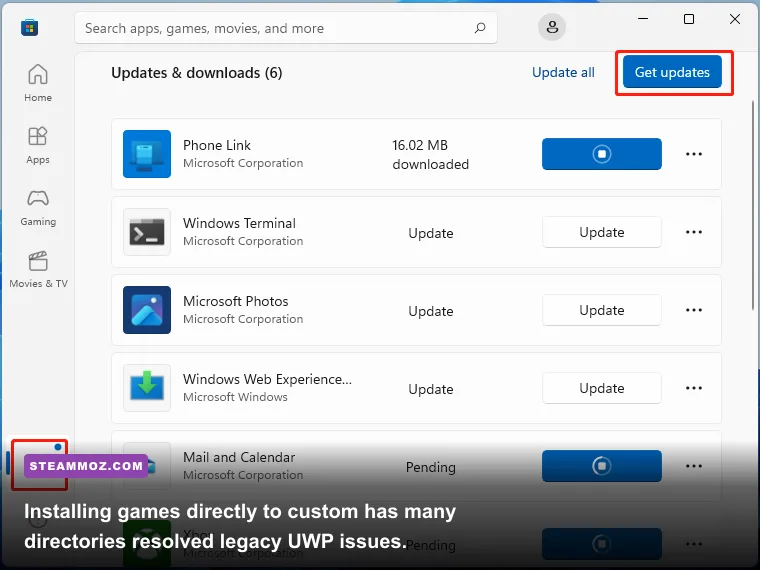
It is impossible to evaluate PC Game Pass without directly addressing the software housing it. The Windows Xbox application has endured a turbulent history. In earlier iterations, games downloaded via the Windows Store were locked behind impenetrable Universal Windows Platform (UWP) file directories. Users faced inaccessible folders, encrypted executable files, broken administrative permissions, and zero capability to run even basic community reshades or utility mods. Thankfully, Microsoft retooled the backend infrastructure to allow installations into unrestricted, user-selected folders.
You can now specify custom install directories on secondary NVMe drives, verify and repair corrupted game files without redownloading 100GB packages, and drop mods directly into local game directories. However, limitations remain when compared to the gold standard of PC gaming: Steam.
- Modding Limitations: While standard loose-file modifications (like textures, config files, and basic script injection) work on most titles, games that depend on deep memory hooks or custom executable loaders (such as the script extenders required for heavily modded Bethesda titles) frequently fail to communicate with Game Pass versions due to lingering executable certificate checks.
- Download Throttling: Unlike Steam's hyper-consistent CDN routing, the Xbox PC app can suffer from inexplicable speed bottlenecks during massive global launches. A 90GB install will occasionally throttle down to single-digit megabits despite running on a gigabit fiber connection, requiring network adapter resets or Delivery Optimization tweaks inside Windows settings.
- Cloud Sync Collisions: If you hop between a primary desktop and a secondary gaming laptop, the Xbox app occasionally struggles with cloud save discrepancies, presenting ambiguous "Which save file do you want to keep?" prompts that can overwrite progress if clicked carelessly.
When software instability strikes—which is a reality across any PC platform—you need reliable troubleshooting steps. If you encounter weird driver timeouts or unexpected desktop drops when firing up newly installed subscription titles, following established optimization routines like our PC crash fixes and FPS stabilization guide can prevent file verification loops and get your games running smoothly.
EA Play and Extra Perks: Added Value or Marketing Noise?
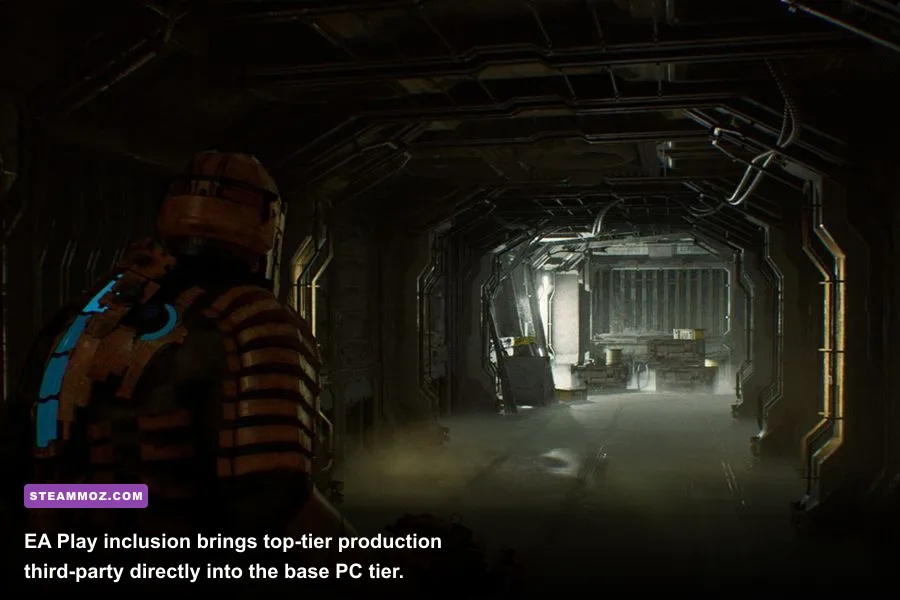
A massive, often underappreciated perk of the basic PC Game Pass tier is the native inclusion of standard EA Play membership. On consoles, this perk is reserved exclusively for the pricier Ultimate tier; on PC, it is baked right into the standard $11.99 monthly price tag. Connecting your EA account to your Xbox profile grants immediate access to the EA Play desktop client vault, unlocking a wealth of high-production blockbusters without an extra fee.
This integration brings heavy hitters like the brilliant Dead Space remake, Star Wars Jedi: Survivor, Battlefield 2042, and back catalogues of legacy classics like the entire Mass Effect Legendary Edition and Dragon Age series. You also get 10-hour early access trials for newly released EA sports franchises and publishing efforts, alongside a flat 10% discount on digital purchases through EA's storefront. For players who skipped major EA releases over the last few years, the EA Play vault alone holds well over $200 worth of premium games you can blast through at your own pace.
Beyond Electronic Arts, Microsoft packs in revolving perks for competitive live-service players. If you play Riot Games' competitive lineup, linking your Game Pass account instantly unlocks every single champion in League of Legends and all current and future agents in Valorant on day one. Unlocking that roster manually demands hundreds of gameplay hours or dozens of dollars in microtransactions. Add in regular perks like Discord Nitro trials, in-game cosmetics, and currency packs for titles like Overwatch 2, and the ancillary perks offer real, tangible value to competitive multiplayer fans.
The Bottom Line: Who Should Buy and Who Should Walk Away
PC Game Pass remains the absolute best transaction in modern gaming, provided your playing habits fit its structural model. If you are an active gamer who tackles multiple major releases each year, loves sampling indies, and doesn't obsess over building a permanent digital shelf inside a single launcher, the financial math is overwhelmingly positive. Subscribing for an entire calendar year costs substantially less than buying two $70 standard releases and an indie game on Steam.
However, the subscription model collapses into a recurring cash drain under specific circumstances. If you spend 90% of your free gaming time dedicating yourself to a single lifestyle game like Dota 2, Apex Legends, or an MMO with its own active monthly fee, you simply won't play enough rotating titles to justify the overhead. Furthermore, if you are an uncompromising power user who demands total control over your install directories for massive 500-mod overhauls, or you run a pure Linux build via SteamOS on a dedicated living room rig, native Steam purchases remain superior.
For everyone else sitting on a modern Windows machine looking for maximum entertainment per dollar spent, PC Game Pass is impossible to beat. Treat it flexibly: subscribe when the major release calendar gets dense, binge the hottest day-one campaigns and indie discoveries, pause your billing cycle when summer dry spells roll around, and let Microsoft's massive multi-billion-dollar studio pipeline fund your hobby on the cheap.