
Nine Sols has no co-op multiplayer, online mode, or playable second character, so there are no genuine co-op builds to make. Red Candle Games designed it as a single-player 2D action-platformer centered entirely on Yi, parries, talisman attacks, and Jade loadouts. If you searched for “Nine Sols best co-op multiplayer builds,” the practical answer is to use a solo build that covers defense, stagger damage, healing, and exploration without relying on another player.
This distinction matters because Nine Sols is not structured like Risk of Rain 2, Dead Cells, or No Rest for the Wicked. It has no party roles, revive system, aggro control, shared inventory, or multiplayer scaling. Yi cannot equip a support companion, and bosses are balanced around one player reading attack telegraphs. You can confirm the game’s single-player format on the official Nine Sols Steam page and the Red Candle Games website.
Why Nine Sols Cannot Support Co-Op Builds

Nine Sols uses a deliberately personal combat loop: Yi blocks an incoming strike, performs a Perfect Counter, applies a Talisman, and detonates that mark with a charged attack. Every part of that sequence is tied to one character’s positioning and timing. A second player would need a separate attack table, hitbox behavior, camera solution, and boss AI, none of which exists in the released game.
The game also has no character-selection screen or class system. Yi’s main weapon is the Trigram, while his customization comes from skill unlocks, Jades, and talisman-related upgrades. A “tank,” “healer,” or “DPS” division therefore does not apply. Even defensive upgrades improve Yi’s own ability to survive rather than protecting an ally.
Do not confuse optional NPC assistance with multiplayer. Characters such as Shuanshuan, Kuafu, Shennong, and Eigong contribute to the story, upgrades, or worldbuilding, but they are not controllable companions. Likewise, the game’s Story Mode accessibility options change the challenge for the solo player; they do not add a second character or online matchmaking. For comparison, our No Rest for the Wicked co-op builds guide covers a game that actually supports multiplayer systems.
Best Solo Build for Players Expecting Co-Op
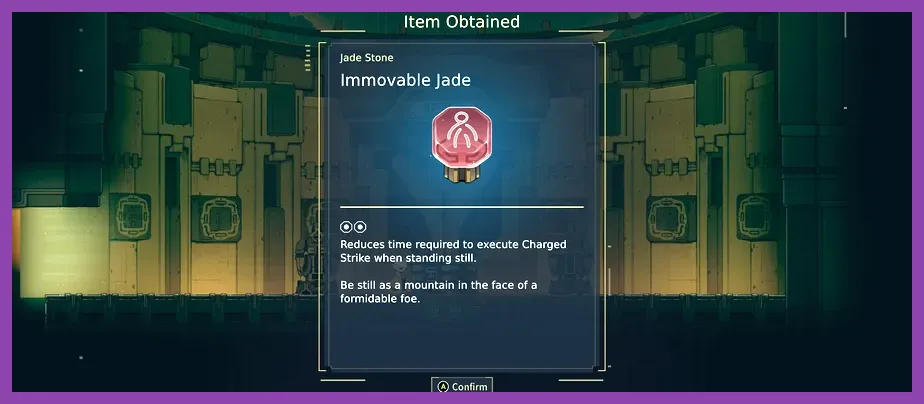
The closest substitute for a co-op build is a self-sufficient Yi setup. It should generate value from every successful parry, recover from mistakes, and finish bosses quickly after a stagger. Prioritize the following core tools as soon as they become available:
- Unbounded Counter: learn and practice this counter type for red attacks that cannot be handled by an ordinary block. It is essential against enemies and bosses that use unblockable strikes.
- Cloud Piercer: use the charged arrow option when a boss creates distance or gives you a safe ranged opening. It adds damage without forcing a risky approach.
- Full Control: take upgrades that improve the consistency and payoff of Yi’s Talisman detonations. Your strongest punish window begins after a successful counter, not with random sword swings.
- Air Dash and air movement upgrades: these are movement tools first, but they also prevent corner traps and let Yi reset spacing during platforming-heavy encounters.
- Healing and recovery upgrades: favor any available option that converts safe exploration or successful combat into more reliable healing. A solo player cannot expect a teammate to rescue a failed exchange.
For a more detailed unlock order, use Steamoz’s Nine Sols best skills to unlock first guide. The important principle is simple: choose skills that make counters safer and punish windows more decisive before spending resources on niche damage improvements.
Recommended Jade Priorities and Gear Logic
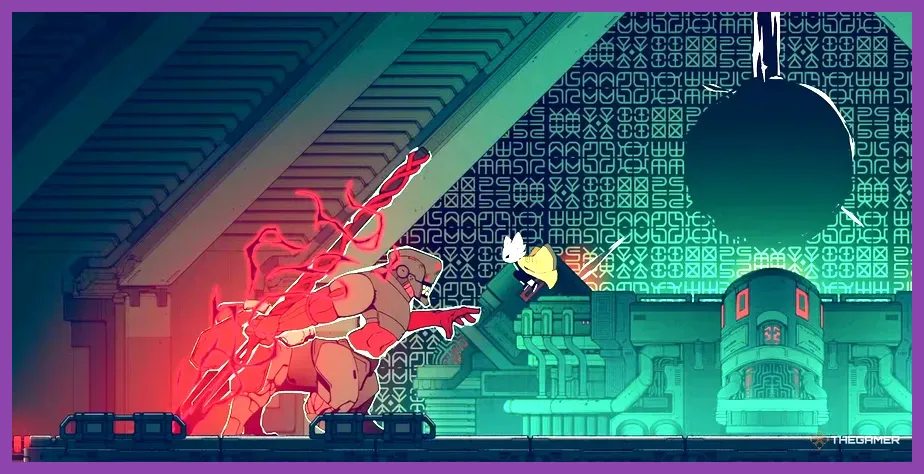
Jades are the closest thing Nine Sols has to a build system, but they are not classes. You should change them according to the boss, your current skill level, and whether you are exploring or entering a combat arena. A strong general-purpose loadout follows this priority order:
- Parry consistency: equip Jades that improve the reward for successful counters or make the defensive rhythm easier to maintain. These are the best choices while learning a boss because a missed attack is usually more expensive than a small loss of damage.
- Talisman damage: once you can reliably Perfect Counter, switch one slot toward Talisman amplification. Marked enemies are your main burst targets, especially during long boss recovery animations.
- Qi and resource efficiency: use resource-focused Jades when your playstyle depends on repeated Talisman detonations, charged techniques, or healing. More available resources are valuable only if you spend them safely.
- Survivability: use defensive Jades for unfamiliar bosses, challenge rooms, or sections with multiple enemies. Survival is damage because every death resets the encounter and costs another attempt at learning the pattern.
Do not copy a high-damage Jade setup before you can identify attack colors and timings. Nine Sols rewards a clean counter far more than constant aggression. Your Trigram’s defensive function is not a last resort; it is the central damage engine. If your setup leaves you unable to recover from one missed parry, it is not a good “co-op replacement” build, even if its theoretical damage is higher.
Combat Rotation for a Self-Sufficient Yi
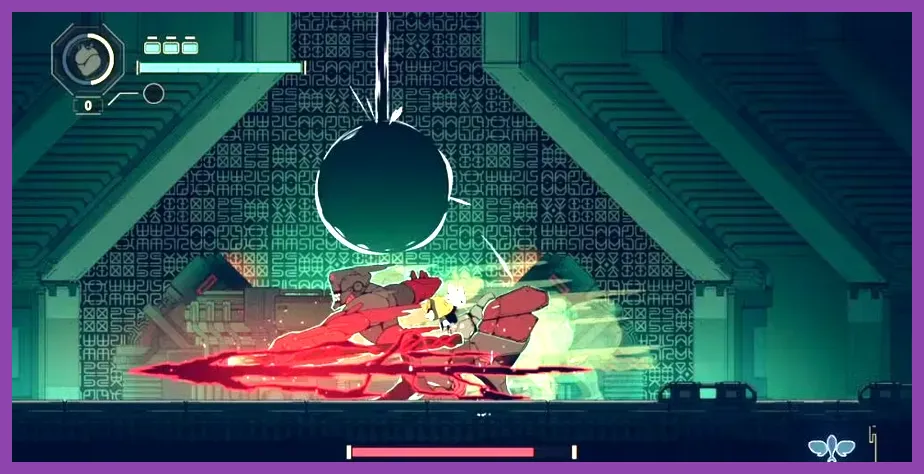
Use this rotation against ordinary enemies and bosses whenever the arena permits it:
- Start at mid-range. Do not open by rushing into an enemy’s body. Mid-range gives you enough time to read a projectile, dash, normal strike, or red unblockable attack.
- Block the incoming hit. A normal successful defense builds the opportunity for a counter. Avoid holding block indefinitely because several encounters chain attacks specifically to punish passive defense.
- Perform the correct counter. Use the standard counter for attacks that can be deflected. Use Unbounded Counter against red attacks. If the attack is a projectile or area effect, reposition rather than forcing a parry that the move does not support.
- Apply a Talisman immediately. After a successful counter, mark the enemy while the opening is active. Delaying the Talisman wastes the safest damage window.
- Detonate, then reset. Complete the Talisman attack and return to a neutral distance. Do not extend the combo just because the boss is still in hitstun; many bosses recover with a fast follow-up.
- Use Cloud Piercer only during clear space. Ranged damage is a supplement for disengagements, not a reason to abandon the parry loop.
Against groups, kill the enemy with the most dangerous ranged or red-attack pattern first. Nine Sols does not provide co-op crowd control, so you must reduce the number of active attack sources yourself. Air movement is especially useful when one enemy occupies the ground and another controls the upper screen.
Boss-Specific Adjustments Instead of Party Roles

Bosses require different solo configurations because there is no teammate to cover a mechanic. Against Feng, stay close enough to react to his staff patterns but avoid standing directly beneath him during aerial movement. Watch the weapon animation rather than the boss’s body: the staff tells you whether the next strike is a standard counter opportunity or a red attack requiring Unbounded Counter. Detonate the Talisman after the defensive exchange and immediately prepare for his repositioning.
Goumang rewards patience. Her arena pressure can make a greedy melee sequence look attractive, but the safer plan is to clear space, defend the predictable attack, and punish only after the animation commits. A survivability Jade is more useful here than a small burst increase if you are still learning her timing.
Lady Ethereal tests target recognition and movement more than raw damage. Keep your camera position and Yi’s spacing stable, identify the real target before spending resources, and avoid firing Cloud Piercer into a clone or unsafe visual effect. A resource-efficient setup helps because the encounter gives you multiple opportunities to waste Qi on the wrong target.
General Yang is the clearest proof that Nine Sols is built around solo mastery. His attacks demand precise responses, and his counter sequences punish panic healing or random aggression. Enter with a defensive Jade configuration until you can consistently recognize normal and red attacks. Once the pattern is familiar, replace one defensive option with Talisman damage and shorten the fight through disciplined counter detonations. The official Nine Sols game page provides the developer’s central reference for the game’s setting and design.
Best Settings for a Smoother Solo Experience
Because Nine Sols is a timing-heavy single-player game, stable performance is more important than maximum visual quality. On PC, begin with Fullscreen or Borderless, set Textures to High if your graphics memory allows it, and reduce Effects or Post-Processing if visual flashes obscure attack telegraphs. Keep the frame rate stable rather than chasing a peak number that produces inconsistent input timing.
Use a controller if you prefer analog movement, but keyboard controls are fully viable. Bind the buttons for jump, dash, counter, Talisman, and healing so that your thumb or fingers do not leave the movement controls during a reaction. The most important input is the counter; remap it if the default position causes delayed presses.
If you are struggling with a boss, Story Mode is a legitimate way to practice patterns. Lowering the challenge gives you more room to learn attack colors, counter windows, and arena positioning. It does not create multiplayer, but it can function as a training environment before returning to the standard experience.
Final Verdict on Nine Sols Multiplayer Builds
There is no Nine Sols best co-op multiplayer build because Nine Sols has no co-op multiplayer. The best practical setup is a self-sufficient Yi build built around reliable counters, Unbounded Counter for red attacks, Talisman detonations, Cloud Piercer for safe ranged damage, and Jades that balance parry consistency with survivability.
Build for the part of the game that causes your deaths. If you miss counters, choose defensive and consistency-focused Jades. If you survive but cannot finish bosses, add Talisman damage and improve your punish rotation. If exploration is the problem, prioritize Air Dash and movement upgrades. This flexible approach matches the game’s actual design far better than trying to force party roles onto a single-player campaign.
For more build-focused reading, compare this approach with Steamoz’s Rust weapon tier list and Satisfactory solo-player guide; both cover multiplayer-adjacent searches, but Nine Sols remains a focused one-player experience where your timing—not team composition—determines success.