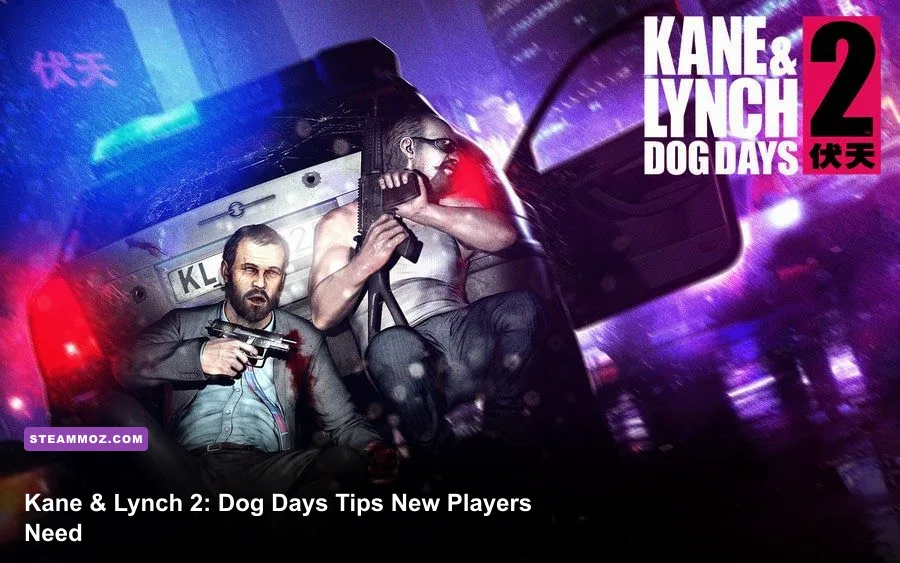
Kane & Lynch 2: Dog Days becomes much easier once you stop treating it like a standard run-and-gun shooter. The winning formula is simple: move between solid cover, burst-fire instead of spraying, steal weapons when your magazine is empty, and revive Kane or Lynch only when the route is safe. These 10 practical tips cover the campaign, higher difficulties, PC performance, and Fragile Alliance without pretending the game has a modern progression system it never needed.
Dog Days is a short, brutal third-person shooter built around ugly momentum. Its handheld-camera presentation, aggressive enemies, limited ammunition, and fast bleed-out states punish players who stand in the open. If you want a calmer shooter with deep weapon customization, this is not that game. If you want tense room-clearing where every reload matters, its rough edges become part of the appeal. The official Steam page for Kane & Lynch 2 is still the best place to check the current PC release details.
1. Learn the cover system before chasing kills
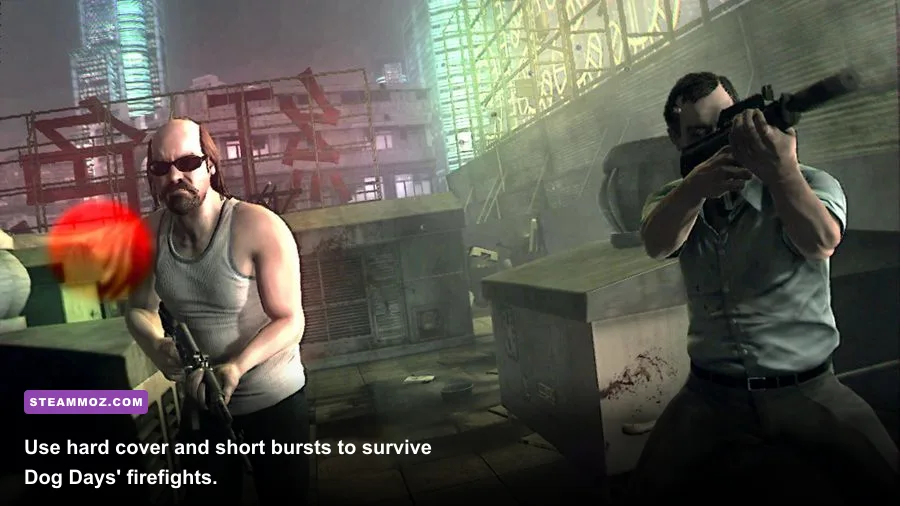
The first major mistake new players make is using cover as a permanent parking spot. Dog Days' cover is a launch point, not a bunker. Press the cover command near a wall, vehicle, crate, or low barrier, then lean out for a short burst and relocate as soon as the enemy line changes. Thin scenery such as wooden panels, shop displays, and some interior furniture can be destroyed or penetrated, so the safest-looking object is not always safe.
Use hard cover whenever possible: concrete dividers, engine blocks, pillars, and thick structural walls. Low cover is useful against riflemen but becomes dangerous when enemies push with shotguns. Keep the camera slightly offset toward the next escape route rather than staring directly at your target. That small adjustment lets you see a flanking enemy before the game forces you into a panic roll.
Dog Days rarely rewards a long peek. Fire two to five rounds, duck back, then change your angle. Enemies often keep shooting your last position for a moment, which creates a clean window to cross. Think of every firefight as a series of small relocations instead of one prolonged exchange.

🎮 Kane & Lynch 2: Dog Days
Looking to experience this game? Grab your digital key directly on our store for $1.49.
View on Steammoz Store →2. Use short bursts and respect recoil
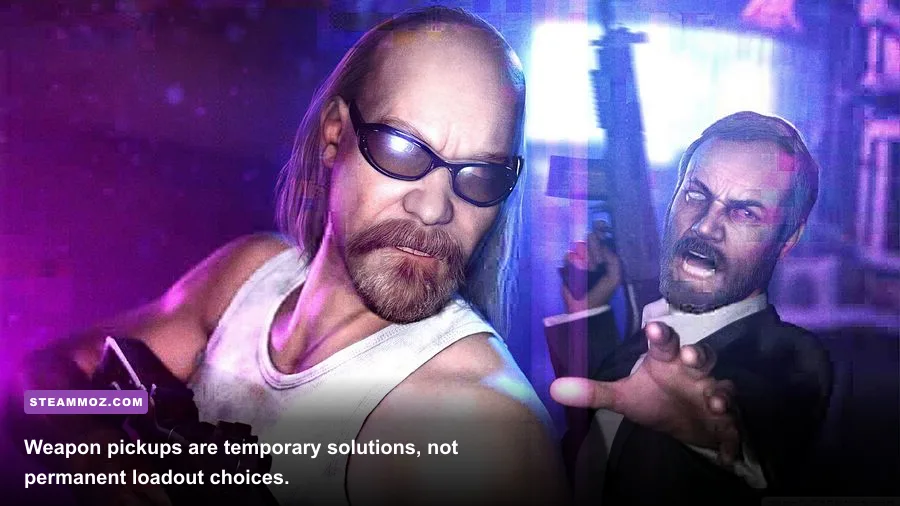
The AK-pattern rifles hit hard but climb quickly, especially when you hold the trigger during a standing hip-fire exchange. The M4 is more forgiving at medium range, while SMGs such as the UMP45 and MP5 are excellent in interiors but lose authority across long sightlines. Shotguns including the SPAS-12 and Remington 870 are strongest when you wait for a clear upper-body shot rather than panic-firing at a moving silhouette.
Aim down sights for rifle and pistol work, but don't treat aiming as a requirement. Hip-fire is useful while retreating from a close-range rush, particularly with an SMG. The trick is to alternate: aim for the first accurate burst, break line of sight, then hip-fire only while moving to a safer position. Repeatedly holding the trigger makes recoil and camera shake do the enemy's work for them.
| Weapon type | Best range | Strength | Common mistake |
|---|---|---|---|
| Pistol | Close to medium | Reliable backup when primary ammo is empty | Trying to out-damage rifles in open ground |
| SMG | Close | Fast handling and strong room-clearing pressure | Holding the trigger at long range |
| Assault rifle | Medium | Best all-purpose damage and reach | Ignoring recoil during full-auto fire |
| Shotgun | Point-blank | Stops pushes and deletes exposed targets | Firing before the reticle settles on the torso |
| Sniper rifle | Long | Removes priority targets safely | Carrying it into a cramped interior fight |
3. Make every weapon pickup solve a problem
Dog Days does not give you a permanent arsenal or a skill tree. Weapons come from the environment and fallen enemies, so your loadout should answer the next encounter rather than match a favorite build. Keep an assault rifle or SMG for general use, then swap the secondary slot to a shotgun before entering a tight corridor. If the next arena opens into a street or courtyard, take the rifle back.
Reload behind cover, not during a heroic push. If the magazine is nearly empty and an enemy is already closing, switch to your secondary instead of waiting for the reload animation. Weapon swaps are often faster than reloading, and that half-second matters when an opponent with a shotgun is crossing the room.
Do not ignore dropped pistols. They are particularly valuable on higher difficulties because they let you preserve rifle ammunition for shielded or heavily protected targets. The best pickup is not always the weapon with the biggest damage number; it is the gun that gives you a usable magazine immediately.
4. Revive Kane or Lynch with a plan

When your partner goes down, the revive prompt is tempting—but rushing straight to it can create a second body on the floor. First identify the nearest threat, break the line of fire, and clear the angle that covers the downed character. Then revive from the side of the body whenever possible. A wall or vehicle between you and the largest enemy group is worth more than a slightly shorter route.
Use the downed partner as information. Enemies often converge on that position, exposing their movement and revealing which doorway is active. If the area is still full of riflemen, move to cover, eliminate the closest pushers, and only then commit to the revive. On harder settings, the difference between a controlled rescue and a reckless one is often the entire checkpoint.
After the revive, don't immediately sprint forward. Both characters need a moment to restore the fight's rhythm. Reload, collect nearby ammunition, and check whether the next trigger will spawn enemies. Dog Days likes to chain encounters together, and entering the next room with a nearly empty magazine is an avoidable disaster.
5. Prioritize enemies by threat, not distance
Visible riflemen are not always the most urgent target. A shotgunner crossing the room, an enemy flanking through a side door, or a close-range attacker behind your cover can end a fight faster than a distant shooter. Scan for movement at the edges of the screen before committing to a target in the center.
Use this order as a starting point: close shotgun threats first, enemies actively flanking second, exposed riflemen third, and distant targets last. Snipers or heavy weapons override that order when their sightline controls the whole arena. You can often identify the danger from behavior: a flanker disappears from the main lane, a shotgunner advances instead of trading shots, and a rifleman stays planted behind a window or barricade.
After each kill, spend one second checking the space it opened. The safest route is frequently the lane created by removing an enemy at the edge, not the obvious doorway directly ahead. This habit also helps you spot ammunition and weapon drops before the next wave arrives.
6. Move between arenas instead of camping
Dog Days' encounters are designed to pressure static players. Enemies pour through doors, appear on balconies, and shift positions while you focus on the nearest target. If your cover has become surrounded, abandon it early. A controlled retreat is safer than waiting for the screen to fill with muzzle flashes.
Move from hard cover to hard cover and cross open spaces during enemy reloads or after a kill. Don't sprint in a straight line across a lane controlled by several rifles. Break the crossing into two movements: first reach a side object, then make the final push when the angle is quieter. Vehicles and concrete planters are especially useful because they let you crouch, reload, and look for the next route.
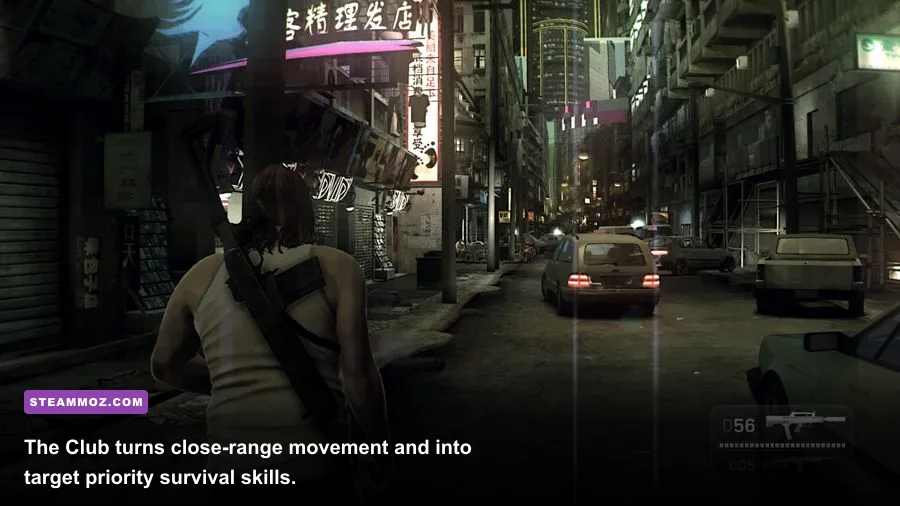
In missions such as The Club and the street-heavy sections around Shanghai, close walls and narrow entrances can make the camera feel worse than the actual danger. Back away before turning a corner so you can see the room's edges. That extra distance gives you more time to identify a shotgunner and keeps the camera from colliding with the wall.
7. Treat the handheld camera as a gameplay warning
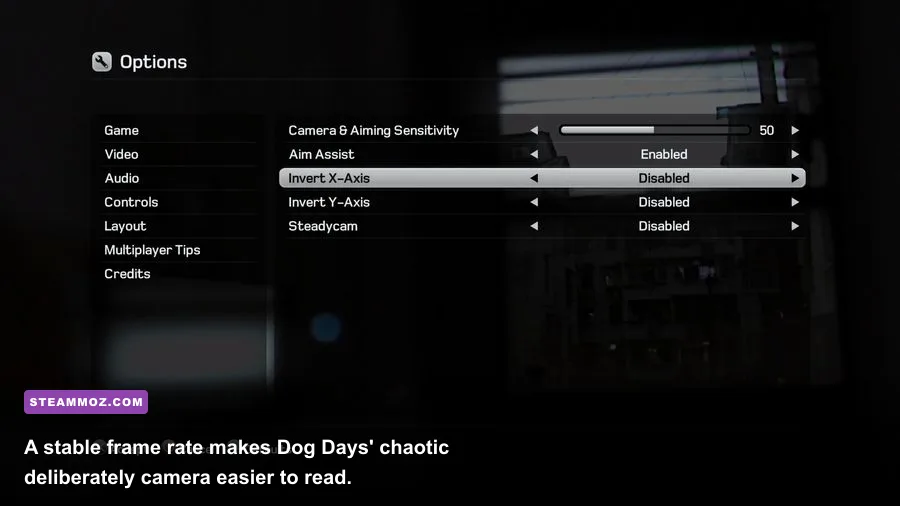
The deliberately unstable camera is not merely a visual filter. Explosions, sprinting, damage, and rapid turns make aiming less comfortable, especially during chaotic transitions. When the image becomes especially noisy, stop trying to win a precision duel. Retreat, let the camera settle, and re-enter the fight from a better angle.
For PC players, a stable frame rate helps more than chasing maximum image quality. Use 16:9 output, disable unnecessary post-processing if your port exposes the option, and cap the frame rate to the highest stable value your system can maintain. Sudden frame-time spikes make recoil and camera shake feel harsher than a consistent lower frame rate.
| PC adjustment | Recommended starting point | Gameplay effect | Trade-off |
|---|---|---|---|
| Resolution | Native display resolution | Clearer enemy silhouettes and weapon sights | Higher GPU demand |
| Anti-aliasing | Medium or the highest stable option | Reduces jagged cover edges | Can cost performance in busy scenes |
| Shadow quality | Medium | Preserves useful depth around cover | Lower settings make scenes flatter |
| Post-processing | Low or medium if frame time is uneven | Improves visual clarity during camera shake | Less of the intended gritty filter |
| Frame-rate cap | Highest consistently stable value | Makes aiming and movement more predictable | May sacrifice peak FPS during quiet scenes |
This is the same practical principle behind our graphics settings for performance guide: consistency beats a flashy benchmark number when combat depends on timing.
8. Use explosives to break stalemates
Grenades are most valuable when enemies have turned a doorway or vehicle into an unbreakable firing position. Don't throw one at the first target you see. Bounce it behind cover so enemies have to move, then shoot them while they scramble. A grenade that forces three opponents into the open is more useful than one that merely damages a single hidden soldier.
Throw from cover and immediately reposition. The explosion can obscure the screen and attract return fire, so staying beside the detonation point is asking to be punished. Explosives also work well at the start of a push: use one to disrupt the front line, advance during the confusion, and finish the closest target with an SMG or shotgun.
Save at least one throwable for a room you cannot read clearly. Blindly entering a dark interior is one of the easiest ways to lose a checkpoint. A grenade gives you information, movement, and damage in one action.
9. Understand the campaign's checkpoint rhythm
Dog Days is built around compact, heavily scripted combat sequences rather than a seamless open world. A cinematic pause, a door opening, or a forced movement section can signal that the next arena is about to begin. Before crossing that point, reload both weapons, collect ammunition, and make sure your partner is standing.
Don't waste time replaying an entire encounter with the same failed approach. If a checkpoint keeps ending with a flank, change the route and target order. If you are dying while reviving, clear the side lane first. If you are running dry, pick up a pistol earlier and reserve the rifle for medium-range targets. The game is short enough that experimentation costs less than stubborn repetition.
For a first run, Normal is the sensible learning difficulty. Hard and Extreme make ammunition discipline, cover selection, and partner timing far more important; they are better approached after you understand where the campaign's ambushes and weapon drops occur. Players who enjoy methodical challenge may also appreciate the route-focused thinking in our Lost Judgment walkthrough, even though the combat systems are very different.
10. Play Fragile Alliance like a heist, not deathmatch
Fragile Alliance adds a completely different rule set: you are trying to extract money while other players can betray the group. The smartest opening move is usually restraint. Let someone else trigger the first fight, watch who collects the cash, and avoid becoming the obvious leader until you know where the escape route is.
Staying alive matters more than grabbing every bundle. Money carried by a dead player can be stolen, but a dead traitor also loses the chance to extract later. If you betray, do it from a position that controls a doorway or escape lane, not in the middle of a crowded street. The strongest betrayal is the one that gives you immediate cover and a clean path to the extraction point.
Keep your weapon topped up before approaching the escape. Reloading during the final sprint is a classic mistake, and the camera chaos makes close-range fights harder to read. Watch teammate behavior too: sudden distance, unusual aim direction, or a player refusing to move with the group can be a warning—but don't shoot first without a route to survive the consequences.
For more multiplayer discipline, compare that risk-management mindset with our Warzone Mobile achievement guide and the loadout planning in our Terraria PvP loadout guide. Dog Days has fewer systems, but every decision is more immediate.
The 10-tip survival checklist
- Use cover as a launch point: peek, burst, and relocate instead of camping.
- Control recoil: fire short bursts with rifles and save hip-fire for close movement.
- Pick weapons for the next room: carry an assault rifle or SMG, then switch to a shotgun for tight interiors.
- Revive safely: clear the angle and block the largest threat before holding the revive prompt.
- Kill by threat: shotgun pushers and flankers usually matter more than distant riflemen.
- Cross open ground in stages: move hard cover to hard cover during reload windows.
- Let the camera settle: retreat when shake and damage effects make precision fire unreliable.
- Throw explosives to force movement: grenades are best used against entrenched groups.
- Prepare at checkpoints: reload, collect ammunition, and expect scripted transitions.
- Play Fragile Alliance patiently: extraction and positioning beat greedy cash grabs.
Dog Days rewards players who accept its limitations. There are no perks to unlock, no ideal endgame build, and no deep weapon spreadsheet waiting to be solved. Its real progression is learning when to leave cover, when to swap weapons, and when not to trust the obvious target. Master those decisions and the campaign's messy, vicious firefights become far more readable—and Fragile Alliance becomes genuinely tense instead of random.
For background on the game's design and wider series, start with the official IO Interactive website and the Square Enix game listing where available.