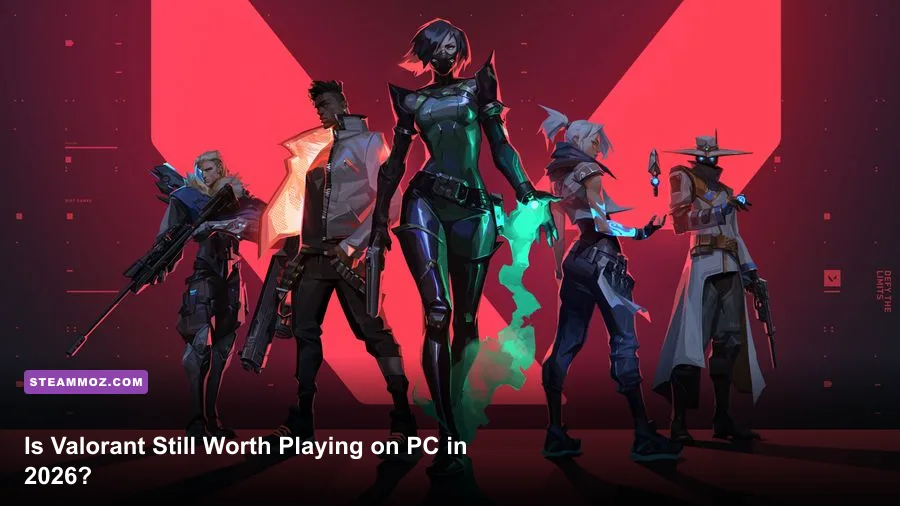
Yes, Valorant is still worth playing on PC in 2026—but only if you enjoy deliberate, high-pressure tactical FPS design. Riot's shooter remains free, technically lightweight, mechanically deep, and populated enough to support serious ranked play. The catch is that its competitive grind, uneven solo-queue experience, and increasingly familiar round structure can feel exhausting if you want a relaxed shooter.
That verdict hasn't changed because Valorant's core loop is exceptionally durable. You clear an angle, manage a 100-health economy, trade kills, protect or defuse the Spike, and learn from the one mistake that ended your round. The game rewards precision rather than spectacle. In 2026, that focus is still its superpower—and its biggest limitation.
Why Valorant's Core Gunplay Still Holds Up
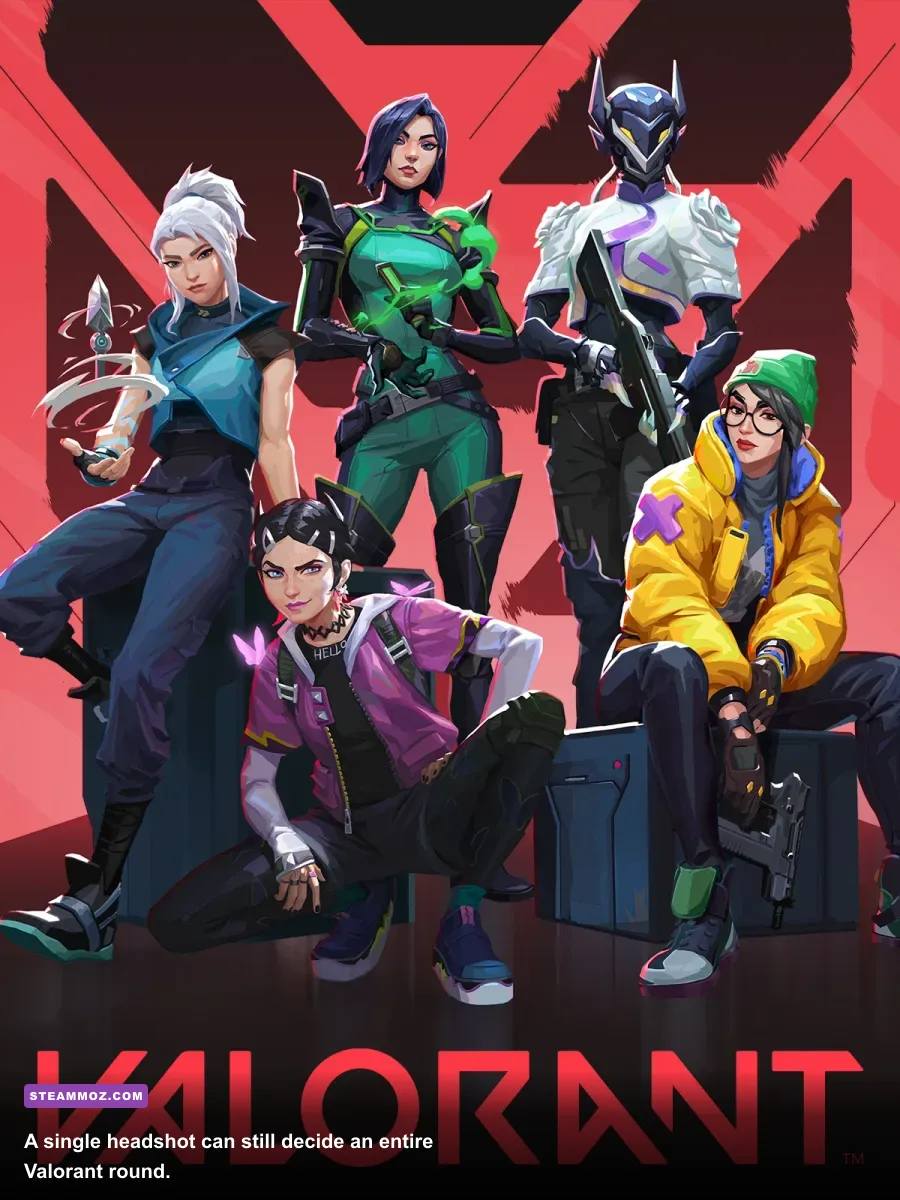
Valorant's shooting model is simple to understand and brutal to master. Most rifles kill with one headshot at standard ranges, while movement accuracy is heavily punished. You can't sprint through a doorway and reliably win a duel; you need to stop, counter-strafe, place the crosshair before the opponent appears, and fire a controlled burst.
The weapon numbers explain why the game feels so crisp. The Vandal deals 160 damage to the head, 40 to the body, and 34 to the legs at every range, making it a true one-tap rifle. The Phantom hits for 156 head, 39 body, and 33 legs inside 15 meters, then drops to 140 head damage from 15 to 30 meters and 124 beyond 30 meters. That means a full-health enemy can survive a distant Phantom headshot, while the Vandal remains lethal across the map.
The Sheriff is similarly unforgiving: 159 head, 55 body, and 46 leg damage up to 30 meters. The Ghost delivers 105 head damage, 30 body, and 26 legs, giving eco rounds real bite without making the pistol round feel random. Meanwhile, the Operator's 255 body damage turns a clean hit into an instant kill, but its cost and slow follow-up shot make missed attempts extremely expensive.
| Weapon | Damage Profile | Best Use | 2026 Verdict |
|---|---|---|---|
| Vandal | 160/40/34 at all ranges | Long-range taps and open angles | Top rifle for confident aim |
| Phantom | 156/39/33 inside 15m | Sprays, smokes, and close fights | More forgiving in utility-heavy rounds |
| Ghost | 105/30/26 | Quiet pistol-round headshots | Reliable budget sidearm |
| Bulldog | 116/35/30 | Mid-range burst pressure | Useful but rarely exciting |
| Operator | 255 body, 150 legs | Holding long sightlines | Powerful when supported by utility |
This is why Valorant still feels different from Counter-Strike 2, Apex Legends, or Call of Duty. Abilities change the information and geometry of a fight, but the final exchange usually comes down to crosshair placement and recoil control. If you want constant movement tech, Valorant may feel stiff. If you want every bullet to carry weight, it remains one of the best PC shooters available.
Agents Add Variety Without Erasing Mechanical Skill
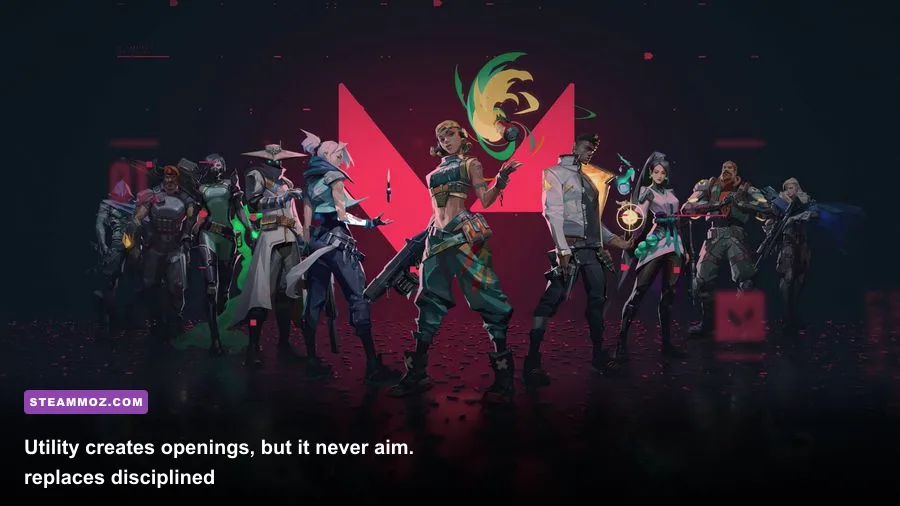
Valorant's agent roster is now broad enough to support very different approaches. Controllers such as Omen and Brimstone reshape sightlines with smoke. Initiators including Sova, Fade, and KAY/O gather information or suppress defensive tools. Duelists like Jett, Raze, and Neon create space, while Sentinels such as Killjoy and Cypher punish careless flanks.
The important detail is that abilities don't function as independent superpowers. Sova's Recon Bolt is only valuable if your team acts on the revealed location. Omen's Dark Cover creates a temporary blind spot, but an opponent can still swing through it with a shotgun or read the timing. Killjoy's Lockdown forces enemies away from an area, yet the ultimate can be destroyed before it completes. Valorant is at its best when utility becomes a conversation between players rather than a collection of solo tricks.
For returning players, the strongest learning approach is to pick one agent from a clear role and master repeatable setups. Learn two smoke placements, one defensive escape, one post-plant lineup, or one reliable recon pattern on your favorite map. You don't need to memorize every ability interaction before entering ranked. You do need to understand what your utility is supposed to accomplish.
| Role | Examples | Primary Job | Common Solo-Queue Problem |
|---|---|---|---|
| Duelist | Jett, Raze, Neon | Create entry space and take first contact | Entering without a trade plan |
| Controller | Omen, Brimstone, Viper | Block sightlines and divide sites | Using smokes too early |
| Initiator | Sova, Fade, KAY/O | Clear angles and provide information | Using scans with no follow-up |
| Sentinel | Killjoy, Cypher, Sage | Secure flanks and slow pushes | Playing utility too passively |
That layered design gives Valorant more strategic longevity than a pure aim trainer. Still, it creates a steep knowledge barrier. A new player can understand a rifle in minutes but may need dozens of matches to recognize a fake rotation, a default plant, or a dangerous ultimate combination.
The Ranked Grind Is Excellent—and Occasionally Miserable
Competitive Valorant remains the strongest reason to keep playing. Rounds are short enough to reset mentally, but the economy creates consequences across an entire half. Losing a pistol round can force a save. Spending 2,900 credits on a Vandal and heavy shields might win the next round, but dying without damage can damage your team's finances for several turns.
That economy makes comeback victories believable. A well-timed bonus-round win, a thrifty Sheriff headshot, or a successful five-player retake can change the rhythm of a match. The best rounds aren't always the ones with the most kills; they're the ones where a team preserves weapons, denies the Spike plant, or forces the enemy to spend utility before the real hit begins.
The downside is the emotional tax. Ranked demands communication, patience, and a willingness to accept that some games are effectively lost before halftime. Smurfs, disconnects, tilted teammates, and uneven comms can still sour the experience. Riot's official support hub remains the right place for current account, penalty, and connection guidance, but no moderation system can eliminate every bad match.
My honest advice is to treat rank as a performance record, not a daily judgment. Play two or three focused matches, review why you died, and stop when your decisions become rushed. A player who understands economy, trades, and post-plant positioning will climb more consistently than someone who simply queues until their aim collapses.
PC Performance Is Still a Major Advantage
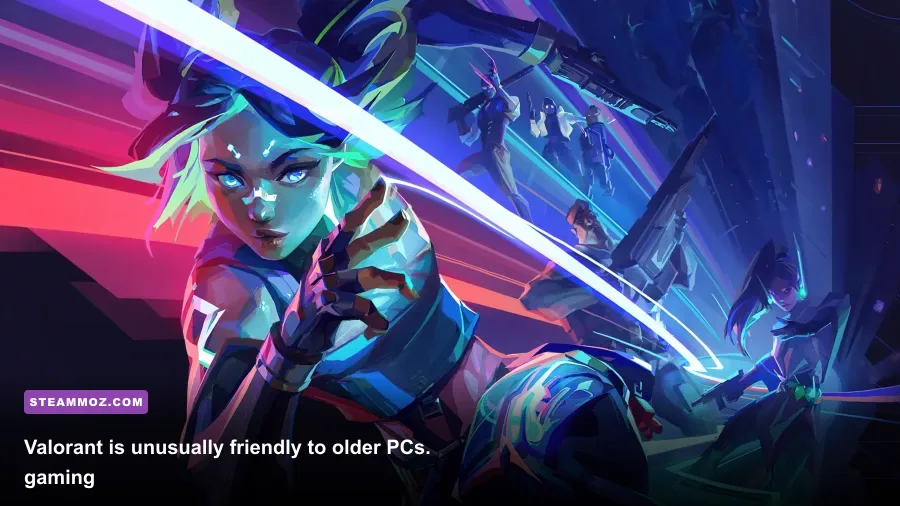
Valorant's low hardware demands are a genuine strength in 2026. Riot's published targets list an Intel HD 4000 for minimum play, an Intel i3-4150-class processor for the 60-FPS tier, and hardware such as an Intel i5-9400F with a GTX 1050 Ti for the 144-FPS target. Modern entry-level systems can exceed those figures comfortably, assuming background applications and thermal throttling aren't sabotaging performance.
For competitive play, high and stable frame time matters more than pretty shadows. A 240Hz monitor only helps if your PC can deliver consistent frames, and uncapped FPS can expose CPU limitations through erratic frame pacing. Start with the game's performance graph enabled, then tune for consistency rather than chasing a peak number.
| Setting | Recommended Value | FPS Impact | Visual Note |
|---|---|---|---|
| Material Quality | Low | Low to medium | Small reduction in surface detail |
| Texture Quality | Low or Medium | Low | Medium is fine with sufficient VRAM |
| Detail Quality | Low | Medium | Reduces distracting environmental detail |
| UI Quality | Low | Minimal | Cleaner competitive presentation |
| Vignette | Off | Minimal | Removes edge darkening |
| VSync | Off | Latency reduction | Use a frame cap if tearing bothers you |
| Anti-Aliasing | MSAA 2x or None | Low | Balance clarity and jagged edges |
| Multithreaded Rendering | On | Positive on modern CPUs | Helps CPU-side performance |
Enable NVIDIA Reflex if your supported GPU offers it, keep mouse acceleration disabled at the operating-system level, and use a sensitivity you can control rather than copying a pro player blindly. For broader troubleshooting, Steamoz's PC crash and FPS fixes and graphics-settings guide cover the same fundamentals: update drivers, monitor temperatures, and remove unnecessary overlays.
What Feels Dated About Valorant in 2026
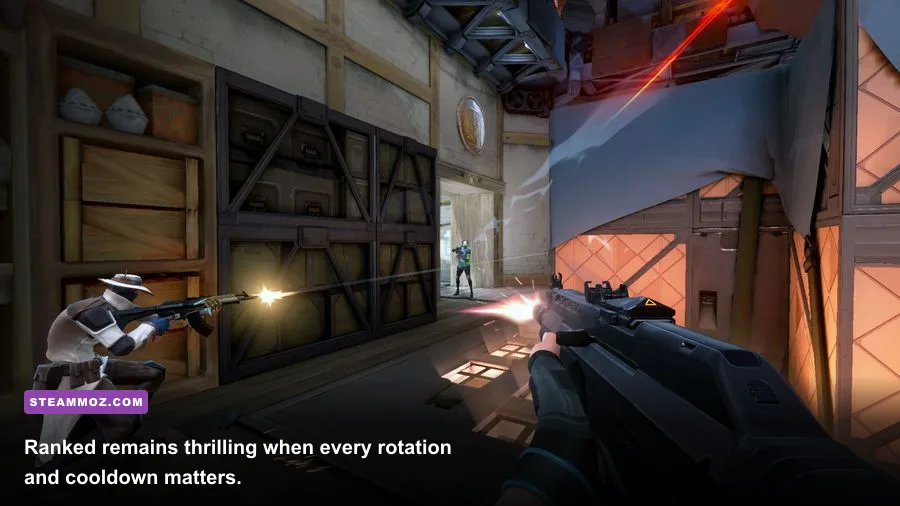
Valorant's weaknesses are more obvious after years of patches and map rotations. The visual style remains readable, but its clean geometry can feel sterile compared with shooters built around destruction, large-scale movement, or cinematic atmosphere. Matches also follow familiar patterns: default control, probe utility, execute, post-plant, repeat.
That repetition is intentional, but it can become homework. You learn lineups, memorize common off-angles, track ultimate points, and study how every agent changes a site. The reward is mastery; the cost is spontaneity. If your favorite FPS memory involves improvising through a chaotic battlefield, Valorant's controlled structure may not satisfy you for long.
The free-to-play model also deserves scrutiny. Gameplay access costs nothing, but cosmetic bundles and rotating store offers are aggressively visible. Skins don't improve damage, yet premium animations and sound effects can make the arsenal feel more desirable than the default equipment. Buy cosmetics only because you like them; never treat them as an investment in competitive performance.
Finally, the game is best with friends. Solo queue can absolutely be rewarding, but coordinated utility, instant trades, and calm mid-round calls reveal Valorant's finest qualities. A five-stack that understands roles will experience a much richer game than five isolated players chasing highlight kills.
Should You Play Valorant on PC in 2026?
Play Valorant in 2026 if you want a free tactical FPS with exceptionally low system requirements, precise weapons, meaningful economy decisions, and an enormous skill ceiling. It remains an excellent choice for players who enjoy improvement as the main progression system. There is no traditional campaign to finish and no gear score to farm; your reward is sharper aim, better timing, and smarter decisions.
Skip it—or approach it casually—if ranked pressure makes you miserable, you dislike learning agent utility, or you need constant movement and spectacle. Valorant won't suddenly become a different game. Its slow clears, lethal headshots, and methodical site attacks are the whole point.
| Player Type | Worth Playing? | Why | Best Starting Approach |
|---|---|---|---|
| Competitive FPS veteran | Yes | Deep gunplay and tactical ceiling | Start unrated, then specialize in one role |
| Casual shooter player | Maybe | Free and accessible, but demanding | Play Swiftplay before ranked |
| Low-end PC owner | Yes | Excellent optimization and scalable settings | Target stable 60 FPS first |
| Solo-queue grinder | Conditional | Strong systems, unpredictable team quality | Limit sessions and use clear comms |
| Story-focused player | No | No campaign or traditional narrative progression | Choose a single-player FPS instead |
Download it through the official Valorant website, check the current Steam hardware guides if you're comparing PC upgrades, and keep an eye on Riot's official news feed for patch changes. If you want another performance-focused read, Steamoz's low-FPS troubleshooting guide is useful beyond VR games too.
The final verdict: Valorant is still worth playing on PC in 2026 because its fundamentals haven't been diluted. The competitive ecosystem may test your patience, and the learning curve is real, but few free shooters make a single well-placed bullet feel this consequential. Just make sure you're choosing the grind because you enjoy the craft—not because the rank badge is chasing you.