
The fastest way to survive Escape From Lavender Island is to treat every trip as a timed supply run: mark landmarks, carry only what supports your next objective, return before darkness becomes a problem, and never spend rare materials on convenience items. The island looks inviting, but its real challenge is navigation, stamina, limited inventory space, and the way small detours quietly turn into failed expeditions.
These 10 Escape From Lavender Island tips are aimed at new players who want a clean first run without wasting resources or wandering in circles. The game does not shower you with loud objective markers, so the best progress comes from reading the environment, building reliable routines, and understanding which discoveries are worth investigating immediately.
1. Establish a safe loop before chasing the story
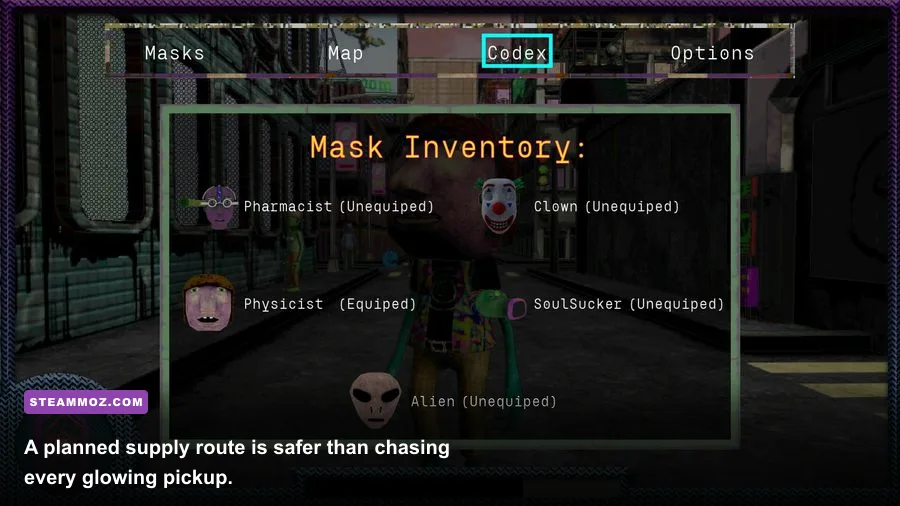
Your first priority should be a repeatable route between your starting area, nearby resource clusters, and the next obvious point of interest. Don’t sprint toward the far side of the island simply because you can see an unusual structure. Early exploration is about learning the island’s visual language.
Pick three fixed landmarks: one near your shelter or starting point, one along the coast, and one inland. Use those as a triangle. If you can return to that triangle without checking every corner, you’ve got a dependable navigation loop. That matters because Lavender Island’s paths can look deceptively similar, especially when grass, fog, or darkness reduces your view.
Spend the opening section collecting common materials while testing how far your stamina lasts. The goal isn’t to fill every inventory slot. It’s to learn how long a practical round trip takes. Once you know that distance, you can decide whether a new objective deserves a full supply run or a quick scouting trip.

🎮 Escape From Lavender Island
Looking to experience this game? Grab your digital key directly on our store for $3.99.
View on Steammoz Store →2. Keep your inventory focused, not full
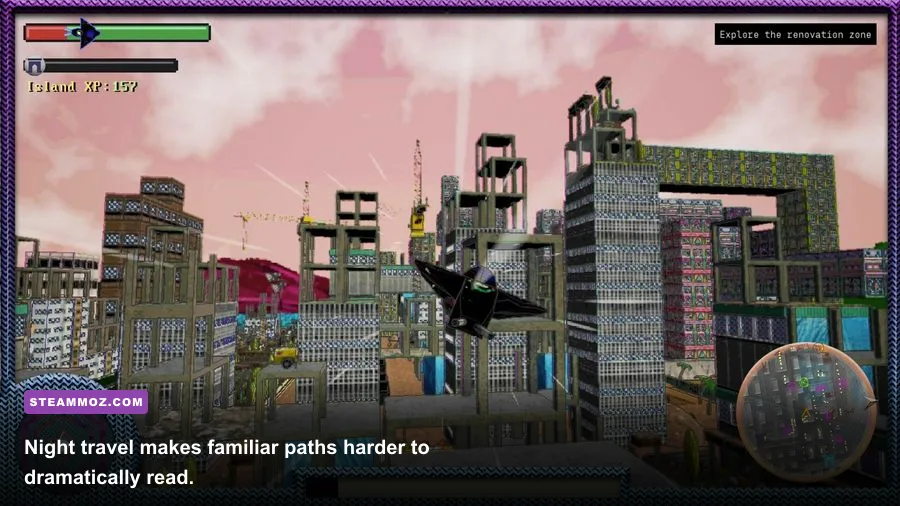
A full inventory feels productive, but it often traps new players in the worst possible way: you find a key item, have no room for it, and then forget where you saw it. Leave a few slots open whenever you explore an unfamiliar section. Those empty spaces are not wasted capacity; they’re insurance.
Separate items into three practical groups. First are immediate-use supplies, such as healing or stamina-support items. Second are objective items, including anything that looks unique, named, or connected to a puzzle. Third are common materials that can be collected again later. If a common resource is blocking a slot needed for a unique object, drop the common resource.
Don’t hoard every consumable. A healing item sitting in your bag has no value if you refuse to use it and then lose progress after a bad detour. Likewise, avoid crafting several copies of something until you know it solves a recurring problem. Lavender Island’s early economy rewards flexibility more than stockpiling.
| Item Type | Keep During Exploration | Best Use | Beginner Mistake |
|---|---|---|---|
| Unique quest objects | Always | Puzzles and progression | Dropping them to carry common loot |
| Healing supplies | At least one practical reserve | Recovering after risky sections | Saving everything for a perfect moment |
| Common materials | Only what supports the next goal | Basic crafting and repairs | Filling every slot before leaving |
| Unidentified curiosities | One or two if space allows | Testing clues or interactions | Building a collection with no clear purpose |
3. Learn the stamina rhythm before you need it
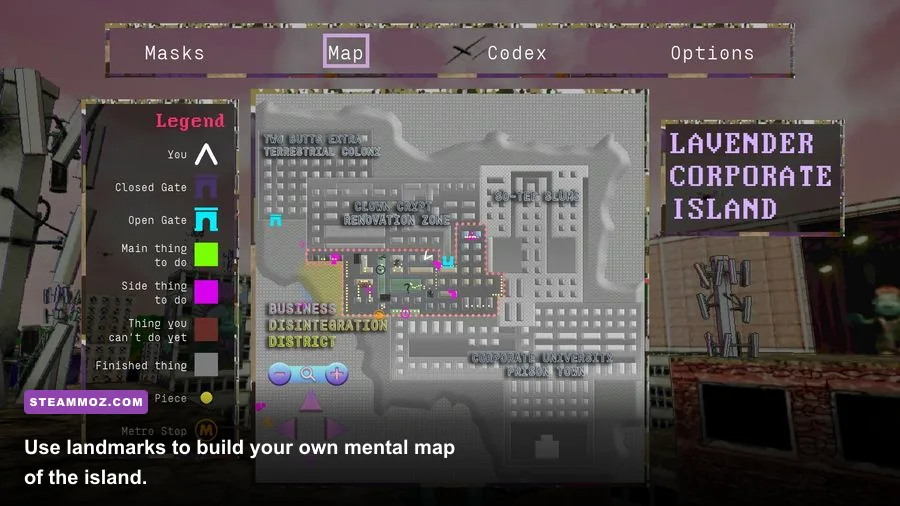
Stamina is less about how much you have and more about when you spend it. New players usually burn the entire bar while sprinting toward a landmark, then discover that they can’t escape, climb, or complete the final stretch safely. That’s how an ordinary trip becomes a disaster.
Use short bursts instead. Sprint across open ground, return to normal movement while approaching vegetation or uneven terrain, and let the bar recover before entering a place you haven’t inspected. Keep enough stamina available for the unknown. A reserve of roughly one-third of the bar is a sensible habit whenever you’re away from safety.
Terrain also changes the value of sprinting. Open beaches and broad clearings are good places to cover distance quickly. Dense vegetation, ruins, and narrow paths are better handled at walking speed because you’re more likely to notice an interactable object or an environmental clue. Speed is useful; control is what prevents backtracking.
4. Use landmarks instead of trusting your sense of direction
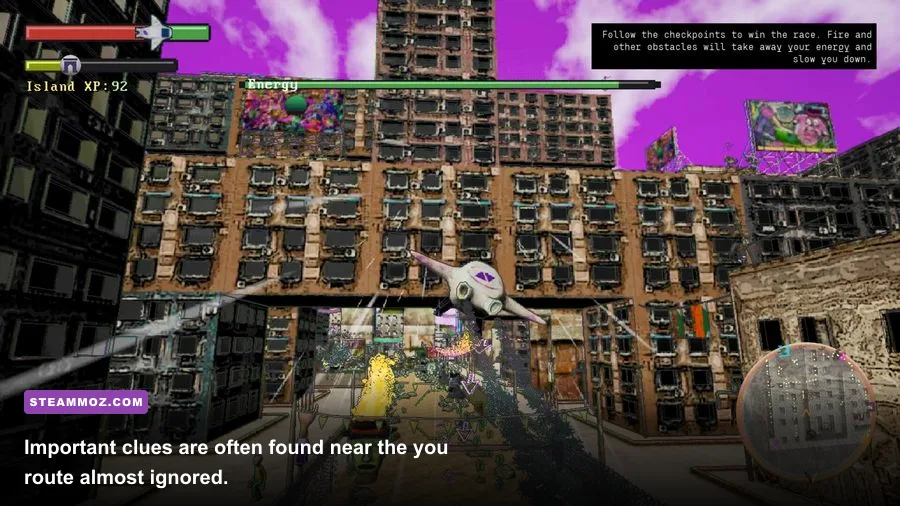
Lavender Island is designed to make you feel like you recognize a place before you actually do. A bend in the shoreline, a line of trees, and a purple field can all look familiar from different angles. Build your own navigation system by naming landmarks mentally: “split rock,” “broken fence,” “tall tree,” or “shoreline bend.” Simple labels work better than trying to remember vague compass directions.
Whenever you discover a useful location, pause and look back toward the route you came from. That reverse view is often completely different from the approach. Take note of silhouettes, rooflines, unusual trees, and changes in ground color. If the game offers map markers, use them immediately. If it doesn’t, screenshots or handwritten notes are genuinely worthwhile.
Follow the coast during your first serious survey. A shoreline gives you a reliable boundary and exposes entrances, docks, wreckage, cliffs, and structures that are easy to miss from inland paths. Once you understand the coast, cut across the interior using the landmarks you’ve already catalogued.
5. Treat every building as a clue chain
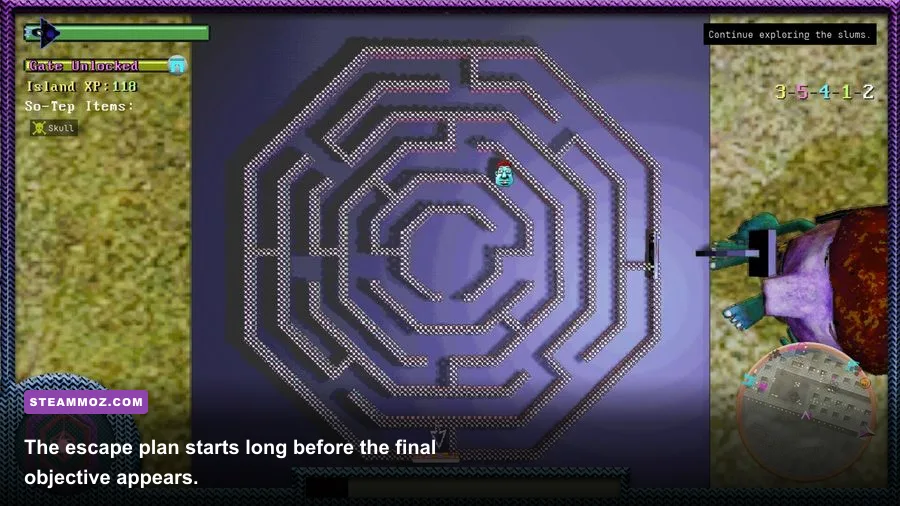
When you enter an abandoned structure, don’t interact with the first obvious object and leave. Search the room in layers. Check the entrance, inspect the central area, scan corners and shelves, then look for anything that changes when viewed from a different angle. Environmental puzzles often communicate through placement rather than a single flashing prompt.
Read notes and inspect unusual objects before moving them. A clue may explain a sequence, identify a symbol, or reveal that a seemingly decorative item belongs somewhere else. If a puzzle has several symbols, write their order down. Memory is unreliable after a long resource run, especially when the game sends you to another room before the solution becomes clear.
Don’t force an interaction just because you found a locked door. Locked spaces are frequently progression gates, not problems you’re expected to solve immediately. Mark the location, record what the lock appears to require, and continue exploring. Returning with the correct item is faster than repeatedly testing unrelated objects.
6. Separate scouting from commitment
Every new area deserves two visits. The first is a scouting run: carry minimal supplies, identify hazards, locate entrances, and learn the route home. The second is the commitment run: bring the materials, healing, and objective items needed to finish the section.
This two-step approach prevents the classic beginner failure of reaching a major location with the wrong equipment. It also lets you spot useful shortcuts. A blocked path on the first visit may connect to your starting area from the other side, turning a long future journey into a quick loop.
Scouting is especially important before interacting with anything that looks like a major objective. If the game changes the area, triggers danger, or removes your safest route, you’ll want to know where the exits and fallback positions are first. Think like a tester: what happens if this goes badly, and where can I retreat?
7. Don’t spend rare materials on early convenience
Crafting systems encourage experimentation, but not every recipe is equally valuable. Early on, prioritize items that expand access, improve survival, or reduce repeated travel. A tool that opens a new route is usually more important than a decorative upgrade or a small comfort boost.
Before crafting, ask three questions: will this solve a problem I’ve already encountered, does it unlock a location or mechanic, and can its ingredients be found again nearby? If the answer is no to all three, wait. You’re not missing out by postponing a recipe; you’re preserving options.
Keep a small reserve of rare components even after unlocking a useful recipe. Story objectives often ask for materials at the exact moment you’re least prepared to gather them. Spending everything because you can afford one upgrade is one of the easiest ways to create unnecessary backtracking.
8. Make darkness a strategic deadline
Nighttime changes more than visibility. Familiar routes lose their landmarks, small objects become harder to spot, and the risk of missing a turn rises sharply. Set a personal return deadline before the light fades. If you’re still investigating a new region when that deadline arrives, stop searching and head back.
Use bright open areas as orientation points and avoid crossing dense interiors at night unless the objective specifically requires it. If you do have to travel after dark, walk more often than you sprint. Slower movement gives you time to recognize silhouettes and prevents the stamina problem that turns a wrong turn into a long, unsafe retreat.
Night is useful for testing routes you already know, not for learning unfamiliar ones. That distinction saves time. Experienced players can exploit darkness because they’ve memorized the island; beginners should use daylight to build that memory first.
9. Prepare escape routes before activating objectives
Whenever you’re about to trigger a suspicious event, stop and prepare. Clear your inventory, heal, identify the nearest open ground, and check the route back. If there’s a door, lever, signal device, or unusual object that feels important, assume the game may change the situation immediately after interaction.
Stand where you can see the exit before activating anything. This sounds obvious, but it’s surprisingly easy to begin an interaction in the middle of a cramped room with no idea which direction is safe. If the game introduces a chase or hazard, your first response should be movement toward a known landmark, not frantic exploration.
Use the environment to create distance. Corners, fences, rocks, and narrow openings can break line of sight or slow threats. Don’t waste stamina weaving randomly; choose a route that forces the danger to follow a predictable path. The island is full of natural cover, and the best escape is often the route you already surveyed.
| Situation | Primary Risk | Best Preparation | Safe Response |
|---|---|---|---|
| Entering an unknown building | Missing a clue or exit | Keep inventory space open | Search in layers and note the entrance |
| Activating a major object | Sudden hazard or route change | Heal and face the exit | Retreat toward a known landmark |
| Crossing dense terrain | Getting lost | Travel in daylight | Use slow movement and visible landmarks |
| Long resource run | Running out of stamina or supplies | Pack for one objective | Turn back at the first warning sign |
10. Build a progression checklist, not a loot habit
The strongest new-player routine is simple: choose one objective, gather only the resources that support it, complete the objective, and return to safety. Avoid turning every trip into a general scavenging expedition. That habit feels efficient, but it makes your inventory messy and your route unpredictable.
Keep track of three things after every run: places you couldn’t access, materials you’re short on, and clues that still need interpretation. This checklist gives your next trip a purpose. It also stops you from repeatedly revisiting areas where nothing new can happen yet.
When you unlock a new tool or discover a new mechanic, revisit earlier locations briefly. Don’t rescan the entire island. Target the locked doors, suspicious gaps, high ledges, and objects you deliberately marked. Backtracking is worthwhile when it’s targeted; it’s painful when it’s driven by guesswork.
A clean first-run plan for Escape From Lavender Island
For a low-stress opening, spend the first section learning your immediate loop and collecting basic supplies. Next, survey the coastline and mark every structure, unusual object, and blocked route. After that, make a dedicated puzzle run with open inventory slots, then return before darkness. Only once you understand the nearby routes should you commit rare materials or push into a distant area.
The bigger lesson is that Escape From Lavender Island rewards information more than speed. A five-minute scouting trip can save twenty minutes of confused backtracking. A spare inventory slot can preserve a unique clue. A fully recovered stamina bar can be the difference between calmly reaching safety and losing an entire run.
If you enjoy games that make exploration itself the puzzle, you may also like Steamoz’s guides to hidden locations in Fated Souls and secret rewards in Ghostrunner. For performance troubleshooting, see our Fear Collection PC fixes and Grow: Song of the Evertree settings guide.
For current availability, patches, and player discussions, check the official Steam search listing, the Steam Community search, and the developer’s announcements through the game’s official store channels. Keep your route deliberate, return before the island turns against you, and Lavender Island becomes far less mysterious—and much easier to escape.