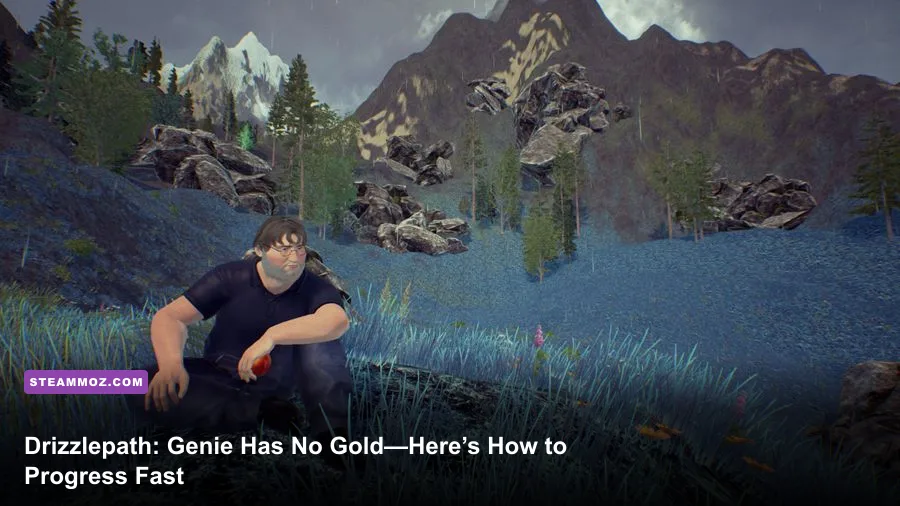
If you’re looking for a Drizzlepath: Genie fast leveling and gold farming guide, here’s the important answer up front: Drizzlepath: Genie has no character levels, weapons, experience points, shops, inventory, or gold currency to farm. It’s a short first-person exploration game built around walking through a surreal landscape, reaching narrative beats, and taking in the scenery. The fastest route is simply to stay on the intended trail, listen for story progression, and avoid wandering away from landmarks.
That sounds obvious, but it matters because searches for “leveling” and “gold farming” can send players toward advice written for an entirely different game. You won’t unlock a stronger build by replaying a valley, and there isn’t a hidden merchant waiting beside a waterfall. If your objective is to finish quickly, the winning strategy is route discipline. If your objective is completion, the better strategy is a careful second pass for Steam achievements and scenic exploration.
This guide separates what the game actually contains from the systems it doesn’t. It also gives you a practical first-run route, a completion-focused route, performance advice, and a clear explanation of why farming resources is impossible here. For comparison, our Dungeon Siege review covers the kind of traditional RPG progression that Drizzlepath: Genie deliberately avoids.
There Is No Leveling or Gold System
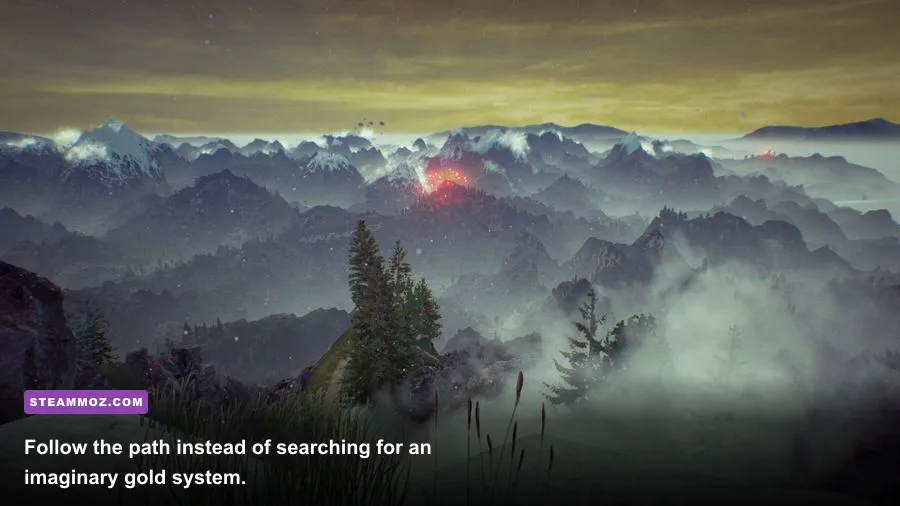
Drizzlepath: Genie is an exploration experience rather than an RPG. The player controls a first-person traveler moving through a linear outdoor environment, with the game’s momentum coming from discovery and narration instead of combat or character growth. There are no visible experience bars, level thresholds, skill points, equipment slots, weapon damage values, or gold counters.
That means the usual farming loop does not exist. You can’t kill enemies for experience because there are no combat encounters. You can’t sell collectibles because there is no selling interface. You can’t buy movement upgrades because the game does not use a shop or equipment screen. Restarting the same section only makes you walk through it again; it does not increase a hidden stat or improve future rewards.
| RPG System | Drizzlepath: Genie Status | What This Means |
|---|---|---|
| Character levels | Not present | There is no XP route or fast-leveling build. |
| Gold currency | Not present | Gold farming and merchant purchases are impossible. |
| Weapons and armor | Not present | Combat damage and gear optimization do not apply. |
| Skill trees | Not present | There are no skill combinations or stat priorities. |
| Story progression | Present | Reaching the next narrative trigger is your real objective. |
| Steam achievements | Present on the Steam version | Completion hunting is the closest equivalent to progression. |
The game’s official store information is the best place to verify this before buying into a supposed farming method. Check the official Steam search listing, then compare the feature description with RPG guides that mention XP, loot tables, or gold routes. Those systems simply aren’t part of Genie.
So why do players ask about fast leveling? The confusion usually comes from the broader Drizzlepath name, from Steam tags associated with exploration games, or from search results that combine unrelated RPG guide terms. The practical correction is simple: replace “farm gold” with “reduce backtracking,” and replace “level quickly” with “trigger the next scene efficiently.”

🎮 Drizzlepath: Genie
Looking to experience this game? Grab your digital key directly on our store for $1.99.
View on Steammoz Store →The Fastest Route Through Genie
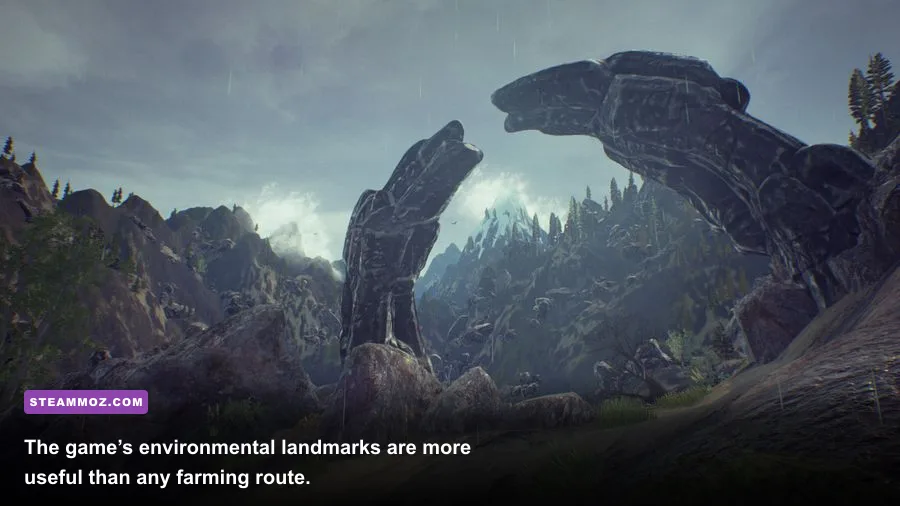
For a speed-focused run, treat the landscape like a guided trail rather than an open-world map. Keep moving forward, prioritize obvious paths, and use major environmental landmarks as confirmation that you’re still progressing. The game’s spaces are designed to look expansive, but the intended route is usually communicated through terrain shape, lighting, and the placement of the next visible point of interest.
Step 1: Start moving immediately
At the beginning of a section, don’t spend several minutes testing the edges of the map. Walk toward the clearest trail or open passage first. If a route looks deliberately framed by rocks, trees, slopes, or lighting, it is generally more useful than a random side path into scenery. You’re not collecting materials, so the first-run priority is forward momentum.
Step 2: Use audio as a progress signal
Keep the game’s narration and environmental audio on. Story delivery and changes in the soundscape can indicate that you’ve reached the correct area. If a voice line or scene has just played, resist the urge to sprint away immediately; give the moment time to finish, then continue along the newly revealed or visually emphasized route.
Step 3: Check high-contrast landmarks
Waterfalls, unusual rock formations, bridges, open clearings, and elevated viewpoints work as navigation anchors. When you’re uncertain, look for the next landmark rather than scanning every corner for loot. A landmark that appears unusually framed or separated from the surrounding terrain is often where the game expects you to go next.
Step 4: Don’t confuse scenery with optional content
Drizzlepath: Genie encourages you to look around, but not every attractive vista hides a reward. Walk off the main route only when you’re deliberately exploring or checking an achievement. If you’re trying to finish in the fewest minutes, every detour is dead time because there is no gold, XP, or random item waiting at the end.
Step 5: Restart only for a clean run
If you become completely turned around, restarting can be faster than retracing a long detour. This is a convenience tactic, not a farming method. A restart resets your position and lets you follow the route with better knowledge, but it won’t preserve or multiply currency because the game has no currency system.
| Situation | Fast Response | Why It Works |
|---|---|---|
| You see several possible paths | Choose the widest or most visually framed route | Genie generally guides movement through environmental composition. |
| A narration line has started | Stop briefly, let it finish, then move forward | You avoid missing story context or walking past a trigger. |
| You find a scenic side route | Ignore it on a speed run | There is no confirmed gold or XP reward for detours. |
| You are lost after exploring | Return to the last recognizable landmark | Landmarks are more reliable than trying to map every path. |
| You want a clean completion time | Restart and follow the known route | A fresh attempt is often quicker than correcting a large detour. |
This is the same basic principle behind a good farming route in a conventional game: remove wasted movement. The difference is that here the payoff is a shorter completion time, not a bigger wallet. Our Empires of the Undergrowth farming guide covers genuine XP and resource optimization; Genie needs none of that spreadsheet thinking.
How to Approach Exploration and Achievements
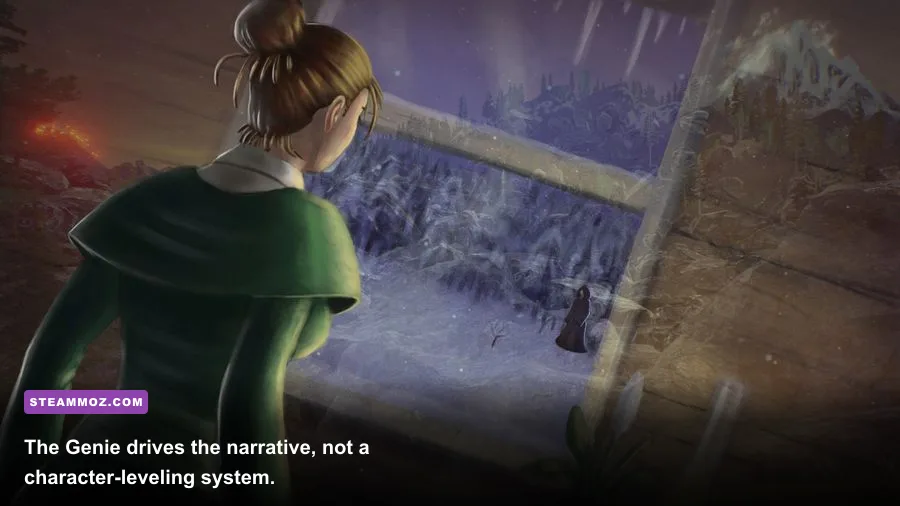
If you’re not chasing a speed finish, Drizzlepath: Genie is better approached as a compact sightseeing trip. Its atmosphere depends on walking slowly enough to notice changes in weather, terrain, lighting, and distant scenery. The game doesn’t bombard you with map icons, quest markers, or collectible counters, so completionists need to be more observant than they would be in a typical open-world game.
Start with a relaxed first run. Follow the main route, listen to every narrative passage, and stop at viewpoints that offer a clear look over the surrounding landscape. Don’t immediately reload every time you suspect you missed something. You’ll build a mental map of the area much faster by finishing the journey once than by repeatedly circling the opening section.
On a second run, use a simple landmark checklist. Record the last major location you passed, the direction of the next trail, and any branching path you skipped. This is more useful than searching for a nonexistent loot table. If an achievement asks you to visit, observe, or interact with something, the clue is likely tied to a distinctive object or area rather than a random spawn.
Speed run versus completion run
A speed run should be decisive: stay on the main path, avoid unnecessary camera stops, and restart when you’ve made a major navigation mistake. A completion run should be patient: inspect side trails, revisit areas from different angles, and allow the game’s scripted moments to resolve before moving on.
Don’t combine both goals on your first attempt. Trying to rush while also searching every corner creates the worst of both approaches. Finish once for route knowledge, then replay with exploration in mind. That two-pass method is faster and less frustrating than attempting to discover every possible interaction while also pursuing the shortest time.
| Run Type | Movement Style | Primary Goal | Best Habit |
|---|---|---|---|
| Story run | Steady forward movement | Hear the narrative and reach the ending | Keep audio enabled. |
| Fast run | Direct and decisive | Minimize detours and confusion | Use landmarks as route checks. |
| Exploration run | Slow with deliberate detours | Inspect scenery and optional paths | Track areas you’ve already checked. |
| Achievement run | Targeted exploration | Complete Steam objectives | Replay from a known route instead of wandering blindly. |
Steam achievements are handled through the platform rather than through an in-game progression screen. You can review the game’s achievement information from its official Steam community search, but be careful with old guides: achievement descriptions, unlock behavior, and community terminology can vary between versions and user reports. Treat screenshots and personal route notes as helpful evidence, not as proof of a gold mechanic.
Settings That Make Navigation Easier
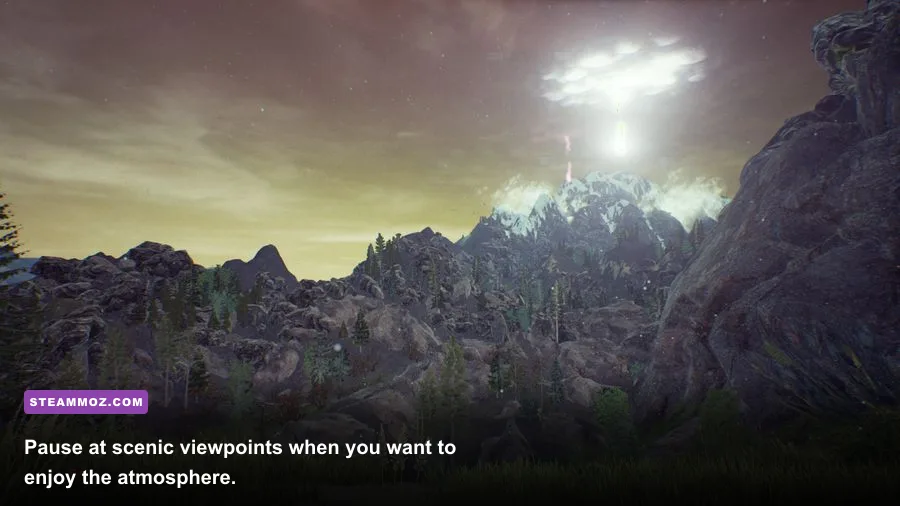
Graphics settings won’t make you level faster, but they can make the intended route much easier to read. Drizzlepath: Genie relies heavily on contrast, distant silhouettes, foliage, and lighting. A blurry image or unstable frame rate can hide the path you’re meant to notice, especially when several trails blend into a hillside.
Start by selecting a resolution that matches your monitor and use a stable frame-rate target rather than blindly pushing every setting to maximum. If the game offers resolution scale, anti-aliasing, shadows, view distance, foliage, and post-processing controls, reduce the expensive options first. Shadows and foliage can cost performance without improving navigation as much as a clean image and steady camera movement.
| Setting | Fast-Run Recommendation | Performance Impact | Visual Trade-Off |
|---|---|---|---|
| Resolution | Native monitor resolution | High | Lowering it can make distant trails harder to read. |
| Resolution scale | 100%; use 90% only if needed | High | Lower values soften landmarks and foliage. |
| Shadows | Medium | Medium to high | Preserves depth while avoiding heavy frame-time spikes. |
| Foliage or vegetation | Medium or High | Medium | Lower it if dense leaves cause stutter or obscure paths. |
| View distance | High if stable | Medium | Useful for spotting distant route landmarks. |
| Anti-aliasing | Medium or the default temporal option | Medium | Reduces shimmering on rocks, trees, and trail edges. |
| Motion blur | Off for navigation | Low | Sharper turns make route reading easier. |
| V-sync | On if tearing distracts you | Low | May add a little input latency but smooths camera movement. |
For a low-end PC, prioritize stable frame pacing over distant detail. Medium shadows, medium foliage, reduced post-processing, and native resolution are a sensible starting profile. For a stronger system, keep view distance high and use the game’s best anti-aliasing option while monitoring whether foliage creates traversal stutter.
There’s no competitive combat here, so you don’t need ultra-low latency or a 200-frame-per-second target. A consistent 60 frames per second is already a comfortable goal for walking and camera control. If your hardware can’t sustain that, a stable 30 frames per second is preferable to constant hitching whenever the game loads a new vista.
For broader PC troubleshooting habits, see our ELEX crash and FPS fixes. The specific games differ, but the useful principles are the same: verify files, close overlays, update drivers carefully, and test one graphics change at a time.
What to Do Instead of Gold Farming
The most productive “farm” in Drizzlepath: Genie is a route-knowledge farm. Every replay should answer one question: did this detour add story, scenery, or achievement progress? If the answer is no, cut it from your next run. That mindset turns an initially confusing walk into a clean, repeatable journey without pretending that the game has systems it doesn’t.
Use the following practical loop:
First pass: learn the shape of the journey
Follow the obvious path and absorb the narrative. Notice major terrain transitions, unusual structures, bodies of water, elevated areas, and locations where the game pauses or changes tone. These are your checkpoints. Don’t worry about an exact minute count yet; your goal is to understand where the route bends.
Second pass: remove wasted movement
Walk directly between the landmarks you identified. Avoid stopping to inspect every texture and don’t reverse direction unless you know an objective requires it. If you reach a familiar landmark quickly, you’re improving the only progression metric that really matters here: completion efficiency.
Third pass: target missed content
Now take the side paths you skipped. Search around unusual scenery, dead ends, and visually isolated objects. Keep a written note of what you inspected. Without an inventory or checklist, memory becomes the biggest threat to completion, not a difficult boss or an expensive upgrade.
Final pass: verify the platform result
After attempting an achievement, check whether Steam registered it. If it did not, close and relaunch the game before repeating the same section, then follow the community’s current instructions rather than relying on an old video. Avoid third-party “achievement unlocker” tools; they can damage the value of the completion and may create account or file-integrity problems.
| Goal | Recommended Action | What Not to Do |
|---|---|---|
| Finish the story quickly | Follow the main trail and use landmarks | Search for XP, enemies, or merchants. |
| See more of the world | Replay and inspect side routes slowly | Assume every scenic area contains loot. |
| Earn achievements | Use a second-pass checklist and verify Steam unlocks | Trust unverified gold-farming guides. |
| Improve replay value | Compare your route times and missed areas | Repeat the same aimless wandering. |
| Fix a confusing section | Restart from the last known landmark | Circle the entire map without a plan. |
That’s the honest Drizzlepath: Genie fast leveling and gold farming guide: there is no level to grind and no gold to bank. The game’s progression is authored, not statistical. You advance by walking to the next narrative beat, and you improve your results by learning the route, tuning the image for clear landmarks, and choosing whether each run is about speed or discovery.
If you came expecting a loot-driven RPG, Genie will feel intentionally sparse. If you approach it as a compact atmospheric journey, the lack of currencies becomes a strength. There’s no busywork between scenes, no artificial gear treadmill, and no reason to replay a section for a better drop. Just follow the trail, listen closely, and let the landscape do the heavy lifting.
For another look at how dramatically progression can change across games with similar fantasy language, read our Dungeons 2 leveling and gold route and Dragonkin hidden rewards guide. Those games reward optimization with tangible power. Drizzlepath: Genie rewards attention, memory, and a willingness to slow down when the view is worth it.