
Stepping onto the USG Ishimura expecting a simple graphics overhaul will get Isaac Clarke decapitated before you even clear Chapter 2. Motive Studio completely rebuilt this horror milestone from the deck plates up, re-engineering core combat mechanics, environmental hazards, and AI aggression. Surviving the remake demands immediate tactical pivots: locking your PS5 into Performance Mode for sub-frame dismemberment timing, treating Kinesis as your primary weapon rather than an ammo-saving parlor trick, learning the new procedural peeling system, and manipulating the game's drop algorithm. If you want to hoard your credits, protect your neck, and make it out of Aegis VII intact, these are the fundamental rules you must adopt the second your shuttle slams into the docking bay.
Lock Down PS5 Graphics Modes and DualSense Tuning Immediately
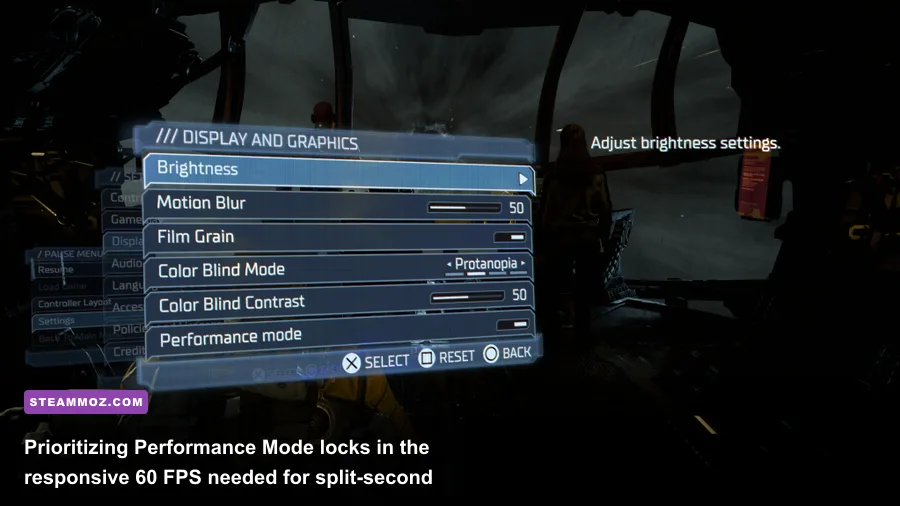
Before unholstering your 211-V Plasma Cutter, dive straight into the system settings. Dead Space on PS5 presents a stark choice between Quality Mode (native 4K at 30 frames per second with Ray-Traced Ambient Occlusion) and Performance Mode (dynamic 1440p upscaled to 4K targeting a rock-solid 60 FPS). In a slow-burn narrative adventure, ray-traced shadows make sense; in a precision combat sim where a Lurker's barb travels at your face while Leapers flank your peripheral vision, 30 FPS is an unnecessary handicap. The 60 FPS output in Performance Mode slashes input latency drastically, giving you the snappy responsiveness required to sever a Slasher's kneecap mid-lunge.
You should also dial in your DualSense controller settings. EA Motive leveraged Sony's haptic feedback and Adaptive Triggers brilliantly—every weapon sports custom trigger tensions, mimicking Isaac's heavy industrial tools. The Plasma Cutter pushes back with mechanical clicks, and the Pulse Rifle rattles Isaac's hands. However, if you experience finger fatigue or struggle to trigger secondary fire modes under extreme pressure, head to the accessibility menu to soften trigger resistance without disabling the tactile rumble that warns you of environmental hull breaches and encroaching Lurkers. Fine-tuning frame rates and control profiles makes every frantic encounter feel instantly more controllable, much like optimizing options when tweaking Filament Marmalade Edition settings for higher FPS.
| Setting Preset | Target Resolution | Target Frame Rate | Ray Tracing | Combat Efficiency Verdict |
|---|---|---|---|---|
| Performance Mode | Dynamic 1440p (Rendered) | 60 FPS (Stable) | Disabled | Essential: Instant dismemberment aim and zero input lag. |
| Quality Mode | Native 4K | 30 FPS | Enabled (RTAO) | Atmospheric: Gorgeous shadows, but sluggish during swarm ambushes. |
| DualSense: Full Resistance | N/A | N/A | N/A | Immersive: Unmatched weapon kick, though exhausting during long fights. |
| DualSense: Medium / Low | N/A | N/A | N/A | Competitive: Quicker trigger resets for frantic crowd control. |
Respect the Flesh-Peeling Mechanics Before Squeezing the Trigger
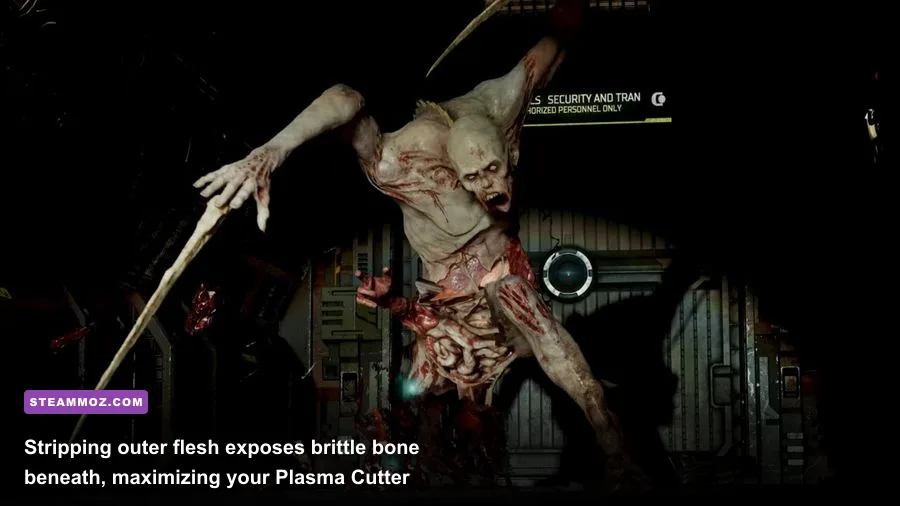
Veterans of the 2008 original will remember that cutting off limbs was a straightforward arithmetic problem: land two clean Plasma Cutter shots horizontally across the thighs, and the Necromorph drops. The remake throws that simplicity out the airlock with its proprietary "Peeling System." Necromorph bodies now consist of distinct anatomical layers: clothing, necrotic epidermal tissue, muscle fibers, and finally structural bone. If you shoot a fully armored or thick-fleshed limb with a high-precision, low-spread weapon, your blast will shear off the outer meat without snapping the bone beneath.
To sever limbs efficiently without chewing through your limited plasma reserves, you need to understand weapon roles and damage layering. Precision weapons like the Plasma Cutter and Line Gun excel at cutting exposed bone, but struggle when blasting through dense, muscular flesh. Conversely, wide-dispersion or bludgeoning tools—such as the Pulse Rifle's alternate concussive mine or the redesigned Force Gun—strip layers of meat clean off the skeleton in a single concussive wave. Stripping a charging Necromorph down to raw calcium with kinetic or explosive force turns subsequent precision shots into one-hit limb amputations. Analyzing which weapon handles which anatomical layer mirrors the weapon ranking mentality seen in tactical breakdowns like Far Cry 3: Blood Dragon weapons ranked from S to C.
Take note of enemy behavior when injured. Severing a leg cripples their forward velocity, forcing Slashers onto their bellies where their attack hitboxes shrink considerably. Never aim for the head or torso—the classic survival rule remains law—but don't just shoot blindly at shoulders either. Strip the tissue, expose the glowing joint seam, and snap the limb at the pivot point to conserve maximum ammunition.
Kinesis Is Isaac's Best Weapon, Not an Afterthought

If you're buying ammo from the Ishimura's store kiosks, you are playing Dead Space wrong. Ammo starvation is a constant threat on Medium and Hard difficulties, especially when exploring sprawling decks like Hydroponics or Medical. The solution isn't firing fewer rounds; it's recognizing that Isaac's upgraded Kinesis Module is practically an infinite-ammo rocket launcher disguised as an engineering gadget. For comprehensive details on environmental combat mechanics, check the detailed breakdown over at the Dead Space Wiki documentation.
Every hallway on the Ishimura is loaded with lethal debris. Look for red explosive cylinders, blue cryogenic stasis tanks, metal wall pipes with sheared edges, and fan blades. Better yet, look at the Necromorphs you just neutralized. When you sever a Slasher's arm or decapitate a Spitter, their scythe-like skeletal blades don't disappear into the floor. You can snatch those detached scythe appendages right out of the air using Kinesis and hurl them back at charging hostiles. A single impalement from a severed Necromorph arm deals monstrous kinetic damage, frequently pinning standard Slashers directly to the bulkhead behind them.
Master the fundamental "Stomp and Pluck" rotation: kill an enemy, stomp the corpse to snap off its extremities, and keep an arm loaded in your telekinetic hold as you round the next corner. You can even rip pipes straight out of damaged wall fixtures using Kinesis. If you manage these environmental resources smartly, you can routinely clear entire rooms without chambering a single Plasma Cutter cartridge. For more on maximizing your resource loops in high-stakes gaming, check out our guide on how to handle valuable upgrades in Everspace.
Strategic Power Node Routing and the "Rule of Two" Loadout

The upgrade Bench on the USG Ishimura can easily trap newcomers into spreading their Power Nodes far too thin. Power Nodes are finite, expensive commodities costing 10,000 Credits apiece at the Store. Dumping nodes into four different firearms simultaneously leaves you underpowered by Chapter 6, when armored, enhanced "Phantom" Necromorph variants begin replacing the basic grunt roster. Upgrading smartly requires strict build discipline, much like structuring an optimal setup in Far Cry 6's best beginner build.
The secret lies in the remake's dynamic drop logic: the Ishimura only drops ammunition for weapons Isaac currently has equipped in his four active holster slots. If you carry the Plasma Cutter, Pulse Rifle, Flamethrower, and Ripper simultaneously, crates and stomped lockers will split ammo distributions four ways. This leaves you with useless scraps of Ripper blades and fuel when what you truly need are high-yield plasma charges. Store unused guns in the Safe at any shop terminal! Running a tight "Rule of Two" loadout—such as the trusty Plasma Cutter paired with the Line Gun or Force Gun—guarantees that 90% of all discovered ammo feeds your primary death-dealers.
| Upgrade Target | Early Priority Nodes | Key Milestone Upgrade | Combat Impact |
|---|---|---|---|
| RIG Suit | Max HP, Air Capacity | Suit Level Upgrades (Shop) | Vastly increases damage threshold; unlocks interconnected node pathways. |
| Plasma Cutter | Damage, Heat Accumulator | Cartridge Rack (+Capacity) | Elevates the starter tool into a terrifying, all-purpose limb-severing laser. |
| Stasis Module | Duration, Energy Pool | Stasis Coating (DoT Effect) | Slows hordes to a crawl, letting you line up zero-stress bone shots. |
| Secondary Crowd Tool | Damage, Radius | Special Alt-Fire Upgrades | Provides an emergency panic button when Slashers surround your flanks. |
When pathing your Node routes on the upgrade tree, focus aggressively on reaching empty Node sockets that unlock flat damage bonuses, rather than wasting nodes on tertiary weapon capacities you don't use. For Isaac's RIG, prioritize Maximum Health and Stasis Duration. Stasis isn't just for puzzle-solving—freezing an aggressive Brute or Twitcher turns high-stress boss skirmishes into leisurely anatomy lessons.
Circuit Breakers and Surviving the Ishimura's Intensity Director
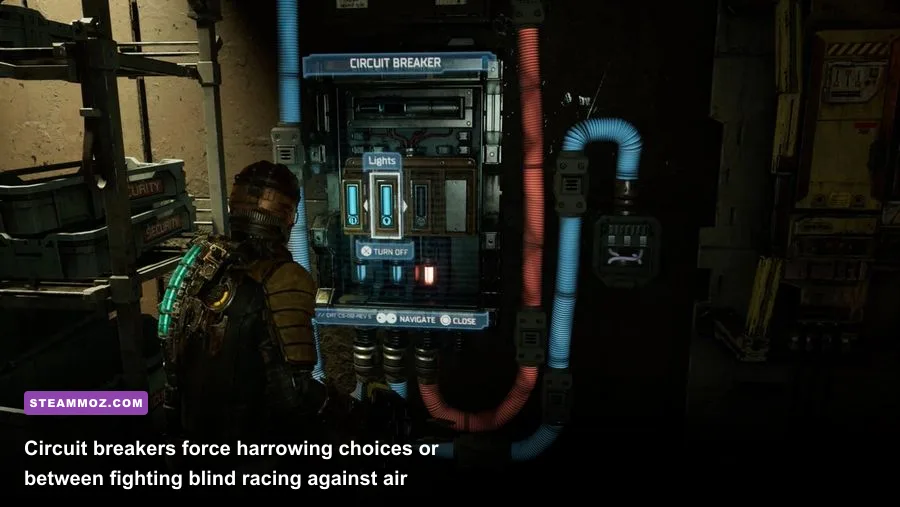
The USG Ishimura is no longer broken into isolated, loading-screen-divided levels; it is a fully interconnected, seamless dreadnought. Connecting those decks are new environmental puzzles called Circuit Breakers. These wall panels force you to divert limited electrical power between competing ship systems. Typically, you must choose between powering a transit door while sacrificing either Hallway Lights or Life Support (Oxygen).
When faced with this dilemma, always sacrifice the lights. Fighting in total darkness is terrifying, but Isaac's weapon-mounted tactical flashlights offer plenty of targeted illumination to spot glowing Necromorph eyes. Sacrificing Life Support, on the other hand, activates your RIG's oxygen countdown timer. Trying to accurately sever limbs while listening to Isaac hyperventilate as your air meter ticks down to zero is a recipe for wasted ammunition and panic-induced deaths. You can monitor official updates and mechanics via EA's official Dead Space portal or purchase copies directly on the PlayStation Store page for Dead Space.
Furthermore, prepare yourself for Motive's insidious background system: the "Intensity Director." This dynamic pacing engine tracks your heart rate, ammo count, and survival stats as you retrace steps through previously cleared corridors. Just because you wiped out the Mining Deck an hour ago does not mean it is empty when you return with Level 2 Security Clearance. The Intensity Director actively spawns wandering Slasher patrols, cuts room lighting, pumps dense atmospheric smoke through ventilation ducts, or triggers synthetic audio hallucinations to throw off your rhythm. Hunting down locked doors and high-value loot cache locations requires steady nerves, similar to navigating exploration routes in games like Eternal Destiny's secret locations. Keep your back to bulkheads, listen for vent-rattling audio cues in your headset, and treat every silent corridor as a primed trap.