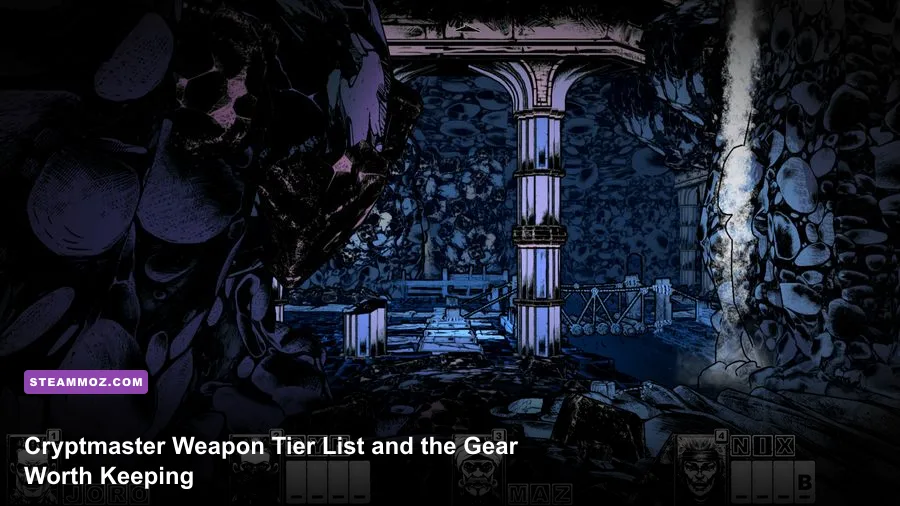
The short answer: Cryptmaster's best equipment isn't determined by a conventional fixed weapon chart. The top-ranked gear is the item that strengthens a character's job while remaining easy to identify and use through the game's typing-based command system. Prioritize fast, reliable damage weapons for your front-line attacker, high-value ability support for your spellcaster, and defensive or control bonuses for the character who keeps the party alive. Treat flashy damage-only loot as S-tier only when it doesn't make your combat vocabulary harder to manage.
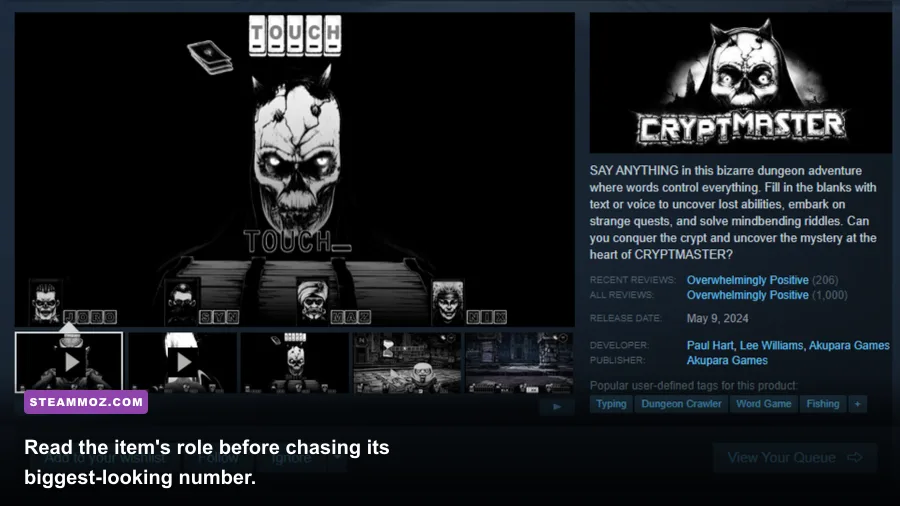
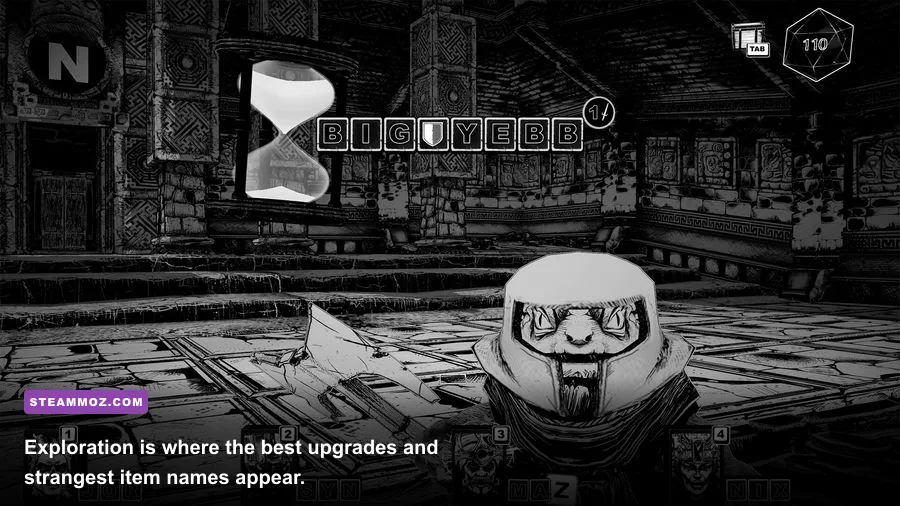
That distinction matters because Cryptmaster isn't a normal dungeon crawler where you click a sword and watch damage numbers climb. You type commands, guess words, answer the Cryptmaster's prompts, and build a party whose gear changes how quickly you can respond. The game's official Steam listing makes the premise clear: exploration, combat, and progression are all wrapped around word-based interaction.
So this ranking focuses on practical performance: damage delivered per turn, reliability under pressure, usefulness against mixed enemy groups, and how well an item fits the game's four-character party structure. It also avoids pretending that every weapon has one universal attack value. Cryptmaster's equipment can be affected by character role, item quality, upgrades, and the run's progression. Compare the actual item card in your game rather than trusting a copied number from a different version.
The Cryptmaster weapon tier list at a glance
The table below ranks weapon roles rather than claiming that every randomly encountered sword or axe has identical statistics. In practice, an excellent fast weapon with a useful effect can beat a higher-damage drop that takes too long to deploy or doesn't fit your current party.
| Tier | Weapon role | Why it ranks here | Best user |
|---|---|---|---|
| S-Tier | Fast single-target weapon with a useful secondary effect | Reliable damage, strong against priority targets, and easy to fit into short command turns | Front-line attacker or rogue-style damage dealer |
| S-Tier | High-value magical focus that improves a core ability | Raises the value of healing, control, or elemental attacks instead of offering empty damage | Wizard or other ability-focused character |
| A-Tier | Balanced sword or general-purpose melee weapon | Consistent in almost every room and rarely creates a bad matchup | Knight or durable physical attacker |
| A-Tier | Area-damage or status-focused weapon | Excellent against groups, although less impressive against one tough target | Bard, caster, or flexible back-line hero |
| B-Tier | Slow heavy weapon | Big hits feel great, but missed turns and awkward targets reduce its real output | Tanky character with room to absorb pressure |
| B-Tier | Pure defensive equipment | Useful during attrition, but it can lengthen fights if your damage falls too far | Dedicated protector |
| C-Tier | Damage-only weapon with no synergy | Looks attractive early, then loses value when enemies demand healing, control, or focus fire | Temporary replacement gear |
| C-Tier | Narrow resistance or situational weapon | Worth equipping for a known encounter, but weak as your default loadout | Any character before a specific dungeon section |
The important takeaway is that S-tier doesn't mean “largest attack number.” Cryptmaster rewards momentum. A weapon that lets you finish a dangerous enemy before it gets another turn can be stronger than a slower weapon with a larger theoretical hit. The same is true for a focus that makes a control or healing command more dependable. Every avoided interruption saves health, words, and time.

🎮 Cryptmaster
Looking to experience this game? Grab your digital key directly on our store for $13.74.
View on Steammoz Store →What makes S-tier equipment so effective
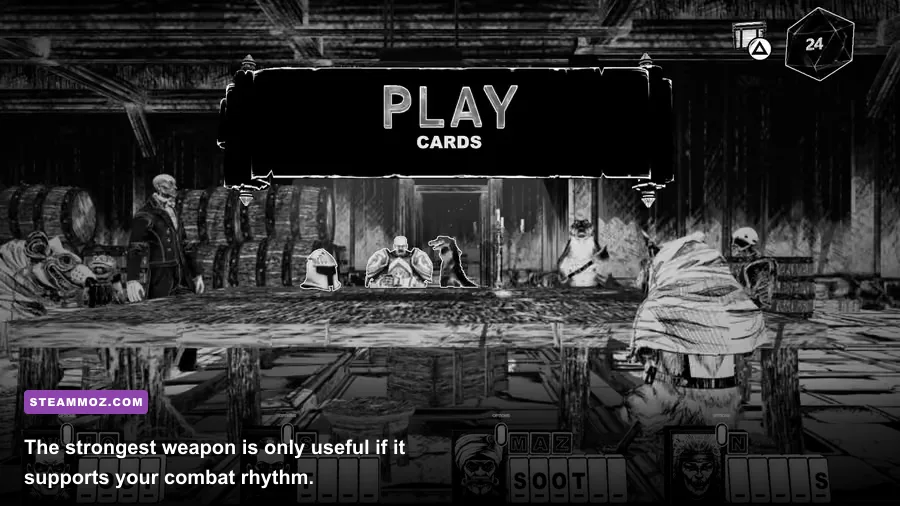
Fast single-target weapons sit at the top because enemy priority matters more than damage spread. If a room contains one foe that can disable, drain, or heavily punish your party, removing that target quickly is usually the best defensive move. Equip the fast weapon on the hero whose basic attacks are easiest for you to recall and type under pressure. Cryptmaster is a typing game before it is a spreadsheet game; a theoretically superior item loses value if you hesitate over its command.
Ability-enhancing focuses are the other S-tier choice. A caster's equipment should be judged by the abilities it improves, not by whether it resembles a traditional wand. A boost that makes healing more efficient can save several turns in a long room. A control-oriented bonus can prevent an enemy from acting at all. Those effects scale with the encounter: the more enemies that can interrupt your plan, the more valuable control and recovery become.
Reliable status effects deserve special attention. Effects such as poison, stun, weakness, or slow can be difficult to value from a single battle because their payoff arrives over several turns. They are strongest when applied early to an enemy that will survive the opening exchange. Don't waste them on a target your physical attacker can already finish immediately. Use the effect to reshape the next two or three turns, then focus the party on the most dangerous remaining enemy.
| Equipment quality | Stat or effect to prioritize | Combat payoff | Common mistake |
|---|---|---|---|
| Early game | Reliable damage and basic survivability | Gets the party through ordinary rooms without exhausting recovery resources | Chasing a rare effect while ignoring a large upgrade in dependable damage |
| Mid game | Role synergy and useful status effects | Lets each hero specialize instead of competing for the same target | Giving every character an offensive item and leaving no support plan |
| Late game | Multipliers, control, resistance, and encounter-specific utility | Improves performance against elite enemies and multi-phase encounters | Keeping an old favorite because its damage number is familiar |
| Boss preparation | Survivability plus the ability to end a phase quickly | Reduces the chance that one bad turn snowballs into a failed run | Equipping four damage items and having no answer to status pressure |
That is why a good equipment screen should be read in context. Ask three questions: who is wearing this, what command does it improve, and what problem does it solve? If the answer is “it adds damage” but your party already kills normal enemies comfortably, the item may be less valuable than defense, healing, or crowd control.
Best equipment by Cryptmaster party role
The knight or front-line defender
The knight wants a balanced melee weapon and defensive equipment that keeps attention away from fragile allies. A heavy weapon can work here because a durable character has more freedom to spend a turn setting up or absorbing a hit, but don't confuse durability with unlimited time. If the knight is the only character capable of finishing a weakened enemy, a faster weapon may still be the better pick.
For this role, rank equipment by consistency first. Health, armor, resistance, and damage reduction are most valuable when they prevent the party from entering the next room already damaged. A defensive item that turns a two-hit survival window into a three-hit window can be stronger than a small attack upgrade, particularly when the Cryptmaster throws several targets at once.
The wizard or ability-focused caster
The wizard should use the item that amplifies the party's most important ability, whether that means direct damage, healing, or control. A caster who can reliably answer groups should not be forced into a single-target damage role just because a weapon has a larger printed value. Equip around the encounters you are actually failing, not the rooms you already clear.
Resource efficiency is the hidden stat here. If an item helps a spell finish a target without another cast, or lets a support action cover more of the party's needs, it effectively creates extra turns. Those turns are worth more than a modest increase to a basic attack. Keep a second option available when the dungeon's enemy mix changes; a brilliant fire-focused setup is still a bad default if the next area punishes that damage type.
The bard or support specialist
The bard's best equipment is rarely the item with the highest raw damage. Support actions become stronger when the bard can stay alive, act consistently, and layer buffs or debuffs before the enemy group overwhelms the front line. Prioritize equipment that improves utility, survivability, or the duration and reliability of party-wide effects.
Don't park the bard permanently in the back and forget about them. In Cryptmaster, a support character often has the most important decision on the turn: restore the party, weaken a dangerous enemy, or help secure a kill. Give this character gear that leaves all three options open. Narrow offensive equipment belongs lower on the list unless your party already has dependable healing and control.
The rogue or fast damage dealer
The rogue benefits most from speed, precision, and effects that reward attacking wounded or isolated enemies. This is the ideal home for the S-tier fast weapon. The rogue should usually finish priority targets rather than open on the largest enemy in the room. Let the knight establish safety, let the caster soften or disable a threat, then use the rogue to close the exchange.
Because the rogue tends to operate near the edge of survival, defense has real offensive value. A dead damage dealer contributes zero damage on the next turn. If an item gives up a small amount of attack for meaningful resistance or evasion, test it in the rooms that normally end your run. Many “glass cannon” upgrades are only upgrades until the first unlucky status effect.
| Party role | First priority | Second priority | Equipment to avoid as a default |
|---|---|---|---|
| Front-line defender | Survivability | Consistent melee damage | Extremely slow weapon with no defensive payoff |
| Wizard or caster | Core ability efficiency | Control or elemental coverage | Raw physical damage that ignores spell synergy |
| Bard or support | Utility reliability | Resistance and health | Single-target damage gear that leaves the party unsupported |
| Rogue or striker | Fast target deletion | Precision, status, or survivability | Slow weapon that cannot secure kills before retaliation |
For a broader look at how RPG equipment rankings can mislead players, compare this approach with Steamoz's Holy Potatoes weapon tier list. Cryptmaster is more improvisational: your typing speed, vocabulary, and ability to recognize a useful command are part of the build.
How to judge loot without wasting a run
Cryptmaster's equipment decisions are easiest when you compare new loot against the job your current item performs. Before replacing anything, record the old item's role in plain language: “keeps the knight alive,” “helps the wizard control groups,” or “lets the rogue finish priority targets.” Then inspect the new item. If it doesn't perform that job better or solve a problem your party currently has, keep the old gear.
- Check the user first. A powerful-looking item may be inefficient on the wrong character. Place support gear on the hero who acts early and can use it every fight.
- Compare real outcomes, not isolated numbers. Ask whether the new weapon changes the number of turns needed to defeat a common enemy. If it doesn't, its smaller utility bonus may still decide the ranking.
- Test command clarity. Use the exact item and ability names during safe encounters. If the equipment's identity or effect is difficult to remember, that friction is part of its cost.
- Keep one flexible backup. Store an area option, resistance option, or support item instead of selling every lower-damage drop immediately.
- Reassess after a major dungeon change. The best weapon in an early crypt section may be mediocre once enemies gain more health or status pressure.
Word knowledge also changes the value of gear. Cryptmaster's combat asks you to type answers and commands, and the game can reward experimentation with verbs, nouns, and item interactions. A familiar, easy-to-spell weapon can outperform a theoretically stronger one simply because it keeps you moving. If you enjoy systems that turn knowledge into combat power, the official Cryptmaster game site is worth bookmarking for updates and details from the developers.
Keep your inventory organized around decisions, not rarity. Mark the item you use for ordinary rooms, the item you bring into elite encounters, and the item that handles a particular resistance or status threat. This prevents the classic RPG mistake of hoarding every upgrade and entering the next fight with an outdated loadout.
Best builds and combat rotations for top-ranked gear
The strongest general-purpose setup is a balanced four-role party: the front liner opens by creating safety, the caster handles the room's largest tactical problem, the support character stabilizes the party, and the fast attacker removes the priority target. The rotation changes depending on the enemy telegraph, but the principle stays the same: deny the most dangerous action before chasing total damage.
Safe-room rotation
In a normal room, begin with the easiest reliable damage command rather than spending every resource immediately. Use the caster's area or control option when multiple enemies can act before your next turn. Have the support character preserve recovery resources if the party is healthy, then let the fast attacker finish the target that has already been weakened. This keeps the party ready for the next encounter and gives you a chance to verify unfamiliar words without boss-level pressure.
Elite encounter rotation
Against an elite, open with control or a debuff if the enemy survives a direct attack. The front liner should absorb the first dangerous exchange while the caster creates an advantage that lasts multiple turns. Once the elite is impaired, shift all available damage onto it. Don't split attacks across several targets unless the group has a shared health mechanic or an area attack makes that clearly more efficient.
Boss-room rotation
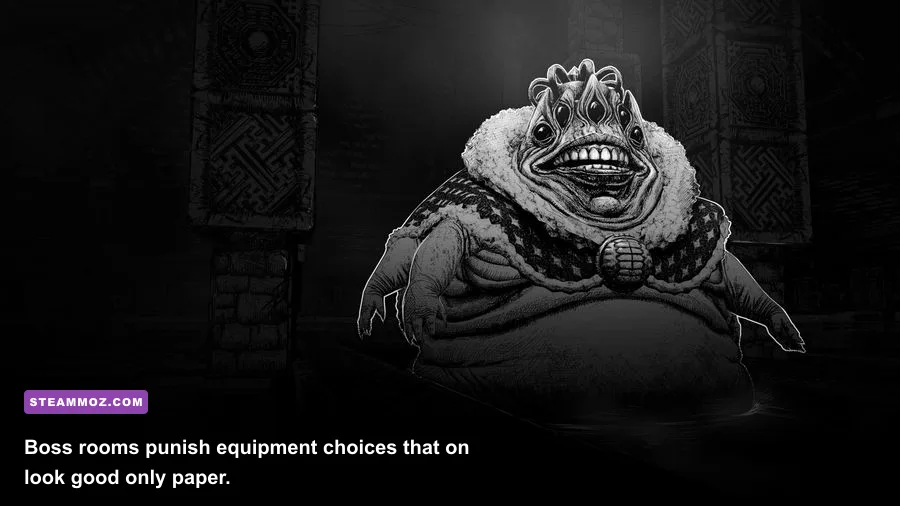
Bosses are where A-tier flexibility can beat S-tier specialization. Bring one weapon that delivers dependable damage and one piece of equipment that helps your party survive the boss's signature pressure. During a phase change, stop attacking automatically and reassess. A new summon, resistance, or status effect may make your favorite command a poor choice for the next exchange.
| Situation | Opening action | Best equipment profile | Win condition |
|---|---|---|---|
| Ordinary mixed room | Reliable damage or light control | Balanced weapon with no severe drawback | Clear threats while preserving recovery |
| Several fragile enemies | Area damage or group debuff | Effect-focused caster or bard equipment | Reduce the number of enemy turns quickly |
| One dangerous elite | Disable, weaken, or focus fire | Fast single-target weapon and control support | Prevent the elite's second major action |
| Boss phase change | Reassess resistances and telegraphs | Flexible gear with defense or status coverage | Survive the new pattern before committing resources |
If you want to squeeze more out of the PC version while running a busy background setup, Steamoz's Hack Slash Loot settings guide offers useful general performance habits. Cryptmaster is not a demanding showcase title, but clean input and stable frame pacing make a typing-focused game feel noticeably better.
What to sell, what to save, and when to rerank gear
Sell duplicate low-impact gear once you have confirmed that it doesn't provide a useful resistance, status effect, or role swap. Keep at least one backup weapon for each major party function: a dependable melee option, a fast finisher, an ability-focused item, and something defensive. That small reserve is more valuable than a packed inventory of items that all do the same thing.
Rerank equipment after three events: a new party member joins, your primary damage command changes, or the dungeon introduces a new enemy behavior. A weapon's tier is not permanent because Cryptmaster's combat problems change. A slow heavy weapon may move from B to A when your defender gains enough protection to use it safely. A poison-focused item may jump from C to S in a long encounter where enemies survive several turns. Context is the entire ranking.
Also remember that Cryptmaster is designed around discovery. The publisher's official game catalog and the game's Steam community are better places to check patch-specific changes than an old screenshot or static list. If an update adjusts item generation, balance, or party abilities, the role-based tier logic still works, but individual drops may move between tiers.
For a related dungeon-crawler perspective, Steamoz's Dungeon Siege starter builds guide is useful reading, although Cryptmaster demands a very different mindset. You aren't simply assembling the biggest numbers. You're building a party whose vocabulary, timing, and equipment all point toward the same plan.
Final ranking: fast priority-target weapons and ability-enhancing focuses are the safest S-tier choices; balanced melee weapons and strong area or status tools belong in A tier; slow heavy weapons and pure defense are valuable but situational B-tier options; and damage-only or highly narrow items should remain temporary C-tier gear unless a specific encounter gives them a clear job. Equip for the next problem, type with confidence, and don't let a shiny number overrule a weapon that actually keeps your party alive.