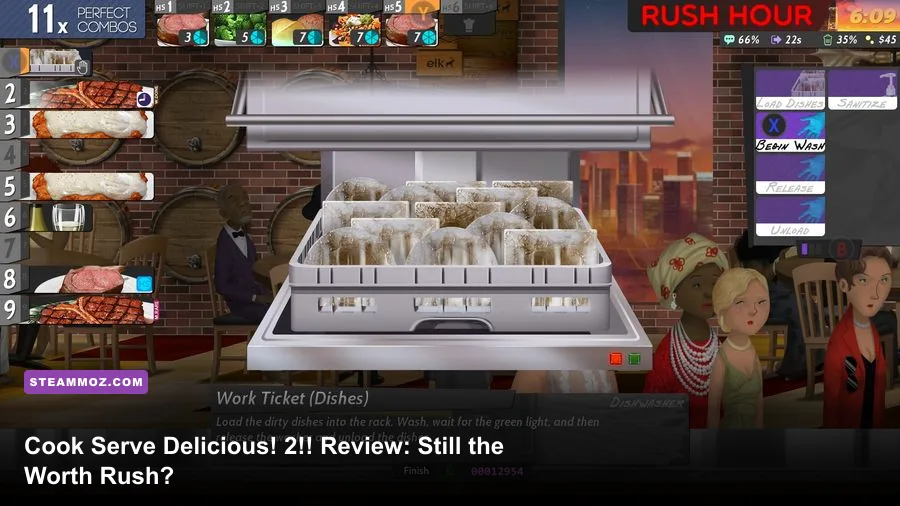
Cook Serve Delicious! 2!! is absolutely worth playing in 2026 if you enjoy fast, keyboard-driven time management with a surprisingly deep restaurant-planning layer. Its pixel-art presentation is dated, and the campaign can feel punishing, but the sharp controls, huge menu variety, local co-op, and endlessly replayable score chase still make it one of the best cooking games on PC.
That verdict comes with one important warning: this isn't a relaxing café simulator. You're not decorating a restaurant, chatting with customers, or casually flipping pancakes. You're juggling food stations, memorized button inputs, countdown timers, VIP orders, cleaning tasks, and service mistakes while the queue steadily fills. The appeal is closer to an arcade game than The Sims, and that's exactly why it has held up.
Why Cook Serve Delicious! 2!! Still Feels Great
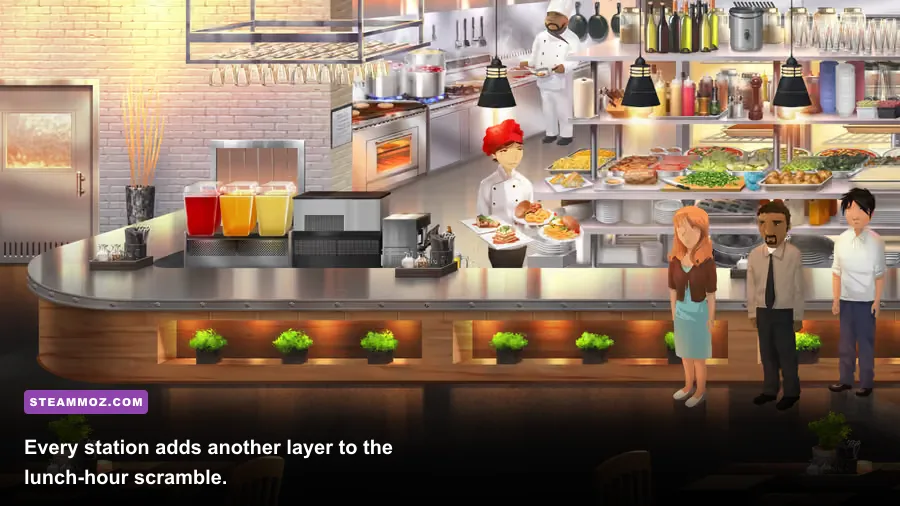
The core loop is beautifully direct. Pick a restaurant, choose a menu, prepare dishes as orders arrive, and try to finish the shift with enough customer satisfaction to unlock the next challenge. Every recipe translates into a compact sequence of actions. Burgers may require grilling and toppings, sushi demands careful assembly, and drinks or sides can become quick filler tasks between longer preparations.
The keyboard design is the star. Most foods use readable letter prompts, number keys, or short sequences rather than awkward cursor dragging. That means the game rewards muscle memory. Once you know the input for a dish, your attention shifts from “what button do I press?” to “which station can I safely delay while I clear this queue?” That change is what separates a beginner from a high-scoring player.
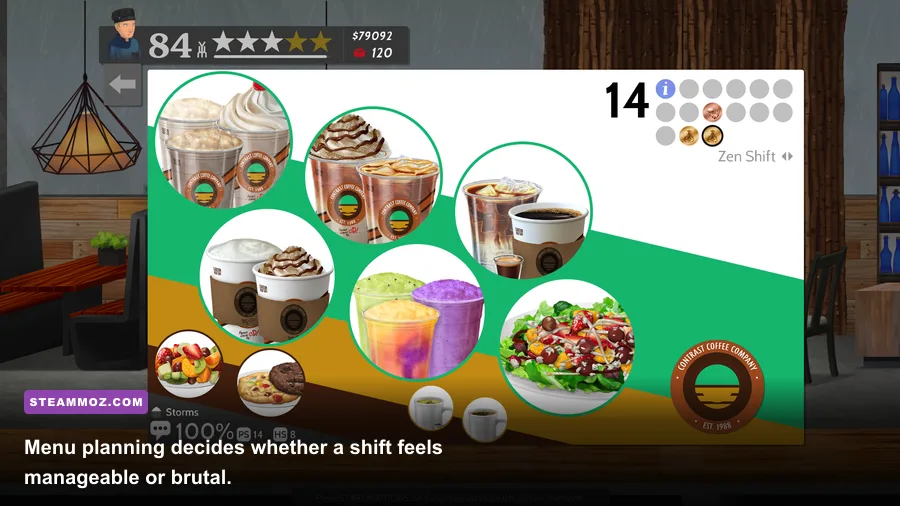
Orders also have different risk profiles. Some recipes are fast and forgiving, while others occupy your attention for several seconds. A menu built entirely from complicated dishes can look profitable on paper and collapse during a rush. Strong players create menus with a rhythm: a few demanding foods, several quick actions, and enough low-maintenance items to prevent dead time.
| Gameplay Element | What You Actually Do | Why It Matters |
|---|---|---|
| Food stations | Prepare, cook, assemble, and serve dishes | Creates the moment-to-moment pressure |
| Menu planning | Select foods before each service | Controls difficulty and earning potential |
| Customer orders | Read prompts and complete timed inputs | Tests memory, speed, and prioritization |
| Restaurant events | Handle special conditions and hazards | Stops the campaign from becoming repetitive |
| Ratings and money | Finish shifts accurately and efficiently | Unlocks more recipes and locations |

🎮 Cook Serve Delicious! 2!!
Looking to experience this game? Grab your digital key directly on our store for $3.74.
View on Steammoz Store →The Campaign Has More Content Than Its Graphics Suggest
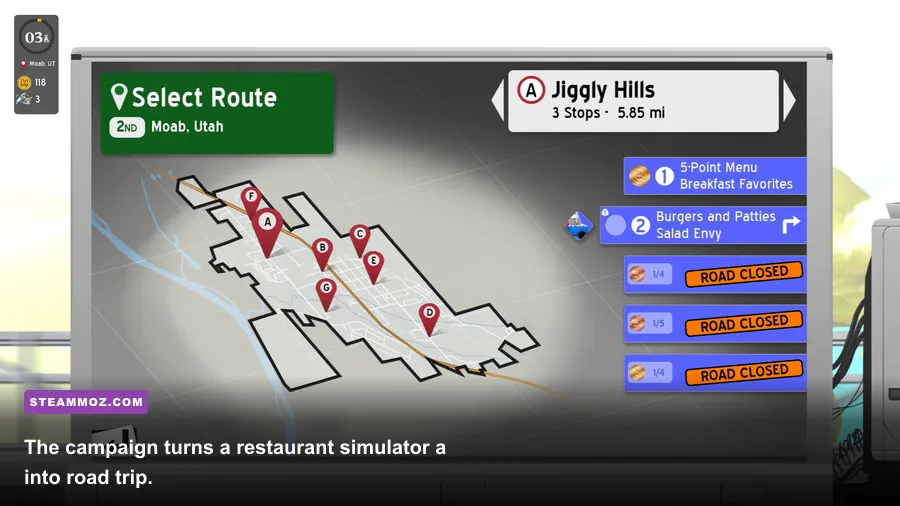
Cook, Serve, Delicious! 2!! launched with a large campaign built around hundreds of restaurant levels, multiple locations, and a broad recipe roster. Exact totals can vary depending on how you count challenge variants and bonus content, but the practical takeaway is simple: there's enough here to occupy dozens of hours before mastery becomes the goal.
The campaign structure works because it doesn't merely hand you harder recipes. It gradually increases cognitive load. Early shifts teach individual stations and simple food combinations. Later stages stack several demanding tasks together, introduce more aggressive customer pacing, and ask you to maintain consistency across a full service rather than survive one frantic order.
That progression is satisfying when you're learning, but it can also expose the game's age. Unlocks sometimes feel spread across a long campaign, and a failed shift can send you back to repeat content while you refine your menu. The game expects persistence. If you prefer a generous difficulty curve, you'll want to use practice runs and choose safer foods instead of chasing maximum earnings immediately.
There is real strategy behind progression. Don't automatically equip every newly unlocked recipe. A food's value depends on its input complexity, cooking time, customer frequency, and how badly it collides with the rest of your menu. A quick side can be more useful than an impressive main course if it lets you clear several orders while a slow station is occupied.
| Menu Approach | Strength | Weakness | Best For |
|---|---|---|---|
| Low-complexity menu | Reliable inputs and fast recovery | Lower scoring ceiling | Campaign learning and difficult shifts |
| Balanced menu | Mixes quick and demanding dishes | Requires planning | Most players and first clears |
| High-complexity menu | Excellent score potential | Small mistakes snowball quickly | Experienced players and replays |
| Co-op menu | Lets players divide stations | Needs communication and practice | Local multiplayer sessions |
Difficulty Is Tough, But the Failure Is Usually Yours
The best compliment I can give the difficulty is that it rarely feels random. When a shift goes wrong, the cause is usually obvious: you started a slow recipe too late, ignored a side station, misread an order, or filled your menu with foods that all demand attention at the same moment. The game is testing operational discipline, not dice rolls.
That said, the interface can become visually noisy. Multiple timers, ingredient prompts, and customer requests compete for attention, especially when a restaurant introduces unusual hazards. The solution isn't frantic button mashing. It's triage. Finish an order that is already close to completion, start long-cook items early, and avoid abandoning a station unless the penalty is worse than the delay.
Use practice deliberately. Repeat a troublesome level with a simpler menu and identify the exact point where the queue gets away from you. Then change one variable. Replace one difficult recipe, move a high-attention dish to a different menu slot, or reserve a keyboard hand for a particular station. Randomly replaying the level while hoping to improve is much less effective.
Controls are responsive on a modern PC, and the game runs comfortably at high frame rates because its visual demands are extremely light. There are no meaningful graphics presets to tune, no ray tracing, and no modern performance bottlenecks. The important “settings” are input comfort, window mode, audio balance, and whether your keyboard layout feels natural.
| Configuration | Recommended Choice | Performance Impact | Practical Note |
|---|---|---|---|
| Display mode | Fullscreen or borderless | Negligible | Choose whichever makes inputs feel more consistent |
| Resolution | Native monitor resolution | Very low | Pixel art remains crisp at integer-friendly scales |
| Frame rate | 60 FPS or higher | Negligible on modern hardware | Stable response matters more than visual spectacle |
| Input device | Keyboard first | None | Keyboard shortcuts are faster than mouse-heavy play |
| Audio | Keep order cues audible | None | Sound helps reinforce the visual timer pressure |
Local Co-op Is the Secret Weapon
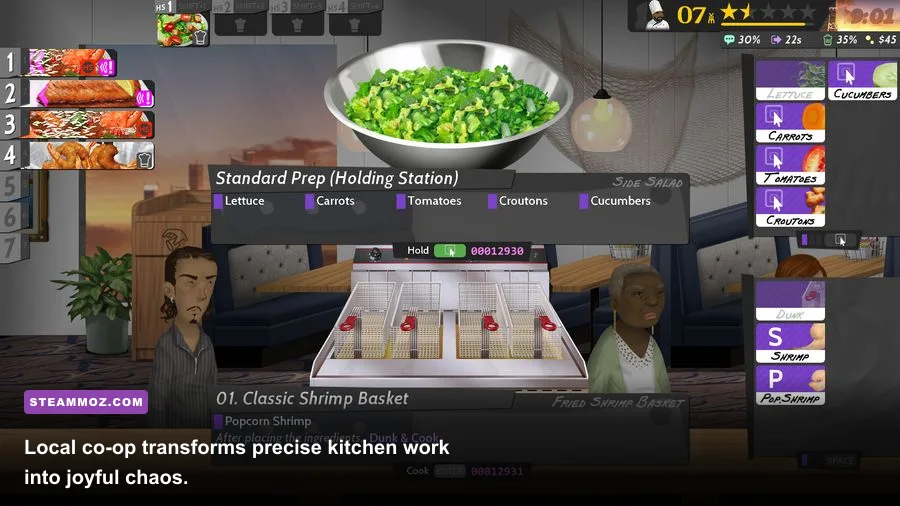
Solo play is excellent, but local co-op is where Cook, Serve, Delicious! 2!! becomes a party game with teeth. Two players can split responsibility across stations, call out orders, and develop their own workflow. One person might handle cooking while the other assembles dishes and watches sides. Then a chaotic level forces both players to abandon that plan and improvise.
Communication matters more than raw speed. “Starting burgers,” “cleaning,” and “two drinks next” are useful callouts because they prevent both players from competing for the same task. New pairs should begin with a forgiving menu and deliberately assign stations. Once the rhythm feels natural, add more demanding recipes and work toward high ratings.
There is a small learning curve when both players reach for the same input or lose track of who owns a station. That's not a flaw so much as part of the co-op texture. The game creates memorable failures: one player saves a burning dish while the other accidentally lets three customers leave. At its best, it produces the same loud, messy teamwork as a great couch co-op puzzle game.
What Hasn't Aged Well in 2026
The presentation is functional rather than luxurious. Pixel art gives every food and station a readable silhouette, but menus can feel utilitarian, animations are modest, and the campaign interface doesn't have the slick feedback of newer management games. If you want a cozy restaurant fantasy with décor, staff personalities, and a beautiful build mode, this is the wrong kitchen.
Accessibility is also more limited than what modern players may expect. The game is fundamentally built around rapid input recognition, and players with motor, visual, or cognitive accessibility needs may find the default pace demanding. Keyboard remapping and comfort settings can help, but they don't transform the core challenge. That's worth considering before buying purely because the screenshots look charming.
Some repetition is unavoidable. You will revisit familiar recipe types and restaurant structures while chasing better ratings. The difference is that replaying is the point. Like a score-attack arcade game, the satisfaction comes from shaving errors out of a route you already understand. If you dislike repetition without a constant stream of narrative rewards, the campaign may feel longer than its content count suggests.
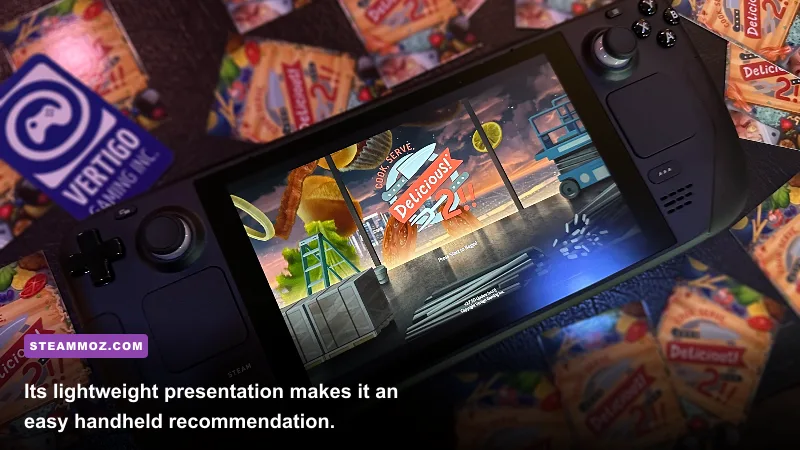
For comparison, players who enjoy methodical progression may also appreciate our strategy-focused leveling guide, while PC users troubleshooting older games can browse our PC performance fixes. Cook, Serve, Delicious! 2!! itself is far less demanding than either example, making it a strong fit for low-end laptops and handheld PCs.
| Player Type | Recommendation | Reason |
|---|---|---|
| Arcade score chaser | Strong buy | Fast inputs and replayable mastery offer long-term depth |
| Cooking sim fan | Buy with caution | Excellent kitchen mechanics but little decoration or role-play |
| Co-op household | Easy recommendation | Local multiplayer creates genuine teamwork and comedy |
| Relaxed player | Try before buying | Late shifts are intense and mistakes compound quickly |
| Low-end PC owner | Strong buy | Minimal hardware demands and fast loading |
Verdict: Buy It If You Want a Real Challenge
So, is Cook Serve Delicious! 2!! worth playing in 2026? Yes, especially during a Steam sale, and even more so if you have a friend for local co-op. Its small visual footprint hides an unusually demanding game about sequencing, attention management, and menu optimization. Every successful shift feels earned because the game makes you improve your process rather than simply grind stronger upgrades.
It isn't the best choice for players searching for a calm cooking sandbox, modern accessibility options, or a story-heavy management sim. The campaign sometimes stretches its ideas, and the interface shows its age. But the controls remain crisp, the recipe variety keeps menus interesting, and the pressure still lands with arcade-game precision.
For more demanding strategy and simulation recommendations, check out our Dungeons 3 strategy tips and Everspace 2 hidden rewards guide. But if your ideal evening involves shouting “order up,” learning a keyboard route, and replaying a level until every station clicks, this kitchen still deserves a reservation.
You can verify the current PC version, features, and player reviews on the official Steam page. More information about the series is available through Vertigo Gaming's official site, while the developer's Steam developer page lists related releases.