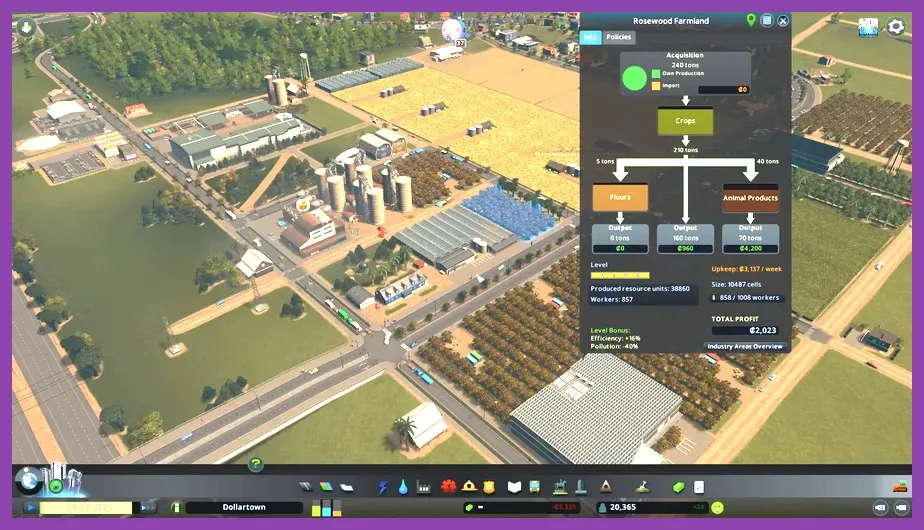
The best materials in Cities: Skylines 2 are not simply the rarest resources: they are the inputs that support profitable production chains without creating crippling traffic. Prioritize grain and vegetables from fertile land, timber from forestry, ore for concrete and metal, and oil for petrochemical production. Build extractors on resource deposits, place processing industry nearby, and use warehouses, cargo rail, and highway access to keep the chain supplied.
This approach works because the game’s industrial economy is built around four natural resources: fertile land, forest, ore, and oil. Each can be extracted locally and converted into processed goods used by commercial buildings and specialized manufacturers. Before zoning a large industrial block, check the official Cities: Skylines 2 game page and the official Steam community hub for current economy and patch information.
1. Fertile Land Is the Best Early Material
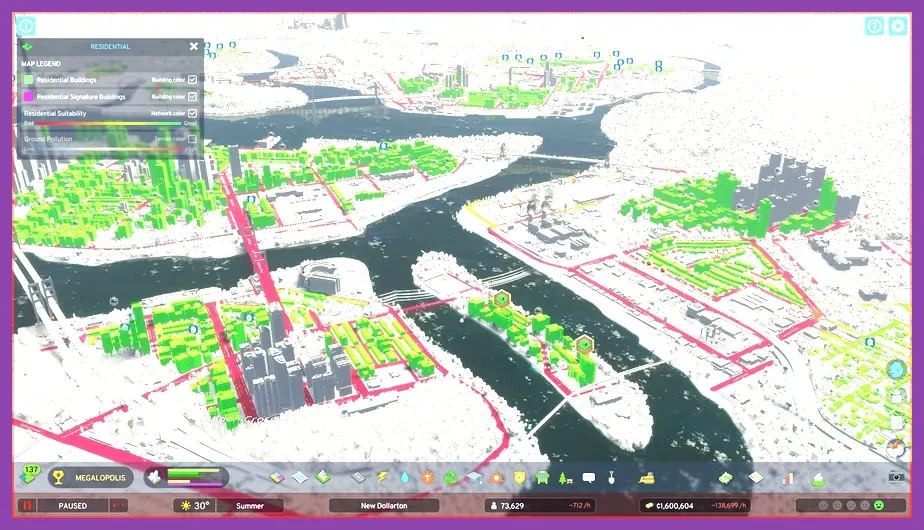
Fertile land is the strongest starting resource because it supports food production, has a relatively simple supply chain, and serves everyday commercial demand. Use the Natural Resources overlay before zoning. Agricultural extractors produce crops such as grain and vegetables, while livestock-related farming can provide additional food inputs depending on the buildings available in your current development stage.
How to use farming efficiently
Keep agricultural extractors close to the fertile deposit, but do not bury them inside your residential grid. Farming buildings generate heavy vehicle movement and may create noise pollution. Give the district a direct collector road to an arterial, then connect that arterial to the highway. A short route is more valuable than a huge farm: trucks that spend their entire trip in traffic can make local production less useful than imports.
Food is especially valuable during the early and mid-game because commercial zones consume it consistently. Start with a compact farming district, then add processing buildings only after you can see a reliable surplus of crops. If the processing building repeatedly reports missing resources, expand extraction or add a warehouse before zoning more shops. The official Paradox forums are useful for checking changes to production and industrial behavior after updates.
2. Forestry Provides the Best Flexible Supply
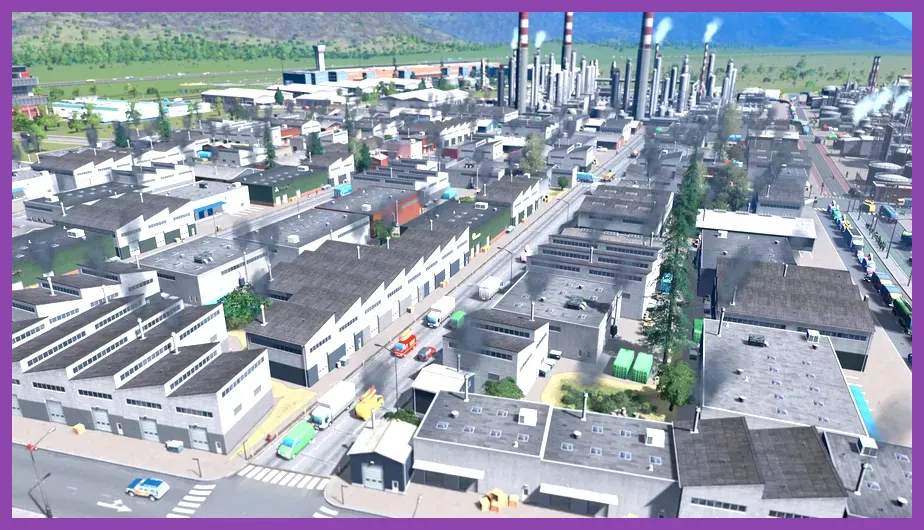
Forest products are one of the safest materials to develop after food. Forestry supports timber-based production and can feed factories that make furniture and other processed goods. It is also more flexible than oil because it does not require you to commit your entire industrial plan to one specialized export chain.
Build a timber chain without wasting trucks
Place forestry extractors directly over the forest resource area, then create a processing cluster within a short drive. Leave enough space for industrial buildings to expand, but avoid a single enormous zone with no internal road hierarchy. Use two-lane local roads for building access and one or two wider roads for freight collection. Keep residential streets, schools, and pedestrian routes out of the truck corridor.
Timber is a strong material for a city focused on commercial growth because furniture demand grows with higher-density development. However, do not overproduce it just because the resource is renewable. Open the Economy panel and watch whether factories are exporting, stockpiling, or reporting shortages. A moderate surplus is healthy; a giant warehouse filled with unsold goods is locked-up capital and unnecessary traffic.
3. Ore Is the Best Material for Construction
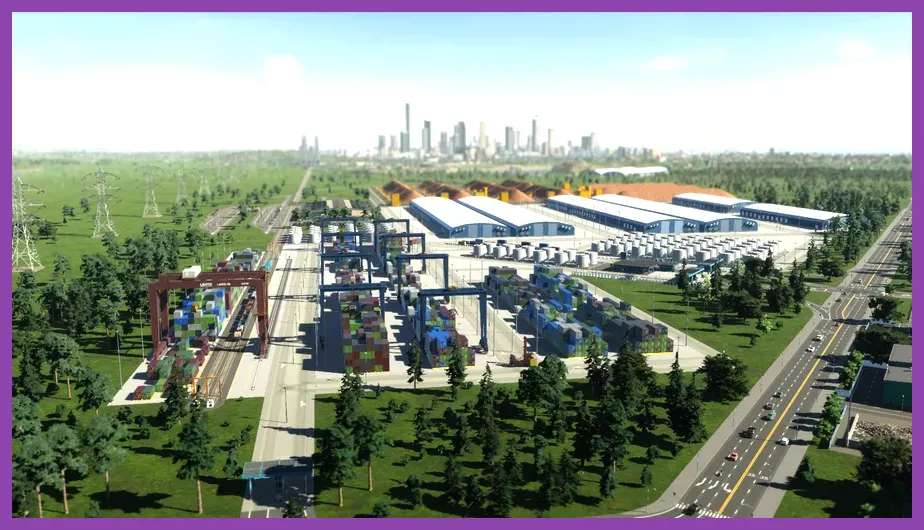
Ore is the best material when your priority is construction support and heavy industry. Ore extraction feeds processing that produces concrete and metals, two important industrial outputs. These materials help supply the broader city economy and make an ore district a strong choice for players expanding roads, utilities, and dense development quickly.
Where to place ore production
Ore extractors belong directly on the ore deposit, while concrete and metal processing should sit nearby on a dedicated industrial boulevard. Keep the whole chain close to a highway connection or cargo terminal. Heavy trucks are slower, create more congestion, and are much more damaging when forced through a downtown junction than when routed around the edge of the city.
Do not mix heavy ore traffic with farming access. Separate the districts with a road connection that gives each industry its own highway ramp. Add storage once you have multiple processing buildings. A warehouse can absorb delivery spikes and give factories a local source instead of forcing every truck to travel to an outside connection. For broader performance advice when your industrial city grows, see Steamoz’s guide to optimizing open-world games on Steam Deck; the same principles of reducing simulation and traffic pressure apply.
4. Oil Is Best for Advanced Industrial Chains
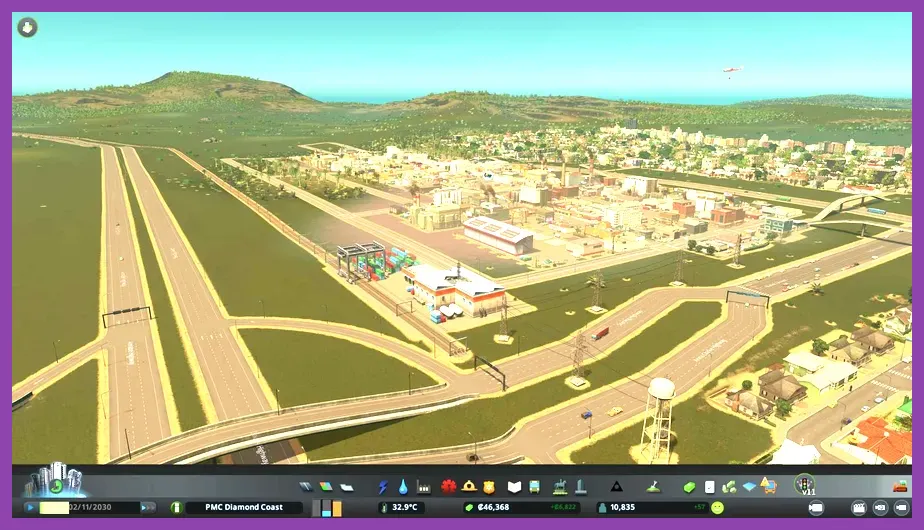
Oil is the best late-game material for players who want higher-value processing, but it is also the easiest resource to mishandle. Oil production creates a powerful specialized industry chain connected to petrochemical goods, plastics, and other advanced manufacturing inputs. The payoff can be excellent, yet the district needs reliable freight access and enough demand to avoid importing or exporting at inefficient volumes.
How to scale an oil district safely
Start with extraction and one processing branch rather than unlocking every oil-related building immediately. Watch the Outside Connections and production panels to confirm that raw oil is reaching processors. If processors sit idle, the problem may be insufficient extraction, a full storage building, a blocked road, or weak demand for the finished product. Diagnose the chain before adding another factory.
Oil industry should be isolated from housing because of pollution and truck traffic. Place it downwind where possible, provide water and power separately, and build a direct freight route to the highway or cargo rail. A cargo train terminal is particularly useful once imported materials and exports begin competing with local deliveries. For PC players, Steamoz’s low-end PC optimization guide includes useful general advice on reducing background load while testing large simulation-heavy cities.
5. Match Materials to the Right Production Chain
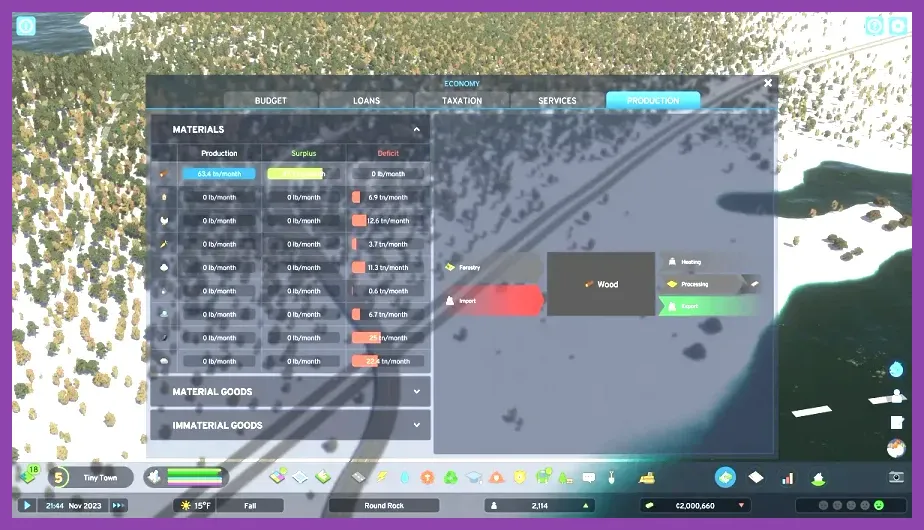
The best material depends on the product you want to manufacture. Use the following ranking when choosing your first specialized industry:
S-Tier: Crops and timber
Crops are S-tier because food demand is dependable and farming is easy to understand. Timber also belongs in S-tier for flexible furniture and commercial supply. Both resources are excellent for a first industrial district, especially when your city has limited cash and cannot afford a complex freight network.
A-Tier: Ore and oil
Ore is A-tier for construction-focused cities because concrete and metals support a broad industrial economy. It moves up to S-tier when you have a highway bypass and cargo storage ready. Oil is also A-tier, but only after your population, budget, and freight infrastructure can support advanced processing. It is profitable when balanced and expensive when overbuilt.
B-Tier: Imported materials
Imported materials are B-tier rather than useless. They are essential when your map lacks a resource deposit or your city has not unlocked the required extractor. Imports let factories operate while you build infrastructure, but they expose you to outside traffic and can become expensive when every production chain depends on them. Treat imports as a bridge, not a permanent substitute for local extraction.
Storage, Traffic, and Production Checks
Material quality cannot compensate for a broken supply route. Build warehouses near processing districts, but do not place every storage building at the end of one road. Use separate entrances and exits where possible, leave turning space around cargo facilities, and connect industrial roads to highways before population growth makes upgrades difficult.
Check three panels whenever a factory underperforms: the building’s input status, the city Economy panel, and the traffic view. “Not enough input” points toward extraction, storage, or transport. “Not enough customers” means production exceeds local demand. Heavy congestion means the chain may be healthy but physically unable to deliver. Fix the relevant failure instead of blindly expanding the zone.
Finally, pause construction when testing a new chain and let the simulation run for several in-game weeks. Production, storage, imports, exports, and commercial demand do not always rebalance instantly. If your city is suffering frame-rate drops while you monitor the economy, Steamoz’s low-FPS troubleshooting advice covers practical PC checks that can also help with large Cities: Skylines 2 saves.
The ideal material plan is simple: begin with fertile land or forestry, add ore when construction demand rises, and invest in oil only when freight infrastructure and advanced demand are ready. Local extraction, short processing routes, sensible storage, and dedicated cargo connections will outperform a much larger industrial zone built without a supply-chain plan.