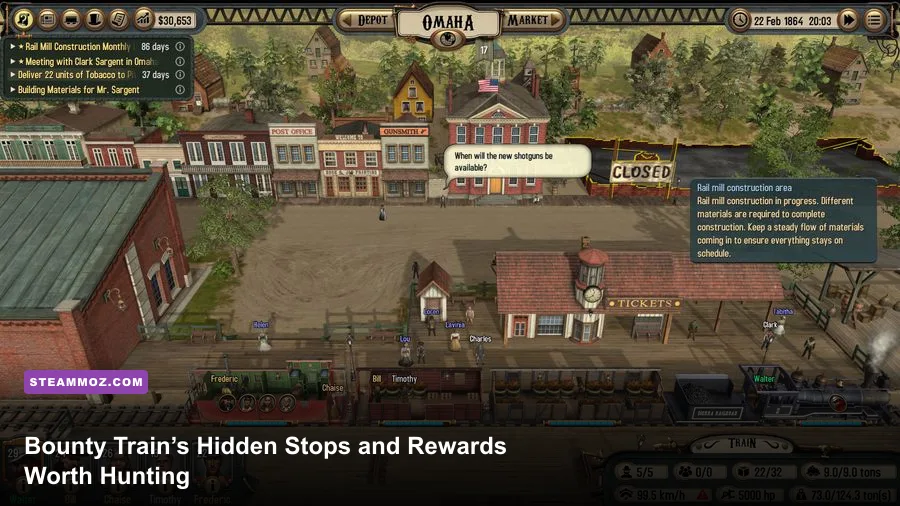
If you’re hunting every secret in Bounty Train, don’t search for a fixed collectible checklist: the game hides its best rewards inside optional map branches, unadvertised encounters, and quest outcomes that appear only when your train, crew, and reputation meet the right conditions. Search every newly revealed stop, inspect every dialogue option, keep spare cargo capacity, and never rush a timed quest past its side objective.
That distinction matters. Bounty Train doesn’t work like a modern open-world game with glowing treasure icons. Its “secret locations” are usually unnamed or low-profile destinations connected to the railway map. Some are revealed by travelling, others by rumors and quests, and several can disappear when a contract expires. The reward may be cash, cargo, a crew recruit, a weapon, a locomotive component, or a permanent relationship change.
How Bounty Train’s secret locations actually work
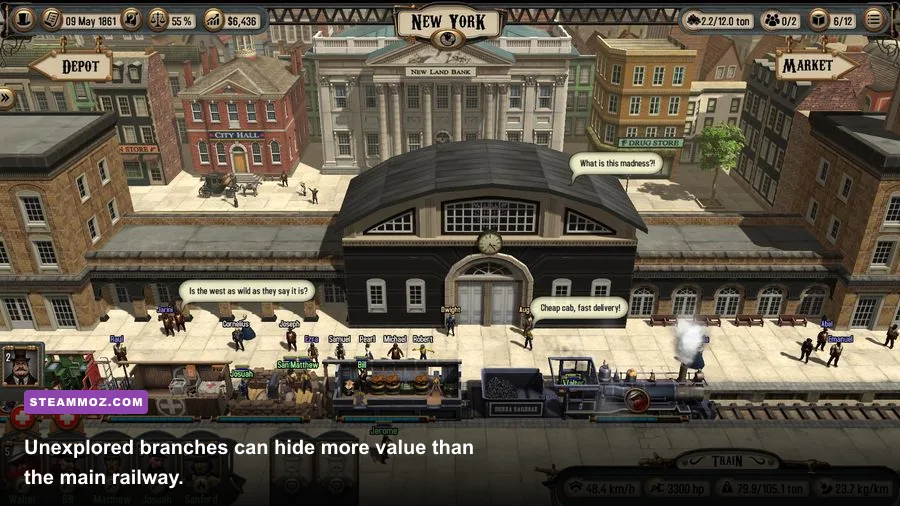
The map is built around cities, stations, and connecting routes, but the valuable discoveries sit away from the obvious New York-to-Chicago rhythm. A stop can look like a routine resupply point until you open its interaction panel. If a destination has a conversation, search, trade, recruit, or investigate option, treat it as a potential secret location rather than a simple waypoint.
There are four discovery rules worth memorizing. First, explore newly unlocked branches before accepting long-distance contracts. A contract can consume the time window needed for a side encounter. Second, visit cities after major story beats; their available characters and dialogue can change. Third, talk to passengers and crew repeatedly. A rumor that sounds like flavor text can reveal a new destination after the next travel segment. Finally, save before entering an unfamiliar stop. Several choices are permanent, and the game rarely advertises the consequences.
The strongest rewards are not always the largest cash payouts. A modest quest may unlock a specialist who improves repair, medical, combat, or negotiation performance for the rest of the campaign. That recruit can be worth more than a one-time $500 reward because crew efficiency compounds across every future journey.
| Secret activity | How it appears | Typical reward | Main risk |
|---|---|---|---|
| Rumor destination | Dialogue from a passenger, crew member, or city contact | Cash, recruit, new route | Rumor expires or requires a reputation threshold |
| Unmarked branch | New map node after exploration or story progress | Rare cargo, equipment, quest item | Ambush, fuel loss, travel delay |
| Optional city investigation | Extra dialogue option at a station | Faction favor, weapon, discount | Bad choice can close another outcome |
| Search encounter | Search or inspect prompt during a stop | Supplies, money, upgrade component | Injury, combat, damaged cars |
Think of this system as a pressure test for preparation. A secret stop is only profitable if your locomotive has enough fuel, the crew can survive a fight, and the cargo hold can accept whatever you find. The broader secret-location guide at Steamoz covers a more conventional collectible hunt, but Bounty Train rewards route discipline rather than memorizing coordinates.

🎮 Bounty Train
Looking to experience this game? Grab your digital key directly on our store for $0.99.
View on Steammoz Store →The major hidden-route regions to check first
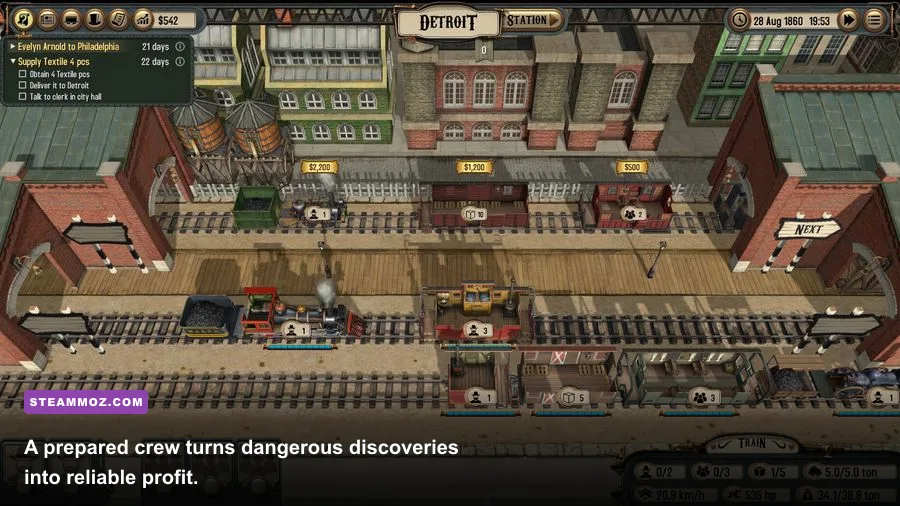
Start in the eastern corridor around New York, Philadelphia, and Washington. These early destinations are more than tutorial stops. Revisit them after your first story milestones and inspect every conversation option again. Early contacts can offer jobs, introduce recruits, or point toward a branch that was not available on your first pass. Because travel distances are shorter here, this is the safest region for learning how optional encounters work.
The next high-value sweep runs through the central routes around Chicago and St. Louis. These cities are excellent staging points because they connect several directions and make it easier to react to rumors without burning an entire season. Before leaving, repair the locomotive, stock food and medicine, and reserve at least one cargo slot. Central branches are where players most often miss rewards because they fill the train with profitable freight and then cannot claim a quest item.
New Orleans and the southern routes deserve a separate pass. They tend to create more complicated faction choices, so don’t assume the first payout is the best outcome. Read the entire dialogue tree before committing. Helping one contact may increase access to a later reward while taking the quick cash can close the more valuable relationship path.
Finally, sweep the western routes only after your train can handle long travel safely. San Francisco and the frontier branches are not “secret” because they are invisible; they’re secret because their rewards are easy to lose to fuel shortages, breakdowns, or an underprepared ambush. Carry repair supplies and avoid starting a western expedition with wounded crew. A hidden weapon is no use if half the train is unable to fight when the return journey triggers combat.
| Region | Best time to search | What to prioritize | Preparation check |
|---|---|---|---|
| New York–Washington corridor | After the opening story missions | Rumors, recruits, repeat city dialogue | Basic medicine and one free cargo slot |
| Chicago–St. Louis routes | Before long-distance contracts | Unmarked branches and faction outcomes | Full repairs, food, spare fuel |
| New Orleans and southern stops | When multiple dialogue choices appear | Relationship rewards and quest chains | Save before negotiations |
| Western frontier routes | After locomotive upgrades | Rare cargo and high-value equipment | Healthy combat crew and repair stock |
There is no reliable “go to this pixel for a guaranteed revolver” trick. Route availability and event presentation can vary with campaign progress, and some rewards are tied to decisions rather than geography. That’s why blindly copying a map screenshot often fails. Use the map as a checklist of regions, then confirm each branch through dialogue and the stop’s interaction panel.
Hidden rewards and the choices that unlock them
Most hidden rewards fall into five groups: money, cargo, equipment, crew, and access. Money is the least interesting unless you’re still stabilizing the company. Cargo can be more valuable when sold in a city with strong demand, but quest cargo may need to remain untouched until delivery. Equipment and recruits are usually the best long-term prizes. Access rewards, such as improved faction standing or a better price at a station, can quietly reshape the whole campaign.
When a secret encounter offers a choice, evaluate it against your current run rather than choosing the largest immediate number. A cash reward may solve today’s fuel problem, while a recruit can improve every later trip. If the train is already profitable, choose the permanent reward. If you’re close to bankruptcy, take liquidity and return to exploration once the company is stable.
Keep a manual note of every unresolved rumor. Record the city, the speaker, the requested item, the time limit, and any faction mentioned. Bounty Train gives you enough information to make informed decisions, but it spreads that information across different interfaces. A notebook prevents the classic mistake of arriving at a destination with the correct quest but no food, no cargo space, or no surviving specialist.
| Reward type | Best use | What to avoid | Veteran verdict |
|---|---|---|---|
| Cash | Fuel, repairs, wages, emergency recovery | Spending it before checking nearby branches | Useful early, replaceable later |
| Rare cargo | Sell where demand and prices are favorable | Filling the hold before a quest visit | Strong if you plan the return route |
| Weapon or equipment | Give it to the crew member who benefits most | Equipping by price alone | Often the best permanent reward |
| Recruit | Cover a missing combat or support role | Ignoring wages and train capacity | Best compounding value |
| Faction access | Unlock safer deals and later interactions | Burning reputation for a small payout | Quietly campaign-defining |
Before collecting a reward, inspect your crew roster. A weapon that looks powerful may be wasted on a character with poor accuracy or the wrong combat role. Likewise, a specialist recruit is only a win if your payroll and passenger space can support them. The same principle applies to cargo: profit is determined by the entire route, not the pickup price.
Combat preparation for dangerous secret stops
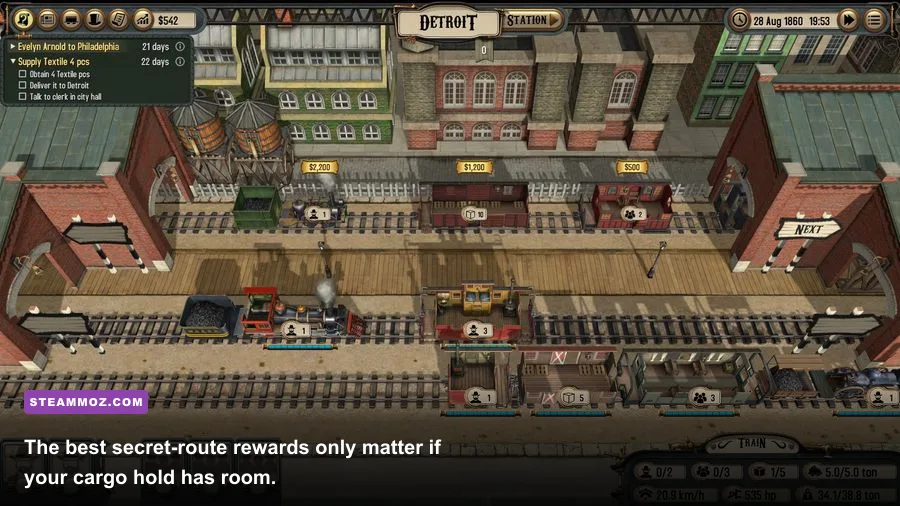
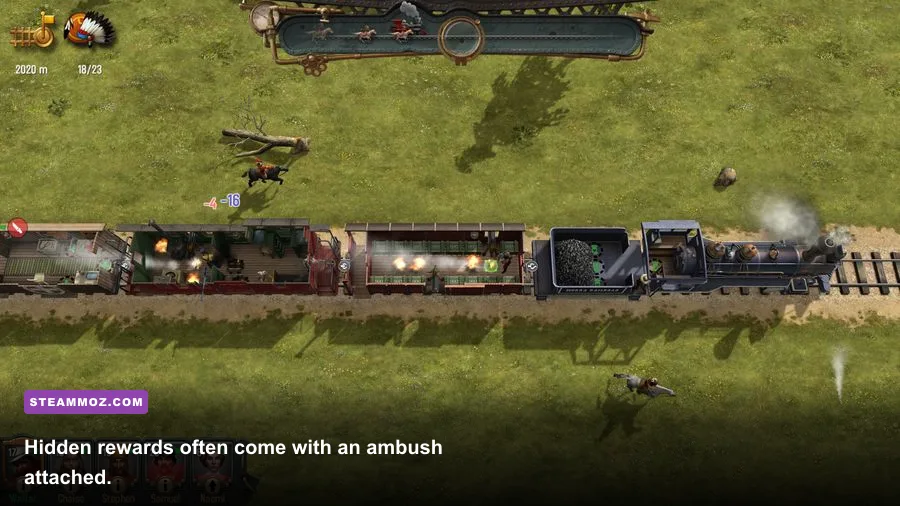
Optional locations are where Bounty Train stops being a trading game and starts demanding tactical discipline. Ambushes punish trains that run with exhausted crew, damaged cars, or a single unprotected side. Before entering a suspicious stop, heal injured characters, repair critical systems, and place your best ranged fighter where they can respond quickly.
Watch enemy positioning instead of clicking targets randomly. Bandits can pressure exposed crew while damage to the locomotive creates a second failure condition. Eliminate threats that can reach vulnerable workers first, then focus on enemies attacking the train’s structure. If a fight begins after a dialogue choice, reload only if you’re testing outcomes; otherwise treat the result as part of the campaign’s risk economy.
Support characters are especially valuable during secret hunts. A medic keeps a single bad encounter from becoming a chain of expensive hospital visits, while repair-focused crew reduce the downtime after an ambush. Don’t send every capable fighter into the same engagement if doing so leaves nobody able to maintain the train afterward.
| Threat | Warning sign | Counterplay | Reward protection |
|---|---|---|---|
| Bandit ambush | Suspicious stop or hostile dialogue outcome | Front-load damage and protect exposed crew | Save before entering and keep medicine ready |
| Locomotive damage | Repeated attacks on train systems | Assign repair-capable crew immediately | Carry repair supplies before frontier travel |
| Long travel attrition | Low fuel, food, or wounded crew | Resupply before searching another branch | Leave one cargo slot for quest items |
| Faction backlash | Choice mentions rival groups or law | Read all outcomes before selecting | Prioritize permanent access over quick cash |
If you enjoy route-based discovery games, compare this approach with the branching hunts in Everspace 2’s hidden-reward guide. The lesson carries over: exploration is only profitable when your build can survive the detour.
The most reliable secret-hunting loadout
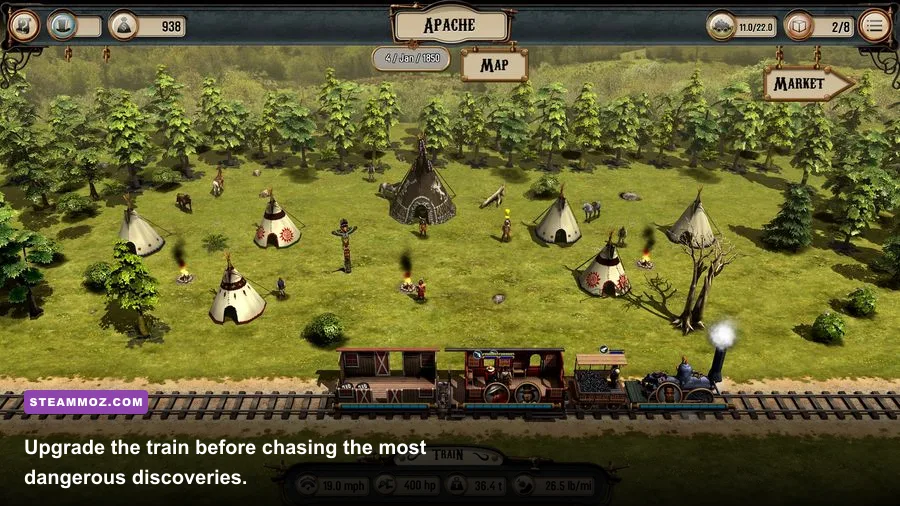
For a completionist run, build for flexibility instead of maximum cargo profit. Early on, prioritize locomotive reliability, fuel efficiency, and basic survivability. A slightly slower but dependable train is better than a fast setup that turns every optional stop into a repair bill. Keep at least one strong combat character, one support specialist, and enough crew coverage to operate the train after an injury.
Use normal trade routes to fund exploration, not the other way around. Accept profitable contracts when they align with a rumor, but don’t stack jobs that force you to cross the map before investigating a newly revealed branch. The ideal run is a loop: city resupply, nearby secret stop, reward collection, profitable delivery, then return to a hub for repairs.
Manage time aggressively. If an encounter offers a deadline, stop accepting unrelated work until you know whether the reward is worth pursuing. Missing one ordinary contract is cheaper than losing a unique recruit or closing an entire dialogue path. Save before every major decision and keep separate saves for the eastern, central, southern, and western sweeps.
A practical completionist priority order
First, reveal nearby branches. Second, revisit cities after story milestones. Third, resolve rumors before they expire. Fourth, claim permanent equipment and recruits. Fifth, return for profitable cargo once the optional content is finished. This order prevents the economy from hijacking your exploration route.
For technical troubleshooting during long sessions, Steamoz’s PC crash-fix checklist is useful general reading, while the official Bounty Train Steam page remains the best place to verify current patches and supported content.
Final checklist for every hidden location
Before leaving a region, open the map and confirm that every visible branch has been visited. Recheck cities after completing a story mission, speak to crew members who gained new dialogue, and inspect every rumor for a destination or delivery condition. If a location appears empty, it may be waiting for a quest trigger rather than lacking content.
- Keep one manual save before every secret-stop decision.
- Carry fuel, food, medicine, and repair supplies before leaving a hub.
- Reserve cargo space for quest items and unexpected rewards.
- Revisit New York, Philadelphia, Washington, Chicago, St. Louis, and New Orleans after major story progress.
- Search western branches only when the locomotive and crew can survive a long detour.
- Choose recruits, equipment, and faction access over small cash payouts when the company is stable.
- Write down unresolved rumors instead of trusting memory.
The real secret to Bounty Train is that its best rewards come from preparation, not speed. Explore before committing to distant contracts, treat every rumor as a possible quest chain, and protect your cargo capacity. Once you stop viewing the map as a straight railway and start treating it as a web of optional opportunities, the hidden stops become far easier to find—and the rewards start paying for the risks.
For more route-based secrets, see Steamoz’s guides to Dungeons 4 hidden rewards and Empires of the Undergrowth resource farming. You can also check the Corbie Games website for developer information and the latest official updates.