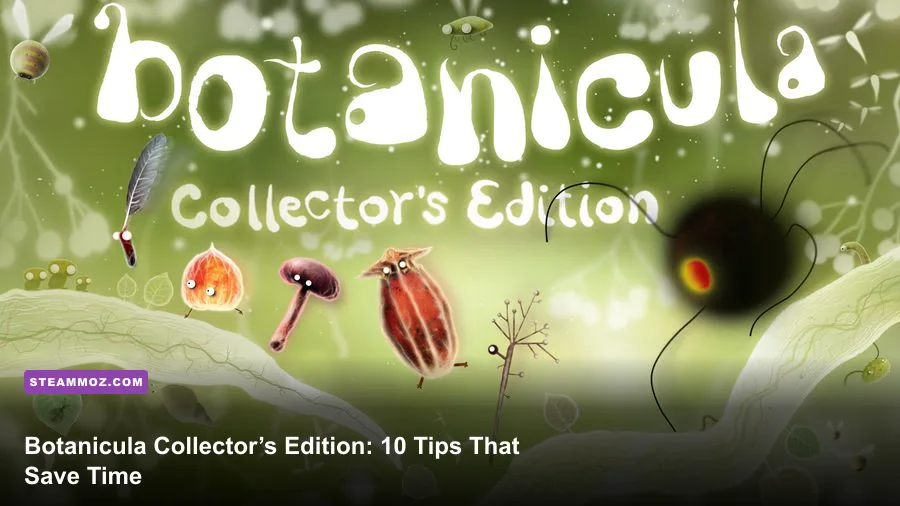
Botanicula Collector’s Edition is easiest when you stop treating it like a traditional point-and-click adventure: click every suspicious detail, cycle through all five heroes, and replay busy scenes before moving on. The game has no combat build, skill tree, or conventional item economy, so your real advantages are observation, patience, and a reliable method for tracking unusual interactions.
This is Amanita Design’s wonderfully odd 2012 adventure about a group of tiny tree-dwellers trying to protect the last seed of their home from parasitic creatures. The Collector’s Edition adds the soundtrack and digital extras, but it doesn’t change the underlying puzzles. These 10 tips are aimed at new players who want to avoid missed discoveries without turning a playful, wordless adventure into a checklist.
If you enjoy quiet, expressive adventures, Steamoz’s Gone Home review is another good read after this one. Botanicula is far more surreal, but both games trust players to investigate rather than follow loud objective markers.
1. Learn what each hero can do
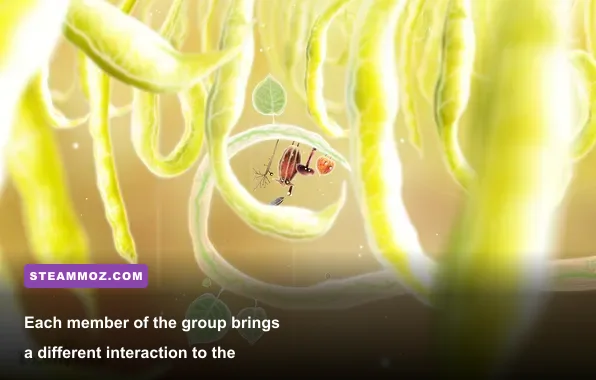
Your party contains Mr Lantern, Mrs Mushroom, Mr Poppy Head, Mr Twig, and Mr Feather. They are not selectable classes, and you won’t be assigning statistics. Instead, each character has a distinct visual language for interactions. Mr Lantern is the group’s bright, expressive leader; Mrs Mushroom can produce smaller mushroom forms; Mr Poppy Head uses his springy body in physical interactions; Mr Twig stretches and manipulates objects; and Mr Feather’s flight makes him the natural choice for airborne scenes.
When a click produces no result, don’t assume the object is useless. Select a different character from the party portraits and try again. This is particularly important when a scene contains a dangling object, a narrow opening, a high platform, or a creature that reacts to one party member but ignores the others.
| Hero | Useful visual clue | Best first test |
|---|---|---|
| Mr Lantern | Bright central character | Clickable lights, plants, and group interactions |
| Mrs Mushroom | Small mushroom form | Openings, low spaces, and mushroom-related objects |
| Mr Poppy Head | Springy red body | Levers, bouncing objects, and physical reactions |
| Mr Twig | Long flexible body | Reachable objects and stretched mechanisms |
| Mr Feather | Winged, airborne movement | High objects and flying creatures |
🎮 Botanicula Collector's Edition
Looking to experience this game? Grab your digital key directly on our store for $2.99.
View on Steammoz Store →2. Scan the entire screen before clicking randomly
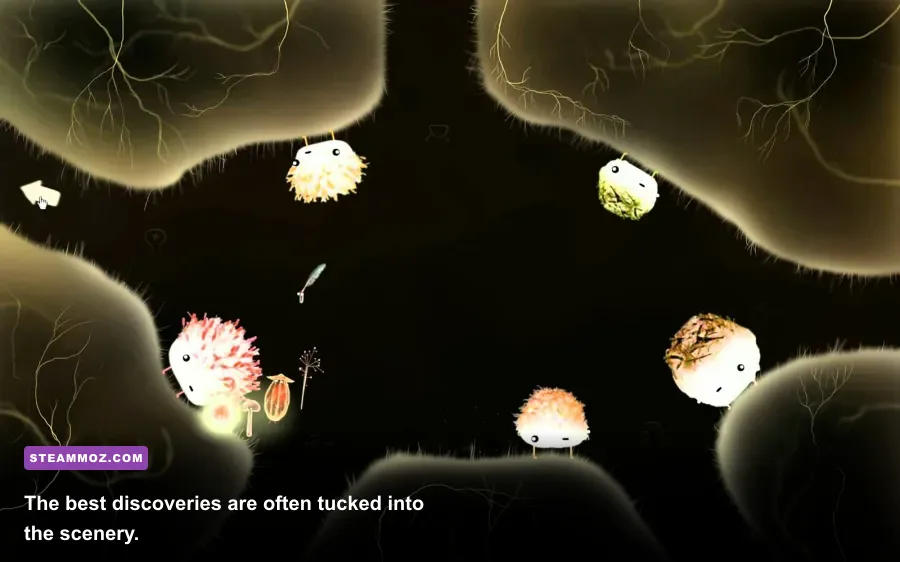
Botanicula’s screens are dense illustrations rather than clean puzzle rooms. A single branch may contain a face, a hatch, a creature, a loose leaf, and a background animation that looks decorative until you click it. Before interacting, move the cursor slowly from the top-left corner to the bottom-right. Look for eyes, blinking shapes, twitching limbs, cracks, holes, and objects that move on a repeating cycle.
The game’s sound design is a useful hint system. A suspicious object often chirps, rustles, groans, or produces a character vocalisation when selected. Turn up the game audio enough to distinguish those reactions from the soundtrack. If you’re playing with headphones, directional sounds can reveal a creature hiding behind a foreground element.
Don’t rush through a screen after solving its obvious obstacle. The main route and the optional discoveries frequently share the same space. A scene that looks “finished” may still contain several small interactions that only become available after a character moves, an object opens, or another puzzle state changes.
3. Treat every new room as a separate search
There is no conventional minimap, quest log, or objective tracker to tell you which parts of a branch you have properly explored. That makes a room-by-room routine invaluable. First identify the exit or main obstacle. Then inspect the foreground, background, party, moving creatures, and any object that changes when clicked. Only leave when you’ve tested the obvious targets with more than one character.
Use a simple note on your phone or computer. Record the location, the visible obstruction, and any strange reaction you can’t explain. “Blue creature near hollow branch—returns later” is enough. This prevents the classic Botanicula mistake of remembering a mystery but forgetting the screen where it appeared.
Revisiting isn’t wasted time. The game often changes a location after a puzzle or story beat. A previously quiet creature may start an animation, a new party member may make an object useful, or a path may open after the parasites move. If something looks deliberately framed by the artwork, assume it deserves another visit.
4. Understand the difference between progression and secrets
Botanicula mixes mandatory actions with optional collectible-style discoveries. The main path generally announces itself through a clear environmental problem: a blocked route, a creature demanding attention, or a mechanism that changes the layout. Optional interactions are often shorter, stranger, and less connected to the next objective. They may trigger a joke, animation, musical moment, or collectible card-like discovery.
Don’t confuse a lack of immediate reward with a failed interaction. Amanita Design frequently uses tiny visual payoffs instead of inventory upgrades or pop-up notifications. If a creature changes expression, a background character appears, or the soundtrack shifts, the click mattered even if no item entered an inventory.
| Interaction type | Typical signal | What to do | Priority |
|---|---|---|---|
| Main progression | Blocks an exit or changes the route | Test the party and nearby objects | Immediate |
| Optional discovery | Odd creature or isolated animation | Click, observe, and note the room | High for completion |
| Environmental joke | Repeated sound or visual gag | Try once, then move on if unchanged | Low |
| Locked interaction | No response or incomplete animation | Revisit after the next story beat | Later |
5. Use the game’s animation as your clue system

Botanicula rarely gives you written instructions, but it constantly communicates through motion. Watch what an object does before trying to solve it. A creature may demonstrate the desired action, a mechanism may pulse in a sequence, or a character may stare directly at the relevant prop. These are not merely charming flourishes; they’re the game’s equivalent of dialogue and tutorial text.
For multi-step puzzles, click once and wait for the full animation to finish. Rapid clicking can make it difficult to see whether you changed the puzzle state or simply replayed the same reaction. If a mechanism has several visible positions, observe the order in which the game presents them. The correct solution is often encoded in that sequence.
When stuck, reset your thinking rather than hammering one object. Ask three questions: what changed since entering the room, which character has not been tested, and which animated element is behaving differently? That approach is faster than clicking every pixel and keeps the solution feeling earned.
6. Don’t expect traditional inventory logic
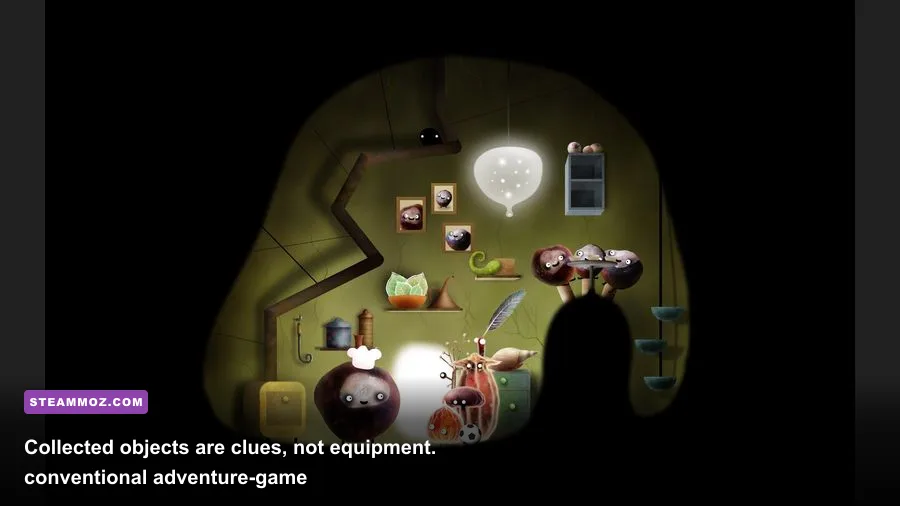
Botanicula does not work like an adventure game where you combine a dozen objects, inspect descriptions, and carry tools from chapter to chapter. Its collectible objects and discoveries are mostly records of what you’ve found, not a permanent kit of mechanical solutions. If an item appears, first ask what it reveals about the world or achievement progress.
Because the game is largely wordless, icons and animations carry the meaning. A collected object may be funny, unsettling, or visually distinctive without explaining its purpose. Take a screenshot or write down unusual symbols if you’re chasing a complete collection. The Collector’s Edition soundtrack makes revisiting especially pleasant, but it won’t provide a conventional hint system.
For a wider look at games that value atmosphere over combat, compare the approach with Steamoz’s piece on Ken Follett’s The Pillars of the Earth. The genres differ, but both reward careful attention to presentation.
7. Solve movement puzzles in small steps
Many obstacles are less about discovering a secret item and more about arranging a sequence of reactions. Trigger one object, watch what moves, then test the newly exposed area. Don’t click three different elements at once. You’ll lose the causal link and may not know which action actually opened the route.
A useful order is: inspect the obstacle, test the nearest interactive creature, test each hero, then examine the new space created by the first successful action. If a group animation begins, let it finish. Botanicula often hides the next clickable target inside the aftermath of the previous action.
8. Adjust the presentation, not the challenge
There are no combat settings to optimise, but a comfortable display matters. Botanicula’s hand-drawn detail can be harder to read when scaled badly, especially on a modern high-resolution monitor. Start with the game’s native fullscreen option, then try windowed mode if the cursor feels imprecise or animations appear oddly stretched.
| Setup | Best use | Potential drawback |
|---|---|---|
| Fullscreen at native resolution | Largest clear artwork | May make small details harder to compare at a glance |
| Windowed mode | Easy note-taking and guide reference | Less immersive; desktop scaling can soften edges |
| Headphones | Hearing creature reactions and audio hints | Some vocal effects are intentionally loud or odd |
| Gamepad | Relaxed couch play | Mouse is usually faster for pixel-specific inspection |
Don’t chase higher frame rates as though this were a competitive game. Stable animation and a sharp image are more valuable than pushing an already light adventure beyond your display’s refresh rate. If you’re troubleshooting older PC games, Steamoz’s Hacknet Complete Edition settings guide offers useful general advice about compatibility and display setup.
9. Save before experimenting with a strange scene
Botanicula is forgiving, but creating a manual save before a major transition is still smart. Save before leaving a busy room, before triggering a dramatic group animation, and before interacting with an object that looks like it could permanently change the scene. This is especially useful if you’re collecting every discovery rather than simply reaching the ending.
Keep two rotating save slots instead of overwriting the same file. Use one for your current progress and one for the previous room. That small habit gives you a safety net if you realise you missed an unusual interaction or want to replay a sequence for the Collector’s Edition extras.
10. Play the second run like a detective
Your first playthrough should be about momentum and curiosity. Don’t interrupt every delightful scene to consult a checklist. On a second run, use your notes to revisit rooms, test unused characters, and look for interactions that require a changed world state. This is the best way to appreciate the game’s tiny visual jokes without flattening the first experience into homework.
The Collector’s Edition is ideal for that slower approach because the soundtrack and art materials add context to Amanita Design’s strange, hand-crafted world. You can also check the official Botanicula Steam page for the current edition details, and browse the official Amanita Design page for the developer’s presentation of the game.
Most importantly, don’t use a walkthrough the instant you hit a wall. Give yourself five minutes to rescan the room, change characters, and watch the animations. Botanicula’s puzzles are deliberately gentle, and its strongest rewards come from noticing something you nearly ignored. If you apply these 10 habits—especially full-screen scanning, character cycling, careful notes, and patient observation—you’ll spend less time backtracking and far more time enjoying the wonderfully bizarre tree.