
Yes, BLEACH Rebirth of Souls is still worth playing in 2026—but mainly if you want a stylish, fundamentals-driven anime fighter rather than a huge competitive platform with endless modes. Its best qualities remain excellent: dramatic sword clashes, a clever health-and-Kikon system, a roster that feels distinct, and a campaign that gives BLEACH newcomers a clear route into the story. Its weak spots are just as obvious: the single-player content is finite, the online population is more modest than the major fighting-game giants, and several characters are much easier to exploit than others.
That makes this a very specific recommendation. Fans who grew up with Ichigo, Rukia, Byakuya, Kenpachi, and Aizen will get the most out of it, especially if they enjoy learning matchup-specific habits. New players can also have a great time, provided they understand that this is not a button-mashing arena brawler. Rebirth of Souls asks you to manage pressure, read defensive reactions, and choose the right moment to spend your strongest tools.
What BLEACH Rebirth of Souls Actually Does Well

Rebirth of Souls captures the fantasy of a BLEACH duel better than its raw content count suggests. Battles are built around movement, sword range, reversals, and sudden momentum swings instead of long combo strings. You are constantly trying to push an opponent toward a mistake, break their guard, and strip away their Konpaku before cashing out with a Kikon finisher.
The crucial distinction is between ordinary damage and a true knockout opportunity. A character can lose visible health without being immediately defeated. Once their Konpaku stocks are exposed, the attacker has to create a clean opening and land a Kikon attack. That extra layer makes fights feel closer to a duel than a conventional health-bar race. A careless player may dominate neutral for thirty seconds, then lose everything by throwing a predictable Kikon move.
The official Steam page lists the game as a 3D action fighter, and that description is accurate, although it undersells the amount of decision-making packed into each exchange. Flash Step is not just a travel button. Used well, it lets you slip past a linear attack, reposition around a guard, or punish an opponent who spends too much time charging Spiritual Pressure. Used carelessly, it leaves you out of position and gives the other player a free turn.
| System | What It Does | Why It Matters |
|---|---|---|
| Konpaku | Represents the opponent's remaining defeat opportunities | Creates comeback tension and makes every Kikon opening important |
| Kikon | A finishing attack used after exposing Konpaku | Rewards confirmed openings instead of random aggression |
| Reverse Action | Defensive reversal used to interrupt pressure | Stops strong players from attacking forever |
| Flash Step | Rapid movement and evasive repositioning | Defines spacing, whiff punishment, and neutral control |
| Awakening | Powerful character-state transformation | Lets losing players change the pace of a round |
The result is a fighter that feels accessible for the first hour and surprisingly demanding after that. You can understand the controls quickly, but winning consistently means learning when not to attack. That is the game's biggest success.

🎮 BLEACH Rebirth of Souls
Looking to experience this game? Grab your digital key directly on our store for $23.99.
View on Steammoz Store →Combat Review: A Smart System With a Rough Learning Curve

The combat loop is strongest when both players know the basic rules. A typical exchange begins with movement and light attacks, shifts into a guard or sidestep check, and ends with one player gambling on a heavy strike, special technique, or Kikon attempt. The most satisfying wins come from conditioning an opponent first: make them expect a forward attack, force a defensive response, then use Flash Step or a delayed heavy strike to catch the escape.
Every character has a recognizable identity. Ichigo is the dependable all-rounder, with straightforward sword pressure and a useful Getsuga Tensho projectile. Rukia plays more deliberately, using ice-based techniques to control space and punish predictable approaches. Byakuya's Senbonzakura gives him excellent mid-range threat coverage, while Kenpachi turns close-range exchanges into terrifying damage races. Yoruichi is faster and more evasive, but she demands cleaner movement and better timing.
Aizen is the roster's classic knowledge-check character. His tools can make opponents hesitate, which is exactly where his pressure becomes dangerous. Ulquiorra, meanwhile, thrives when he can control distance and turn Awakening into a dramatic reversal. These aren't cosmetic differences. Their attacks have different ranges, recovery windows, movement patterns, and ways to force an opponent into a Kikon situation.
The learning curve comes from the gap between pressing an attack and confirming a safe attack. New players often burn Spiritual Pressure immediately, chase after a blocked hit, or trigger Awakening as soon as it becomes available. Better play is more restrained. Hold resources until you know what defensive option the opponent prefers. If they always guard after Flash Step, use a guard-breaking option. If they mash Reverse Action after losing a Konpaku, bait it before committing to your finisher.
The three habits that make you improve fastest
- Stop chasing every retreat. A retreating opponent may be inviting a whiff. Walk them toward the edge, maintain your range, and punish the attack they are forced to use.
- Track their defensive option. Watch whether they guard, Flash Step, Reverse Action, or challenge with a quick attack. Rebirth of Souls becomes much easier once you stop treating every opponent as unpredictable.
- Save Kikon attempts for confirmed openings. A missed finisher can reverse the entire round. Force a guard break, punish recovery, or use a character-specific setup before spending the opportunity.
This is also why the game can feel unfair for the first few sessions. The tutorials explain individual mechanics, but they don't fully teach the rhythm of a real match. The best way to learn is to pick one character, play several matches without switching, and focus on one question: what does my opponent do after blocking?
Players coming from other anime fighters may want to read our Crossing Souls character breakdown for a useful reminder that a large roster doesn't automatically mean every fighter fills the same role. Rebirth of Souls rewards the same kind of matchup awareness.
Roster Rankings: Who Is Best for New Players?
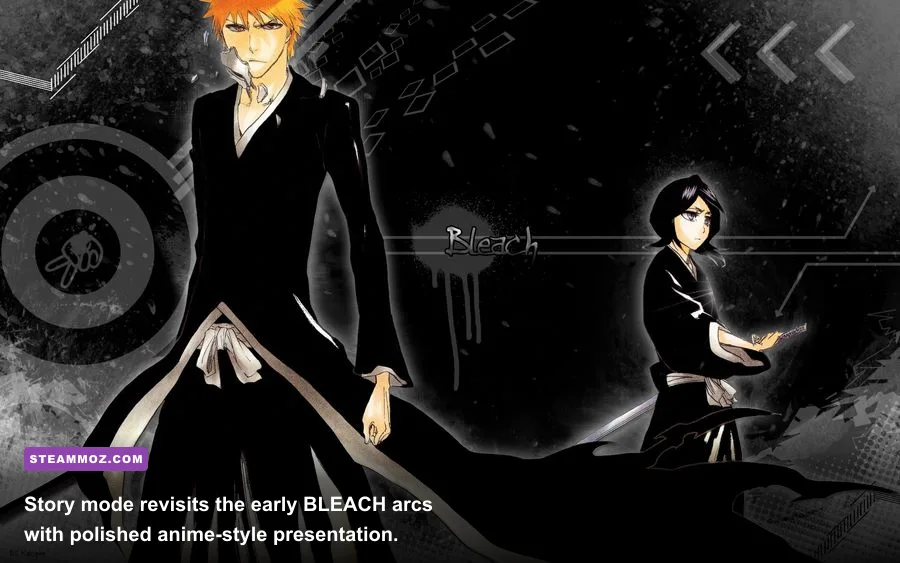
The roster is broad enough to support different playstyles, but it is not perfectly balanced. That matters more in ranked or serious online play than in local matches, where the fun often comes from choosing characters for their personality and spectacle. Ichigo is the safest starting point, while Kenpachi and Aizen offer immediate power at the cost of predictable habits that experienced players can punish.
| Character | Practical Tier | Strength | Weakness | Best For |
|---|---|---|---|---|
| Ichigo Kurosaki | A-Tier | Balanced range, clear confirms, reliable Getsuga Tensho | Doesn't dominate a single category | First-time players |
| Byakuya Kuchiki | S-Tier potential | Excellent mid-range control with Senbonzakura | Needs spacing discipline | Players who like zoning and whiff punishment |
| Kenpachi Zaraki | A-Tier | Heavy close-range pressure and frightening damage | Limited answers when forced to chase | Aggressive players |
| Yoruichi Shihōin | A-Tier | Speed, mobility, and strong repositioning | Less forgiving when attacks miss | Movement specialists |
| Rukia Kuchiki | B-Tier | Useful control tools and deliberate neutral game | Requires setup and patience | Defensive players |
| Sōsuke Aizen | S-Tier potential | Deception, pressure, and strong matchup knowledge checks | Can become predictable in inexperienced hands | Veterans and mind-game players |
| Ulquiorra Shifar | A-Tier | Excellent range and threatening Awakening | Needs resource management | Players who prefer control |
This isn't a permanent competitive ranking; balance patches and player discovery can change the order. The more useful takeaway is that the roster has a healthy spread of entry points. Ichigo teaches the fundamentals without hiding behind a gimmick. Byakuya teaches spacing. Kenpachi teaches commitment and pressure. Yoruichi teaches movement. Aizen teaches conditioning and deception.
For a first week, I recommend Ichigo, Byakuya, or Rukia. Avoid switching characters after every loss. That makes it impossible to tell whether the problem is the character, your neutral game, or your lack of matchup knowledge. Once you understand how one fighter creates Kikon openings, the rest of the cast becomes much easier to evaluate.
Story Mode and Single-Player Content
Story mode covers the main BLEACH journey from Ichigo's early Substitute Soul Reaper period through major Soul Society and Arrancar conflicts. It is not a replacement for watching the anime, and it skips or compresses material, but it does a good job presenting the important rivalries. Ichigo's relationship with Rukia, the confrontation with Byakuya, Kenpachi's brutal challenge, and the escalating threat of Aizen all receive enough context to give the fights emotional weight.
The campaign's strongest feature is its playable perspective. You are not simply watching long cutscenes between matches; you are using the relevant character in the encounter that defines them. That makes key fights more memorable than a generic arcade ladder. It also gives newcomers a practical introduction to the cast before they enter online battles.
The weakness is repetition. Once you've completed the story and sampled Mission Mode, the game has fewer long-term single-player hooks than a traditional RPG or a large arena fighter. There is no sprawling Soul Society hub to explore, no loot chase, and no deep equipment build system. If you expect progression similar to a character-action game, the campaign will feel short.
That limited structure is not automatically a problem. Fighting games are supposed to move players toward mastery, and Rebirth of Souls does provide a clear path: story mode, training, missions, local versus, then online play. The issue is that the game doesn't always explain how much depth is waiting in the final step. Its replay value depends heavily on whether you enjoy practicing matchups and refining reactions.
If you prefer games with a more elaborate progression loop, Steamoz's Don't Be Afraid 2 review covers a very different kind of long-form experience. Rebirth of Souls is much more focused: its reward is better play, not a bigger inventory.
Graphics, Performance, and the Best Settings
Rebirth of Souls looks strongest during Awakening animations and signature attacks. Character models preserve the anime's silhouettes, sword effects are bright without completely swallowing the action, and the arenas provide enough visual contrast for most attacks to remain readable. It isn't a technical showcase in the same way as a first-party blockbuster, but it delivers the presentation BLEACH fans expect.
On PC, a stable frame rate matters more than pushing every visual option to maximum. Reactions, Flash Step timing, and Kikon confirms all benefit from consistent frame pacing. A locked 60 frames per second is the sensible target for most systems. Increasing resolution or effects quality is worthwhile only after the game is holding that target during busy Awakening sequences.
| Setting | Recommended Value | Estimated FPS Impact | Visual Trade-Off |
|---|---|---|---|
| Resolution | Native monitor resolution | High | Lower only if GPU load prevents a stable 60 FPS |
| Texture Quality | High | Low to medium | Keep high if VRAM allows; character detail benefits most |
| Shadow Quality | Medium | Medium | Small visual loss with a useful performance gain |
| Effects Quality | High, then reduce if needed | Medium to high | Lower settings make Awakening effects less dense |
| Anti-Aliasing | High or default | Low to medium | Reducing it can produce distracting jagged outlines |
| Motion Blur | Off | Minimal | Improves attack readability and visual clarity |
| Frame Rate | 60 FPS cap | None when stable | Consistency is more valuable than an unstable unlocked rate |
Check the official Bandai Namco game page for the latest platform information and patches before buying. If you are troubleshooting an older PC, our low-FPS troubleshooting guide covers general steps that also apply here: update the GPU driver, disable overlays, close capture software, and test fullscreen versus borderless mode.
Online Play in 2026: The Real Buying Decision
Online activity is the deciding factor for many players. Rebirth of Souls is fun in local versus and training, but its long-term value rises sharply when you have a regular group or can find matches consistently. The combat is built for rematches because each loss usually reveals a specific mistake: a missed Flash Step, a wasted Reverse Action, or a Kikon attempt thrown without confirmation.
The problem is that it doesn't have the same player base or competitive infrastructure as Street Fighter 6, Tekken 8, or Mortal Kombat 1. Match availability can depend on platform, region, time of day, and whether a sale or DLC release has brought players back. Before buying specifically for ranked play, check recent Steam activity and community discussion through the official Steam community hub.
Netcode quality and matchmaking patches can also change the experience over time, so launch impressions shouldn't be treated as a permanent verdict. The practical advice is simple: buy it for the combat first, and treat online longevity as a bonus. If you already have friends who want a BLEACH fighter, the recommendation becomes much stronger.
Players who want a game built around farming and constant numerical upgrades may prefer something like our Chef Life progression guide. Rebirth of Souls has no equivalent grind to keep you busy. Its loop is training, fighting, learning, and repeating.
Is BLEACH Rebirth of Souls Worth Playing in 2026?
For BLEACH fans, the answer is an easy yes. The roster has personality, the super attacks look fantastic, and the Konpaku-Kikon structure gives fights a distinctive identity instead of copying the usual combo-heavy template. It respects the source material without turning every match into a cutscene, and that balance is harder to achieve than it looks.
For competitive fighting-game players, the answer is more cautious. Rebirth of Souls is worth sampling if you enjoy 3D anime fighters, resource management, and mind games, but you shouldn't expect the same depth of training tools, tournament support, or population as the genre's biggest releases. Its best competition may come from your friends and from the small group of players who stick with it.
| Player Type | Verdict | Why |
|---|---|---|
| BLEACH fan | Strong buy | Authentic characters, memorable rivalries, and excellent signature attacks |
| Anime fighter fan | Worth playing | Distinct combat built around spacing, reversals, and finishers |
| Serious ranked competitor | Buy on sale or with friends | Smaller population and less competitive support than genre leaders |
| Single-player-only player | Buy on sale | Good story introduction, but limited long-term solo content |
| RPG progression fan | Probably skip | No loot chase, open world, or deep character-building system |
My final verdict in 2026 is 7.5/10. BLEACH Rebirth of Souls is not the definitive fighting game for everyone, and its modest content offering keeps it from reaching the genre's top tier. But the core combat is clever, the fan service is unusually well integrated, and the roster gives you plenty of reasons to keep learning. Pick Ichigo first, practice confirming Kikon attacks, turn off motion blur, and don't judge the game until you've played against someone who understands Reverse Action. That's when Rebirth of Souls stops looking like a flashy anime tie-in and starts feeling like the sharp little fighter it always wanted to be.
For additional background, the official BLEACH games site is useful for keeping track of the wider franchise, while the publisher's launch coverage provides the official release context. Just remember what you're buying: not a new BLEACH RPG, but a focused duel game with a surprisingly thoughtful combat engine.