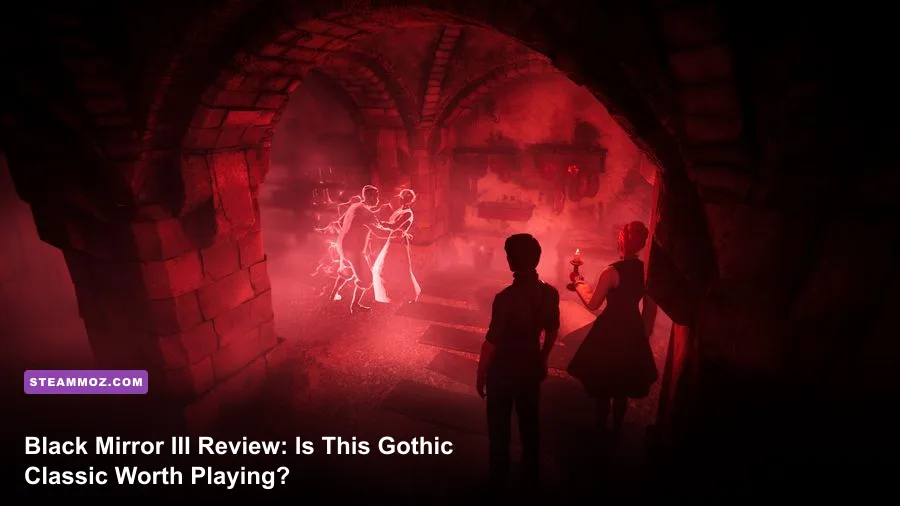
Yes—Black Mirror III is worth playing in 2026, but only if you enjoy old-school, deliberately paced point-and-click adventures. Cranberry Production's 2011 finale delivers a strong gothic mystery, excellent atmosphere, and a satisfying conclusion for Darren Michaels, yet its awkward interface, dated visuals, uneven voice acting, and occasionally infuriating puzzle logic are impossible to ignore. Play it for the story and setting, not for modern convenience.
That distinction matters. This isn't a horror game built around combat, stealth, or elaborate systems. There are no weapon stats, skill trees, or reaction-heavy boss fights to master. Your real tools are the cursor, the inventory, the notebook, and your willingness to inspect every suspicious object in Black Mirror Castle and the surrounding areas. If that sounds appealing, the game remains a worthwhile final chapter. If you want fast pacing or frictionless puzzle design, it will test your patience quickly.
What Black Mirror III gets right
Black Mirror III picks up after the events of Black Mirror II, again putting Darren Michaels at the center of the Black family mystery. Darren's story has a more personal edge here: he isn't simply wandering into a haunted estate to solve somebody else's curse. His connection to the Black legacy, the suspicious behavior around Willow Creek, and the continuing presence of figures such as Angelina give the investigation emotional weight.
The strongest material is the atmosphere. Black Mirror Castle feels damp, hostile, and deeply wrong without needing constant jump scares. Narrow corridors, candlelit rooms, ruined stonework, and gloomy outdoor paths create the kind of slow-burn tension that modern horror adventures often rush past. The game understands that a locked room and an unexplained family portrait can be more effective than a monster jumping through a window.
The narrative also benefits from being a conclusion rather than a standalone tease. It answers several questions established across the trilogy, ties Darren's journey to the Black family mythology, and gives returning players a reason to care about familiar characters. The payoff is not perfectly elegant, but it is considerably more rewarding if you've played the first two games. Newcomers can follow the broad mystery, though they will miss much of the dramatic context.
For a useful comparison, Steamoz's Dungeon Siege retrospective makes a similar point about revisiting older PC games: historical importance and present-day convenience are two separate questions. Black Mirror III scores well on the first and unevenly on the second.

🎮 Black Mirror I
Looking to experience this game? Grab your digital key directly on our store for $9.99.
View on Steammoz Store →How the puzzles feel in 2026
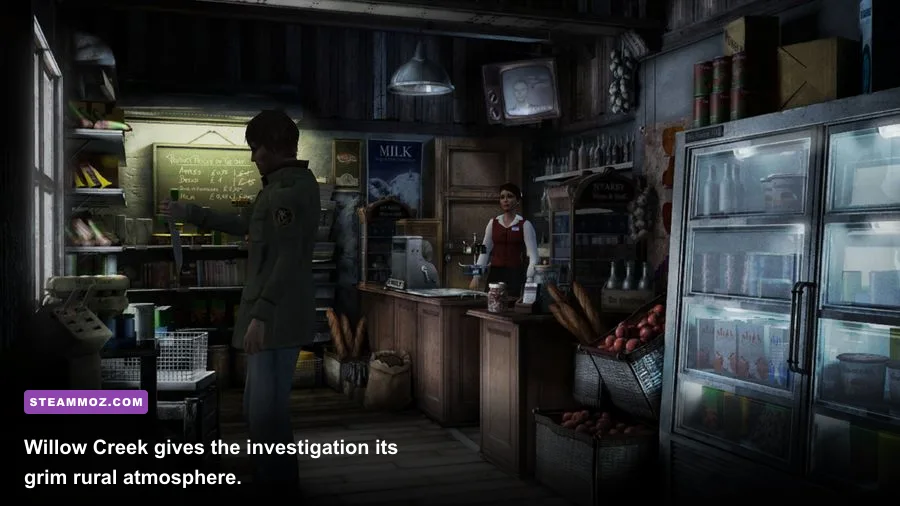
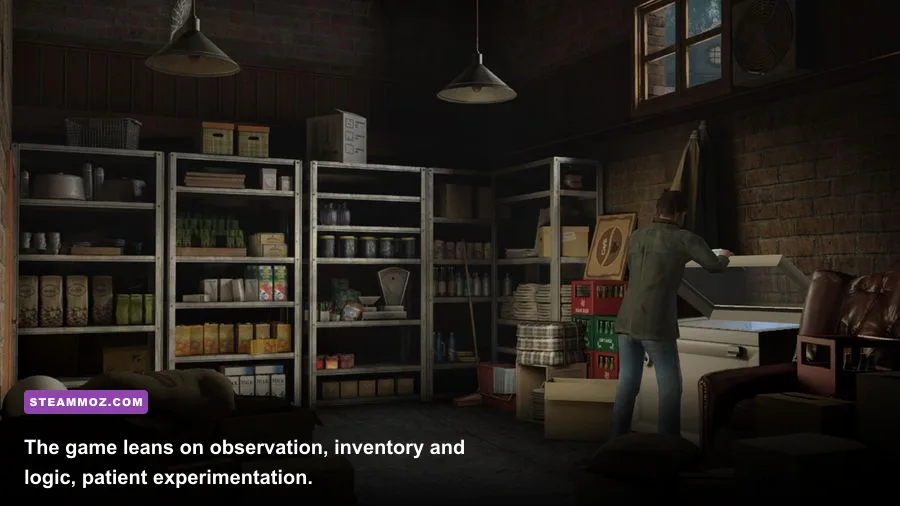
The core loop is classic adventure-game investigation. You move through a scene, switch between conversation options, inspect hotspots, collect objects, combine inventory items, and return to characters when a new clue changes the conversation. Darren's journal helps track major developments, but it doesn't remove the need to remember which person mentioned which location or object.
That design produces some excellent “aha” moments. A seemingly useless item can become meaningful after a conversation, and a location that first looks decorative may hide the clue that unlocks the next sequence. The best puzzles ask you to connect information rather than simply hunt for a pixel-sized object.
The weaker puzzles rely on adventure-game moon logic. You may have the correct broad idea but still need to perform an oddly specific interaction, use an item on a hotspot that barely looks relevant, or revisit an earlier screen after a trigger has silently changed. Darren's dialogue is often the best hint: exhaust conversations before randomly combining objects. Also inspect every hotspot with the cursor before leaving a room. Missing one environmental description can make the next objective feel completely arbitrary.
| Puzzle Situation | What Usually Blocks Progress | Best Approach | Frustration Level |
|---|---|---|---|
| Locked room or container | Key item is hidden in an earlier location | Recheck visited scenes after major conversations | Medium |
| Character refuses to help | A dialogue flag has not been triggered | Exhaust every dialogue branch and inspect nearby objects | Low |
| Inventory combination | Logic depends on visual or conversational context | Read item descriptions before combining objects | Medium-High |
| Environmental mechanism | Correct hotspot is visually understated | Sweep the cursor slowly across the entire scene | High |
Save often, and keep at least two rotating save files. Some adventure sequences can make earlier interactions less obvious, and a backup prevents a long backtrack if you miss a trigger. This is not a game that respects modern autosave expectations.
Story, characters, and the trilogy problem
Darren is still a divisive protagonist. His investigation gives the player a clear viewpoint, but his moodiness and occasional impulsive decisions can make him feel more like a vehicle for plot delivery than a fully natural detective. That said, the character works better when viewed across all three games. Black Mirror III is interested in what prolonged exposure to family secrets does to a person, and Darren's unease is part of that design.
The supporting cast is more effective when the game lets suspicion build gradually. Angelina remains important to the emotional side of the story, while the people around Willow Creek add layers of local gossip, fear, and secrecy. Conversations can be long, sometimes too long, but they establish the world in a way environmental storytelling alone couldn't.
The final act is where opinions will split. The game provides answers, but not every revelation lands with equal force. Some twists feel earned because earlier scenes quietly prepared them; others arrive with the bluntness of a late sequel trying to close several narrative doors at once. Still, the ending gives the trilogy a sense of completion that many adventure series never receive.
Play order is simple: start with Black Mirror, continue with Black Mirror II: Reigning Evil, then finish with Black Mirror III: Final Fear. Watching a recap is better than nothing, but the finale's strongest scenes depend on recognizing relationships and recurring ideas. If you like older narrative RPGs and mysteries, our ELEX PC fixes guide is also useful context for the kind of older PC release that may need a little technical patience.
Performance, controls, and modern PC compatibility
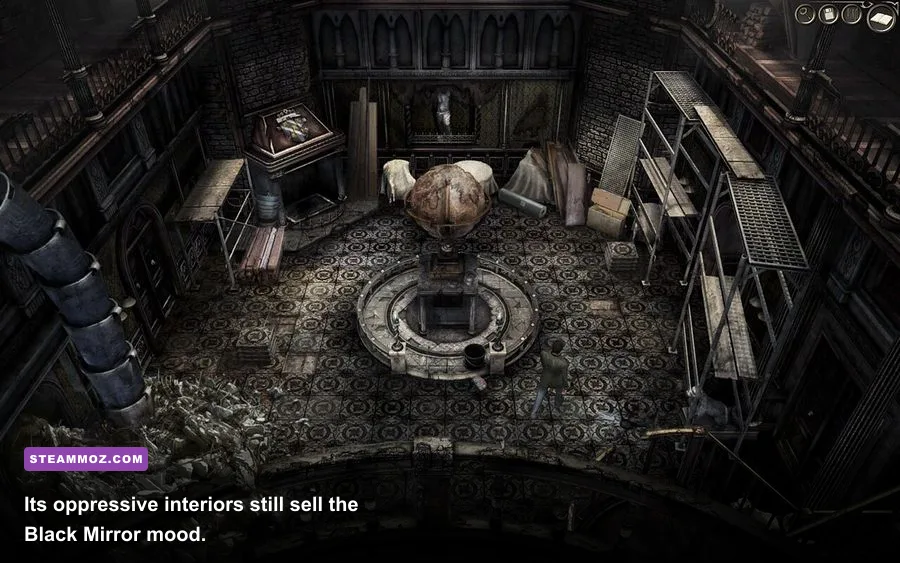
Black Mirror III is extremely light by 2026 standards. Its official storefront listing targets old Windows hardware, with requirements built around Windows XP/Vista/7-era PCs, roughly 1 GB of RAM, a 2 GHz-class processor, a 256 MB 3D graphics card, and around 5 GB of storage. That means raw performance is rarely the problem. Compatibility, display scaling, codecs, and input behavior are more likely to cause irritation.
| Setting or Issue | Recommended Choice | Performance Impact | 2026 Note |
|---|---|---|---|
| Resolution | Native desktop resolution if supported | Very low | Expect a 4:3 presentation or pillarboxing on modern monitors |
| Anti-aliasing | Use the highest stable option | Low | Older rendering can look jagged at high resolutions |
| Compatibility mode | Try Windows 7 mode only if launch issues appear | None after launch | Don't enable fixes blindly; test the clean install first |
| Frame-rate expectations | Cap to a stable desktop-friendly rate if needed | Negligible | The game is not built around high-refresh responsiveness |
| Display scaling | Integer or aspect-ratio-preserving scaling | None | Prevents stretched character models and backgrounds |
Mouse control is functional but old-fashioned. Hotspots can be easy to miss, and the interface doesn't always communicate why an interaction is unavailable. A mouse with a reliable left click is all you need, though playing from a couch with a controller is a poor fit. Keep subtitles enabled if available; audio mixing and aged voice performances can make quieter lines difficult to catch.
Before buying, check the current Steam listing for Black Mirror III and its recent community reports. Store builds, operating systems, and compatibility layers can change. The same rule applies to other vintage releases: Steamoz's PC requirements guide explains why listed minimum specs don't always tell the full story on current hardware.
Is Black Mirror III worth playing in 2026?
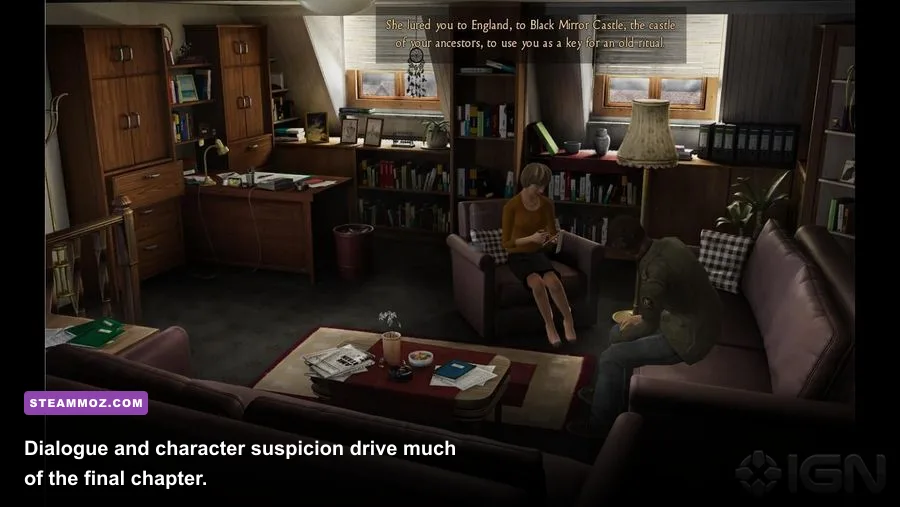
My answer is a qualified yes. Black Mirror III is worth playing if your priority is a gloomy, story-heavy mystery with traditional inventory puzzles and a proper trilogy conclusion. It remains especially appealing during a quiet weekend when you want a game that asks you to observe rooms, listen to conversations, and sit with an uneasy atmosphere instead of constantly rewarding reflexes.
| Player Type | Verdict | Why |
|---|---|---|
| Point-and-click veteran | Recommended | Strong setting, classic structure, and plenty of investigation |
| Black Mirror trilogy fan | Highly recommended | Provides the narrative closure the series is building toward |
| First-time horror player | Try with a recap | Atmosphere works, but the slow pace and dated interface may bite |
| Modern action-horror fan | Probably skip | No combat, limited interactivity, and deliberately slow progression |
| Puzzle purist | Recommended with a guide nearby | Good deduction mixed with occasional moon logic |
Don't expect a remaster, quality-of-life overhaul, or a technically polished 2026 rerelease. Expect a period piece: low-resolution assets, stiff animation, long conversations, and puzzles that occasionally demand a guess the designer thought was obvious. Those flaws are real, but they don't erase the game's central strengths. The manor is memorable, the mystery has enough momentum to carry a long campaign, and Darren's final chapter has more narrative ambition than its rough edges suggest.
Buy it when it's discounted, play the trilogy in order, use a modern compatibility layer only when necessary, and keep a walkthrough available for the notorious dead ends. If that sounds like too much maintenance, choose a newer adventure. If you're happy to meet an old PC mystery on its own terms, Black Mirror III: Final Fear is still a worthwhile final visit to Black Mirror Castle.
For more classic-PC context, Steamoz's Far Cry 2 compatibility breakdown and Dungeons 3 tips guide cover the same broader lesson: older games can still deliver, provided you know which rough edges are part of the experience and which ones your setup can smooth out.
Final verdict: 7/10. A moody, imperfect, and genuinely worthwhile gothic adventure for patient mystery fans—not a universal recommendation, but a solid 2026 deep cut.