
Aliens vs. Predator becomes far less punishing once you stop playing all three campaigns like standard shooters. The Marine needs sightlines, ammo discipline and motion-tracker awareness; the Alien wins through speed, darkness and ambushes; the Predator controls a fight with height, vision modes and ranged tools. These 10 practical tips will get new players through Rebellion’s 2010 Aliens vs. Predator without wasting ammunition, energy or the advantages built into each species.
Start With the Right Expectations
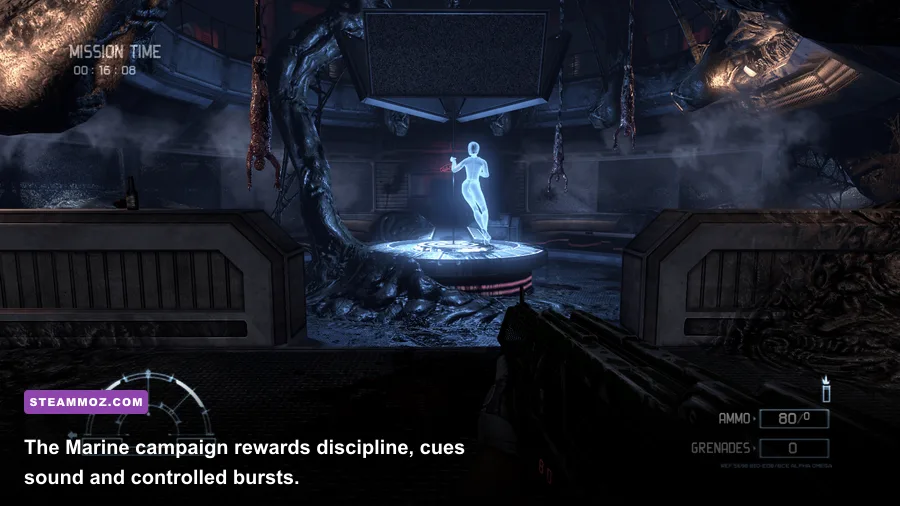
1. Play the campaigns in the intended order. The Marine campaign is the clearest introduction to the Weyland-Yutani facility, but it is also the most stressful. The Alien campaign teaches movement and close combat, while the Predator campaign assumes you already understand stealth, targeting and vertical positioning. Playing Marine first gives later missions more context, especially when locations and events overlap.
2. Learn what each species is actually trying to do. The Marine is a fragile shooter with familiar weapons, but darkness and limited information are the real enemies. The Alien is not a melee tank: it should isolate targets, strike from unusual angles and retreat before gunfire becomes concentrated. The Predator is powerful, yet its health, energy and ammunition are finite. If you stand in the open trading shots, you are throwing away the character’s biggest advantage.
3. Use difficulty to learn, not to prove a point. Normal is the best first run for most players. Hard sharply punishes missed shots and poor positioning, while Nightmare turns several encounters into resource puzzles rather than cinematic action. You can replay missions later for collectibles and higher difficulty, so there’s no prize for burning out during the first refinery or research-lab firefight.
| Species | Primary Advantage | Common New-Player Mistake | Best Habit |
|---|---|---|---|
| Marine | Firearms and reliable damage | Standing still while reloading | Fight from doorways and retreat routes |
| Alien | Speed, wall movement and stealth | Charging groups head-on | Separate targets before attacking |
| Predator | Vertical mobility and ranged technology | Overspending energy on every target | Scout first, then choose the cheapest kill |
For background on the game’s PC release, keep the official Steam page handy. It also lists the original campaign and multiplayer features, though online availability can vary by platform and community activity.

🎮 Aliens vs. Predator
Looking to experience this game? Grab your digital key directly on our store for $3.74.
View on Steammoz Store →Marine Tips That Keep You Alive
4. Treat the motion tracker as an alarm, not a radar. The Marine’s motion tracker is most useful when you read its direction and distance, then verify the information visually. A blip can come from a side passage, a room above you or an enemy approaching through a route you cannot immediately see. Don’t stare at it while moving. Check it, raise the pulse rifle, and place yourself where only one or two approaches remain possible.
5. Use the pulse rifle’s burst discipline. The M41A Pulse Rifle is your dependable general-purpose weapon. Hold short bursts instead of dumping the magazine into darkness. Its grenade launcher is excellent for a cluster or a doorway, but it is wasted on a lone Drone. Save grenades for moments when multiple Xenomorphs are forced through one entrance. The shotgun is your emergency answer at close range: aim for the head or upper torso, fire once, then create distance rather than admiring the kill animation.
6. Don’t reload just because the magazine is not full. A partial reload in a quiet corridor is sensible, but reloading while a Xenomorph is closing is how beginners die. Switch weapons if possible. The Marine’s pistol can finish a damaged target, and the shotgun can interrupt a rush. The flamethrower is particularly strong for controlling a narrow route, but its ammunition disappears quickly and its range is shorter than many players expect.
Sound is as important as the tracker. Hissing, ventilation noise and distant movement often tell you that an encounter is about to begin. Kill lamps and explosive objects only when they help you; lighting every room can make you visible from angles you have not checked. If you enjoy tense resource management, our Fade to Silence survival-game coverage has a similar take on why panic spending gets players killed.
| Marine Tool | Best Use | Do Not Use It For | Positioning Tip |
|---|---|---|---|
| Pulse Rifle | Mid-range Drones and general combat | Blind full-magazine spraying | Fire from a retreating doorway |
| Shotgun | Stopping a close attacker | Long corridors | Backpedal after each blast |
| Flamethrower | Area denial and narrow entrances | Open rooms with many escape routes | Use short bursts to conserve fuel |
| Sniper Rifle | Priority targets at distance | Fast melee enemies in tight spaces | Pre-aim before exposing yourself |
Alien Movement and Combat Fundamentals

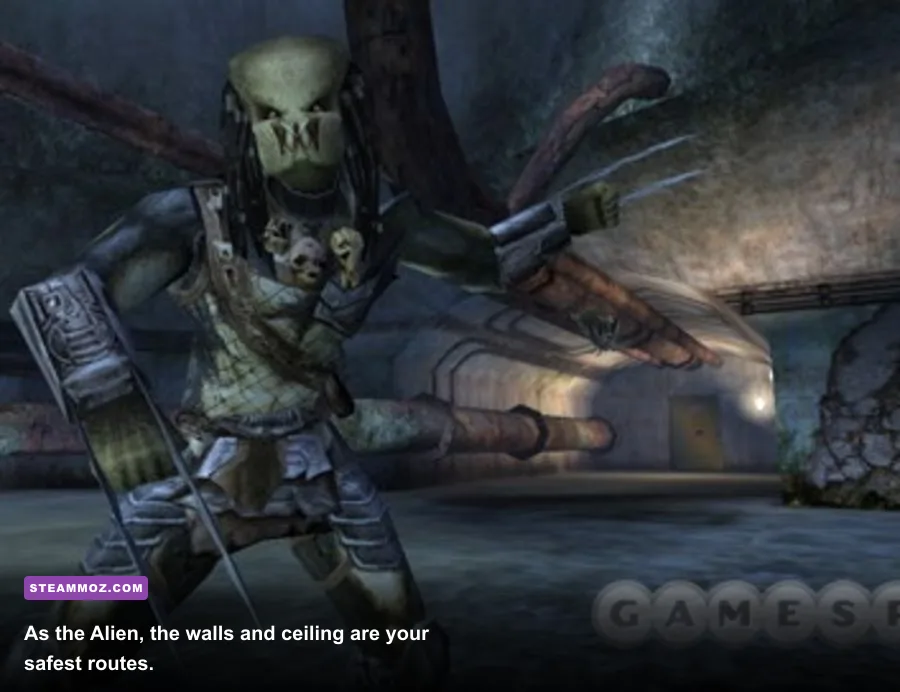
7. Master focus mode before you chase kills. The Alien’s focus ability highlights routes, enemies and usable movement paths, turning apparently confusing rooms into navigable hunting grounds. Use it before entering a new space, then move across walls and ceilings rather than approaching along the floor. The Alien’s silhouette is harder to read when it attacks from above, and vertical movement lets you bypass defensive firing lines.
Wall-walking is not just a novelty. It lets you flank Marines, escape through vents and approach from behind cover. Keep moving after an attack; the first strike should create an opening, not start a prolonged boxing match. Light attacks are safer for testing a target, while heavy attacks deliver more punishment but leave you committed longer. The tail attack is especially useful when a Marine is trying to maintain distance, but don’t spam it blindly and lose track of your escape route.
Use pounce selectively. A clean pounce from concealment can open an execution or remove a dangerous target before it calls for help. A failed pounce into a group leaves you surrounded by muzzle flashes. Against multiple Marines, retreat into a vent or climb above the room, wait for the formation to stretch, and hit the isolated player. That patient loop—scout, separate, strike, vanish—is much stronger than repeated frontal attacks.
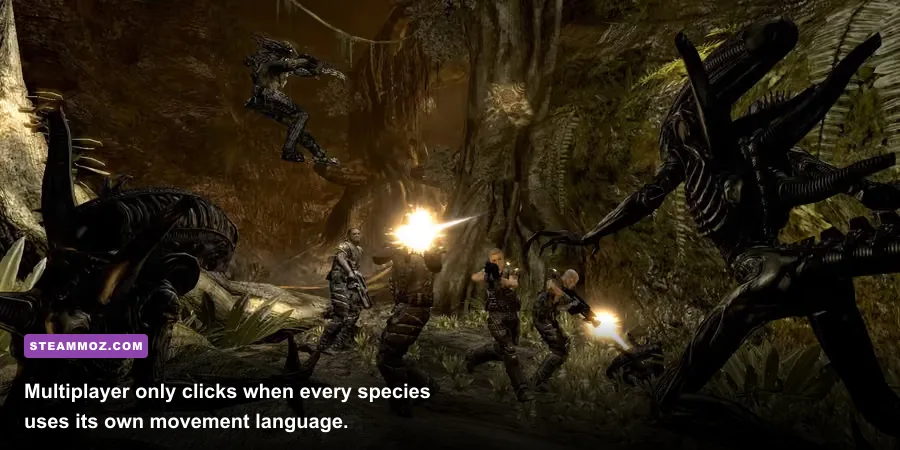
Remember that Alien executions are spectacular but risky. They can lock you into an animation while another enemy lines up a shot. Start executions only when the surrounding space is clear or when the kill removes the last immediate threat. The same principle applies to online play: style kills are rewards for winning the position, not substitutes for winning it.
Predator Gear, Energy and Stealth

8. Scout in vision mode, then switch modes before attacking. Predator vision modes reveal different targets, but leaving thermal or alien-focused vision active all the time can make environmental information harder to read. Scan a room, identify the strongest threat and return to a useful combat view. The cloak helps you approach, not become invincible. Gunfire, movement and careless attacks can expose your position quickly.
9. Save energy for the plasma caster and healing. The Plasma Caster is one of the Predator’s best tools for opening an encounter, especially against a stationary Marine or a group pinned in a corridor. Its cost is energy, and energy also supports key technology. Don’t fire charged shots at targets you could remove with the Combistick, wrist blades or a Disc from a safe angle. When the fight turns messy, retreat and use the environment instead of spending every resource to force a bad duel.
The Predator’s shoulder-mounted cannon is powerful because it changes the range of the fight. Charge it behind cover, expose yourself only long enough to fire, and relocate immediately. The Combistick is excellent for a clean single-target kill, while the Disc rewards open sightlines and careful targeting. Wrist blades are fastest when you have already secured the ambush. Against armed Marines, do not begin with a melee exchange in a brightly lit room unless you have a clear exit.
10. Use height as your default defense. Trees, ledges and elevated structures make the Predator difficult to track and create better angles for ranged attacks. Leap away after a kill instead of remaining beside the body. Health regeneration is valuable, but it cannot save you from sustained focus fire. The Predator campaign is at its best when every encounter feels like a hunt: mark the prey, choose the tool, strike once and disappear.
| Predator Tool | Ideal Target | Resource Cost | Best Tactical Use |
|---|---|---|---|
| Plasma Caster | Stationary or clustered enemies | Energy | Open a fight from cover |
| Combistick | One exposed target | Ammunition | Secure a quiet ranged kill |
| Disc | Targets in open sightlines | Ammunition | Attack while maintaining distance |
| Wrist Blades | Isolated enemies | Health risk | Finish an ambush quickly |
Rebellion’s official game page is worth checking for the developers’ original overview of the three-species design. That asymmetry is the key to the entire game: the Predator should never feel like a slower Marine, and the Alien should never fight like a smaller Predator.
Settings, Collectibles and Smarter Practice
On modern PCs, stable frame pacing matters more than maxing every visual option. Aliens vs. Predator’s dark scenes are already atmospheric, so reducing shadow quality slightly usually costs less immersion than playing with stutter during a close-range attack. Start with the game’s native resolution, disable unnecessary background overlays, and cap the frame rate if uncapped output produces uneven delivery. Our PC performance troubleshooting guide covers the same general process for diagnosing stutter and inconsistent frame pacing.
| Setting | Recommended Starting Value | FPS Impact | Visual Trade-Off |
|---|---|---|---|
| Resolution | Native monitor resolution | Highest impact | Lowering it noticeably softens the image |
| Shadow Quality | High, then Medium if needed | Medium to high | Lower settings reduce shadow detail |
| Texture Quality | High if video memory allows | Low to medium | Lower values blur surfaces |
| Anti-Aliasing | Use the highest stable option | Medium | Lower values create jagged edges |
| Motion Blur | Off for clearer combat | Minimal | Less cinematic camera movement |
Collectibles are not merely decoration. The Marine’s audio logs and the campaigns’ Royal Jelly pickups reward careful exploration and help explain the facility’s collapse. Search dead ends after combat, not during it. In a new area, identify the next objective first, then sweep side rooms while the immediate threat is gone. This prevents the classic mistake of finding a collectible, triggering a spawn, and discovering you have no escape route.
For practice, replay an early Marine checkpoint and impose one rule: no panic reloads and no blind sprinting. Then replay an Alien section and focus only on movement—wall, ceiling, vent, retreat—before worrying about executions. Predator players should practice selecting a target and escaping without spending more than one major resource. These drills build instincts faster than simply restarting a failed encounter.
Finally, don’t judge the game by its first few minutes. Aliens vs. Predator is uneven, but its best encounters emerge when you respect the species’ limits. Check the Steam version for current platform details, and browse more Steamoz performance advice in our graphics-settings guide. Keep the motion tracker close, the Alien moving, and the Predator patient; those three habits will carry a new player through nearly every campaign ambush.