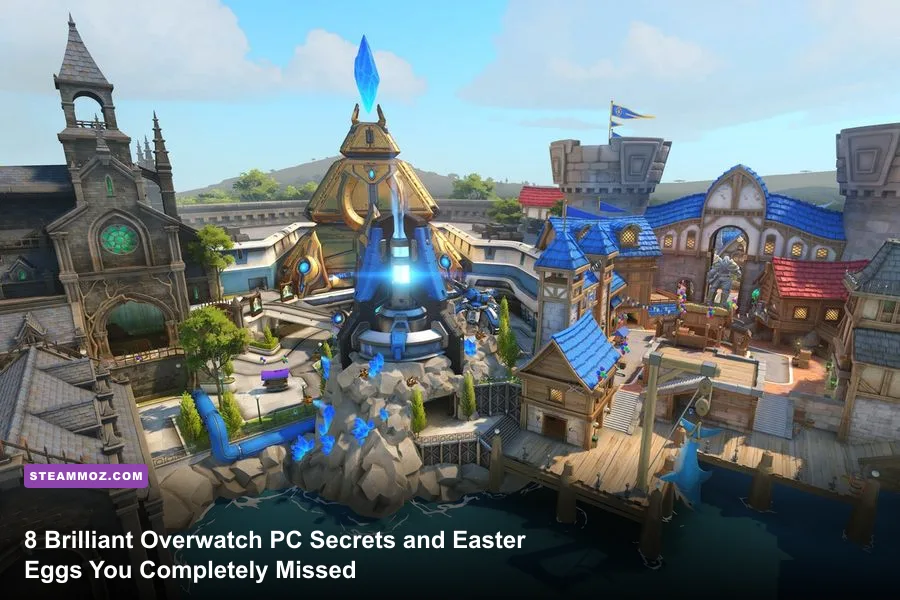
When you are sweating through a high-stakes competitive match on PC, frantically tracking ultimate charge percentages and peeling for your vulnerable flex-support, you completely overlook the staggering volume of detail Blizzard baked into its battlegrounds. Overwatch maps are far more than symmetrical kill-boxes designed for payload pushing and team fights; they are love letters to gaming history, brimming with interactive soundboards, narrative environmental storytelling, and bizarre structural anomalies. While exploring secret locations and hidden rewards across other genres trains your eyes to look for off-path clues, Blizzard's flagship shooter demands mechanical precision even to witness its neatest background surprises. From a fully functional pitch-tuned chime puzzle in Dorado to a solemn FromSoftware tribute hidden behind a crumbling castle wall, here is the definitive breakdown of the best-hidden secrets, interactive environmental Easter eggs, and elite tactical perches in Overwatch on PC that you definitely walked right past.
The Dark Souls Shrine and the Fallen Crusaders of Eichenwalde
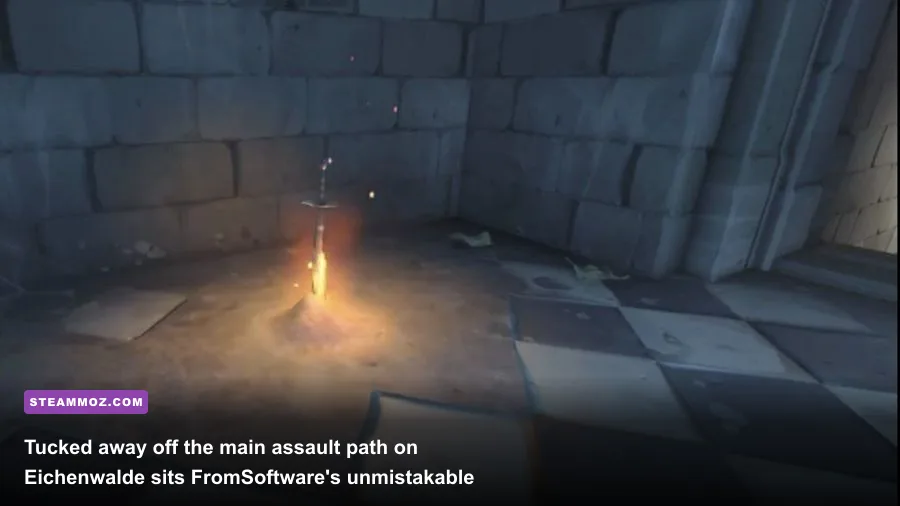
Eichenwalde is arguably one of the most atmospheric hybrid maps in competitive rotation, but most players never bother detouring away from the choke point under the archway. Before your team breaches the heavy wooden castle gates at Checkpoint B, take a sharp detour through the hunting lodge situated just across from the drawbridge approach. Inside a quiet, dimly lit stone dining hall littered with overturned timber benches and ancient ironware, you will spot a pile of glowing gray ashes with an unmistakable coiled broadsword plunged directly down through the embers.
This is Blizzard's explicit nod to FromSoftware's legendary Dark Souls franchise. Unlike normal static props across the map, this bonfire radiates dynamic lighting and emits a faint, crackling audio hum if you step up to it. In early versions documented across the Overwatch Lore Compendium, stepping directly into the coals with certain heroes produced a distinct flame particle burst. While it will not restore your Estus Flasks or refill your biotic ammo reserves, it serves as a stunning atmospheric pause right beside one of the bloodiest chokepoints in the game.
Walk deeper into the castle towards the final payload delivery platform, and the lore gets even heavier. Resting on the ornate stone throne is the massive, weathered armor of General Balderich von Adler, Reinhardt's mentor and the fallen commander of the Crusaders during the Omnic Crisis. If you look closely at the breastplate using a scoped hero like Widowmaker or Ana at maximum render resolution, you can see individual blast scorches, hydraulic leaks, and omnic blade gouges rendered with microscopic detail. PC players utilizing uncompressed texture settings can read the German filigree along the pauldrons, an engineering detail completely obscured if your texture filtering is turned down to save VRAM.
🎮 1bitHeart
Looking to experience this game? Grab your digital key directly on our store for $2.99.
View on Steammoz Store →Blizzard World: A Masterclass in Cross-Franchise Environmental Lore
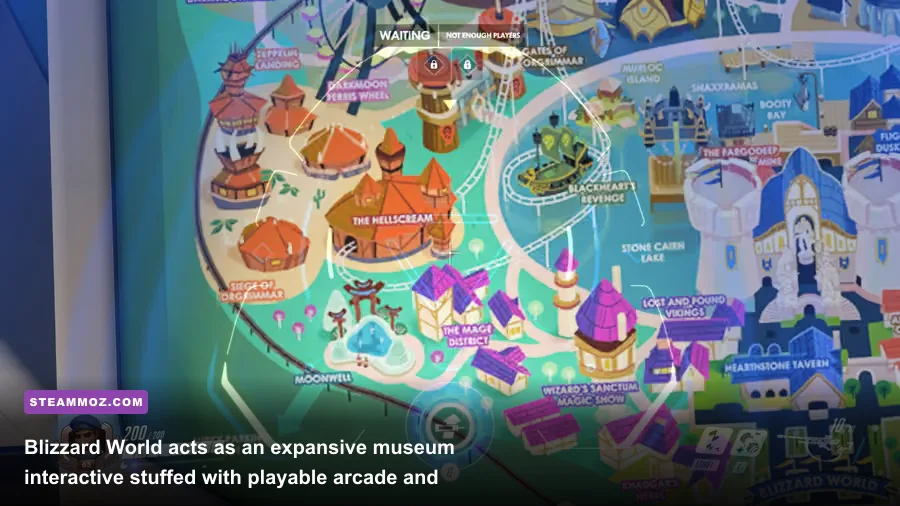
Blizzard World is an unrelenting, self-referential sandbox where every single shopfront, concession stand, and trash can pays tribute to decades of Blizzard software development. If you manage to survive the opening assault push, the map transforms into a gigantic interactive theme park packed with subtle mechanical triggers.
Spawn in as the attacking team inside the Hearthstone Tavern, and you can interact directly with the wooden tables. Firing hitscan rounds or using primary melee attacks on the game boards will send Hearthstone cards, mana crystals, and wooden game pieces scattering with realistic Havok physics. Furthermore, standing near the digital arcade cabinets scattered around the park reveals fully animated attract screens running retro 16-bit animations of The Lost Vikings and classic StarCraft marine sprites.
To showcase just how deep these map secrets go across the game's competitive roster, take a look at the comprehensive breakdown below detailing the most intricate interactive Easter eggs Blizzard built into their map pool:
| Map & Exact Location | Secret / Easter Egg | Trigger Requirement | Franchise / Real-World Reference |
|---|---|---|---|
| Eichenwalde (Hunting Lodge) | Coiled Sword Ash Bonfire | Walk inside side room near Checkpoint B | Dark Souls series (FromSoftware) |
| Dorado (Town Courtyard) | Harmonic Church Bell Pitch System | Shoot 3 bells with single-bullet hitscan | Musical notes: C, E, G (Triad Chords) |
| Blizzard World (Tavern Spawn) | Interactive Hearthstone Game Board | Melee or fire explosives at table center | Hearthstone: Heroes of Warcraft |
| Busan (Downtown Noraebang) | Solo Character Karaoke Singing | Interact key near microphone with select heroes | Original Voice Cast Easter Egg |
| Hanamura / Kanezaka (Arcade) | 16-Bit Fight BGM & Claw Machines | Destroy machine glass or interact with joysticks | Street Fighter & Super Fighter 1993 |
| Route 66 (Panorama Diner) | Deckard Cain Soda Fountain & Receipt | Zoom in on register desk counter | Diablo II Lore / Deckard Cain |
Just past the Blizzard World docks, take note of the Snaxxramas snack kiosk—a morbid culinary tribute to the dreaded floating necropolis of Kel'Thuzad. The menu lists food items like "Plague Nachos" and "Frostwyrm Slushies." If you listen closely through spatial audio headphones, you can occasionally hear the iconic laugh of the Lich King echoing through the ambient crowd track, a master stroke in sound design that demonstrates why running high dynamic range audio on the PC platform makes such an enormous difference.
Musical Hitscan Puzzles in Dorado and the Route 66 Heist
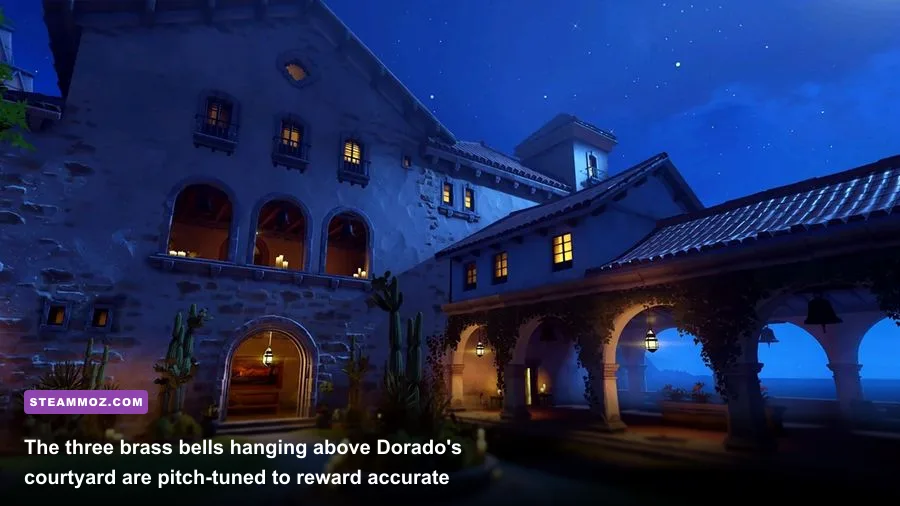
Dorado is widely regarded as one of the most technically demanding escort maps in Overwatch, yet its most enduring mystery is a playable acoustic instrument located right above your head. As you push past the first fountain plaza towards the sprawling market gates, look up at the stone archway supporting three heavy bronze church bells. These are not static decorative assets; Blizzard coded them with specific pitch values corresponding to musical notes.
Using single-shot hitscan weapons like Cassidy's Peacekeeper revolver, Ashe's Viper rifle, or Widowmaker's sniper rifle, you can shoot these three bells to play recognizable melodies. Highly skilled players have mapped out note sequences to recreate the opening riff of the Futurama theme, Beethoven's "Ode to Joy," and the Mexican folk song "La Cucaracha." The bells react with velocity-sensitive pitch depending on how fast you trigger the collision box, meaning players with pinpoint mouse precision can bust out real tunes while waiting for the payload doors to open.
Down the road in Route 66, the attacking team's spawn inside the Panorama Diner houses a treasure trove of hidden lore. Behind the stainless steel service counter rests an old-fashioned receipt printer. If you zoom in using a high-magnification scope, you can read the itemized bill left behind by outlaw Jesse McCree (now Cole Cassidy). The bill totals $9.99 for a cup of black coffee and a slice of pie, but the credit card signature at the bottom has been aggressively scribbled out with bullet gouges.
Beside the register sits a hot sauce bottle labeled with Diablo's fiery countenance, boasting a heat rating of "Hellfire." These minute narrative props tie directly into the broader lore found on the official Overwatch website, where the Deadlock Gang's explosive train derailment serves as the foundational narrative backdrop for the entire map.
Interactive Vocals: The Hidden Karaoke Stars of Busan
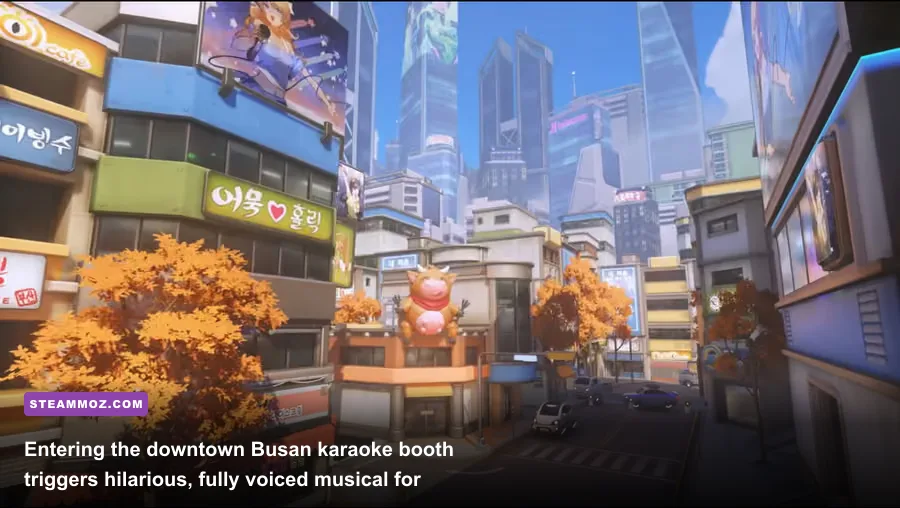
Blizzard loves giving its voice cast room to improvise, but nowhere is this more hilariously obvious than the Downtown district of Busan. Tucked inside the neon-drenched shopping plaza is an authentic Korean *noraebang* (karaoke room) featuring a flashing disco ball, velvet seating, and an illuminated stage mic.
If you approach the microphone and press your interact key (bound to 'F' by default on PC), several specific heroes will step up and belt out absurd, fully voice-acted musical numbers. If you do this as Reinhardt, the German crusader roars out an off-key, operatic German ballad that rattles the furniture in the room. Torbjörn delivers a grumpy, rhythmic dwarven work chant about molten metal, while Reaper mutters a monotone, painfully awkward death metal growl before trailing off in utter embarrassment.
Cassidy attempts a classic country western twang, and Sigma sings a hauntingly beautiful, mathematically obsessed classical melody in Dutch. This isn't just a gimmick; it shows the immense dedication of the audio engineering team. Much like hunting for oddities in an expansive deep-space adventure, discovering which heroes have custom voice lines in Busan's karaoke bar turned into a massive community-wide easter egg hunt during the map's public test realm debut.
Tactical Secret Perches: Skybox Exploits and Pixel-Walks for PC Players
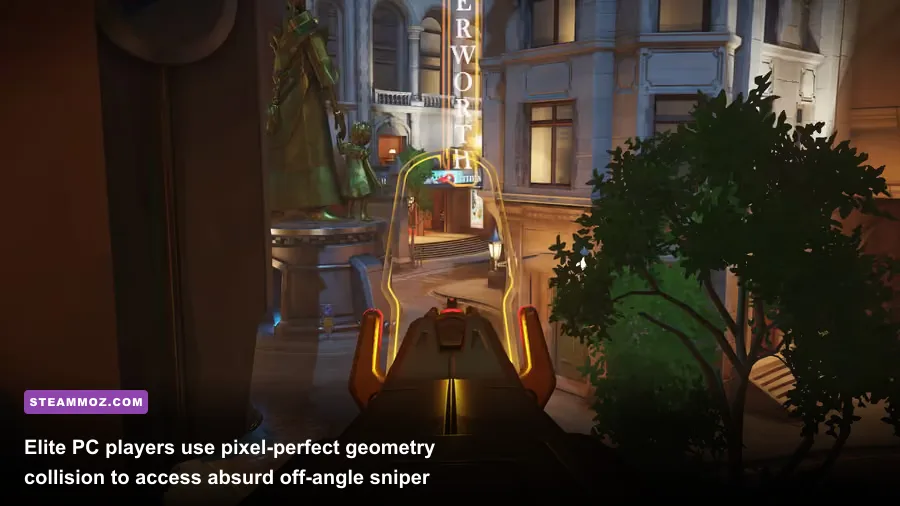
Not all secrets in Overwatch are cosmetic Easter eggs meant to make you chuckle. For hardcore PC competitors, the most valuable map secrets are high-altitude pixel-walks, clipping perches, and architectural blind spots that give movement-heavy heroes unmatched tactical advantages. Because PC gaming allows for uncapped framerates and flick-of-the-wrist mouse flicks, mastering these geographical anomalies can single-handedly win competitive team fights.
Consider the third phase of King's Row, deep within the subterranean factory. High along the left ceiling runs a network of exposed industrial cooling pipes. While casual players assume these pipes carry death-plane clipping boundaries, mobile heroes like Lúcio, Genji, and Doomfist can actually land and balance on specific flat valve flanges. A skilled Lúcio player can jump from the high catwalk, skim the pipes using continuous wall-ride acceleration, and stall directly over the payload without the enemy frontline ever detecting their presence.
Take a look at how specific heroes can exploit these hidden structural sightlines across the standard competitive map rotation:
| Map & Point | Hero Archetype | Required Technique / Collision Point | Tactical Advantage |
|---|---|---|---|
| King's Row (Point C Factory) | Lúcio / Genji | Wall-skimming across hanging coolant pipes | Uncontested aerial stall directly above the payload path |
| Hollywood (Point A Gate) | Widowmaker / Ashe | Grapple sling onto the cinema neon sign ledge | Extreme off-angle sightline punishing attacker spawn exit |
| Rialto (Canal Bridges) | Pharah / Echo | Hover stalling beneath wooden bridge underhangs | Complete breaking of enemy hitscan line-of-sight and free flanking |
| Eichenwalde (Castle Keep) | Doomfist / Wrecking Ball | Diagonal punch / grapple bounce off roof gargoyles | Instant 20-meter vertical rollout directly onto enemy backline |
| Circuit Royal (Uphill Curve) | Sombra / Tracer | Translocator toss over building facade trim | Undetected flank onto sniper balconies without triggering audio cues |
On Hollywood Point A, defensive snipers can perform an advanced grapple sling onto the narrow architectural bevel of the movie theater roof. By uncapping your PC frame rate and exploiting the precise 60-tick physics interpolation, you can briefly stand on this slanted geometry before the game registers a slide collision. This grants a split-second, unobstructed sightline directly into the attacker's main archway choke, allowing an elite Widowmaker to delete an enemy support before the fight even begins.
Learning the intricacies of these mechanical geometry interactions requires the same precision tuning as dialling in your optimal visual performance settings. If your frame timing drops or your input latency spikes, executing these microscopic ledge grabs becomes practically impossible.
How PC Engine Settings and Spatial Audio Reveal Hidden Details
You can easily miss half of these map details if your in-game PC settings are dialed down to bare minimums for competitive raw framerate. While high-ranked players notoriously reduce graphic options to eliminate visual clutter, dropping your "Model Detail" setting to Low actively deletes dozens of non-essential environmental props, including framed photos, lore-rich computer terminals, and small breakable Easter eggs.
Setting your Model Detail to High or Ultra keeps physical world-building intact without taking a devastating toll on your GPU's rasterization pipeline. For players who frequently troubleshoot their system to eliminate latency, much like applying stability tweaks for stable frame rates, balancing visual fidelity with high framerates is crucial. Furthermore, ensuring that "Local Reflections" and "Ambient Occlusion" are kept at medium allows hidden inscriptions on metallic plaques—such as the memorial signatures tucked into the walls of the Kanezaka pottery shop—to become sharp and legible.
Sound design is the other half of the equation. Overwatch features a native implementation of Dolby Atmos for Headphones, accessible directly inside the sound menu without requiring third-party spatial software. Enabling this feature dramatically expands the soundscape's verticality and depth perception. With Atmos enabled, ambient environmental secrets come alive: you can hear the faint humming of omnic servers beneath the floorboards of King's Row, the rhythmic clicking of the clockwork mechanism deep inside the Junkertown vault, and the hushed whisper of wind whistling through the Shimada castle rafters in Hanamura.
Blizzard continuously tweaks these environmental assets across regular game cycles, detailing subtle audio additions and collision adjustments inside their Blizzard developer patch logs. Next time you boot up Overwatch on your PC, step away from the grueling competitive grind for an hour. Jump into a custom skirmish lobby, strip off the match timer, pick a high-mobility hero, and actually explore the architectural genius sitting right beneath your crosshairs. You will discover an entirely new game hiding in plain sight.