Before you draw your katana on the shores of Tsushima, understand this: the PC port of Sucker Punch's open-world epic is not a hack-and-slash button-masher, nor does it play like a forgiving modern action game. Ported brilliantly by the wizards at Nixxes Software, Ghost of Tsushima Director's Cut on PC rewards disciplined rhythm, razor-sharp reflexes, and clever resource management. If you barrel in treating Jin Sakai like an immortal superhero, Mongol spears will pin you to the mud before you clear your first logging camp.
Surviving Izuhara—the dense, sprawling southern region of the island where your journey begins—demands a balance of hardware optimization and gameplay savvy. From deciphering Nixxes' graphics options to untangling combat mechanics that the tutorial barely glosses over, these are the fundamental lessons you need locked down before stepping onto Tsushima's blood-soaked grass.
Dial In Your Display and Frame Pacing Settings First
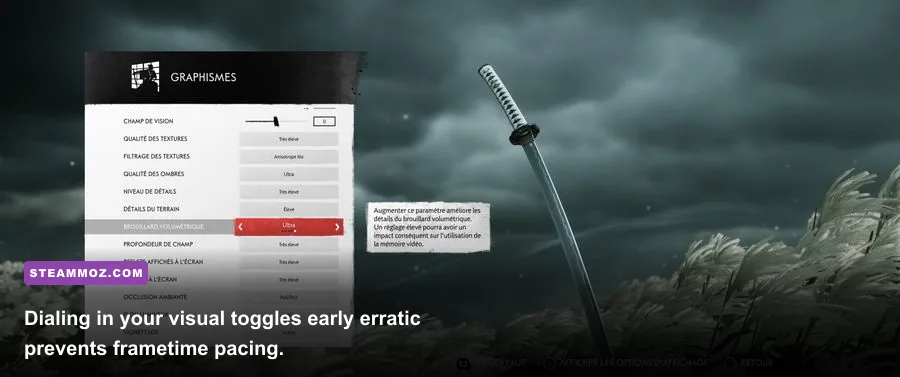
Nixxes has earned a stellar reputation for PlayStation PC conversions, but a stellar port still requires intelligent tuning. By default, the game attempts to balance graphical flair with your detected hardware, yet a few specific toggles cause erratic frametime spikes if left unattended. If you have spent time tweaking visual fidelity in games like our breakdown on tuning PC settings for buttery framerates, you know that micro-stutters completely ruin parry timing.
The biggest technical trap lies in upscaling and frame generation synergy. Ghost of Tsushima supports Nvidia DLSS 3, AMD FSR 3, and Intel XeSS alongside cross-vendor Frame Generation. However, running Frame Generation without an underlying base framerate of at least 60 FPS injects noticeable input latency into Jin's parry and dodge windows. For a game built around precise 200-millisecond reaction times, that floatiness will get you killed during one-on-one boss duels. Pair your upscaler with Nvidia Reflex or AMD Anti-Lag to keep latency locked down tight.
| Graphics Setting | Recommended Value | Performance Impact | Why It Matters |
|---|---|---|---|
| Shadow Quality | High (avoid Very High) | 8% - 12% FPS drop | Very High sharpens distant ambient shadows with negligible visual gain in forests. |
| Volumetric Fog | Medium to High | 7% - 10% FPS drop | Izuhara is drenched in mist. Cranking this to Ultra tanks your 1% low framerates. |
| Dynamic Resolution Scaling | Off (use Fixed DLSS/FSR) | Variable | Can cause subtle image clarity shifts mid-combat, throwing off enemy attack telegraphs. |
| Screen Space Reflections | High | 3% - 5% FPS drop | Essential for puddled roads and muddy riverbanks without dragging down GPU headroom. |
| Nvidia Reflex / Low Latency | On + Boost | None (Reduces latency) | Shrinks input delay dramatically, giving you wider comfort windows for Perfect Parries. |
If you encounter erratic drops during heavy storm sequences or sprawling Mongol fortress raids, applying fundamental stability tweaks similar to our guide for rescuing framerates and stopping PC crashes will keep your GPU overhead stable. Turn Motion Blur completely off; Tsushima's wind engine and particle effects are gorgeous enough, and blur only masks subtle weapon twitches that signal incoming unblockable attacks.
DualSense vs. Mouse & Keyboard: The Hard Control Truth
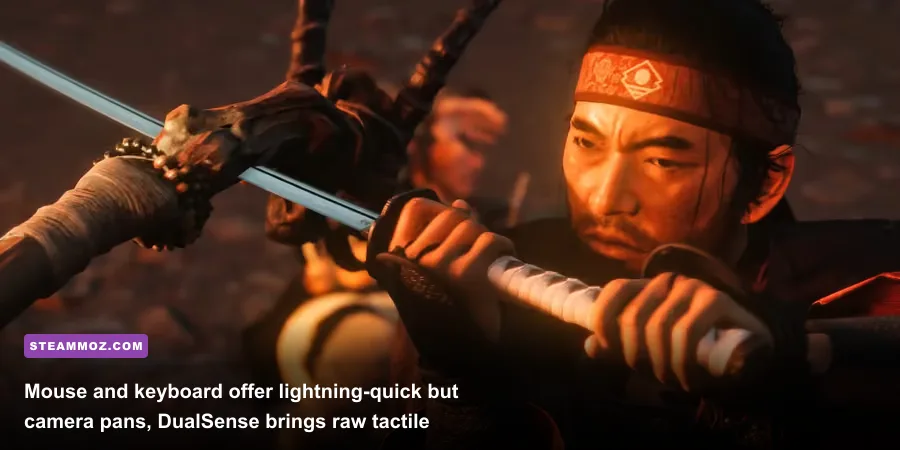
One of the biggest questions PC players face is whether to stick to native mouse and keyboard or plug in a controller. The answer isn't purely black and white, but it leans heavily in one direction depending on your playstyle.
If you connect an official PlayStation DualSense controller via a direct USB-C cable (Bluetooth disables high-bandwidth audio haptics), the PC port retains every single nuance of the PS5 experience. You feel the distinct tactile scrape of steel leaving the scabbard, the resistance of the adaptive triggers when drawing the Halfbow, and the delicate rumble of hooves transitioning from stone paths to tall pampas grass. Immersion-wise, the DualSense is unmatched, and switching between Jin's four stances feels completely natural mapped to face buttons.
On the flip side, mouse and keyboard transform Jin's ranged combat from a clunky chore into an absolute slaughterhouse. Snapping headshots with the Halfbow or Longbow using raw mouse input allows you to wipe out an entire Mongol patrol before they even sound their horn. Furthermore, the ability to flick your camera 180 degrees instantly completely neutralizes Tsushima's primary combat weakness: enemy off-screen flanking. The default keybindings for stance switching on keyboard can feel awkward at first, so immediately remap your stances to dedicated mouse side-buttons if your peripheral allows it.
The Stance Dance: Stagger First, Kill Second
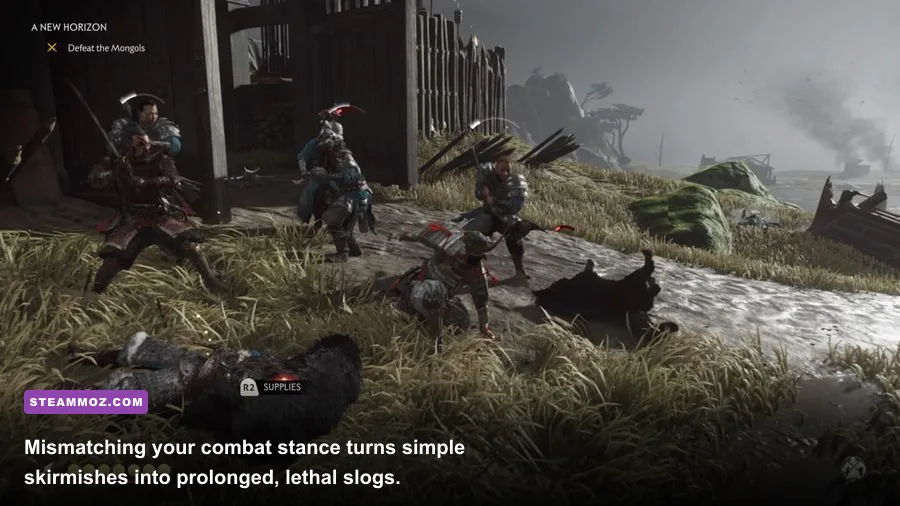
In most action games, heavy attacks simply deal more health damage. In Ghost of Tsushima, hitting an enemy's health directly is practically impossible until you shred their white Stagger meter. Enemies will effortlessly block or deflect your strikes unless you match their weapon type with the correct combat stance.
Trying to muscle through a spearmen camp using Stone Stance is suicide. Unlocking and mastering all four stances isn't an endgame luxury—it is your primary survival chore in Act I. You unlock stances by killing or "observing" Mongol Leaders in occupied encampments. Always sneak into high vantage points above camps first to observe leaders while they train; doing so grants you a free progression point toward your next stance before you even drop down to assassinate them.
| Stance Name | Target Enemy Type | Primary Stagger Combo | Key Combat Upgrade Node |
|---|---|---|---|
| Stone Stance | Swordsmen & Dual-Wielders | Heavy, Heavy, Heavy (Stab) | Full Puncturing Strike (Lethal thrust that interrupts swings) |
| Water Stance | Shieldmen | Hold Heavy, Tap Heavy x3 | Surging Strikes (Five-hit rapid flurry that melts shields) |
| Wind Stance | Spearmen & Polearms | Hold Heavy, Release (Kick) | Typhoon Kick (Launches enemies backward off ledges) |
| Moon Stance | Brutes & Heavy Gunners | Heavy, Heavy, Heavy (Spin) | Tornado Whirl (Wide area-of-effect sweep to stagger heavies) |
When you unlock Water Stance's Surging Strikes, shield-bearing brutes become trivial. But spears will remain your biggest threat throughout the early campaign. Spearmen have deceptive reach, sweeping unblockable attacks marked by a glaring red flash. Prioritize putting skill points into the Wind Stance tree until you grab Spear Defense, which allows Jin to automatically parry spear strikes even during standard light attacks.
Don't Rush Act I: Focus on Shrines, Bamboo, and Charm Synergies
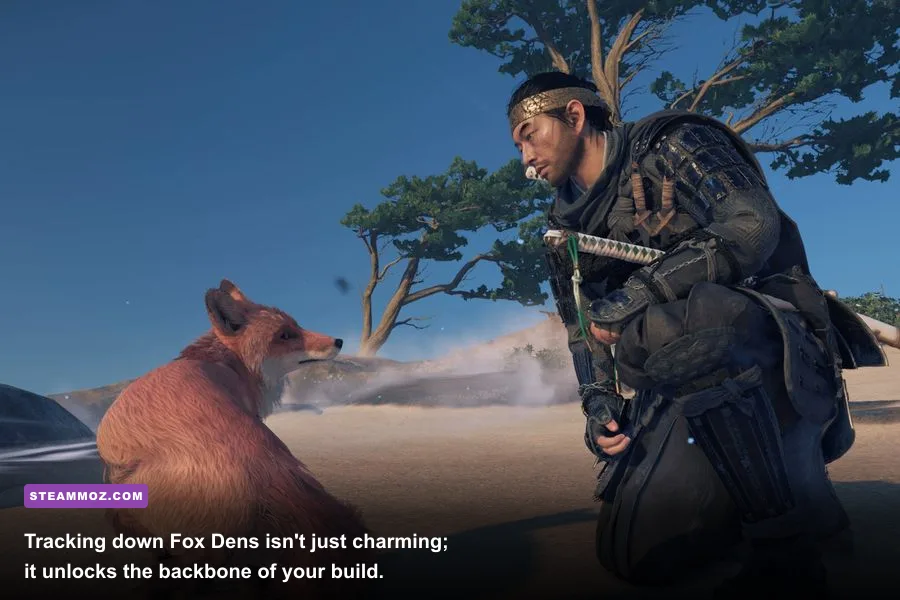
The open-world map of Tsushima is shrouded in a thick fog of war that clears as you explore. While the narrative urgency pushes you to rescue Lord Shimura immediately, rushing main story missions will leave you hopelessly underpowered. Tsushima's progression is tied directly to environmental landmarks rather than standard character levels, much like the optimized routing we cover in our guide to efficient leveling and resource gathering.
Prioritize three specific open-world discoveries the moment you gain full freedom:
- Inari Shrines (Fox Dens): Following golden foxes leads you to hidden shrines. Honoring these shrines unlocks additional Charm slots (up to six total) and upgrades the power of two of the game's strongest minor charms: the Charm of Inari's Might (massive melee damage boost) and the Charm of Silence (stealth detection speed reduction).
- Bamboo Strikes: These quick-time mini-games test your button cadence. Completing them expands Jin's maximum Resolve. Resolve is your lifeline; you burn it to execute deadly Mythic techniques and, more importantly, to heal yourself mid-fight.
- Hot Springs: Soaking in these tranquil pools permanently boosts your maximum health bar and gives you a moment of contemplative narrative reflection.
Most importantly, seek out the Arrow Peak Shrine in southern Izuhara as early as humanly possible. Completing this platforming puzzle rewards you with the Charm of Inari. This single charm massively increases the amount of Bamboo, Yew Wood, Iron, and Supplies you harvest from nodes and defeated foes. Equipping this in your first five hours will virtually eliminate the material grind needed to fully upgrade your Sakai Katana at the swordsmith.
Throw Lord Shimura's Honor Out the Window

The central narrative tragedy of Ghost of Tsushima revolves around Jin Sakai abandoning his uncle's rigid code of samurai honor to wage asymmetric guerrilla warfare. Many beginners make the mistake of roleplaying a pure, honorable samurai during their first playthrough, refusing to use stealth, backstabs, or Ghost weapons.
Do not fall into this trap. The game does not feature a morality meter. Sneaking through pampas grass, assassinating guards from rooftops, and slitting throats from behind does not change the ending of the story or penalize your rewards. In fact, combat is intentionally balanced under the assumption that you will thin out Mongol war bands before engaging in open sword duels.
Your Ghost weapons are crowd-control masterpieces that belong in your regular combat rotation:
- Kunai: Quick-thrown knives that instantly break the Stagger meter of up to three surrounding enemies, leaving them wide open for instant execution.
- Smoke Bombs: The ultimate "get out of jail free" card. Dropping a smoke bomb mid-combat blinds everyone around you, instantly enabling you to perform two to three Chain Assassinations on panicked enemies.
- Sticky Bombs & Black Powder Bombs: Essential tools for clearing clusters of archers or knocking brute shieldmen flat on their backs.
If you enjoy tactical gear setups, you can adapt your approach just like setting up combat rotations in our breakdown of early beginner build strategies. Keep the Traveller's Attire equipped while riding your horse—it vibrates your controller near collectibles and clears 30% more fog of war—then swap into the Samurai Clan Armor the second you engage a fortress to soak up heavy incoming damage.
Track Down Act I's Mythic Tales Early
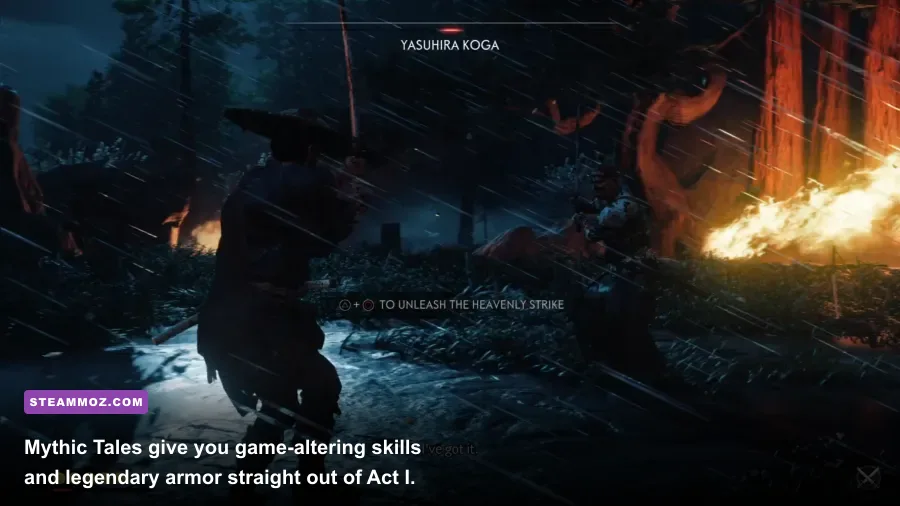
Scattered across the map are legendary musicians singing of ancient warriors. These initiate Mythic Tales, highlighted by distinctive blue quest markers on your map. While standard side quests (Tales of Tsushima) grant minor charms and crafting materials, Mythic Tales grant game-defining abilities, rare weapons, and legendary armor sets.
You should complete two Mythic Tales before ever attempting to attack Castle Kaneda at the climax of Act I:
1. The Heavenly Strike
Found near Komatsu Forge, this quest pits you against the rogue swordsman Yasuhira Koga. Defeating him unlocks the Heavenly Strike, an unblockable, lightning-fast slash costing one Resolve. It bypasses enemy guard completely and deals catastrophic bonus stagger damage to staggered targets. It is your most reliable tool for finishing off aggressive enemies before they can counterattack.
2. The Legend of Tadayori
Located in the rust-colored grasslands of the Houren Pastures, this quest rewards you with Tadayori's Armor. This set is an absolute must-have for archery enthusiasts. It boosts your nocking and reload speeds, extends your Concentration mode (slow-motion aiming) by up to several seconds, and restores 50% of your Concentration meter every time you score a headshot. In open field battles, this armor allows you to eliminate an entire raiding squad in slow motion before they can close the distance.
For deep lore backgrounds and studio development insights, checking out updates on the PlayStation Blog or reading developer diaries from Sucker Punch Productions offers fantastic context on how these mythic legends mirror authentic Japanese folklore.
Mastering the Deflection Tree and Resource Economy
When spending your first dozen Technique Points, resist the temptation to grab flashy offensive moves right away. Jin's baseline survival hinges on mastering the Deflection skill tree under Samurai techniques. Your top three early skill priorities should be:
- Perfect Parry: Expands your counter window, allowing a last-second block to trigger a blinding counterattack that refunds Resolve.
- Unyielding Sword Parry: Essential for survivability. This node allows you to parry blue-glint attacks from enemy swordsmen that were previously unblockable.
- Deflect Arrows: While holding block, Jin automatically swats away incoming arrows. In massive encounters where three archers fire at you from elevated towers while you are locked in melee combat, this skill is the difference between life and death.
Finally, guard your Gold and Steel with your life. Wood and iron can be purchased from trappers or scavenged readily, but Gold is strictly limited to clearing major Mongol Strongholds. Pour your initial high-tier metals exclusively into upgrading the Sakai Katana. Upgrading your bow is helpful, but your sword is your primary tool from the opening beach battle to the closing credits.
Tsushima is a brutal, mesmerizing world that rewards patience over panic. Tune your graphics settings to guarantee zero frame lag, keep your combat stances dancing to match your foes, never hesitate to fight dirty, and let the wind guide your blade across the island.