
You don't truly master Relic Entertainment's genre-defining space RTS just by deathballing Heavy Cruisers and spamming Ion Cannons. Behind the melancholy strings of Barber's Adagio for Strings and the terrifying vastness of the galaxy, the developers secretly packed both the 1999 original and the Homeworld Remastered Collection with obscure derelicts, cut mission scripts, haunting radio chatter, and bizarre developer debug gags. While modern space explorers hunt down Everspace 2 secret locations, Homeworld pioneered atmospheric environmental storytelling twenty-five years ago—and most fleet commanders blasted right past its best secrets without ever checking their Sensors Array.
Whether you're cruising through the Karos Graveyard or surviving the blood-red dust clouds of Kadesh, the deep void hides specific triggers that yield salvageable ancient prototypes, hidden lore entries, and hilarious pilot dialogue. If you want to uncover the coolest easter eggs and hidden coordinates hidden across the campaign, you'll need to pull your camera away from the Mothership, burn your strike craft fuel reserves, and inspect the coordinates normal nav-markers ignore.
The Karos Graveyard: Raiding the Junkyard Dog's Secret Stash
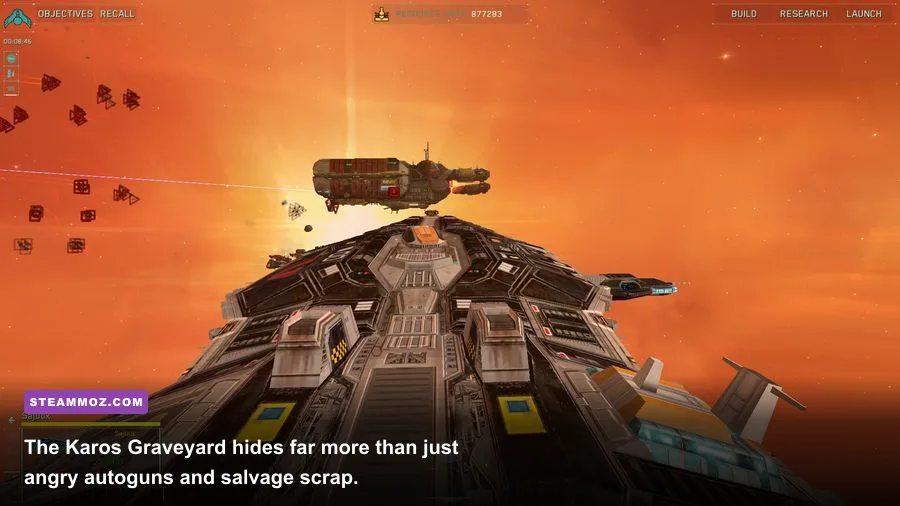
Mission 13, the Karos Graveyard, is already famous for inducing panic the second the dreaded Junkyard Dog clamps onto your prized Destroyer and drags it away toward its disposal bay. But most players focus entirely on destroying the Hyperspace Inhibitors and gunning down Autoguns, completely failing to explore the outer debris clouds. If you pan your Sensors Manager (hitting the spacebar and holding the right mouse button to adjust extreme vertical Z-coordinates), you'll spot several gargantuan derelicts far outside your objective path.
Tucked into the far eastern sector of the map sits the remains of a T-Mat Megaship, an ancient, non-playable alien vessel left behind by an extinct precursor civilization. If you send a flight of fast Scouts along an evasive trajectory to evade the ambient perimeter mines, you'll discover cut tactical log triggers that flesh out the graveyard's history. Even better: you can actually turn the tables on the Junkyard Dog itself. By baiting the Dog with a cheap sacrificial Corvette, you can micro a strike wing of two to three Salvage Corvettes directly behind its thruster cones.
While the original script was meant to make the Dog immune to capture, strict micro-timing allows your salvage claws to latch onto its rear chassis. If successful, your corvettes will drag the terror of the graveyard right into your Mothership bay. While you can't construct duplicates, capturing the Dog permanently secures your fleet from being plucked apart, turning the level's most stressful obstacle into a museum trophy inside your hangar bay.

🎮 Home
Looking to experience this game? Grab your digital key directly on our store for $4.99.
View on Steammoz Store →The Ghost Ship of the Sea of Lost Souls: Revealing the Ancient Pilot
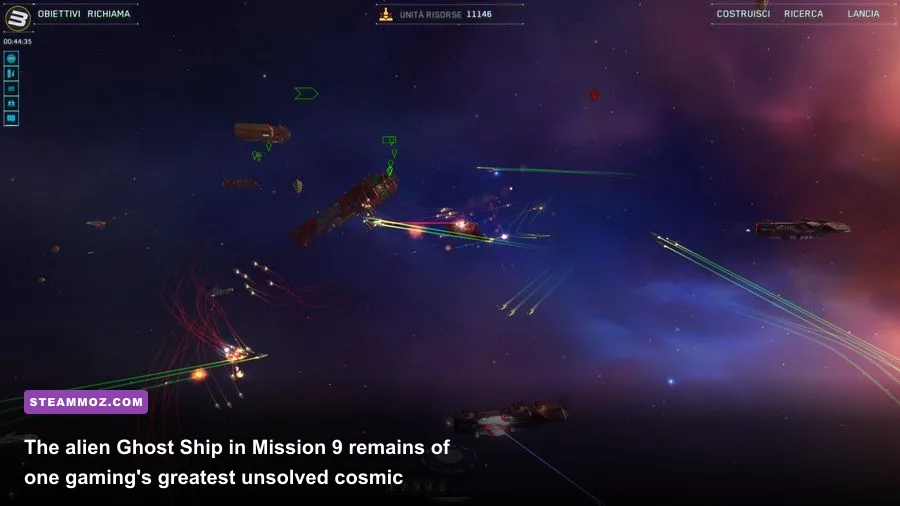
Mission 9 drops your fleet into the Sea of Lost Souls, a cosmic graveyard dominated by an eerie alien derelict surrounded by an impenetrable glowing energy sphere. Any capital ship or frigate that enters the field instantly turns hostile, locked under the alien ship's telepathic or electronic command. Conventional wisdom tells you to send an armada of strike craft—Interceptors and Attack Bombers, which are completely immune to the ship's control field—to knock out its shields and break the trance.
However, dig into the game files or use a free-cam script mod to zoom right up to the vessel's primary observation dome, and you'll find an astonishing level of detail hidden inside an unlit asset. Modelled directly inside the command center is an alien pilot skeleton fused into the flight controls, confirming that this ship has drifted autonomously for millennia. Furthermore, if you hold back your strike crafts and intentionally allow a captured Taiidan frigate from Mission 8 to approach the anomaly, Fleet Intelligence triggers an obscure piece of voice acting acknowledging that the ghost ship's internal alloy signatures match hull metals documented thousands of years before the Kushan Exile.
Hunting down these narrative anomalies feels just like chasing hidden secrets in classic campaigns, proving how Relic used subtle level geography to reward players who take the time to scan the edges of the mission perimeter.
| Mission / Location | Hidden Anomaly / Secret | Trigger Condition | Tactical / Lore Payoff |
|---|---|---|---|
| Mission 9: Sea of Lost Souls | Alien Pilot Bridge Interior | Free-cam mod / Zooming inside the derelict dome | Reveals unique precursor pilot asset modeled inside the hull |
| Mission 13: Karos Graveyard | T-Mat Megaship & Dog Capture | Coordinate scout flight to East sector; rear-salvage micro | Deactivates graveyard hazard; reveals ancient alien wreck site |
| Mission 7: The Gardens of Kadesh | Ancestral Kushan Debris Field | Harvest extreme northern dust pocket before jump | Triggers hidden audio confirming Kadeshi are biological cousins |
| HW2: Mission 4 (Gehenna) | Sajuuk's Coracle Transmission | Leave Progenitor dig-site unharvested for 10 minutes | Bentusi distress recording hinting at the Three Cores' origin |
The Gardens of Kadesh: Uncovering the Heretic Relics
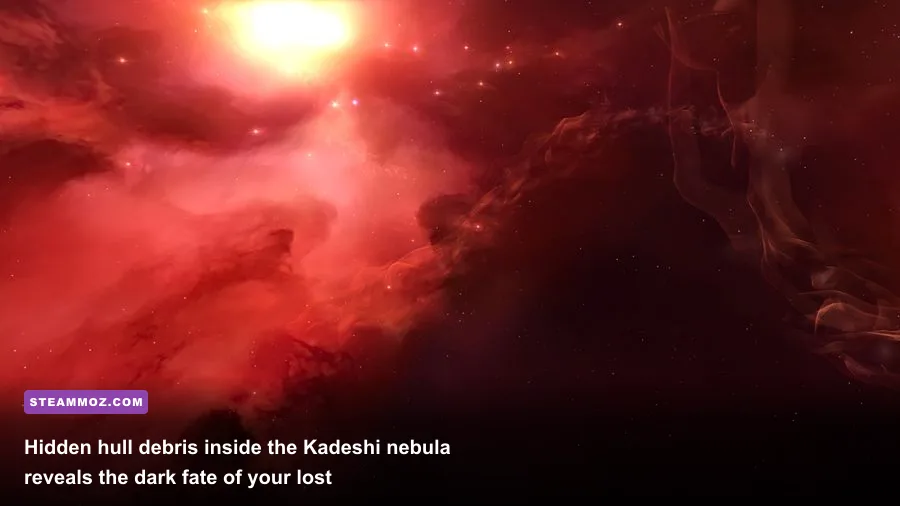
The Gardens of Kadesh (Missions 7 and 8) are renowned for terrifying swarms of agile strike craft that bleed your fighters dry. The Kadeshi worship the nebula, declaring the dust clouds holy ground and executing anyone who dares harvest their resource dust. But there's a tragic secret hidden in the dust clouds that most players overlook during the adrenaline rush of combat.
If you push your Resource Collectors to the extreme northern edge of the cloud in Mission 7—far away from the main Kadeshi Cathedral ship—you will run across ancient, twisted ship hulls buried inside the nebular gas. Scanning these hulks reveals they share an exact chassis profile with the ancient Kushan transport pods seen in the Kharak burning cutscene. The game subtly tells you what Fleet Command takes missions to piece together: the Kadeshi are not an alien religious order, but the descendants of a lost sister transport that split off from your exile convoy centuries ago. Managing your collectors through these dangerous skirmishes requires the same ruthless macro instincts you'd use for fast resource micro and fleet scaling, because if your harvesters get ambushed without a Defender screen, your economy collapses instantly.
For an extra tactical easter egg: if you capture a Kadeshi Fuel Pod using two Salvage Corvettes instead of blowing it up, you can lock it into your fleet permanently. In the classic 1999 release engine, capturing this pod allows you to dock and refuel your own strike craft indefinitely, bypassing the fuel burnout penalties that plague standard Kushan light craft in long dogfights.
Homeworld 2's Progenitor Wrecks and Balcora Gate Oddities
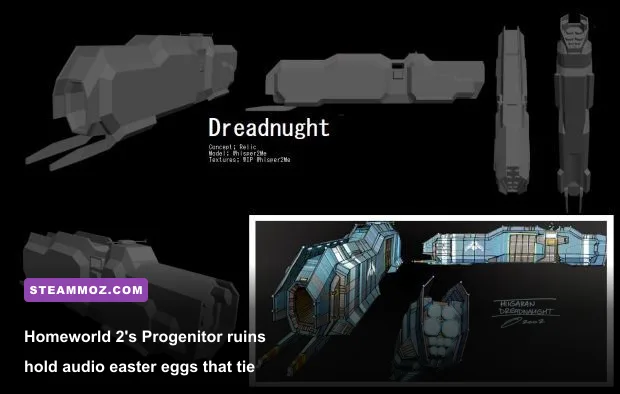
When Relic released Gearbox-supported sequels and expansions, they doubled down on cosmic mythology. In Homeworld 2, Mission 7 (Dreadnaught Berth), your mission is to recover a massive Progenitor warship lodged deep inside an ancient orbital facility. Most commanders simply power down the defense turrets, clear out the hostile Vaygr strike forces, and tow the Dreadnaught home. But you're missing out on the game's best auditory worldbuilding if you rush.
If you hold off on docking your Marine Frigates to the Berth and deliberately order your probes to sweep the lower lattice structure beneath the station, you can intercept an encoded audio loop. The transmission features the faint, distorted chimes of the Bentusi Tradeship Sajuuk's Coracle, broadcasting a cyclical prayer in ancient Hiigaran. It provides concrete narrative connective tissue linking the fallen Progenitors to the Great Hyperspace Cores long before the campaign's climax at the Balcora Gate.
Furthermore, if you take the time to capture every single automated Progenitor Mover unit in Mission 8 rather than destroying them with pulsars, they retain their unique high-speed hull-breaching laser weapons. Packing a squadron of captured Movers alongside your standard fleet gives you an unconventional anti-frigate strike wing with DPS values that rival late-game upgrades like the specialized loadouts seen in retro weapon tuning guides.
| Capturable Secret Asset | Game / Mission | Salvage Units Needed | Combat Utility & Unintended Perks |
|---|---|---|---|
| Junkyard Dog | Homeworld 1 (M13) | 2x Salvage Corvettes (Precision Micro) | Immense hull armor; permanently cleans the map of hazards |
| Kadeshi Fuel Pod | Homeworld 1 (M7/M8) | 2x Salvage Corvettes | Refuels allied fighters mid-battle (Classic engine mechanic) |
| Progenitor Mover | Homeworld 2 (M8) | 1x Marine / Infiltration Frigate | Extreme speed; high-density particle beam melts frigates |
| Taiidan Heavy Cruiser | Homeworld 1 (M14) | 4x Salvage Corvettes | Double-barrel ion turrets bypass your build-queue cap limits |
Developer Jokes, Pilot Chatter, and the Infamous "Big Cheddar"

Relic wasn't purely focused on heavy space-opera melodrama; the developers also snuck plenty of humor into the game's underlying codebase. For example, if you've spent any time scouring early 2000s forums on Encyclopedia Hiigara, you might have heard legends of the "Big Cheddar."
During the development of Homeworld (1999), the engineering team used a bright yellow-and-orange placeholder model resembling a massive wedge of Swiss cheese to test collision hitboxes, hyperspace exit vectors, and capital ship docking clamps. While the asset was scrubbed from the final production campaign builds, command-line arguments like /debugMode and legacy mod tools allow players to load the cheddar mesh in place of the Kushan Mothership. Watching a gigantic hunk of dairy initiate a cinematic hyperspace window with full lighting shaders remains one of the funniest sights in RTS history.
The pilot chatter holds its own batch of treats. If you take an idle wing of Kushan Interceptors or Scouts and spam-click move orders directly into deep empty space over 40 times in rapid succession, you'll break the pilots' typical military discipline. Instead of acknowledging with standard confirmations ("Acknowledged", "Course plotted"), the voice actors will cycle into hidden frustration lines, including weary sighs, sarcastic murmurs like "Are you trying to send us into a star?", and frantic warnings about hull rattles. It's a tiny, brilliant human touch that breathes life into tiny poly-count crafts floating thousands of meters away from home.
Next time you boot up the campaign, don't just follow the green waypoint markers like an autopilot drone. Send out your long-range sensor probes, look beneath the orbital planes, bring along plenty of Salvage Corvettes, and witness the forgotten relics that make Homeworld an untouchable sci-fi masterpiece.