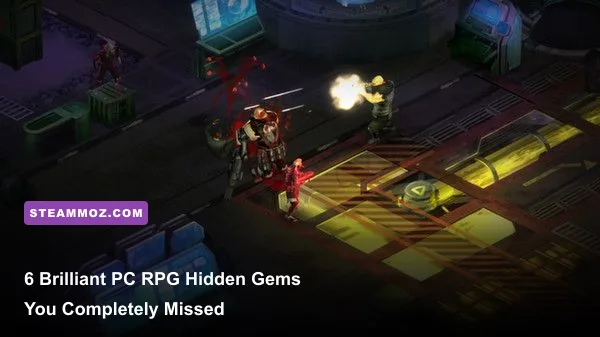
If you have exhausted every corner of the Sword Coast and rolled credits on every mainstream release, Steam's algorithm is hiding some of the best computer role-playing games ever engineered. The mainstream market often prioritizes cinematic sheen over deep simulation, but a dedicated subculture of indie developers has quietly built titles offering unmatched player agency, ruthless stat-scaling, and branching dialogue choices that rival legendary classics. These six PC RPG hidden gems deliver the intricate buildcraft, tactile world design, and unforgiving tactical combat that high-budget studios abandoned years ago.
UnderRail: The Brutal Isometric Masterclass That Out-Fallouts Fallout
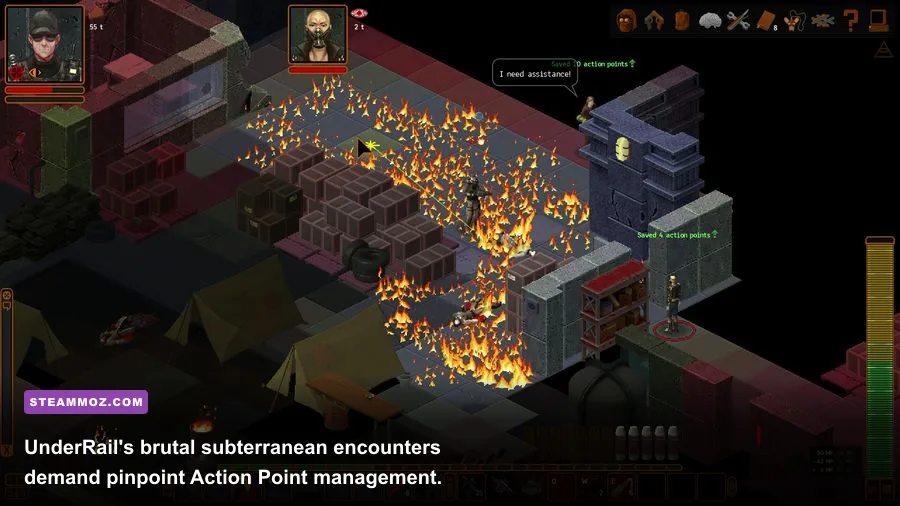
Developed by Stygian Software, UnderRail is an uncompromising, post-apocalyptic turn-based RPG set in a vast subterranean metro network. If you love classic titles like Fallout 2 and Arcanum, this game treats you with absolute mechanical respect—and zero mercy. You navigate South Gate Station (SGS) and the lawless underbelly of the Core City, where survival demands complete mastery over Action Points (AP), Movement Points (MP), and damage threshold calculations.
Unlike modern titles that auto-scale enemies to your current tier, UnderRail locks encounters to static levels. Venture into an abandoned Biocorp outpost too early, and a pack of stealth-stalking Crawlers will paralyze you on turn one before injecting lethal neurotoxins. Combat revolves around two distinct defensive statistics: Damage Resistance (DR, a flat percentage reduction) and Damage Threshold (DT, a flat damage subtracted before resistance applies). If you fire a standard 9mm JHP bullet with low armor penetration against an Ironhead marauder wearing reinforced metal armor with a DT of 18, your shots will deal zero damage. You have to craft armor-piercing W2C rounds or leverage internal trauma through specialized builds.
The build diversity here is staggering. You can craft a "Tin Can" juggernaut clad in heavy Super Steel plate armor wielding a pneumatic sledgehammer boosted by the Super Slam and Pummel feats. Alternatively, you can dive into psionics across four schools: Thought Control, Psychokinesis, Metathermics, and Temporal Manipulation. Combining Metathermic abilities like Cryokinesis to freeze high-threat targets while deploying Cryo-Shield allows squishy mages to dictate battlefields. The game's crafting system lets you salvage weapon frames, balance barrel lengths, and wire electronic components to produce weapons that outclass any vendor stock. Just remember to heed optimization lessons from punishing games like Elex and its unforgiving progression curve—spreading your attribute points too thinly in UnderRail will brick your character before you ever reach Depot A.
The Chronicles of Myrtana: Archolos: The Definitive Open-World Euro-RPG
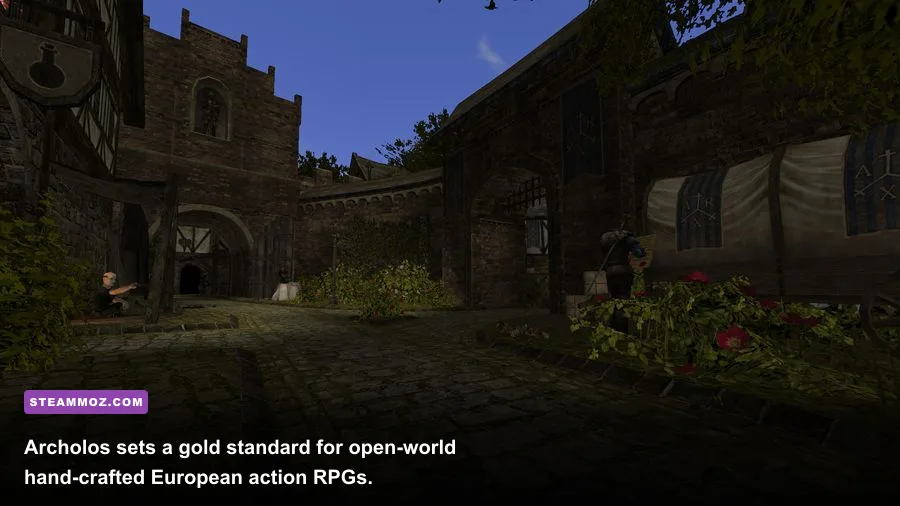
Built as a standalone total conversion modification for Gothic II: Gold Edition by Team Archolos, The Chronicles of Myrtana: Archolos plays like a commercial €60 production. Delivering over 60 hours of questing across a breathtaking volcanic island, it tells the story of Marvin, a refugee fleeing war in the Myrtana kingdom. It captures the legendary Piranha Bytes atmosphere better than modern attempts, stripping away quest markers and hand-holding in favor of organic spatial exploration.
The core gameplay loop centers on the scarce Learning Points (LP) economy. You earn LP upon leveling up, but you cannot simply click a menu to allocate stats. You must locate trainers across the rural village of Silbach or the massive trading metropolis of Archolos, paying both LP and gold to raise Strength, Dexterity, Mana, or weapon proficiencies. Reaching the 30% and 60% breakpoints in 1-Handed or 2-Handed weapons fundamentally changes Marvin's combat animation frames. At 10% skill, your swings are sluggish with massive recovery frames that leave you exposed to a Scavenger's peck. At 60% (Master tier), your weapon chains fluidly into multi-hit combos with active frame cancellations, turning previously lethal encounters into satisfying skill checks.
The quest design avoids fetch-quest filler entirely. Joining either the Merchant Guild of Araxos or the City Guard requires navigating multi-stage socio-political investigations where your choices permanently eliminate rival paths. The world features hand-placed loot behind environmental puzzles, complex alchemy crafting where eating rare permanent plants like King's Sorrel yields vital stat boosts, and a vibrant economy where every loaf of bread matters. For fans of classic European design, this is peak action RPG engineering.
Colony Ship: Hardcore Turn-Based Tactics Aboard a Dying Generation Ark
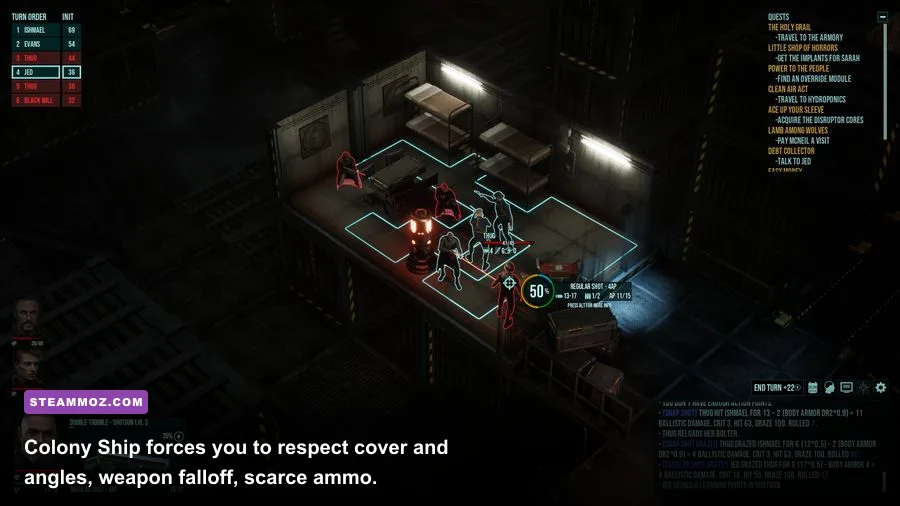
Developed by Iron Tower Studio—the creators behind The Age of Decadence—Colony Ship: A Post-Earth Roleplaying Game drops you into the grim steel belly of the Starfarer, a decaying generation starship cruising toward Proxima Centauri. Society aboard the vessel has collapsed into factional warfare between the autocratic Ship Authority, the fanatical Mission, and the liberationists of the Brotherhood. Colony Ship rejects the power fantasy trope: you are not a chosen hero, but an expendable scavenger clawing through claustrophobic cargo corridors.
Combat functions on a tactical grid where line of sight, cover status, and ballistic recoil reign supreme. Low cover grants a flat -20% hit chance modifier, while high cover inflicts -40% to inbound hit calculations. Spraying with an automatic submachine gun without checking your character's Recoil Control skill will scatter rounds across adjacent tiles, chewing up precious ammunition that costs a fortune to replace. Critical hits are divided into distinct tiers: a Grazing Hit deals 50% base damage, a Solid Hit deals standard output, and a Critical Strike rolls against body-part charts to inflict crippling debuffs like Fractured Limbs or Concussions.
Colony Ship employs a strict "learning by doing" progression curve paired with feat selection at level milestones. Fire shotguns in skirmishes, and your Shotgun skill advances; lockpick security vaults throughout the Habitat, and your Infiltration grows. The game features an uncompromising cyberware economy: installing combat cybernetics like the Subdermal Armor or Motor Cortex Implants consumes your permanent Constitution or Charisma stats, forcing you to choose between human sociability and chrome-augmented lethality. Balancing your party composition requires the same intentional build discipline you would apply to high-end weapon setups in titles like Far Cry 6 loadout optimization, except here, an unoptimized squad member permanently dies in turn three.
Mechanical Comparison: Systems, Build Diversity, and Time Investment
To help you choose your next deep dive, we have evaluated the mechanics, engine styles, and mechanical complexities of these standout RPGs. These are games designed around active problem-solving rather than mindless button-mashing.
| Game Title | Core Subgenre | Combat Engine | Build Depth Rating | Avg. Campaign Length | Signature Mechanical Hook |
|---|---|---|---|---|---|
| UnderRail | Post-Apocalyptic cRPG | Turn-Based (Grid/AP) | 10/10 (Hyper-Complex) | 80-120 Hours | Extensive crafting & 4-school psionics |
| Chronicles of Myrtana | Action Open-World RPG | Real-Time Animation Frame | 8.5/10 (Classic LP) | 60-90 Hours | Trainer-based learning & organic world reactivity |
| Colony Ship | Sci-Fi Tactical RPG | Turn-Based (Hex/AP) | 9/10 (Strict Math) | 35-50 Hours | Non-combat viability & cybernetic trade-offs |
| Troubleshooter | Tactical Anime cRPG | Turn-Based (AT Delay) | 10/10 (RNG/Synergy) | 100-150 Hours | 600+ collectible Masteries synergy board |
| Drova: Forsaken Kin | Dark Celtic 2D RPG | Real-Time Stance Action | 8/10 (Skill-Action) | 30-45 Hours | Flow-state combo meters & faction warfare |
When starting any of these games, misallocating your base attributes can severely hamper your progress. The table below outlines the optimal starting attribute distribution and critical early survival perks across three of our top tactical picks.
| Game | Recommended Archetype | Primary Stat Priority | Key Early Perk / Feat | Common Early-Game Mistake |
|---|---|---|---|---|
| UnderRail | Stealth Psionic Infiltrator | Will (10), Perception (8), Agility (6) | Sprint (+30 MP for 2 turns) | Ignoring crafting skills (Mechanics/Electronics) |
| Colony Ship | Gunslinger / Diplomat | Perception (8), Dexterity (8), Charisma (8) | Fast Draw (AP reduction on weapon ready) | Engaging targets outside optimal weapon range |
| Drova: Forsaken Kin | Spear & Stance Skirmisher | Agility (Primary), Constitution (Secondary) | Flow Retention (Maintains combo meter) | Spamming dodges and emptying the stamina pool |
Troubleshooter: Abandoned Children: The 100-Hour Tactical Mastery Engine
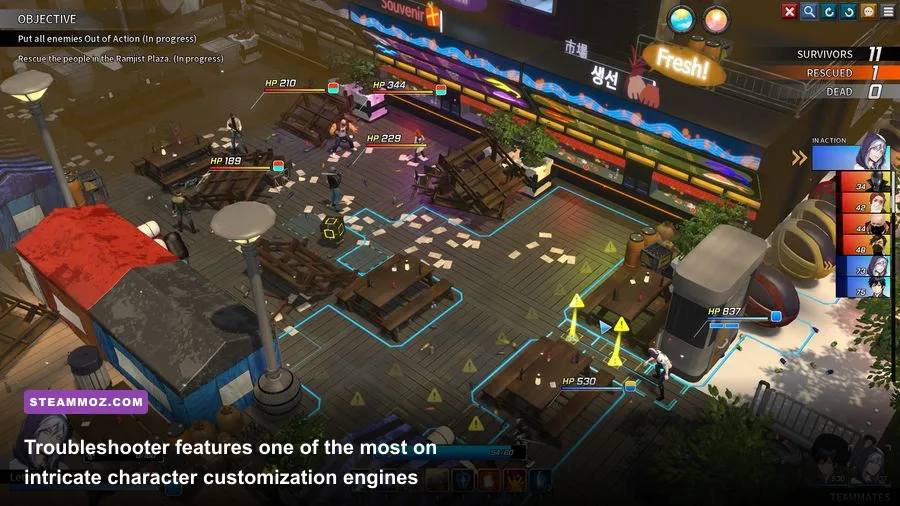
Hailing from South Korean indie studio Dandylion, Troubleshooter: Abandoned Children looks like an anime-styled tactical game, but don't be deceived. Beneath the colorful visuals lies an exceptionally deep tactical RPG on modern storefronts. It borrows the cover and grid-based framework of modern XCOM, blends in the turn timeline mechanics of Final Fantasy Tactics, and attaches a character progression system that puts mainline AAA role-playing games to shame.
Set in the free trade city of Valhalla, you control Albus Bernstein and his fledgling private detective and security agency (known as "Troubleshooters"). While missions feature tactical grid combat against street gangs and corporate syndicates, the real game unfolds inside the Mastery Board. There are over 600 distinct Masteries in the game, categorized into Basic, Support, Defense, Attack, and Special brackets. Defeating specific enemy types gives you a chance to acquire their intrinsic Masteries. Equipping specific permutations of four complementary Masteries unlocks a hidden "Mastery Set" bonus that completely alters your playstyle.
Take the protagonist Albus: by equipping his basic Swordsman masteries alongside Counterattack, Close Quarters Defense, and Wind Sense, you unlock the set effect Gale Swordsman. This setup guarantees that whenever an enemy enters Albus's melee perimeter or targets him with ranged ballistics, he automatically interrupts their attack with a high-critical counter-slash before their damage registers. You can configure Sion into an area-of-effect lightning battery, Irene into an unkillable brawler who converts damage taken into raw offensive strike power, or Anne into a combat medic who grants continuous turns through the Action Time (AT) tick engine. It is a build-crafter's playground that easily eats up 100 hours of playtime.
Drova - Forsaken Kin: The Dark Celtic 2D Action RPG You Need to Play
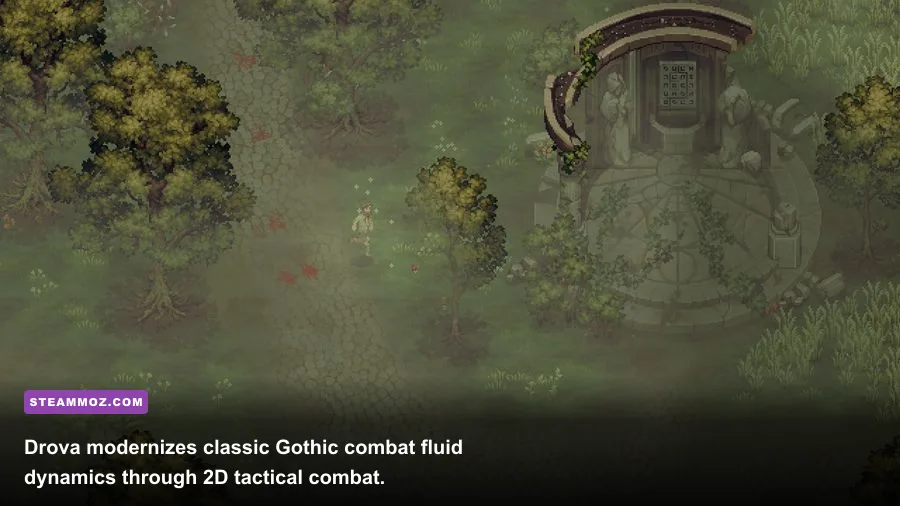
If you prefer real-time combat over grid-based tactical rounds, Drova - Forsaken Kin by Just2D is an absolute triumph. Inspired by the grim atmosphere of early Piranha Bytes games and the visual styling of classic 16-bit adventures, Drova drops you into a mysterious, Celtic-inspired realm shrouded in supernatural fog and dominated by ancient spirits. You are forced to survive in a wilderness where wild boars and bloodflies will slaughter an unprepared traveler in seconds.
Combat relies on real-time stamina, positioning, and an innovative "Flow" system. Landing basic attacks with dual daggers, polearms, or heavy two-handed axes fills your character's Flow bar. When full, you enter a heightened combat state that unlocks powerful abilities—such as an armor-shattering sweeping cleave or a rapid multi-thrust combo. Getting hit, mistiming a parry, or rolling at the wrong moment empties your Flow bar, leaving you vulnerable to staggering hits from enemy leaders. You have to learn your recovery windows and balance stamina consumption with tactical precision.
Drova's world design stands alongside the best in the genre. You can align with either the Order of Nemeton—a faction striving to build a peaceful society through spiritual communion—or the Remnants, rebels seeking to shatter the realm's magical seal through raw extraction and force. Quests feature numerous emergent solutions. You can bribe guards, search for hidden sewer passages, decipher runic clues, or track environmental hints without following glowing mini-map breadcrumbs. Exploring the damp undergrowth of the Silver Mire provides the same thrill of genuine discovery you find in deep discovery games like Everspace 2 secret hunting routes or classic dungeon crawlers such as Eternal Destiny's hidden unlocks. Drova rewards players who take time to study enemy habits, prepare defensive elixirs, and respect the world's danger.
The Tactical Verdict: How to Approach These Hidden PC RPGs
If you're eager to try these titles, pick the one that matches your playstyle. If you want unmatched post-apocalyptic customization and don't mind restarting a campaign to refine your stat sheet, grab UnderRail. If you want rich world-building with an open medieval landscape, download Gothic II and play The Chronicles of Myrtana: Archolos immediately. For tactical thinkers who enjoy managing shipboard politics, turn-based cover dynamics, and strict bullet inventories, Colony Ship is the definitive choice. If you love deep build mechanics and spending hours testing skill combinations, Troubleshooter: Abandoned Children will quickly dominate your Steam library.
These games represent the enduring brilliance of PC role-playing game design. They bypass mass-market hand-holding in favor of complex math, deep lore, and systems that reward player intelligence. Instead of jumping on the next overhyped release, install one of these hidden gems—your time and attention will be richly rewarded.