When Elden Ring dropped in February 2022, it consumed millions of player hours, casting a massive shadow that buried some of the most inventive PC games of the decade. If you spent that entire year rolling through the Lands Between, you missed out on razor-sharp tactical simulators, haunting low-poly survival horrors, and dice-driven cyberpunk masterclasses that fundamentally solved problems AAA games still struggle with. The five games highlighted here delivered the absolute best design work of 2022—featuring zero microtransactions, pristine performance curves on budget hardware, and mechanical depth that will ruin bloated open-world fetch quests for you forever.
| Game Title | Primary Genre | Standout Mechanic | Avg. Playtime | Steam Deck Status |
|---|---|---|---|---|
| Symphony of War: The Nephilim Saga | Turn-Based Strategy / SRPG | 9-Unit Squad Grid Assembly & Morale Breaks | 35–45 Hours | Verified (60 FPS @ 5W) |
| Citizen Sleeper | Narrative RPG / Tabletop Sim | Condition-Linked Daily Dice Allocation | 6–8 Hours | Verified (90 FPS @ 4W) |
| Betrayal at Club Low | Immersive Dice-Heist RPG | Per-Face Customizable Tactical Dice | 3–5 Hours | Playable (Flawless Mouse/Trackpad) |
| Signalis | Classic Survival Horror | 6-Slot Hard Inventory & Radio Decryption | 8–10 Hours | Verified (60 FPS Locked) |
| Chained Echoes | 16-Bit Turn-Based JRPG | Dynamic Overdrive / Overheat Combat Bar | 40–50 Hours | Verified (60 FPS @ 5W) |
Symphony of War: The Nephilim Saga — The Tactical Masterclass That Deserved Fire Emblem's Crown
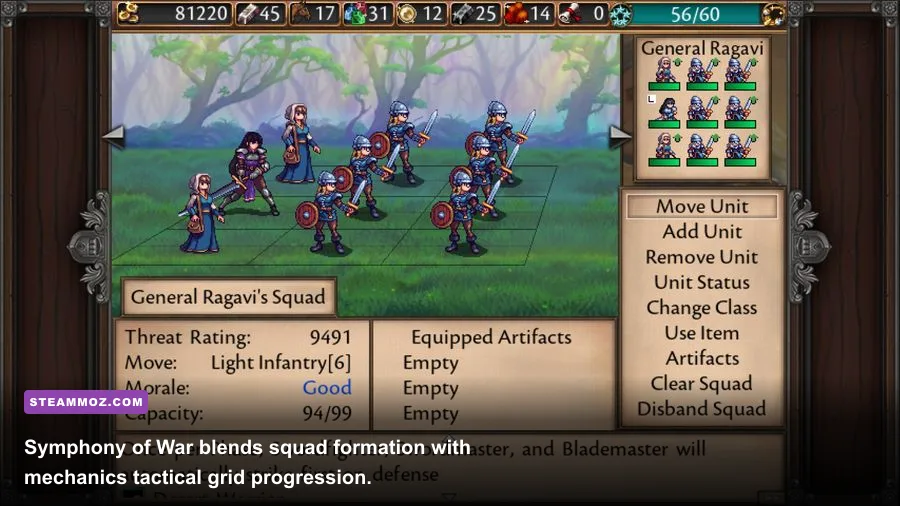
Developed by Dancing Dragon Games, Symphony of War: The Nephilim Saga bridges the gap between classic Fire Emblem and the squad-building genius of Ogre Battle 64. Rather than moving single characters across a battle tile, you command full tactical squads containing up to nine distinct combatants arranged on a 3x3 combat formation. Where a standard modern tactical game degenerates into abusing your single strongest superhero, Symphony of War requires surgical formation theory.
Placing three heavy Paladins or Ironclads across your front row absorbs line-of-sight physical impacts, protecting squishy Sorceresses and Apprentice spellcasters lined up behind them. Every class has an initiative tier: light skirmishers like Rogues strike first to apply Bleed and Blind; frontline brawlers trade heavy blows mid-turn; while slow, artillery-tier siege engines and archers volley from the back. If you misjudge positioning and allow enemy cavalry to flank your squad from the sides, your defensive frontline is bypassed entirely, exposing your fragile healers to instant annihilation.
The progression loop is relentlessly addictive. Across over 50 unit classes, you promote simple militia recruits into specialized battlefield terrors using resources gathered through tactical play. Units gain individual leader traits like "Tactician" (reducing terrain movement penalties) or "Unscathed" (granting flat critical rate spikes while above 90% HP). The game rewards brainpower over brute force through its Surrender system: by reducing enemy Morale through backline wipes or pinning enemies without an escape route, you can force opposing squads to throw down their weapons. This yields double mercenary payout, surplus faction affinity, and rare class-changing medallions.
Hunting down top-tier equipment in this tactical powerhouse scratches the exact same itch as searching for high-end gear caches in our Everspace 2 secret locations and hidden rewards guide. Equipping artifacts like the Obsidian Plate or the Dragon Armor transforms generic vanguard soldiers into unkillable wall units that absorb triple-digit punishment without flinching.

🎮 ELDEN RING
Looking to experience this game? Grab your digital key directly on our store for $59.99.
View on Steammoz Store →Citizen Sleeper: Cyberpunk Tabletop Storytelling Done Right
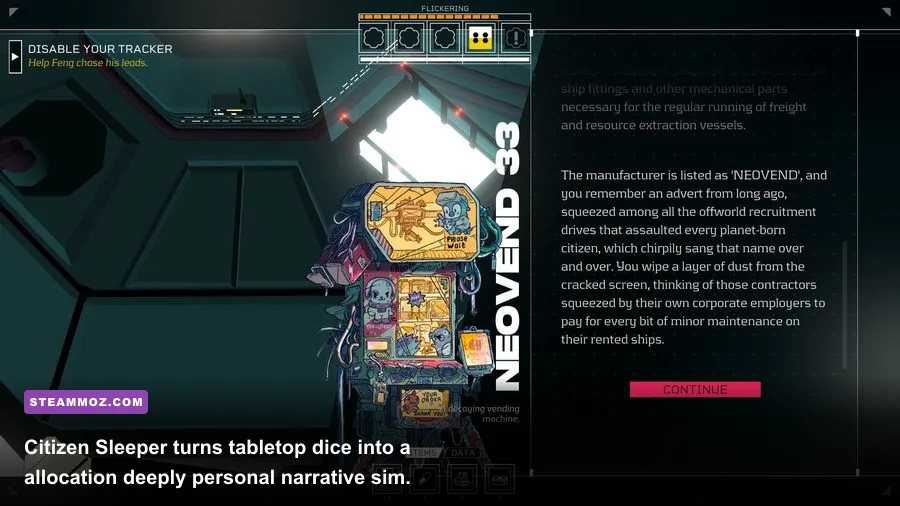
While massive studios spent nine-figure budgets attempting to craft immersive cyberpunk futures, solo developer Jump Over the Age produced the most human, gripping sci-fi narrative of 2022 with Citizen Sleeper. You inhabit the failing body of a Sleeper—a digitized human consciousness cloned into an artificial, deteriorating frame owned by the Essen-Arp mega-corporation. Having escaped your indentured servitude aboard a cargo freighter, you arrive broke, starved, and decaying at Erlin’s Eye, a lawless, deteriorating space station built around an abandoned ring structure.
Mechanically, the game plays like an elite tabletop roleplaying campaign driven by resource management and dice allocation. At the start of every cycle (day), your chassis rolls a pool of six-sided dice. The number of dice you receive depends entirely on your Condition meter; if your cybernetic body deteriorates down to 20%, you only roll two dice per cycle, severely limiting your operational bandwidth. Higher numerical values correspond directly to task success probabilities:
- Die Value 6: 100% Positive Outcome (Guaranteed success, bonus resources, max clocks filled).
- Die Values 4 & 5: 50% Positive / 50% Neutral Outcome (Task succeeds, minor wear or scrap consumed).
- Die Values 1 & 2: 50% Neutral / 50% Negative Outcome (High failure risk, heavy Condition damage, clocks ticking backward).
The genius lies in your daily balancing act. Do you burn your single '6' to advance a decryption hack for the data-broker Feng, or do you assign it to the noodle bar shift to earn the cryo-dollars needed to buy stabilizing medicine from an underground chemist? Timers tick ruthlessly in the background. Corporate bounty hunters are actively tracking your digital footprint, while your own cybernetics are engineered to undergo planned obsolescence without regular injections of proprietary serum. There is zero combat clutter, no bullet-sponge enemies, and not a single meaningless fetch quest. It is pure narrative velocity driven by mechanical tension that runs flawlessly on even low-tier integrated laptop graphics.
Betrayal at Club Low: The Weirdest, Smartest Dice-Heist RPG on Steam

Winning the Independent Games Festival (IGF) Seumas McNally Grand Prize in 2023 for its sheer brilliance, Cosmo D's Betrayal at Club Low was released quietly in late 2022 to universal acclaim from those lucky enough to spot it. Playing as an undercover operative disguised as an unassuming pizza delivery driver, your mission is simple on paper: infiltrate an exclusive underground nightclub housed inside a converted coffin factory and extract your fellow spy before midnight.
Instead of standard skill trees with flat passive percentages, the entire game is built on a physical, tactile dice-modding system. You manage seven primary competencies: Cooking, Deception, Music, Wit, Muscle, Wisdom, and Luck. Whenever you attempt an action—such as talking your way past an imposing bouncer, blending in behind the turntables to impress a suspicious DJ, or navigating toxic kitchen politics—you roll your designated skill die against the opponent's defensive challenge dice.
Every single face on each of your six-sided dice can be individually upgraded at cash-operated terminals throughout the club. You spend cash to turn a standard +1 Deception face into a devastating +3 with an added "Dice Stun" effect, neutralizing an opponent's high-value roll. You also juggle two distinct health meters: Condition (physical endurance) and Nerve (psychological composure). Failing a social check doesn't just block a dialogue path; it inflicts severe Nerve trauma. Once your Nerve drains to zero, your operative suffers a humiliating anxiety meltdown and gets thrown into the gutter, forcing you to reconsider your tactical entry route.
The game shares its atmospheric, eccentric European adventure DNA with classic point-and-click puzzlers—a lineage you can appreciate if your machine meets the standards covered in our Edna & Harvey Harvey's New Eyes PC requirements analysis. With eleven distinct endings and run times hovering around three hours, it provides infinite replayability without a shred of filler.
Signalis: The Precision Survival Horror That Outclassed Modern AAA
While massive publishers continue to churn out high-budget remakes of 90s survival horror classics, German duo rose-engine quietly dropped Signalis, instantly delivering the single best survival horror experience on PC since Resident Evil 2 (1998). Taking inspiration from classic PS1 aesthetics, vintage anime like Neon Genesis Evangelion, and the cosmic dread of Robert W. Chambers, Signalis throws you into the steel-toed boots of Elster, an LSTR Replika searching a dystopian off-world mining colony for her lost partner.
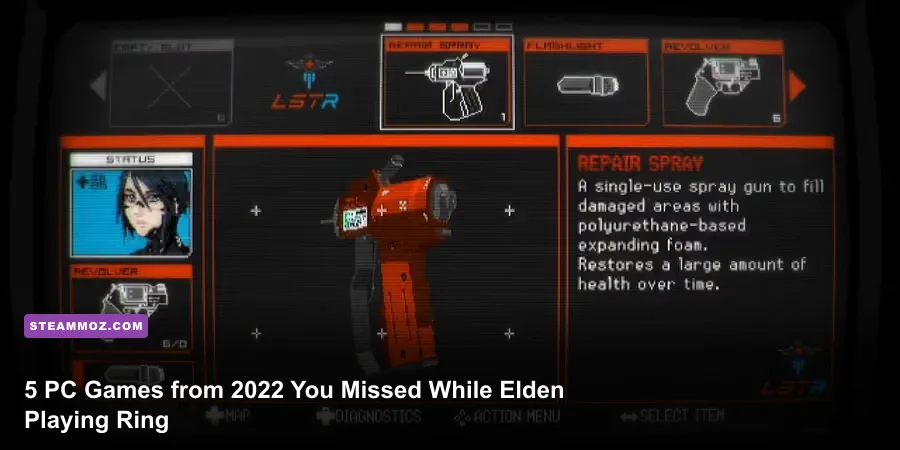
Unlike modern games that treat survival horror as an over-the-shoulder action shooter with scarce ammunition, Signalis enforces a strict, uncompromising 6-slot inventory cap. Your weapons, spare ammo, flashlight module, repair patches, and key puzzle components all compete for the exact same six slots. Stepping into the dark sublevels with a 10mm Pistol, an extra magazine, and a Flashlight leaves you with only three empty slots to carry key items and puzzle pieces back to your safe room.
The mechanical pressure is intense:
- Corpse Persistence: Slain corrupted Replikas do not stay dead. Unless you burn their downed bodies using rare Thermite Flares or headshot them with hyper-scarce Flare Gun rounds, they inevitably regenerate after a random interval when you backtrack through previously cleared hallways.
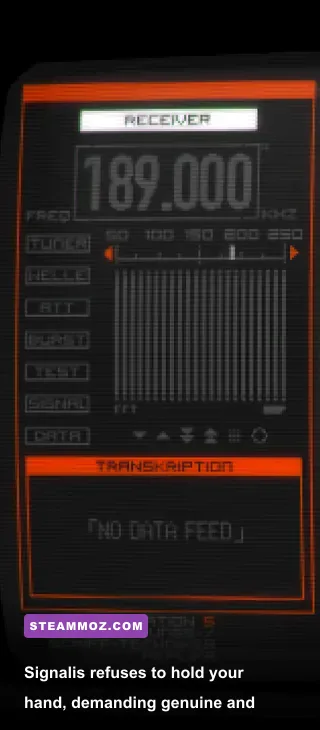
- Analog Puzzle Architecture: You will not find modern objective markers here. Solving puzzles requires tuning Elster's internal Radio Receiver module to exact frequencies (such as dialling 210.000 kHz to match acoustic safe-lock tones), decoding cypher letters, and physically memorizing the layout of the Sierpinski mining complex.
- Dynamic Enemy Behavior: Different Replika types demand custom combat geometry. Fast-moving Star units must be staggered using Disposable Stun Prods to avoid taking chip damage, while lumbering Mynah units armed with laser mining tools demand wide-arc kite maneuvering.
Just as you have to calculate every bullet and utility slot in deep survival campaigns, prioritizing the right loadout makes or breaks your playstyle. We see this exact dynamic when choosing hardware loadouts in our Everspace Deluxe Upgrade weapons guide, proving that tight resource economies always elevate raw gameplay.
Chained Echoes: A 16-Bit JRPG That Fixed Decades of Turn-Based Bloat
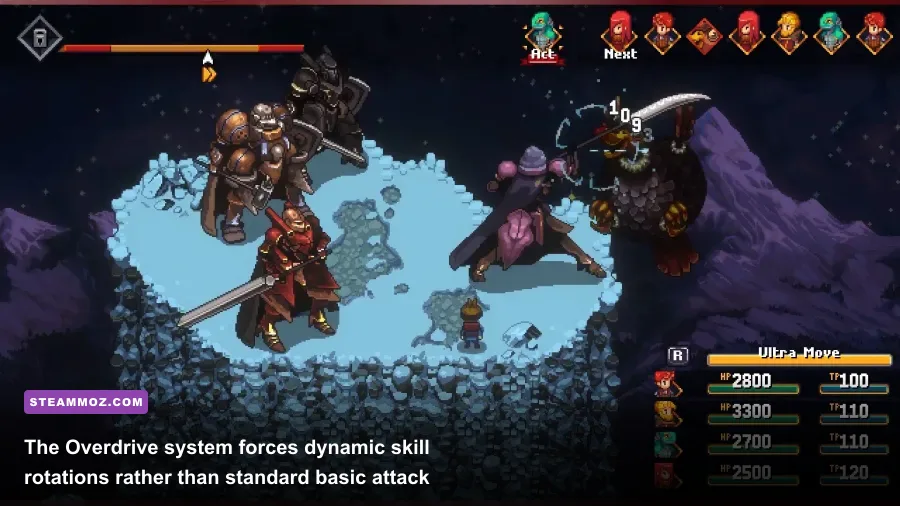
Developed over seven years almost entirely by solo creator Matthias Linda, Chained Echoes did the unthinkable: it took the beloved 16-bit JRPG blueprint perfected by Chrono Trigger and Final Fantasy VI and ruthlessly scrubbed out every dated, irritating design flaw that has plagued the genre for three decades.
There are zero random encounters. Every enemy squad is visibly placed on the map, allowing you to engage on your own terms or sneak past entirely. Even better, your party’s HP and TP (Tech Points) fully restore automatically at the end of every battle. Because the game resets your health between fights, the developer doesn't need to balance combat around boring resource attrition. You don't spend hours using basic "Attack" commands to conserve mana for the boss. Every single battle is tuned like a tactical puzzle where you are expected to unleash your highest-tier spells, buffs, and crowd-control abilities immediately.
The combat engine hinges entirely on the Overdrive System. During encounters, an Overdrive gauge rests in the top-left corner of the screen, split into three distinct color zones: Yellow (Neutral), Green (Overdrive), and Red (Overheat):
| Combat Zone | Gauge Status | Damage Dealt | Damage Taken | Skill TP Cost |
|---|---|---|---|---|
| Neutral Zone | Starting point (Yellow) | 100% (Baseline) | 100% (Baseline) | 100% Standard Cost |
| Overdrive Zone | Target Sweet Spot (Green) | 120% (+20% Buff) | 85% (-15% Mitigation) | 50% (Half Cost!) |
| Overheat Zone | Danger Ceiling (Red) | 100% (Buff Lost) | 125% (+25% Incoming Spike) | 100% Standard Cost |
Every ability you trigger pushes the gauge needle forward. To keep from tipping into the deadly Overheat zone, you must actively track the dynamic Skill Type Icon displayed on the UI. If the icon switches to "Utility," using a debuff or shield skill like Glenn's Armor Break will pull the needle backward back into the safe Green zone. Defending, swapping party members from your backline on the fly, or triggering powerful Ultra Moves also cools down the gauge. Later in the campaign, you unlock customizable Sky Armors (Mechs), introducing a 3-Gear transmission system that alters heat generation per turn against giant colossi.
Hidden Gems PC Performance & Steam Deck Tuning
One of the greatest advantages of picking up 2022's overlooked indie masterpieces is their extraordinary PC optimization. Unlike modern AAA releases plagued by shader compilation stutters, broken frame pacing, and VRAM memory leaks, every single game on this list runs with immaculate precision across low-end rigs and handheld gaming PCs alike.
Just as players frequently have to wrestle with unoptimized engines by applying community-tested fixes—like the configurations we outlined in our Elex PC crash fixes and FPS stabilization guide—these 2022 gems require almost zero troubleshooting out of the box. However, applying deliberate TDP (Thermal Design Power) limits on handheld hardware like the Steam Deck, ROG Ally, or Lenovo Legion Go will unlock staggering battery runtimes without sacrificing a single frame of performance.
For players who enjoy fine-tuning lightweight titles to hit blistering battery life milestones, our Filament Marmalade Edition FPS settings guide demonstrates how capping background renderer bloat can stretch your gaming sessions. The table below provides verified hardware tuning configurations specifically built for these 2022 hidden champions:
| Game | Target FPS | Recommended TDP Cap | Display Scaling Profile | Battery Life (Steam Deck 40Wh) |
|---|---|---|---|---|
| Signalis | 60 FPS (Native) | 7 Watts | Linear Scaling, CRT Filter Enabled | ~4.5 to 5.5 Hours |
| Chained Echoes | 60 FPS (Native) | 5 Watts | Pixel Perfect (Integer Scaling) | ~6.0 to 7.0 Hours |
| Citizen Sleeper | 60 / 90 FPS | 4 Watts | Native Screen Resolution (1280x800) | ~6.5 to 7.5 Hours |
| Symphony of War | 60 FPS | 6 Watts | Native 16:9 / Letterboxed Integer | ~5.0 to 6.0 Hours |
| Betrayal at Club Low | 60 FPS | 6 Watts | Trackpad / Mouse Region Emulation | ~5.0 to 5.5 Hours |
If your backlog is currently dominated by games that demand 150 gigabytes of SSD space and three separate launch clients just to show you an in-game store, drop them immediately. Grab any one of these overlooked 2022 PC gems, set your graphics settings to native, and experience how remarkable PC gaming can be when developers prioritize gameplay design, artistic vision, and mechanical depth above all else.