
If you want hidden gem latest PC games rather than another parade of sequels, start with Blue Prince, Tactical Breach Wizards, Keep Driving, Arco, and Mouthwashing. These releases are radically different, but they share the traits that make a great discovery: a sharp central idea, mechanics that reward curiosity, and enough personality to stay in your head after you quit.
None of these is a disposable five-hour experiment. Blue Prince can consume weeks of morning runs, Tactical Breach Wizards delivers a remarkably polished campaign, and Keep Driving turns a humble road trip into a resource-management RPG. Here’s what makes each one worth playing now, plus the ideal player profile, major caveats, and the best way to approach them.
For more PC discoveries, Steamoz readers can also browse our guides to hidden locations and rewards and Everspace 2’s secret rewards.
Blue Prince turns exploration into a daily puzzle
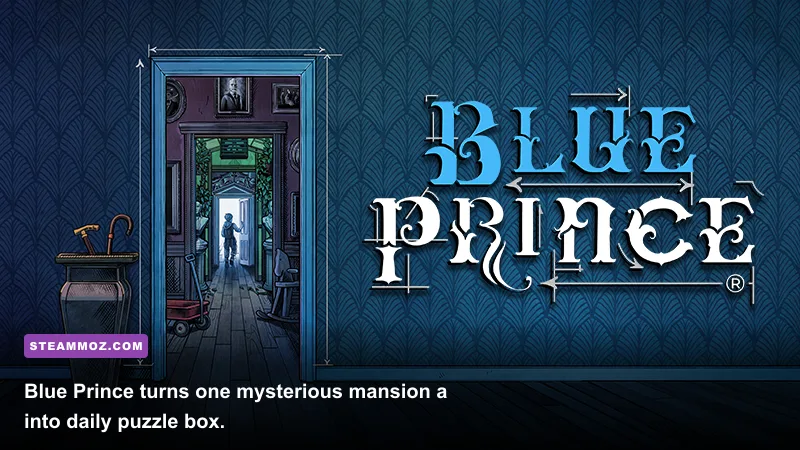
Blue Prince is the most immediately addictive game here. You enter Mount Holly, a mansion that rearranges itself every day, and draft rooms from three door choices at every junction. The goal is to reach the mysterious 46th room, but the mansion only lets you build 45 rooms during a run. That single rule turns layout planning into a tense, wonderfully readable puzzle.
The game’s brilliance is that rooms are both destinations and tools. A Kitchen can provide food, a Security Room can reveal information, and a Workshop helps you manipulate items. You might take a dead-end Utility Closet because it leads to a valuable resource, then regret losing the corridor space needed to reach the Observatory. The mansion never feels like a random dungeon; it feels like a set of bad choices you can gradually learn to exploit.
Runs reset daily, but permanent discoveries carry forward. Keys, documents, codes, and room-specific clues reshape your future decisions. The best strategy is not to sprint toward the 46th room every time. Use early runs to map room connections, identify reliable resource rooms, and test suspicious objects. Blue Prince rewards note-taking more than reflexes, so it’s ideal for players who enjoy deduction games, immersive sims, and the obsessive “one more run” loop.
| Player Type | Best Approach | Main Strength | Potential Friction |
|---|---|---|---|
| Puzzle fan | Track room effects and clues | Deep deduction | Progress can feel opaque |
| Roguelike fan | Optimize routes and resources | Excellent replayability | Luck affects door drafts |
| Story hunter | Inspect every document | Layered mystery | Answers arrive slowly |
Check the official Blue Prince Steam page before buying if you want to confirm current platform details and system requirements.
Tactical Breach Wizards makes failure feel productive
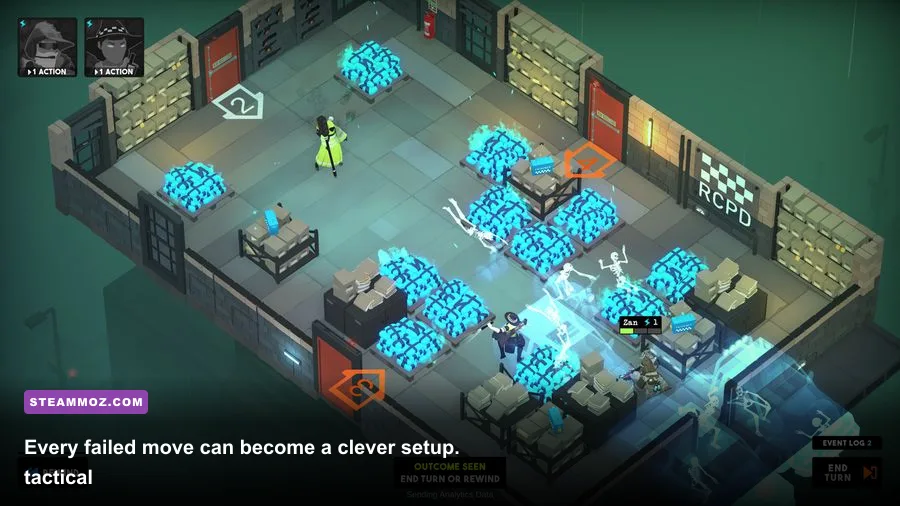
Tactical Breach Wizards is turn-based tactics with a rare sense of comic timing. You command a squad of magical operatives, each built around a clear battlefield role: Sid, the bullet-deflecting riot wizard; Jen, whose teleport tricks rearrange positioning; Zan, who manipulates enemies with gravity; and Eris, who excels at controlling space with elemental attacks.
The key feature is the rewind system. You can undo turns freely, which removes the usual frustration of losing a mission because one enemy rolled unexpectedly well. That doesn’t make combat easy. It lets the developers build brutally clever encounters around experimentation. A failed grenade throw becomes information. A wizard knocked through a window may reveal a launch angle. You are encouraged to test the ridiculous plan, rewind, and then execute the version that actually works.
Most attacks interact with the environment or enemy positioning. Knock a guard into another guard, push someone off a rooftop, or create a chain reaction that clears several targets at once. Objectives are usually more interesting than “kill everything,” too. Protecting civilians, reaching extraction points, or surviving a timed wave forces you to value movement and crowd control over raw damage.
How to get better quickly
Start each encounter by identifying threats that can interrupt your plan: snipers, reaction attacks, reinforcements, and enemies near ledges. Then spend a turn creating a safe route before committing your strongest ability. Don’t hoard cooldowns. Tactical Breach Wizards is designed around short, decisive missions, and the rewind mechanic means you can learn the cost of a mistake without permanently ruining the run.
It’s a superb recommendation for XCOM players who want less inventory management and more puzzle-like combat. The campaign also has a strong narrative rhythm, with sharp dialogue between missions rather than hours of exposition. The official Steam listing has a useful feature breakdown.
Keep Driving is a road-trip RPG with real stakes
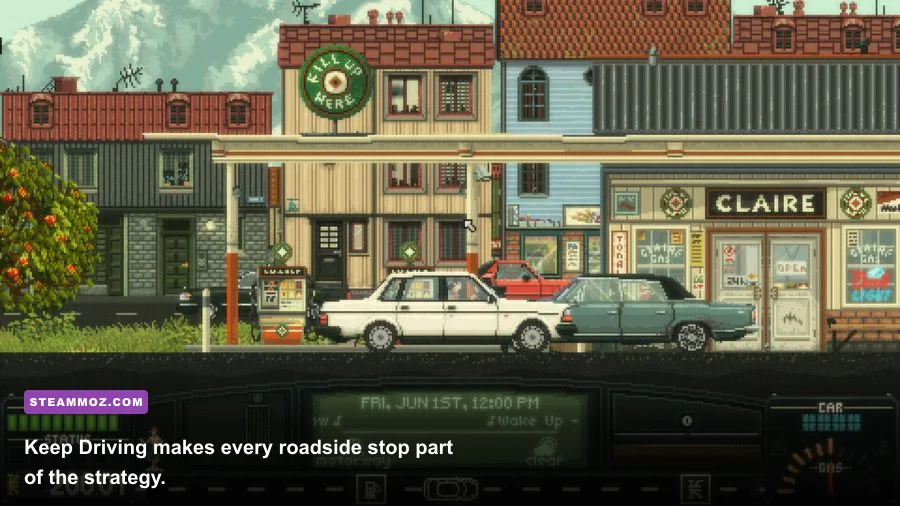
Keep Driving looks like a relaxed pixel-art journey, but its systems are surprisingly demanding. You drive across a stylized version of the United States, picking up passengers, managing fuel, repairing your car, and choosing whether to take short safe routes or longer roads with better rewards. The destination matters, but the memorable decisions happen at gas stations, roadside stops, and random encounters.
Road events play out as card-based encounters. Your passengers provide abilities, while equipment and car upgrades expand the solutions available to you. A problem that costs precious time early in the trip may become trivial once you have the right tool, but upgrades compete for limited money and installation space. That gives every purchase a personality: do you improve fuel efficiency, increase durability, or build a stronger encounter deck?
The game’s progression curve is especially good because failure rarely feels like a total wipe. A rough trip teaches you which passenger types complement your route and which supplies you consistently underestimate. You’ll eventually unlock new cars and modes, but the first journey remains the strongest hook because every mile creates a small story. The best comparison is not Euro Truck Simulator or a pure visual novel; it’s a compact survival RPG disguised as a vacation.
| Upgrade Priority | What It Solves | Best Early Use | Trade-Off |
|---|---|---|---|
| Fuel efficiency | Reduces expensive refueling | Long-distance routes | Less immediate utility |
| Durability | Protects against breakdowns | Event-heavy roads | Consumes upgrade budget |
| Encounter tools | Expands card solutions | Passenger-focused builds | Can strain storage |
Keep Driving is a particularly good pick for players who want an RPG that can be played in short sessions. If your PC struggles with newer 3D releases, compare it with Steamoz’s PC performance tips for lightweight games, although Keep Driving itself is far less demanding.
Arco is a tactical western with an unusual rhythm
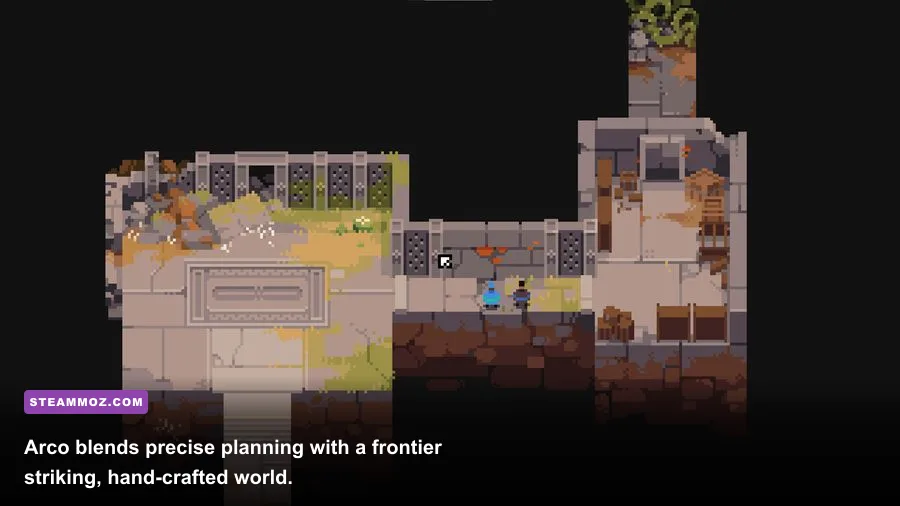
Arco deserves more attention because it makes real-time-looking gunfights work inside a turn-based framework. You control several characters across a revenge story involving Indigenous-inspired fantasy, colonial violence, and supernatural forces. The pixel art is colorful, but the battles are unforgiving: positioning, line of sight, cover, and action timing matter more than simply stacking damage.
Arco’s defining system is simultaneous planning. You queue actions, watch the battlefield resolve, and then adjust when the situation changes. A gunshot can miss because an enemy moved. A melee attack can fail because you misread distance. The result is closer to choreographing a fight than selecting commands from a menu. You need to predict where enemies will be, not where they are now.
Weapons and abilities also encourage distinct approaches. Firearms offer range but create timing and ammunition concerns, while close-range attacks are powerful when you can control the approach. Abilities that reposition characters or interrupt enemy plans are often more valuable than another damage boost. Save before risky encounters, study enemy patterns, and use the first attempt as reconnaissance rather than treating every defeat as a failure.
The campaign is divided into character-focused chapters, giving the story a strong change-of-perspective structure. It’s an excellent choice for players who find traditional tactics games too slow but still want meaningful decisions every few seconds. The developers’ official Steam page shows the game’s distinctive combat style in action.
Mouthwashing is short, brutal, and impossible to shake
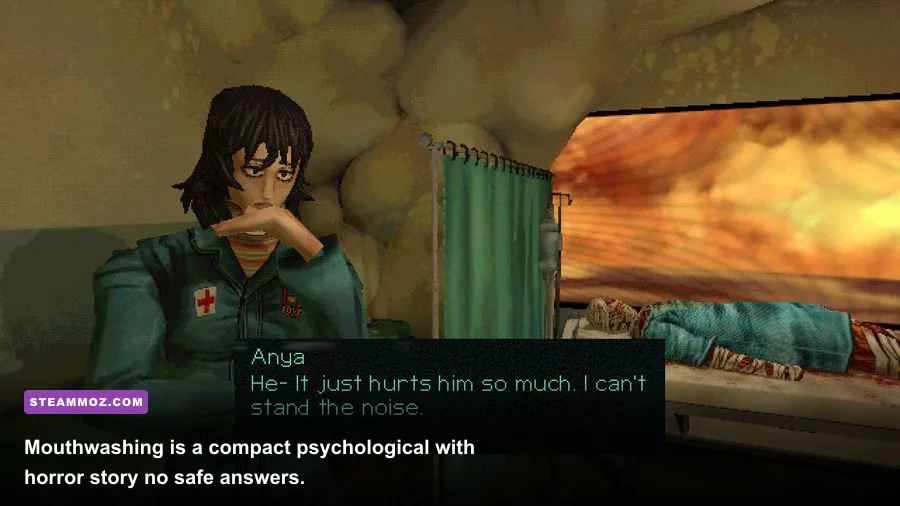
Mouthwashing is the outlier: a compact first-person psychological horror game set aboard the damaged cargo ship Tulpar. After a crash strands the crew in deep space, captain Curly and his surviving crew face dwindling supplies, medical catastrophe, and a breakdown in trust. It’s best experienced with as little prior knowledge as possible, so this section will stay deliberately spoiler-light.
There’s no conventional combat build or loot treadmill. The game’s tension comes from exploration, environmental details, distorted perspective, and the uncomfortable contrast between ordinary ship routines and escalating body horror. You’ll move through the cockpit, medical bay, cargo areas, and crew spaces while piecing together what happened. Small details matter: a neglected object, a line of dialogue, or an apparently mundane task can change how you interpret an entire scene.
Its low-poly visuals are intentionally rough rather than technically weak. Aggressive lighting, cramped corridors, and abrupt audio cues do more work than expensive textures could. Headphones are strongly recommended, and the game is better played in one or two focused sittings than nibbled at between multiplayer matches. It’s also worth checking the content warnings before starting; Mouthwashing deals with intense psychological distress, violence, medical trauma, and abuse.
If you want a horror game that trusts the player to connect the dots, this is the one. The official Steam page provides the current content information, while Steamoz’s low-FPS troubleshooting guide is useful if other horror games give your system trouble.
Which hidden gem should you play first?
Choose Blue Prince if you want a mystery that rewards notes, patience, and repeated attempts. Pick Tactical Breach Wizards for the cleanest tactical gameplay and the most generous approach to experimentation. Keep Driving is the relaxed-looking game with the deepest survival decisions, while Arco is the best choice for players who want stylish, fast tactical combat. Go with Mouthwashing when you want a concentrated horror story that will leave you thinking about it afterward.
| Game | Best For | Approximate Style | Biggest Hook |
|---|---|---|---|
| Blue Prince | Deduction fans | Procedural mystery | Drafting a mansion room by room |
| Tactical Breach Wizards | Tactics players | Turn-based campaign | Rewinding every mistake |
| Keep Driving | Systems-focused RPG fans | Road-trip management | Passengers become your abilities |
| Arco | Action-tactics fans | Turn-based western | Simultaneous combat planning |
| Mouthwashing | Psychological horror fans | Narrative exploration | Unreliable, unsettling storytelling |
That’s the real appeal of this group of hidden gem latest PC games: none depends on a giant map, a battle pass, or a hundred-hour checklist. Each takes one strong idea and pushes it hard. Put one on your wishlist, ignore the algorithm for an evening, and you may find the next PC game you can’t stop recommending.