
If Chronicles of the Wolf leaves you hungry for gothic exploration, branching secrets, and old-school castle combat, start with Bloodstained: Ritual of the Night. It is the closest modern match, while Castlevania: Symphony of the Night, Blasphemous 2, Infernax, and The Last Faith each capture a different reason to love Migami Games' werewolf adventure.
Chronicles of the Wolf is a deliberately focused 2D action game built around the Beast of Gévaudan legend. You play as Elisabeth, investigate a sinister rural France, and push through a gothic world where navigation, combat, and hidden routes matter more than loot explosions or endless side quests. That makes the right follow-up less obvious than simply grabbing any game tagged “Metroidvania.”
This ranking is based on the things that actually define the experience: how satisfying the map is to learn, whether combat has readable enemy telegraphs, how much backtracking feels earned, and whether the atmosphere supports the mystery. The recommendations below also account for what you want in 2026: modern controller support, reliable PC performance, meaningful replay value, and games that still feel good after the novelty wears off.
The Best Games Like Chronicles of the Wolf Ranked
The games below are not interchangeable. Bloodstained is the broadest and most content-heavy option. Symphony of the Night is the purest historical match. Blasphemous 2 has the strongest atmosphere and weapon variety, while Infernax nails the compact, punishing retro structure. The Last Faith is the choice for players who want heavier violence and harsher execution.
| Tier | Game | Best Match For | Main Trade-Off |
|---|---|---|---|
| S-Tier | Bloodstained: Ritual of the Night | Exploration, RPG progression, gothic castles | Its loot system can overwhelm a focused mystery |
| S-Tier | Castlevania: Symphony of the Night | Classic castle design and atmosphere | Older presentation and uneven difficulty |
| A-Tier | Blasphemous 2 | Dark folklore, precision combat, visual identity | Less traditional RPG customization |
| A-Tier | Infernax | Retro challenge and meaningful choices | Much shorter and deliberately rougher |
| B-Tier | The Last Faith | Heavy weapons and punishing fights | Some platforming and pacing issues |
One useful warning: don't judge these games only by their screenshot similarity. Chronicles of the Wolf is comparatively restrained. Bloodstained throws hundreds of items and abilities at you; Blasphemous 2 asks you to learn deliberate attack spacing; Infernax expects you to accept NES-era friction. The best choice depends on which part of Elisabeth's journey hooked you.

🎮 Chronicles of the Wolf
Looking to experience this game? Grab your digital key directly on our store for $13.99.
View on Steammoz Store →1. Bloodstained Is the Closest Modern Replacement
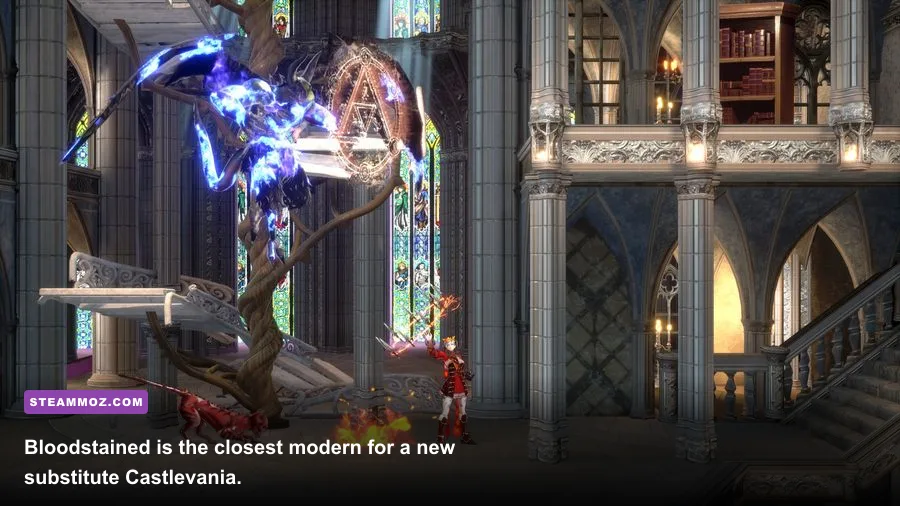
Bloodstained: Ritual of the Night is the obvious S-Tier recommendation because it was created by Koji Igarashi, the producer most associated with Castlevania's exploration-heavy “Igavania” formula. Its protagonist, Miriam, explores an enormous castle, collects movement abilities, equips weapons and armor, and absorbs enemy Shards that function as attack skills, passive bonuses, and familiars.
The most important difference is scale. Chronicles of the Wolf builds tension through a tighter folkloric mystery; Bloodstained is a full RPG with crafting, cooking, quests, a bestiary, multiple endings, and a giant equipment list. That excess is a strength if you enjoy experimenting. The Directional Shard system lets you tailor Miriam around ranged attacks, while Conjure Shards such as the familiar-based skills keep damage flowing while you focus on movement.
For a clean first run, prioritize survivability before chasing the highest attack number. A weapon with comfortable reach is usually more valuable than a theoretically stronger short blade, especially in rooms containing flying enemies and armored knights. Test Shards in the in-game descriptions rather than selling every duplicate: repeated copies improve a Shard's Grade, while Rank upgrades its efficiency or behavior. That distinction is easy to miss and is the backbone of a strong build.
Bloodstained also has the best long-term value here. You can finish the main route, return for missed rooms, pursue the true ending, and then tackle optional bosses with a completely different loadout. If you're coming from a guide-heavy playthrough of another game, its map completion percentage and fast-travel structure make cleanup painless.
Play it on the official Steam page, and check our weapon-tier advice if you want a more systematic approach to comparing gear. Bloodstained is the pick when you want Chronicles of the Wolf's foundation, but with four times the build depth.
2. Symphony of the Night Is the Blueprint
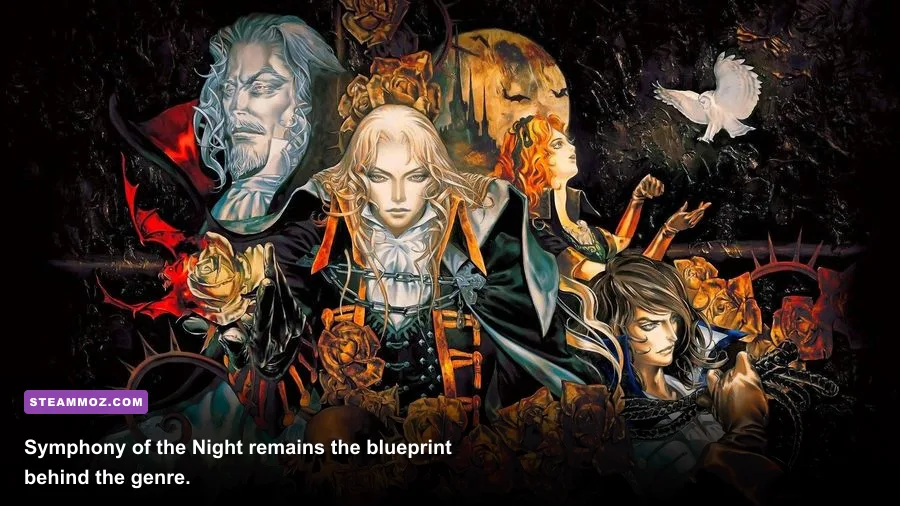
Castlevania: Symphony of the Night is older than every other recommendation here, yet it remains the most important comparison. Its lead character, Alucard, begins with a sword, shield, and a surprisingly flexible movement set before unlocking transformations and relics that open previously inaccessible sections of Dracula's Castle.
The castle is the real star. Locked doors, suspicious walls, vertical shafts, and apparently useless rooms gradually become part of a giant spatial puzzle. That sense of recognition—walking back through an area and suddenly understanding why a ledge mattered—is exactly what makes Chronicles of the Wolf's exploration work. Symphony simply gives the idea more room to breathe.
Its combat is less disciplined than modern soulslike-influenced metroidvanias. Alucard can become extremely powerful through equipment, familiars, spells, and hidden weapons, and some enemies barely survive once your gear catches up. The famous inverted castle also turns the map upside down after the apparent finale, creating a second campaign rather than a standard endgame cleanup.
New players should avoid rushing straight toward the strongest weapon guides. Experiment with Alucard's spells, learn the input patterns, and pay attention to the Shield Rod interaction with certain shields. The game rewards curiosity more than perfect execution. Its biggest weakness in 2026 is accessibility: presentation, menus, and controller behavior depend heavily on the version you play. Still, its compact rooms and unforgettable soundtrack make it essential.
If you're interested in the broader Castlevania lineage, Steam's official catalog is the safest place to check current releases and collections. For another weapon-focused comparison, our character ranking guide shows how different build priorities can change the way a 2D action game feels.
3. Blasphemous 2 Has the Strongest Atmosphere
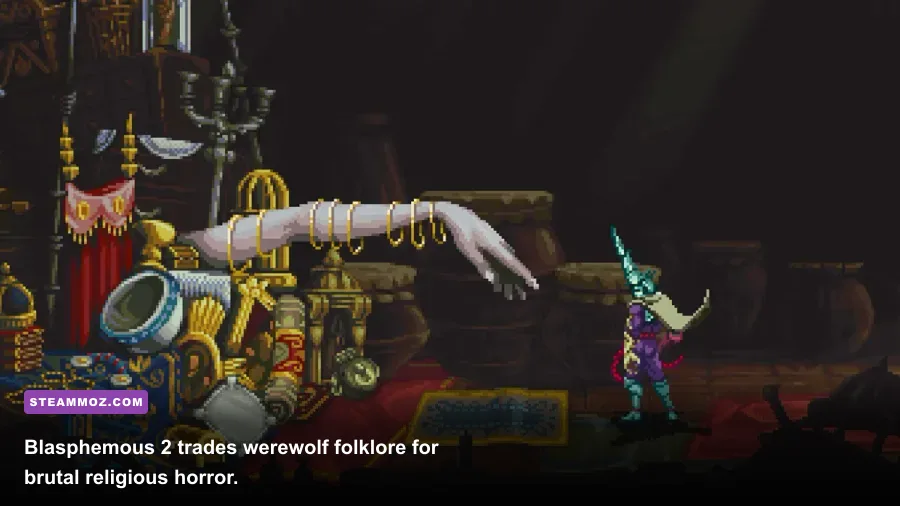
Blasphemous 2 is the best follow-up if what stayed with you was Chronicles of the Wolf's oppressive folklore rather than its exact mechanics. The Penitent One returns to a grotesquely beautiful world built from religious imagery, body horror, processions, ancient rituals, and bosses that look like they crawled out of a fever dream.
Its combat revolves around three primary weapons: Ruego Al Alba, Sarmiento & Centella, and Veredicto. Ruego is the balanced sword with a parry and a powerful charged state. Sarmiento & Centella are twin rapiers that reward fast strikes and can build electrical effects. Veredicto is the huge flail, slower but devastating, with excellent reach and a flame-based empowerment route. You can switch between them instantly, and several rooms are designed around their traversal or environmental functions.
That weapon triangle makes Blasphemous 2 feel more tactical than a basic “equip the biggest sword” game. Veredicto is ideal for controlling crowds and punishing large targets, but its recovery frames can get you clipped by quick enemies. Sarmiento & Centella melt vulnerable targets when you maintain pressure, yet their shorter reach demands better spacing. Ruego sits between those extremes and is often the safest tool for learning a boss.
Spend your Marks of Martyrdom on weapon upgrades early rather than hoarding them for an imaginary perfect build. The game has enough room for experimentation, and upgraded weapon states noticeably improve damage and utility. Prayers and Rosary Beads add another layer, but don't treat them as mandatory homework: choose effects that support your actual habits. If you keep taking chip damage, defensive bonuses will outperform a tiny damage increase.
The world is more combat-forward than Chronicles of the Wolf, and some bosses rely on multi-hit patterns that punish panic healing. Watch the animation before the attack, not the damage number. Blasphemous 2 is available through its official Steam listing, and it pairs particularly well with our weapon-ranking approach if you enjoy comparing tools by role instead of raw damage.
4. Infernax Is the Best Retro Challenge
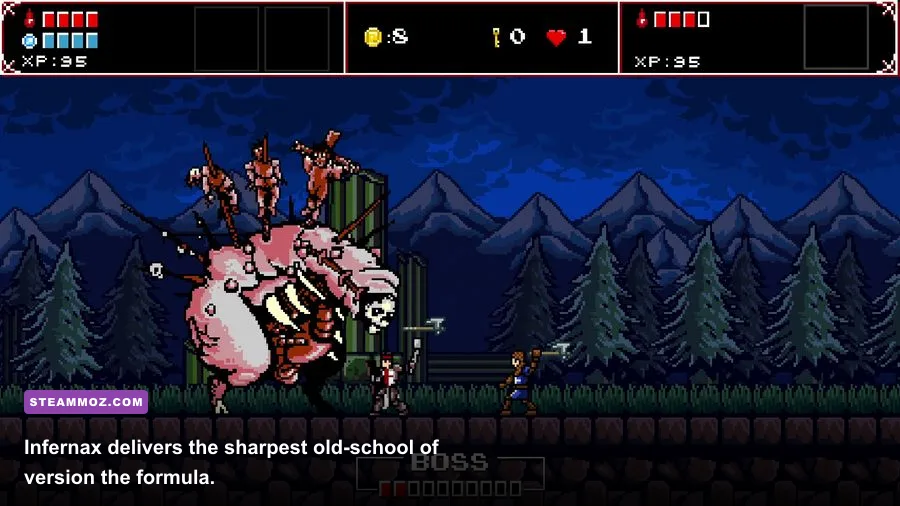
Infernax strips the formula back to its sharpest outline. You play a returning knight in a cursed medieval land, slash through side-scrolling areas, buy upgrades, defeat bosses, and make decisions that alter the story and ending. Its graphics intentionally echo 8-bit action games, but its map has modern conveniences such as fast travel and a clear upgrade path.
The game is shorter than Bloodstained or Blasphemous 2, and that's precisely why it works as a palate cleanser. There are no oceans of crafting materials to sort, no sprawling quest log, and no need to memorize ten weapon systems. You improve by finding better armor, learning spell utility, and understanding enemy patterns.
Magic matters more than newcomers expect. Offensive spells can erase dangerous formations, but mana is limited and upgrades are expensive. Save it for enemies that are awkward to approach, then use your melee attack to finish ordinary mobs. The mace's reach and your shield timing are more important than reckless aggression, especially in narrow corridors where knockback can send you into environmental hazards.
Infernax also delivers genuine choice. Decisions are not cosmetic; they influence routes, rewards, and endings. Keep separate save files before major moral choices if you want to see the consequences without replaying the entire campaign. That structure gives it a replay hook Chronicles of the Wolf players may appreciate, even though the combat is much more deliberately archaic.
Choose Infernax if you want a weekend game with real bite. If your PC gaming backlog includes older strategy or action titles, our performance-focused PC guide is a useful reminder that older-looking games can still need sensible display and controller settings.
5. The Last Faith Is the Brutal Alternative
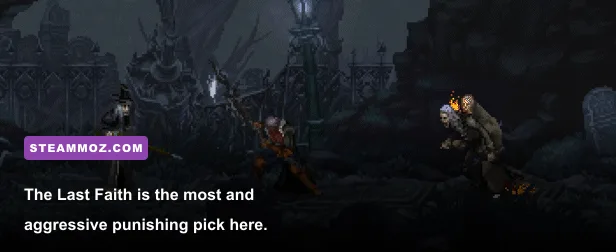
The Last Faith is the right answer for players who want Chronicles of the Wolf's gothic mood pushed toward bloodier, more punishing action. You control Eryk, an amnesiac warrior moving through a decaying world filled with grotesque enemies, oversized weapons, firearms, and supernatural powers. Its visual language sits between gothic horror and soulslike brutality.
The Last Faith's weapons have distinct rhythm rather than merely different damage values. Heavy blades create large commitment windows but stagger smaller targets. Faster weapons let Eryk slip in several hits before retreating. Firearms and special tools are best treated as interruption or burst options, not a replacement for learning melee spacing. If you burn every resource in the first phase of a boss, the second phase will expose you quickly.
Boss telegraphs are readable once you stop attacking on autopilot. Watch for the pause before a lunge, the repositioning that signals a projectile pattern, and the brief recovery after a multi-hit string. The safest rotation is usually one or two attacks, a reposition, then a dodge through—not away from—the next committed swing. Greed is the game's most reliable damage-over-time effect.
It isn't as polished or consistently paced as Bloodstained. Some rooms feel designed around attrition, and platforming sequences can be less comfortable than the combat. That said, its atmosphere is excellent, and the weapon weight gives every successful counterattack satisfying impact. It belongs in the B-Tier only because it is a harsher recommendation, not because it lacks ambition.
Before buying, review the current patch notes on the official Steam page. Players sensitive to stutter should also read our PC troubleshooting coverage before assuming every performance issue is caused by their hardware.
Which Game Should You Play First?
Pick Bloodstained: Ritual of the Night if you want the closest modern structure, the largest castle, and deep RPG customization. Pick Symphony of the Night if you want to see the template that Chronicles of the Wolf is responding to. Choose Blasphemous 2 for grim art direction and weapon-based combat, Infernax for a compact retro adventure with meaningful choices, and The Last Faith if you want every fight to feel dangerous.
| Your Priority | Best Choice | Why It Wins | Recommended Starting Approach |
|---|---|---|---|
| Closest overall match | Bloodstained | Castle exploration plus ability-gated progression | Use balanced weapons and test Shards constantly |
| Classic design | Symphony of the Night | Alucard, Dracula's Castle, relic-based exploration | Explore every suspicious wall and side room |
| Best atmosphere | Blasphemous 2 | Dense folklore, grotesque art, flexible weapons | Upgrade all three weapons before specializing |
| Best short campaign | Infernax | Fast progression and consequential decisions | Save before major choices and conserve mana |
| Hardest combat | The Last Faith | Heavy attacks, lethal bosses, soulslike pacing | Learn one boss string at a time; don't trade hits |
My personal order for a Chronicles of the Wolf fan is Bloodstained first, Blasphemous 2 second, and Symphony of the Night third. That sequence gives you the modern mechanical upgrade, the strongest contemporary atmosphere, and finally the historical source material. Infernax is the perfect break between larger games, while The Last Faith is best saved for when you specifically want a challenge.
Don't chase a supposed “correct” route through any of them. The appeal of this subgenre is the moment a locked corridor becomes accessible, a weak enemy drops an unexpectedly useful ability, or a boss's terrifying animation suddenly makes sense. Chronicles of the Wolf understands that rhythm. These five games do too—just with different weapons, different monsters, and very different amounts of patience required.