If you want online multiplayer games on PC with genuinely incredible gameplay, start with Counter-Strike 2, Helldivers 2, Deep Rock Galactic, Monster Hunter Wilds, and Warframe. They deliver the strongest mix of mechanical depth, meaningful teamwork, replayability, and satisfying progression. The rest of this list covers five different multiplayer moods, from ranked tension in Rocket League to long-form adventures in Final Fantasy XIV.
This isn't a popularity contest built around player counts. The games below earned their places because the moment-to-moment play holds up after dozens, or even hundreds, of hours. Each one gives your squad something specific to master: recoil control, enemy aggro, ability timing, traversal, positioning, crafting, or simply knowing when not to press the big red button.
The Top 10 Multiplayer PC Games Ranked
| Rank | Game | Best For | Core Gameplay Strength |
|---|---|---|---|
| 1 | Counter-Strike 2 | Competitive FPS players | Precision, economy, map control |
| 2 | Helldivers 2 | Four-player co-op | Squad tactics and emergent chaos |
| 3 | Deep Rock Galactic | Repeatable co-op missions | Class synergy and destructive caves |
| 4 | Monster Hunter Wilds | Action-RPG hunting parties | Weapon mastery and boss reads |
| 5 | Warframe | Fast free-to-play co-op | Build crafting and movement |
| 6 | Rocket League | Short competitive sessions | Physics-based skill expression |
| 7 | Final Fantasy XIV | Long-term MMO groups | Encounters, jobs, and social depth |
| 8 | Apex Legends | Squad-based battle royale | Movement, gunplay, and rotations |
| 9 | Valheim | Persistent survival servers | Exploration, building, and preparation |
| 10 | Baldur's Gate 3 | Story-driven co-op | Turn-based tactics and consequences |
1. Counter-Strike 2
Counter-Strike 2 is still the cleanest competitive multiplayer game on PC because almost every advantage comes from a decision you can understand and improve. Its 5v5 structure is brutally readable: Terrorists plant the bomb, Counter-Terrorists prevent or defuse it, and both teams manage a shared economy across rounds. There are no unlock trees hiding the fundamentals. Your AK-47, M4A1-S, USP-S, and Glock-18 perform consistently, so crosshair placement and timing matter more than grinding.
The exact feel comes from the interaction between movement and shooting. Stop before firing, control the first five to eight bullets of the AK-47's vertical spray, and learn utility lineups for maps such as Mirage, Inferno, and Ancient. A smoke grenade lasts 18 seconds, which is long enough to block a choke, isolate a defender, or force a rotation. The new subtick system doesn't make poor positioning disappear; it makes disciplined peeking and clean counter-strafing even more valuable.
Start in Competitive to learn map structure, then move to Premier when you understand economy calls such as an aggressive force-buy after losing pistol. The official Counter-Strike 2 site is worth checking for system updates, while Steamoz's PC crash and FPS fixes are useful general troubleshooting if your system stutters during matches.
2. Helldivers 2
Helldivers 2 is the rare co-op shooter where the team is as dangerous to itself as the enemy. Every mission asks four players to choose Stratagems, complete objectives, manage reinforcements, and extract before the timer turns a victory into a disaster. The Orbital Precision Strike, Eagle Airstrike, Recoilless Rifle, and Guard Dog each solve different problems, but bringing four players with identical anti-tank tools leaves the squad helpless against crowds.
Its best design trick is friendly fire. A badly placed Eagle Cluster Bomb can wipe a team, while a careless turret can create a second front. Good squads call their Stratagem locations, avoid crossing firing lanes, and reload heavy weapons while another player covers them. Against Terminids, the SG-225 Breaker handles close-range pressure, the Grenade Pistol helps close bug holes, and the Quasar Cannon gives you reusable anti-armor damage. Against Automatons, cover, stagger, and head-level shots matter more than sprinting into the open.
Use the Scout armor passive when your squad wants to avoid patrols, and bring booster choices that complement the mission rather than stacking selfish bonuses. Higher difficulties add tougher enemy compositions and more objectives, but the real challenge is keeping a four-person formation intact. Read the latest information on the official Helldivers 2 Steam page before jumping in.
3. Deep Rock Galactic
Deep Rock Galactic turns class design into a co-op language. The Scout's Grappling Hook and Flare Gun reveal and reach distant minerals, the Engineer's Platform Gun creates ledges and bridges, the Driller reshapes terrain with twin Reinforced Power Drills, and the Gunner's Zipline Launcher crosses huge gaps while the Shield Generator saves a team under pressure. None of those tools feels redundant, especially on Hazard 4 and Hazard 5.
The mission objective changes the correct playstyle. In Mining Expedition, the team should split briefly to collect Morkite but regroup for swarms. In Escort Duty, the Driller can clear terrain around Doretta while the Engineer prepares platforms for awkward nitra deposits. During Elimination, save explosives and heavy ammunition for the Dreadnought's armor and never burn the Gunner shield just to revive someone in a safe corridor.
Builds deepen the loop. The Engineer's Breach Cutter is exceptional against clustered enemies, while the Gunner's Thunderhead Autocannon provides sustained area damage. Scout players often favor the M1000 Classic for weak-point shots, but the Deepcore GK2 is more forgiving in chaotic caves. Overclocks change priorities enough to make every promotion feel meaningful. The official Steam listing explains the class structure, but the real lesson is simple: mine together, fight together, and never leave the Driller behind.
Three More Games Built Around Mastery
4. Monster Hunter Wilds
Monster Hunter Wilds is built around learning a monster rather than merely lowering its health bar. A successful hunt depends on recognizing tells, positioning around hit zones, and choosing a weapon whose rhythm matches your instincts. The Great Sword rewards charged True Charged Slashes after a monster commits to an attack. The Long Sword asks you to build Spirit Gauge levels and land Spirit Helm Breaker at the right opening. The Hunting Horn turns buffs into a team-wide damage engine.
Multiplayer hunts are strongest when roles emerge naturally. One hunter can mount or interrupt, another can place traps, and a third can use a Heavy Bowgun to maintain pressure from range. Don't spam traps at the start of a hunt; save them for enraged phases or capture thresholds. Watch stamina, sharpen during safe transitions, and use the Seikret to reposition rather than treating it as an escape button after every mistake.
What makes this more than a boss-rush game is the preparation loop. Armor skills, decorations, food buffs, weapon sharpness, and elemental matchups all affect your margin for error. A raw-damage build may outperform elemental gear against one target but lose efficiency against a monster with a vulnerable elemental hit zone. Co-op is available through the official Monster Hunter Wilds website, and the game is especially rewarding when a regular group learns each hunt together.
5. Warframe
Warframe is one of the fastest multiplayer games on PC, but its speed isn't random button mashing. Bullet jumps, aim glides, wall latches, sliding, and aerial attacks create a movement system that lets experienced players cross a mission before newcomers have finished opening a locker. Frames also change the shape of a squad. Volt accelerates allies and amplifies electric damage, Wisp provides powerful motes, Rhino protects himself with Iron Skin, and Nekros improves resource farming with Desecrate.
The early game can feel opaque because the progression map is enormous. Focus on clearing the Star Chart, unlocking junctions, and upgrading a small set of weapons rather than spending every resource immediately. A basic reliable setup might pair Rhino with the Hek shotgun and Orthos melee weapon, while a speed-focused Volt can use the Soma and any quick melee weapon to clear lower-level missions. Mod capacity matters more than weapon rarity: rank essential damage, multishot, critical, and elemental mods before chasing a glamorous blueprint.
At higher levels, armor stripping, status effects, and ability duration become central. Corrosive damage combines Electricity and Toxin, while Viral combines Cold and Toxin and increases health damage. The official Warframe site tracks current content, and Steamoz's hidden-rewards coverage is a useful reminder that exploration often pays better than blindly repeating the same mission.
Competitive Games That Reward Precision

6. Rocket League
Rocket League has an absurdly simple pitch—soccer with rocket-powered cars—and one of the steepest skill curves in multiplayer. The ball follows physics, not animation shortcuts, so every touch has consequences. A soft wall pass can create a scoring chance; a bad clear can become an own goal three seconds later. Bronze players chase the ball, while stronger players manage boost, rotate behind the play, and predict the next touch.
Learn half-flips, wave dashes, fast aerials, and basic dribbling in Free Play before blaming teammates. In 3v3, rotate out after your touch instead of driving directly back into the corner. Keep at least 30 boost when possible, because emptying the tank for a low-percentage challenge often gives the opponent an uncontested counterattack. Ranked 2v2 is the best test of individual decision-making, while 3v3 demands more disciplined spacing.
7. Apex Legends
Apex Legends remains a superb squad shooter because movement, gunplay, and information are inseparable. Wraith's Into the Void can escape danger, Bangalore's Smoke Launcher can break sightlines, Bloodhound's Eye of the Allfather reveals enemies, and Lifeline's D.O.C. healing drone changes how a team handles attrition. Those abilities are useful, but they don't replace fundamentals: armor swaps, head-level aim, slide-jumps, and taking cover before healing.
Weapon pairings define your engagement range. The R-301 Carbine remains approachable for mid-range tracking, the Flatline rewards stronger recoil control, and the Peacekeeper punishes confident close-range peeks. Carry at least one weapon for sustained damage and one for finishing fights. Don't chase every knock; Apex rewards the squad that takes high ground, watches the next ring, and forces opponents to move through open space.
| Game | Ideal Session | Mechanical Focus | Best Team Size |
|---|---|---|---|
| Counter-Strike 2 | 35–50 minutes | Recoil, utility, economy | 5 players |
| Rocket League | 10–30 minutes | Car control, rotations | 2–3 players |
| Apex Legends | 20–45 minutes | Aim, movement, positioning | 3 players |
| Helldivers 2 | 30–45 minutes | Loadouts, target priority | 4 players |
| Deep Rock Galactic | 25–60 minutes | Class synergy, terrain use | 1–4 players |
Long-Form Multiplayer Worlds Worth Living In

8. Final Fantasy XIV
Final Fantasy XIV delivers the most complete long-term multiplayer structure here. Its job system lets one character play multiple roles, so a Paladin can switch to Black Mage or White Mage without creating a new identity from scratch. Dungeons teach the basics, trials test boss mechanics, and raids demand clean execution of stack markers, spread markers, tankbusters, and positional attacks.
The combat looks slower than an action game because global cooldowns create a rhythm, but high-level play is packed with optimization. You weave an off-global ability between weapon skills, align two-minute burst windows, and plan movement around mechanics so uptime doesn't collapse. The best groups aren't simply fast; they reduce avoidable damage and recover calmly when someone misses a telegraph.
FFXIV also understands that multiplayer doesn't always mean constant voice chat. Crafting, gathering, housing, role quests, and the Duty Finder create social options at different intensities. Start with the free trial if you want to test the early story and job system before buying expansions. New players should also read Steamoz's progression-focused guide for a useful example of how to approach grind-heavy systems without wasting time.
9. Valheim
Valheim is a survival game where preparation makes combat feel heroic. A group begins with crude tools in the Meadows, then advances through the Black Forest, Swamp, Mountains, Plains, and Mistlands. Each biome introduces a new threat and a new reason to rebuild your food, armor, and weapon plan. Before fighting Bonemass, for example, bring Poison Resistance Mead, blunt weapons such as the Iron Mace, and a cleared arena with room to kite.
The food system directly affects performance. Meals provide separate health and stamina values, so a tank carrying a shield wants more health-heavy food while a bow user values stamina to maintain distance. Rested status, comfort, portal networks, and a properly upgraded workbench are not luxuries; they're what keeps a corpse run from becoming a second boss fight. On a server, divide responsibilities: one player farms and smelts, another explores, and everyone contributes materials to shared upgrades.
10. Baldur's Gate 3
Baldur's Gate 3 is the best choice when your group wants multiplayer with a story that reacts to bad decisions. Four players can control separate characters, but party coordination matters because turn-based combat rewards action economy. A Rogue can hide and land Sneak Attack, a Wizard can cast Web to restrict movement, and a Cleric can use Spirit Guardians to punish enemies entering a zone. Throwing explosives, shoving enemies from ledges, and igniting Grease are all legitimate solutions.
Build around complementary actions rather than four damage dealers. A Battle Master Fighter using Trip Attack can knock a target prone, giving nearby attackers advantage. A Sorcerer can use Metamagic to extend a control spell, while a Bard supplies control, healing, and dialogue expertise. Remember that many spells require Concentration; casting another Concentration spell or taking repeated damage can end your setup. Multiplayer is wonderfully unpredictable, but agree on major dialogue choices unless your group enjoys deliberately weaponized chaos.
Choosing the Right Multiplayer Game for Your Group
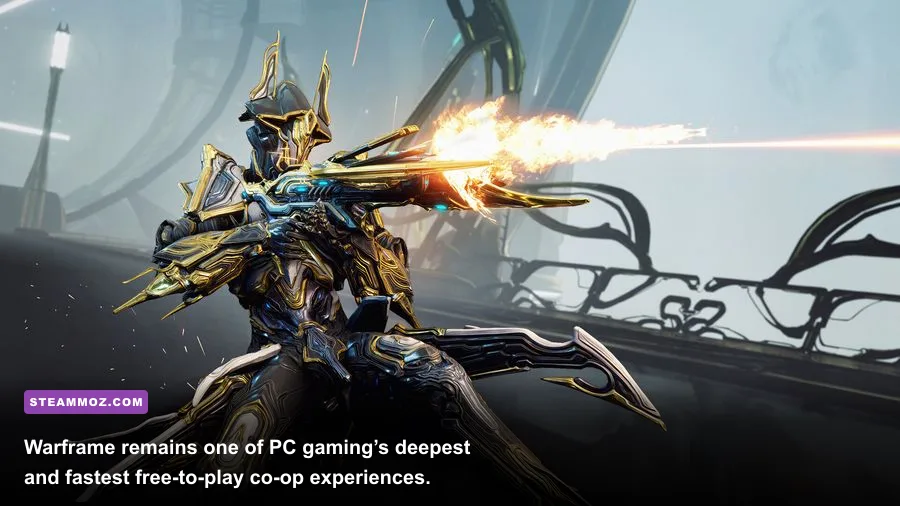
Pick Counter-Strike 2 or Rocket League if you want a clean competitive ladder and measurable improvement. Choose Helldivers 2 or Deep Rock Galactic when your friends prefer laughing through mistakes instead of blaming a scoreboard. Monster Hunter Wilds suits players who enjoy preparation and boss pattern recognition, while Warframe is the better fit for relentless progression and build experimentation.
For a persistent shared world, Final Fantasy XIV offers the deepest structured endgame and social ecosystem. Valheim is more relaxed but asks your group to maintain a server and invest in a shared base. Baldur's Gate 3 is ideal for a fixed party that can commit to a campaign, while Apex Legends is the strongest option for short, high-intensity sessions where every rotation matters.
| Player Priority | Best Pick | Why It Fits | Main Warning |
|---|---|---|---|
| Competitive improvement | Counter-Strike 2 | Clear fundamentals and ranked structure | Steep learning curve |
| Chaotic co-op fun | Helldivers 2 | Stratagems create memorable disasters | Friendly fire is always active |
| Class-based teamwork | Deep Rock Galactic | Every class solves different problems | Higher Hazards punish isolation |
| Deep progression | Warframe | Huge build and movement sandbox | Early systems can feel confusing |
| Story campaign | Baldur's Gate 3 | Choices and combat interact constantly | Requires a consistent group |
| Survival building | Valheim | Exploration feeds a satisfying base loop | Death recovery can be punishing |
PC Performance Settings That Protect Gameplay
Competitive games benefit from stable frame pacing more than maximum visual quality. In Counter-Strike 2 and Apex Legends, lower shadows, ambient occlusion, and effects before lowering resolution. A consistent 144 fps at 1080p usually feels better than a fluctuating 200 fps that drops during smoke, fire, or a crowded team fight. In Monster Hunter Wilds and Final Fantasy XIV, you can keep textures high if your GPU has enough VRAM, then reduce volumetric fog and crowd density when cities or large hunts cause dips.
| Setting Profile | Recommended Values | FPS Impact | Best Use |
|---|---|---|---|
| Competitive | 1080p, low shadows, low effects, high textures | Highest and most stable | CS2, Apex, Rocket League |
| Balanced | 1440p, medium shadows, medium effects, high textures | Moderate | Helldivers 2, Warframe, Deep Rock Galactic |
| Visual | 1440p or 4K, high textures, high lighting | Heavy in combat | Monster Hunter Wilds, FFXIV, Valheim |
| CPU-limited | Reduce crowds, simulation detail, view distance | Improves busy scenes | FFXIV cities and Valheim bases |
Use an FPS cap just below your monitor's refresh rate if frame pacing feels uneven, and enable upscaling only when native resolution is the performance bottleneck. Keep textures high until VRAM pressure causes hitching. If a game crashes after an update, disable overlays, verify files, and test a clean graphics profile before changing ten variables at once; Steamoz's crashing and low-FPS troubleshooting guide covers that methodical approach.
The best online multiplayer games on PC don't all chase the same kind of fun. Counter-Strike 2 asks for precision, Helldivers 2 celebrates improvisation, Deep Rock Galactic rewards class awareness, and Monster Hunter Wilds turns enemy knowledge into power. Start with the game that matches your group's personality, then stick around long enough to reach the point where the systems stop feeling like rules and start feeling like instincts.