Yes, Xbox games are still worth playing in 2026—but not because every first-party release landed perfectly. The real argument for Xbox is the combination of backward compatibility, excellent older exclusives, Smart Delivery, quick resume, cross-play, and Game Pass. If you already own a Series X or Series S, there is an enormous backlog worth exploring. If you're buying into the ecosystem now, the value depends heavily on whether you want polished single-player adventures, a multiplayer platform, or the cheapest route to a broad library.
That distinction matters. Xbox's current identity isn't built around one unstoppable mascot game. It's a flexible console platform where Forza Horizon 5, Hi-Fi Rush, Psychonauts 2, Sea of Thieves, Grounded, Gears 5, and a pile of Xbox 360 and original Xbox classics sit alongside major third-party releases. Check the official backward compatibility catalog before buying an older title, because not every game from the Xbox archive is playable on modern hardware.
The Xbox catalog is deeper than its reputation
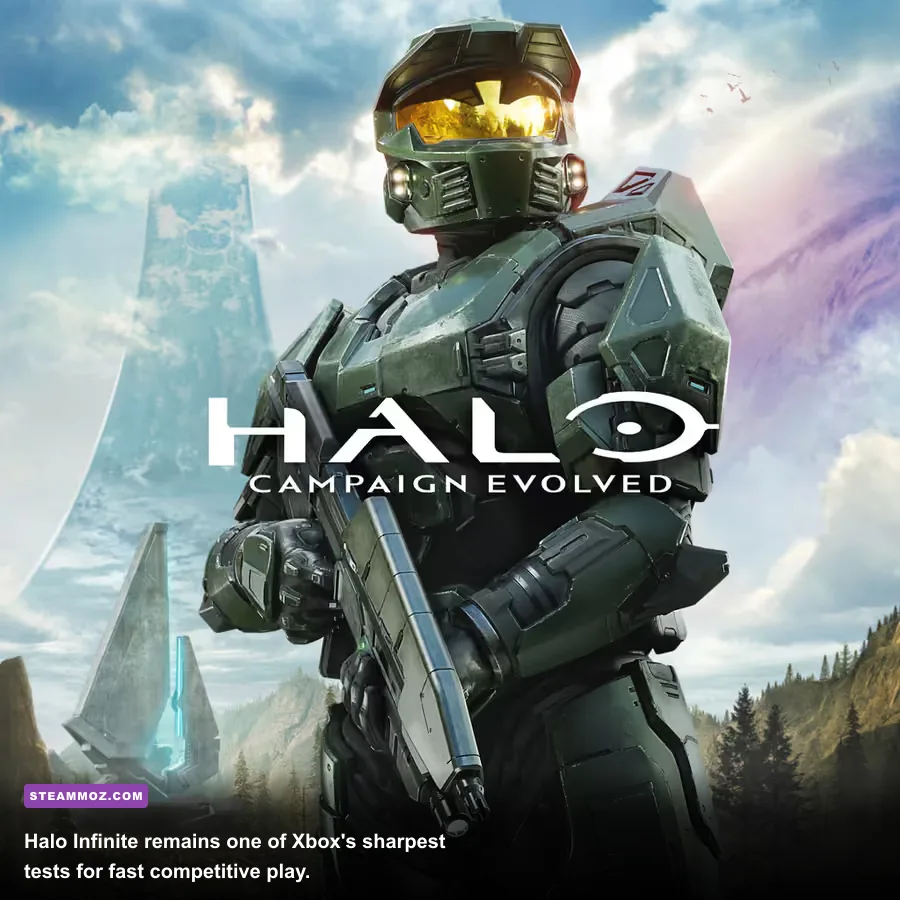
The easiest mistake in judging Xbox in 2026 is looking only at new releases. Xbox's strongest games are spread across three generations, and modern hardware gives many of them better loading times, steadier frame rates, HDR support, or FPS Boost. Gears 5 still delivers a terrific campaign with chunky cover shooting, while Ori and the Will of the Wisps remains one of the best 2D action-platformers available on any console.
Forza Horizon 5 is the safest recommendation for almost anyone. Its Mexico map is enormous without feeling empty, the driving model supports both casual assists and serious tuning, and its seasonal events keep the festival moving. The Series X version offers a quality mode targeting 4K at 30 frames per second and a performance mode targeting 60fps. The Series S generally prioritizes a lower resolution, but the 60fps option still makes free-roaming feel dramatically better.
Then there are the games that prove Xbox can be weird and personal. Pentiment is a historical mystery with no combat and an art style inspired by illuminated manuscripts. Hi-Fi Rush turns every sword slash, parry, and platforming step into a rhythm-game input. Psychonauts 2 mixes playful level design with surprisingly thoughtful writing about grief and mental health. These aren't interchangeable open-world blockbusters, and that's precisely why they have lasted.
| Game | Best Reason to Play in 2026 | Ideal Player | Time Commitment |
|---|---|---|---|
| Forza Horizon 5 | Excellent driving, huge Mexico map, 60fps mode | Racing and open-world fans | 20-100+ hours |
| Hi-Fi Rush | Rhythm combat with readable timing windows | Action-game fans | 10-15 hours |
| Pentiment | Dense historical mystery and branching dialogue | Story-focused players | 15-25 hours |
| Gears 5 | Excellent cover shooting and co-op campaign | Third-person shooter fans | 12-20 hours |
| Ori and the Will of the Wisps | Fluid movement and demanding platforming | Metroidvania players | 12-18 hours |
Where Xbox still wins in daily use
Xbox's hardware advantage in 2026 is less about raw spectacle and more about friction. Quick Resume can keep several compatible games suspended, and Smart Delivery usually gives you the correct Series X|S version without forcing you to decode a confusing upgrade path. The Series X's 1TB SSD is still tight once modern games routinely consume 80GB or more, but its 12-teraflop GPU and UHD Blu-ray drive make it the more complete long-term machine.
The Series S is a different proposition. Its 4-teraflop GPU, 10GB of shared memory, and smaller internal SSD mean developers have less room for high-resolution assets and demanding ray tracing. It can still produce excellent results at 1080p or 1440p, particularly in games with a good performance mode. However, a game that holds 60fps on Series X may use a lower resolution, reduced foliage, or a less stable frame rate on Series S.
| Feature | Series X | Series S | 2026 Verdict |
|---|---|---|---|
| GPU target | 12 teraflops | 4 teraflops | Series X has much more headroom |
| Internal storage | 1TB SSD | 512GB SSD on the base model | External expansion is expensive but useful |
| Typical resolution | 1440p to 4K | 1080p to 1440p | Depends heavily on the developer |
| Disc support | 4K UHD Blu-ray | None | Series X wins for physical libraries |
| Best use case | Premium living-room play | Affordable digital access | Both remain viable with different expectations |
For competitive games, prioritize performance modes over ray tracing whenever possible. Halo Infinite feels far better at 120fps on a compatible display than it does with maximum visual quality at 30fps. That isn't a minor preference: lower input latency makes the difference between winning a close-range battle and watching the killcam. For slower games such as Starfield, the visual mode can be easier to accept, although its 30fps target still feels dated beside smoother third-party alternatives.
Game Pass is valuable, but only with discipline
Game Pass remains one of Xbox's best reasons to exist, especially if you play several genres each month. First-party games such as Forza Horizon 5, Sea of Thieves, Grounded, Microsoft Flight Simulator, and Halo Infinite give subscribers a strong base, while rotating third-party additions fill in the gaps. Cloud streaming and PC access can also turn the subscription into a flexible way to test games before committing to a download.
But the subscription isn't automatically a bargain. If you mostly play one annual sports title and two competitive games, buying those outright can cost less than maintaining a year-round membership. Game Pass also encourages a dangerous habit: downloading five games, finishing none, and confusing access with ownership. I get more value by treating it like a critic's screening room—play the first two hours, identify what deserves your time, and buy a favorite when you want permanent access.
Use the official Xbox Game Pass page to check the current tiers and catalog before subscribing. The lineup changes, licensing windows shift, and availability can differ between console, PC, and cloud. That caveat is especially important for older Bethesda, Activision Blizzard, and third-party games that may move between plans.
The best Game Pass strategy
- Start with short games: Hi-Fi Rush, Pentiment, and Limbo can prove whether the service fits your taste quickly.
- Use cloud play for trials: Test performance and controls before filling the SSD.
- Download large games overnight: A 100GB install shouldn't decide whether you try something new.
- Buy permanent favorites on sale: This protects your save and access if a licensing deal ends.
That approach makes Game Pass a powerful recommendation engine instead of an endless queue.
The weak spots are impossible to ignore
An honest retrospective can't pretend Xbox's first-party output has been perfectly consistent. Redfall launched in rough shape and never became the co-op shooter many players expected. Starfield has compelling ship customization, faction quests, and a massive sandbox, but its procedural planets, repeated interiors, and 30fps console target make it a more divisive recommendation than the hype suggested. Halo Infinite eventually improved through updates, yet its original live-service rollout damaged trust.
There is also the question of identity. PlayStation has a recognizable lane for cinematic single-player adventures, while Nintendo owns a very distinct family of characters and hardware ideas. Xbox's best games span racing, strategy, co-op survival, shooters, indies, and PC-first experiences—but that variety can feel like a lack of direction if you're waiting for one giant cultural event.
PC ownership complicates the value proposition further. Most major Xbox-published games also appear on Windows, and cross-save makes switching platforms painless. That is fantastic for players, but it means the console is no longer the only place to experience the ecosystem. Xbox is now selling convenience, living-room simplicity, and a subscription—not exclusivity alone.
If an older PC game is giving you trouble, Steamoz's guides on ELEX performance fixes and Far Cry 6 graphics settings are useful reminders that platform choice can change the experience dramatically. Console convenience has real value when you don't want to hunt through config files.
Who should still buy an Xbox in 2026?
Buy a Series X if you want the best console version of Xbox's backward-compatible library, play on a 4K television, use physical discs, or regularly switch between demanding third-party releases. It is particularly strong for someone who wants Forza Horizon 5, Gears 5, Halo Infinite, Sea of Thieves, and older games such as Fallout: New Vegas in one ecosystem.
Choose a Series S if price and size matter more than resolution, you play mostly digital games, and you have a 1080p or 1440p display. It remains a remarkably accessible gateway to Game Pass, but budget for storage and accept that some 2026 releases will make more visible compromises. The Series S is not a bad console; it simply rewards realistic expectations.
Skip Xbox for now if your only goal is a constant stream of platform-exclusive prestige adventures, or if you already have a gaming PC that handles Game Pass titles and third-party games comfortably. The hardware won't magically create a different library for you. Its value comes from how much of that library you haven't played yet.
For a practical backlog route, start with Hi-Fi Rush, then play Psychonauts 2, Forza Horizon 5, and Gears 5. Follow those with Pentiment if you want something slower, or Ori and the Will of the Wisps if you want demanding movement. After that, explore backward-compatible highlights rather than blindly chasing every new release. Steamoz's guides to Far Cry 3: Blood Dragon and Everspace weapon upgrades are a good reminder that older games can still have sharper ideas than newer blockbusters.
The verdict is clear: Xbox games are still worth playing in 2026, but the recommendation is about curation, not blind loyalty. The Series X is an excellent all-purpose console, the Series S remains a clever entry point, and Game Pass can be outstanding when you manage it carefully. Xbox hasn't won every generation-defining software battle. It has built something arguably more useful for busy players: a huge, accessible, technically improved library where the next great game may be a 2024 release, a 2011 classic, or a strange indie you would never have bought at full price.
For the latest platform announcements, performance updates, and first-party news, keep an eye on the official Xbox Wire newsroom and the Xbox Series X product page. The hardware story may evolve, but the backlog is already here—and it still hits.