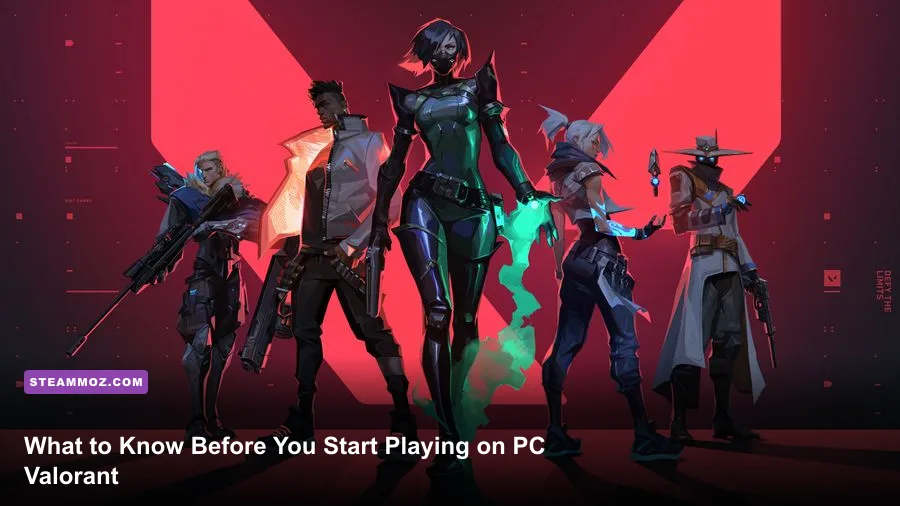
Before you start playing Valorant on PC, get three things right: stable performance, crosshair placement, and the round economy. Riot’s shooter isn’t won by flicks alone. You’re managing information, abilities, credits, timing, and one-life-per-round pressure while learning how every weapon behaves. Set up Vanguard correctly, begin with a forgiving agent, use a 144Hz-friendly graphics profile, and stop buying rifles when your team cannot afford a full round. Those choices will save you more games than chasing highlight clips.
Valorant is free to download from the official Valorant website, but the competitive learning curve is very real. The good news is that its rules are consistent. A missed shot, wasted smoke, or bad purchase usually has a clear reason behind it. Learn those reasons early and the game becomes far less mysterious.
Check Your PC and Fix Input Delay First
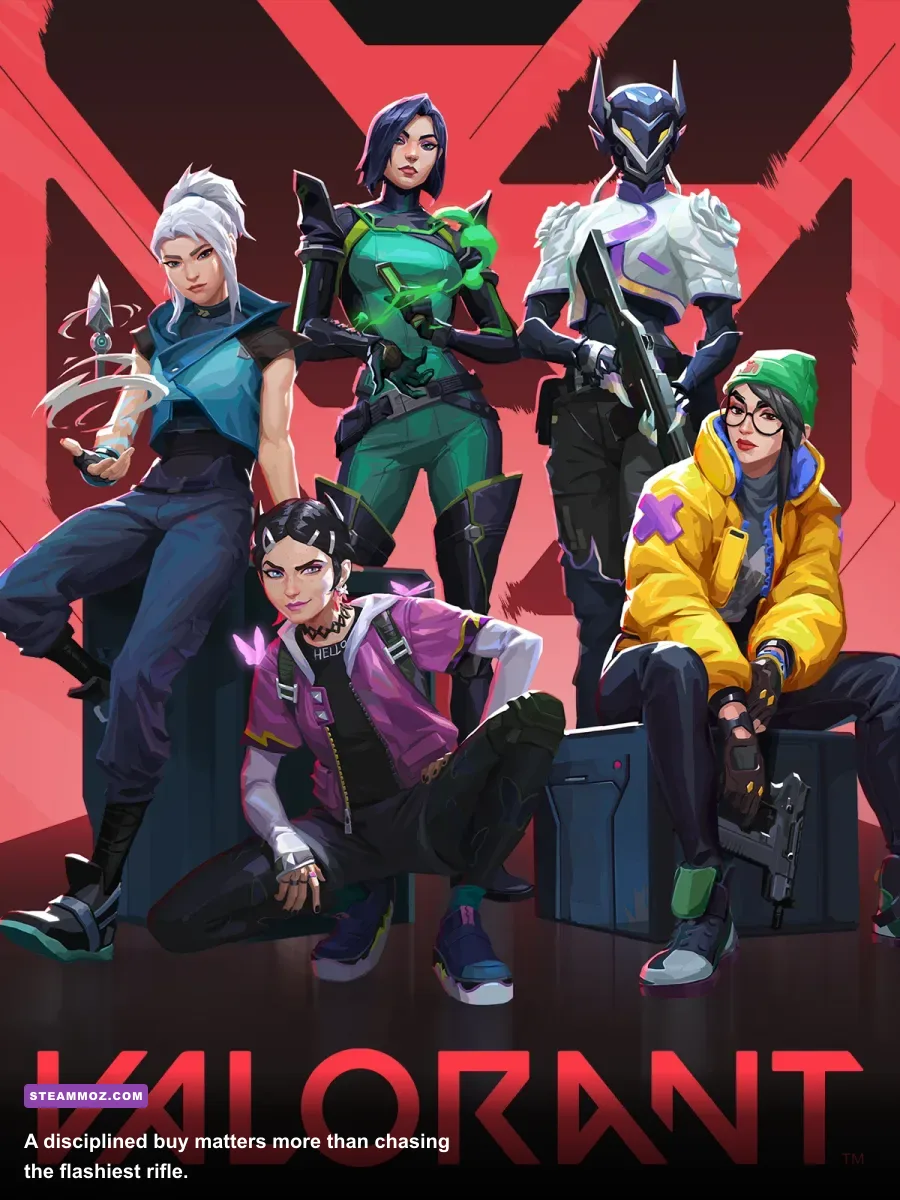
Valorant is relatively easy to run, but competitive play demands more than merely reaching the minimum specification. Riot lists Windows 10 64-bit or Windows 11, 4GB of RAM, and hardware around an Intel HD 4000 or AMD Radeon R5 220 for minimum play. A system around an Intel i3-4150 and GeForce GT 730 is commonly associated with the 60-FPS target, while a 144-FPS profile requires a stronger modern CPU and GPU. Your exact result depends on resolution, background programs, cooling, and whether your processor is limiting frame delivery.
| Target | Practical PC Profile | Recommended Setup | Why It Matters |
|---|---|---|---|
| Minimum play | 4GB RAM, Intel HD 4000-class graphics | Low settings at 720p or 1080p | Playable, but inconsistent frame pacing is possible |
| Stable 60 FPS | Intel i3-4150-class CPU, GT 730-class GPU | 1080p low-to-medium settings | Good starting point for casual matches |
| Competitive 144 FPS | Modern four-to-six-core CPU and discrete GPU | 1080p low settings, high refresh monitor | Lower latency and clearer motion during peeks |
| High-refresh 240 FPS | Fast modern CPU with strong single-thread performance | 1080p low settings, 240Hz display | Useful only if your frame rate is genuinely stable |
Use the official Valorant PC requirements as the baseline, then test your own machine in the Practice Range. Enable the in-game client FPS, frame time, packet loss, and network RTT graphs. A number that jumps from 240 to 90 is worse for aiming than a locked 120 with clean frame pacing.
Start at 1920x1080 if your monitor supports it. Set Display Mode to Fullscreen, limit menus and background FPS, and turn off unnecessary overlays from browsers, recording software, or GPU utilities. NVIDIA Reflex should be enabled if your hardware supports it; otherwise, prioritize a stable frame rate over maximum image quality. Valorant’s Material, Texture, Detail, and UI Quality settings can usually sit on Low or Medium without hiding important gameplay information.
Windows mouse acceleration should be disabled through the normal Enhance pointer precision setting. Valorant uses raw input behavior, but a consistent desktop setup still prevents confusing muscle memory. Pick one sensitivity and keep it for several sessions. Constantly copying a professional player’s settings is usually a distraction, because mouse grip, pad size, resolution, and arm movement all change the result. For broader troubleshooting habits, Steamoz’s PC crash and FPS fixes are also useful reference material.
Learn the Gunplay Before Chasing Abilities
Valorant’s most important mechanical rule is simple: stop moving before you shoot. Walking accuracy is dramatically better than running accuracy, and counter-strafing lets you release movement, tap the opposite direction briefly, and become accurate sooner. Don’t spray at every distance. The Phantom and Vandal can kill with a headshot, but the correct burst length changes with range and recoil.
| Weapon | 0–15m Damage | 15–30m Damage | Best Use |
|---|---|---|---|
| Vandal | 160 head / 40 body / 34 leg | 160 head / 40 body / 34 leg | Consistent one-tap potential at every range |
| Phantom | 156 head / 39 body / 33 leg | 140 head / 35 body / 29 leg | Fast sprays, close fights, and controlled bursts |
| Bulldog | 116 head / 35 body / 30 leg | 95 head / 29 body / 24 leg | Budget rifle with a useful alternate burst |
| Sheriff | 159 head / 55 body / 46 leg | 145 head / 50 body / 42 leg | Eco-round headshots and long-range picks |
| Classic | 78 head / 26 body / 22 leg | 66 head / 22 body / 18 leg | Free sidearm, especially strong in close right-click fights |
The Vandal’s headline advantage is its 160 damage headshot, which remains lethal through distance falloff. The Phantom is more forgiving during close-range sprays and has a larger magazine, but its damage drops enough at range that a fully armored opponent can survive a headshot. Neither rifle is universally superior. Choose the Vandal for open lanes such as Breeze’s long sightlines; favor the Phantom when you expect close fights around Bind’s B site or tight Haven entrances.
Armor changes the math. Light Shields cost 400 credits and give 25 additional health; Heavy Shields cost 1,000 and give 50. Heavy armor does not reduce damage, so a Vandal headshot still kills. It simply protects you from body shots, wallbangs, and weaker weapons. The Spectre is excellent against lightly armored opponents at close range, while the Stinger’s short-range burst can punish careless pushes but becomes awkward quickly.
Crosshair placement should happen before the enemy appears. Keep your crosshair at head height along the likely path, then clear angles from the safest order rather than sweeping randomly. Every corner you expose creates a possible duel. Practice two-shot bursts with the Vandal, three-to-five-round bursts with the Phantom, and deliberate Sheriff taps. The first ten minutes in the Practice Range should be about stopping cleanly and placing the crosshair, not maximizing bot kills.
Pick an Agent That Teaches Useful Habits
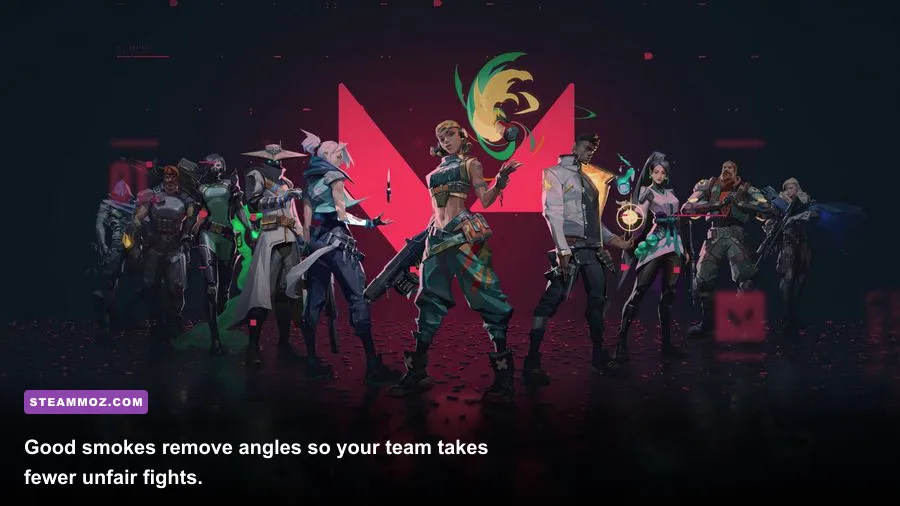
Agents aren’t traditional classes, but they do shape your responsibilities. A beginner-friendly Duelist can build confidence, yet learning only entry fragging often leaves new players with weak map awareness. Sage, Brimstone, and Gekko are better teaching tools because their abilities have obvious value without demanding advanced lineups or perfect mechanics.
| Agent | Role | Beginner Strength | Common New-Player Mistake |
|---|---|---|---|
| Sage | Sentinel | Barrier Orb and Slow Orb create clear defensive decisions | Saving utility until the round is already lost |
| Brimstone | Controller | Three fast smokes and Stim Beacon are easy to understand | Smoking after teammates have already entered |
| Gekko | Initiator | Wingman can plant or stun, and abilities can be recovered | Throwing Dizzy without a plan to capitalize |
| Killjoy | Sentinel | Turret and Alarmbot provide information and delay | Placing every device in one predictable spot |
| Jett | Duelist | Dash can escape danger and smoke can create entry space | Using mobility to take an isolated fight with no trade |
Start by learning one agent’s job on two maps rather than unlocking five agents and using every ability randomly. Brimstone’s Sky Smokes are a perfect lesson in timing: smoke the dangerous defender sightlines immediately before your team moves, not thirty seconds early. Sage’s Barrier Orb can block a choke, protect a plant, or deny a defuse, but placing it only for personal safety wastes its strongest purpose.
Utility should create an advantage for somebody. Sova’s Recon Bolt is valuable when teammates are ready to shoot revealed targets. Gekko’s Dizzy is strongest when thrown over cover before a swing. Killjoy’s Alarmbot and Nanoswarm can protect a planted Spike, but opponents can destroy or avoid predictable setups. Ask yourself what the ability forces the enemy to do, then coordinate around that answer.
Learn the difference between initiators, controllers, sentinels, and duelists through Riot’s official agent roster. You don’t need every lineup on day one. You do need to understand whether your team has smokes, reliable entry pressure, information, and a way to hold the site after the plant.
The Economy Is a Team Decision

Valorant awards credits for kills, round wins, and the losing-side bonus. A round win gives each player 3,000 credits, while a loss gives a rising bonus that starts at 1,900 and can reach 3,000 after consecutive losses. Players also receive 200 credits per kill, and the Spike plant gives the planter 300. That money determines whether the next round is a real rifle fight or another difficult save.
A full buy usually means a rifle or strong SMG, Heavy Shields, and essential abilities. A half-buy spends enough to create a chance without destroying the next round’s purchase. A save means keeping credits for the following round, often using only the Classic or a cheap weapon. Don’t buy a Vandal with no armor and no utility just because you personally have 2,900 credits. A coordinated half-buy can be powerful; five disconnected purchases are just five future problems.
| Round Plan | Typical Purchase | When to Choose It | Team Goal |
|---|---|---|---|
| Full buy | Vandal or Phantom, Heavy Shields, core abilities | Most players can afford the same level of equipment | Contest the round with complete utility |
| Force buy | Spectre, Bulldog, Sheriff, or light armor | Late in a half or when momentum matters | Steal a round without expecting a clean reset |
| Half-buy | Sheriff, Marshal, or limited utility | Several teammates are close to a full buy next round | Deal damage and preserve future credits |
| Eco or save | Classic, Shorty, or no purchase | Team cannot reasonably reach a useful full buy | Guarantee rifles and armor for the next round |
Use the team credit display before buying. If two teammates can only afford Stingers while the rest can buy Vandal and Heavy Shields, pause and discuss the plan. A force buy can be correct after a plant because the bonus credits and enemy weapon recovery may swing the round, but it should be deliberate. On defense, saving a rifle for the next round may be more valuable than attempting a low-percentage retake with no utility.
Ultimates are part of the economy too. A player one point from an ultimate may buy differently because an orb, kill, or plant can unlock a decisive tool. Track enemy ultimates as well: if Raze has Showstopper or Killjoy has Lockdown available, your default site hit may need extra patience. The scoreboard is not just a kill counter; it is a forecast of the next round.
Play the Round, Not the Highlight Clip
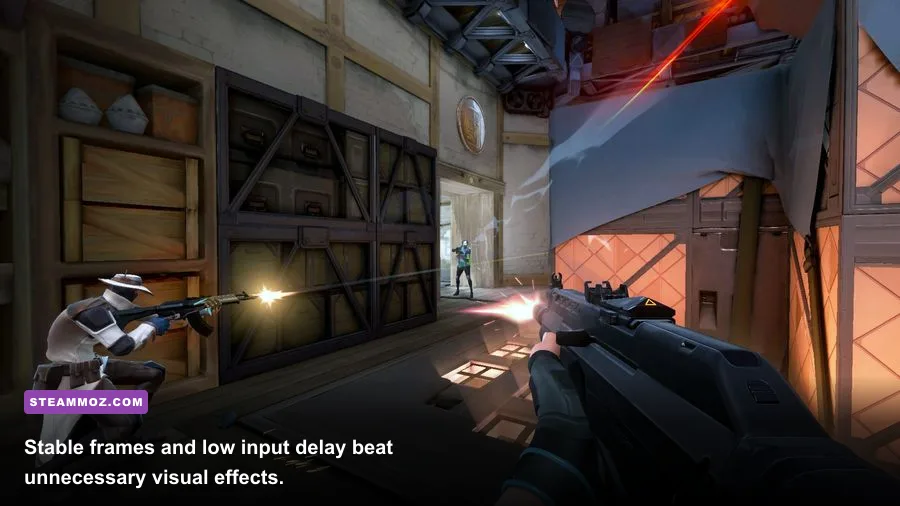
Valorant rounds are won through information and trade structure. On attack, don’t sprint into the first smoke without knowing what follows. Clear close angles, use utility to remove common defenders, and keep enough time for the Spike plant. On defense, early aggression is fine when it is supported by a flash, trap, or teammate trade. Repeating the same dry peek after being punished is not confidence; it’s donated equipment.
Trading means entering close enough that a teammate can kill the opponent who eliminates you. It does not mean standing shoulder-to-shoulder in a narrow doorway. Stagger your spacing so one enemy burst cannot kill two players, while keeping the second player ready to swing. After gaining a pick, avoid immediately hunting another duel. Make the enemy retake space, preserve your advantage, and force them to reveal themselves.
Sound is a weapon. Running creates audible footsteps, while walking reduces noise and jumping still gives away movement. Reloading, swapping weapons, picking up a dropped gun, and using certain abilities also create information. Before rotating, ask whether the enemy has heard enough to predict your route. Fake pressure on one site, hold for a defender rotation, then hit the weak side only when your team can still plant.
Post-plant play is another major beginner trap. Once the Spike is planted, you don’t need to chase every surviving defender. Play crossfires, hold different angles, and use mollies or slows to delay the defuse. Brimstone’s Incendiary, Viper’s Snake Bite, KAY/O’s FRAG/ment, and Killjoy’s Nanoswarm can deny the final seconds, but throwing them too early lets the enemy wait and tap again. Listen for the defuse sound, then use damage-over-time utility when the timing actually matters.
Finally, treat ranked as a feedback loop rather than a judgment. Review deaths by category: poor crosshair placement, movement error, unnecessary peek, missing utility, or bad timing. Warm up with a few minutes of bots and deathmatch, but don’t play ten exhausting matches while tilted. Riot’s official game updates explain balance changes, so check them when weapon or agent behavior suddenly feels different. If another PC game is also stuttering, Steamoz’s FPS settings guide offers useful general optimization ideas.
Valorant becomes much easier once you stop treating it as a pure aim test. Lock your frame rate into a stable range, learn the damage breakpoints, buy with the team, and use every ability to create a specific advantage. Begin with one agent, two maps, and one reliable rifle. The flashy plays will come later; the fundamentals are what get you there.