If gamer anticipation is the measuring stick, Grand Theft Auto VI is the clear number-one upcoming PC game, followed by The Witcher 4, Hollow Knight: Silksong, Fable, and Dune: Awakening. This ranking weighs community interest, developer track record, confirmed ambition, playable evidence, and the chance each game can actually deliver something special on PC—not just trailer views.
There is no perfectly objective list of the best upcoming PC games of all time. Nobody can score a game that has not shipped, and release windows, PC ports, and feature lists can change overnight. Still, gamers have made their priorities loud and clear through wishlists, trailer reactions, forum discussion, showcase viewership, and years of sustained interest. The result is a fascinating split between guaranteed blockbusters and smaller games with much more to prove.
This isn't a list of the games with the biggest marketing budgets. It's a ranking of the titles that PC players are most eager to install, test, mod, benchmark, and debate the moment they arrive.
The ranking at a glance
| Rank | Game | Why gamers are excited | PC outlook |
|---|---|---|---|
| 1 | Grand Theft Auto VI | Massive open world, dual protagonists, Rockstar detail | PC version expected eventually, but timing remains uncertain |
| 2 | The Witcher 4 | Ciri-led RPG built with Unreal Engine 5 | Strong PC fit, likely demanding hardware requirements |
| 3 | Hollow Knight: Silksong | Precision combat, new kingdom, enormous fan demand | Excellent fit for PC and handheld play |
| 4 | Fable | Rebooted British fantasy world and Playground's open-world expertise | Likely scalable, but PC optimization will matter |
| 5 | Dune: Awakening | Survival systems, faction politics, huge Arrakis sandbox | Potentially CPU-heavy in populated regions |
The important distinction is between hype and confidence. GTA VI has unmatched hype, while Silksong has perhaps the strangest relationship with confidence: fans are desperate to play it, but its long development has turned every announcement into an endurance test. Dune: Awakening sits lower because survival MMOs are difficult to sustain, even when their launch ideas are excellent.
🎮 1bitHeart
Looking to experience this game? Grab your digital key directly on our store for $2.99.
View on Steammoz Store →S-Tier: the games capable of defining a generation
1. Grand Theft Auto VI
Rockstar's next crime epic earns the top spot because it isn't merely another open-world sequel. It is a cultural event with the potential to reset expectations for NPC behavior, environmental detail, driving, animation, and systemic storytelling. The confirmed setting returns players to Vice City and the wider state of Leonida, while Jason and Lucia give the campaign a criminal partnership at its center.
The trailer footage already shows why the game sits above everything else. Rockstar is pushing dense crowds, social-media satire, wildlife, beaches, highways, nightclubs, boats, and rural spaces into one connected ecosystem. The key question for PC players is not whether the world will look impressive; it is whether the PC version will let modern hardware run that density without turning every city block into a frame-time problem.
Rockstar has not committed to a PC launch date in the currently public console release information, so PC buyers should treat any retailer listing as speculation. That delay is frustrating, but the upside is obvious: a later PC version could arrive with improved visual settings, ultrawide support, higher frame rates, ray tracing options, and years of patches already applied.
For players who want to follow official announcements, the official GTA VI page is the source worth bookmarking. Avoid basing upgrade plans on unofficial system requirements. Until Rockstar publishes them, a sensible target is a modern six- or eight-core CPU, 32GB of memory, and an SSD with plenty of free space.
Why it ranks first
GTA VI combines unmatched visibility with a proven developer, a setting people already love, and a technical target that could make the PC version one of the decade's most demanding benchmarks. The risk is equally large: a late PC launch, aggressive hardware requirements, or a multiplayer rollout that overshadows the single-player experience.
2. The Witcher 4
Officially known by its Polaris codename during development, The Witcher 4 takes second place because it has the clearest path to becoming a serious PC role-playing obsession. CD Projekt Red has confirmed that Ciri is the protagonist, and the game is being built in Unreal Engine 5 rather than the studio's previous REDengine technology. That change matters: it should make large-scale environments and cross-platform development more manageable, but it also places pressure on shader compilation, streaming, and CPU-side world simulation.
Ciri is not simply Geralt with a different face. Her established abilities include supernatural mobility, heightened senses, and a faster, more agile combat rhythm. The new game has to balance those strengths against the slow preparation, investigation, and alchemy that define The Witcher. The best version of this sequel will let players track monsters through clues, choose contracts with consequences, and then make Ciri's movement feel distinct from Geralt's heavy swordplay.
CD Projekt Red's official Witcher 4 site has confirmed the project's existence, but not a final release date or complete PC specification sheet. That silence is healthy. A game this ambitious needs time to avoid repeating the launch problems that damaged Cyberpunk 2077's reputation on older consoles.
PC players should expect meaningful graphics options rather than a simple low-to-ultra ladder. Nanite-style geometry, virtual shadow maps, volumetric fog, foliage density, and CPU-heavy crowds could each affect performance differently. If the studio lands its streaming technology, The Witcher 4 could become the RPG that finally makes Ciri's story feel as important as Geralt's.
A-Tier: huge potential with one major question mark
3. Hollow Knight: Silksong
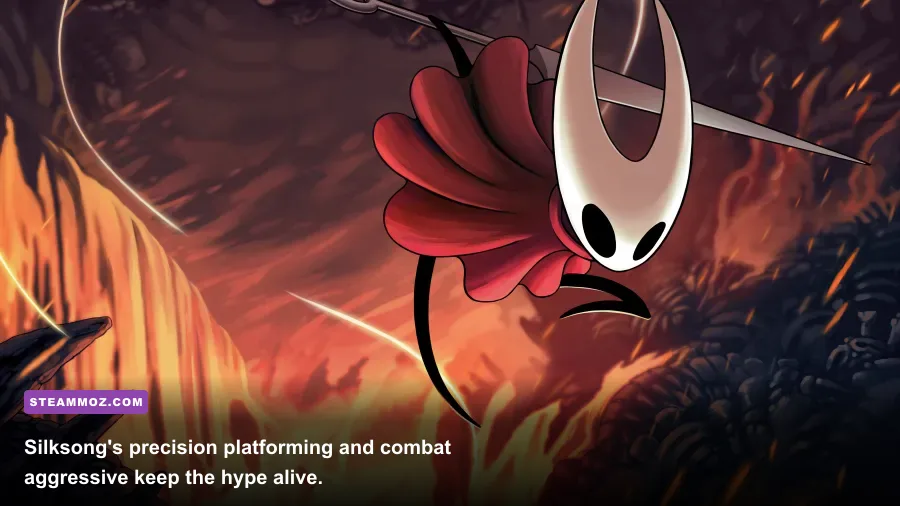
Silksong is the rare indie game that has reached blockbuster anticipation without blockbuster production values. Team Cherry's follow-up puts Hornet in Pharloom, a kingdom built around silk, song, vertical exploration, and hostile creatures. The original Hollow Knight proved that responsive controls and tightly designed spaces can outperform expensive spectacle; Silksong has to preserve that precision while giving its more acrobatic protagonist room to shine.
Hornet's movement changes the combat equation. She can leap, dash, climb, use her needle, and work with tools that create more active combat options than the Knight's straightforward nail-and-spell kit. That should make encounters faster, but it also raises the difficulty ceiling. A boss can no longer rely only on forcing the player to walk or jump around a fixed attack pattern. It needs to control vertical space, punish reckless healing, and create readable openings for a mobile character.
The original game's charm system also sets a high bar. Silksong's replacement systems need to support real build variety without turning every challenge into a solved loadout. Players should be able to favor aggressive needle attacks, safer mobility, resource generation, or tool-based burst damage. The danger is that too many overlapping mechanics could make encounters noisy instead of elegant.
Team Cherry's official Silksong website remains the best place to separate confirmed information from social-media rumor. On PC, the game should be exceptionally accessible: its hand-drawn visuals won't demand a flagship GPU, and a stable 120fps mode would suit the game's parry-like timing and platforming. The real challenge is content quality. Fans don't just want Silksong to launch; they want it to justify the wait.
4. Fable
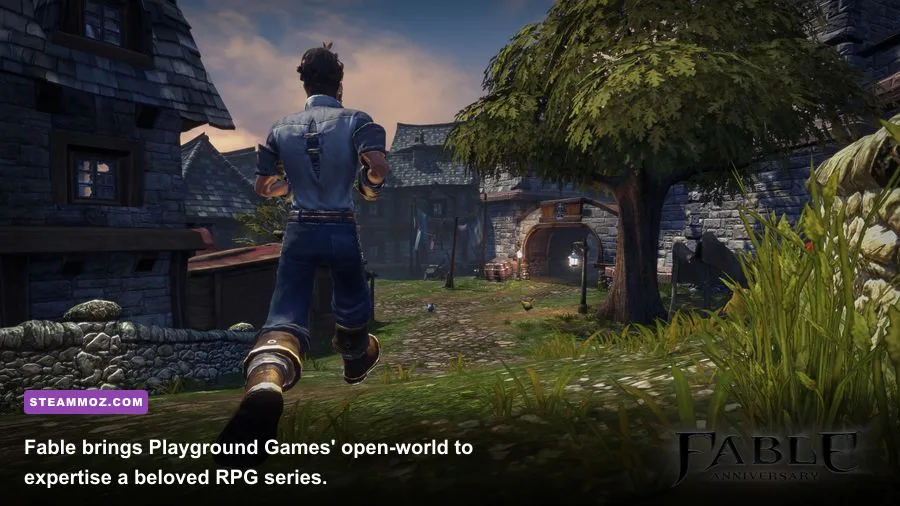
Playground Games is taking over a fantasy series known for humor, morality, talking trees, ridiculous villains, and surprisingly sharp social satire. The new Fable returns to Albion with a modern presentation, a third-person perspective, and a world that looks more grounded than the bright, caricatured style of the original games. That tonal shift is intriguing, but it is also the reboot's biggest gamble.
Fable works when its systems support comedy. A morality meter alone won't recreate the series' charm. The world needs reactive characters, exaggerated consequences, clothing that changes how people treat you, and quests that can turn from silly to unsettling without warning. The hero should be able to become a celebrated champion, a selfish opportunist, or something much stranger because the game keeps presenting choices with social texture—not just a blue option and a red option.
Playground's open-world experience gives the project a strong foundation, but racing games and fantasy RPGs have completely different pacing demands. Exploration must reward curiosity without burying the main story under map icons. Combat needs enough weight to support swords, ranged weapons, and magic without becoming a generic action system. Albion also needs memorable towns, not just beautiful fields between quest markers.
Microsoft's official Fable page confirms the reboot's core identity, while Steam remains the place to watch for PC storefront details when the listing is finalized. Because the game is being designed for PC and Xbox, scalable settings will be crucial. A 60fps target at 1080p should be realistic on midrange systems, but dense towns, foliage, and global illumination may punish older CPUs.
5. Dune: Awakening
Dune: Awakening ranks fifth because its fantasy is so specific and its risks are so obvious. Funcom is building a survival game on Arrakis, where water, shade, sandworms, base construction, crafting, faction allegiance, and player conflict all interact. The premise is instantly compelling: survive long enough to build power in the desert, then decide whether you want to become a trader, soldier, spice harvester, smuggler, or political operator.
The strongest design idea is that the environment itself becomes an enemy telegraph. Open sand means exposure to worms, heat, and hostile players. Rocky formations offer cover and building opportunities but can become ambush points. Vehicles change how quickly players cross the map, while the thumper and sandworm ecosystem should make careless gathering genuinely dangerous rather than merely inconvenient.
Its progression must avoid the survival-game trap where the first ten hours feel exciting and the next fifty become inventory maintenance. Water management should create meaningful decisions, not constant busywork. Crafting tiers need to unlock new strategic options rather than simply bigger numbers. Most importantly, faction systems should affect access, reputation, missions, and PvP pressure in ways players can understand.
The official Dune: Awakening site has shown enough of Arrakis to make the concept credible, but long-term server health will decide whether it becomes a classic. On PC, expect CPU and network performance to matter as much as GPU power, especially around bases and crowded social hubs.
How the contenders compare for PC players
| Game | Genre strength | Biggest PC advantage | Biggest risk |
|---|---|---|---|
| GTA VI | Open-world crime sandbox | High-end visuals, mods, scalable controls | Late port and severe CPU demands |
| The Witcher 4 | Story-driven action RPG | Ultrawide displays, graphics customization, mod potential | Unreal Engine 5 performance problems |
| Silksong | Metroidvania | Low hardware demands and excellent handheld fit | Expectations have become impossible to satisfy |
| Fable | Fantasy open-world RPG | PC settings and Game Pass availability | Reboot may lose the series' comic identity |
| Dune: Awakening | Survival MMO | Mouse-and-keyboard precision for building and inventory | Server population and PvP balance |
For hardware planning, don't buy a new GPU solely because a trailer looks cinematic. Wait for official requirements and independent benchmarks. Engine demos frequently run on carefully controlled scenes, while the final game has to stream interiors, AI, weather, physics, and online services simultaneously. A sensible upgrade profile for demanding releases is a modern six-core processor, 32GB RAM, an NVMe SSD, and a graphics card with at least 12GB of VRAM if you want high-resolution textures at 1440p.
Players on older machines can still prepare intelligently. Keep Windows and GPU drivers current, reserve SSD space, and avoid filling the system drive to capacity. Shader compilation stutter is often reduced by letting a game complete its first-run process rather than immediately skipping it. For practical troubleshooting, Steamoz's guides on stopping crashes and rescuing FPS and optimizing demanding PC settings cover the same problems that regularly appear in large open-world releases.
The B-Tier challengers worth watching
The five games above lead the anticipation race, but several challengers could climb quickly once developers show more gameplay. Perfect Dark has the right ingredients for a stylish first-person espionage game, yet its success depends on how much freedom it gives players inside missions. A linear shooting gallery would waste the franchise's identity; layered objectives, gadgets, stealth routes, and social infiltration would make it stand out.
State of Decay 3 has a more practical challenge. The series' appeal comes from permanent survivor loss, community management, scavenging, and the fear that one bad supply run can ruin a carefully built settlement. Better animation and larger environments are welcome, but they can't replace the emergent stories created by limited resources and meaningful death.
Crimson Desert is another visually ambitious action RPG drawing attention with large-scale combat, mounted travel, and a sweeping fantasy setting. Its trailers suggest a broader action vocabulary than a traditional character-action game, including grappling, ranged tools, environmental interaction, and boss encounters. The question is whether all those mechanics will connect into a coherent campaign rather than a montage of impressive systems.
Monster Hunter Wilds also deserves mention whenever players discuss upcoming or recently arriving PC releases, particularly because Capcom's PC support has become increasingly important to the series. The Seikret mount, dynamic weather, herd behavior, and open-world zones could change how hunters prepare for a target. Anyone who enjoys chasing rare drops can also check Steamoz's secret-locations guide for the same exploration mindset, even though the game is a different genre.
What makes a future classic instead of just a hit
Anticipation gets a game onto a list like this; execution determines whether it stays there. The future classics will need reliable frame pacing, fast loading, readable combat, meaningful progression, and enough player agency to support conversation after the credits. A beautiful map isn't enough if every activity feels like the same checklist. A massive skill tree isn't enough if only three nodes matter. And a cinematic campaign won't survive if the PC port crashes during the opening hour.
The best upcoming PC games should also respect the platform's strengths. That means adjustable field of view, remappable controls, ultrawide support, unlocked frame rates where practical, proper mouse input, detailed graphics menus, and cloud saves that work reliably. Mod support isn't mandatory, but games with strong creation tools often outlive their launch windows. The PC audience notices when a port feels like an afterthought.
Based on what gamers know today, GTA VI has the greatest chance of becoming the generation's defining release, while The Witcher 4 has the strongest chance of becoming the PC RPG obsession. Silksong is the purest test of fan patience, Fable is the most interesting reboot, and Dune: Awakening is the boldest multiplayer experiment. None can claim to be one of the best games of all time yet—and that is exactly why watching them develop is so compelling.
For now, the smart move is to keep wishlists flexible, ignore fake system requirements, and judge each game by playable evidence rather than another glossy trailer. The ranking will change the moment these projects ship. Until then, these are the upcoming PC games gamers have placed highest on the expectations ladder.