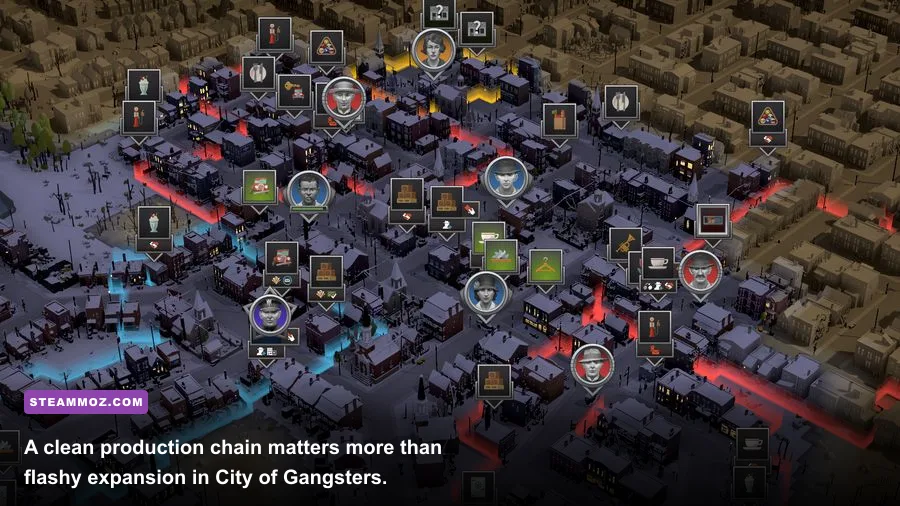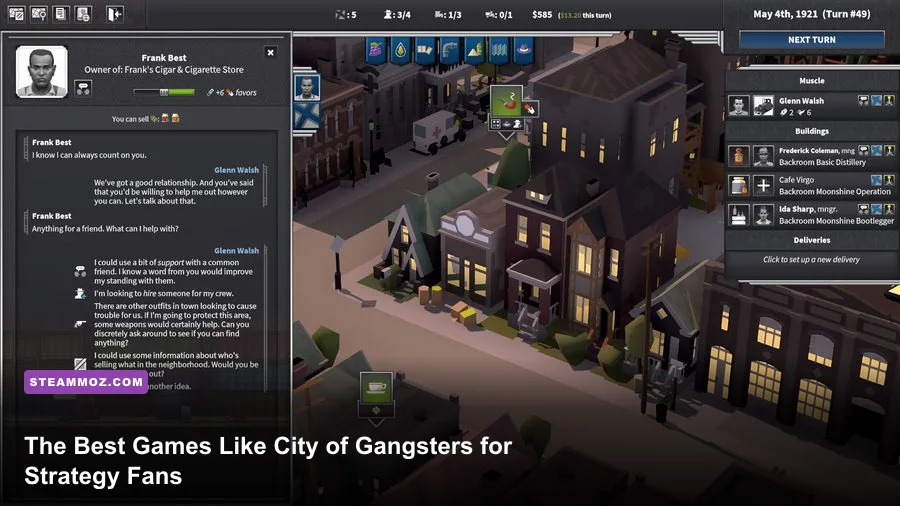
If City of Gangsters hooked you with bootlegging, supply chains, neighborhood pressure, and the slow satisfaction of turning one backroom operation into a citywide machine, start with Cartel Tycoon. It is the closest overall replacement in 2026, while Omerta: City of Gangsters is the better pick for period atmosphere and tactical combat, and Empire of Sin wins if you want memorable mob bosses and crew battles. The Guild 3 and Big Ambitions round out the list for players who care more about dynasties, logistics, and business simulation than gunfights.
These games are not interchangeable. City of Gangsters is unusually focused on conversion chains: acquire inputs, process them, move them, sell them, and keep heat under control. The best alternatives preserve at least two of those pillars instead of simply throwing a gangster skin over a generic strategy game.
S-Tier alternatives for City of Gangsters fans
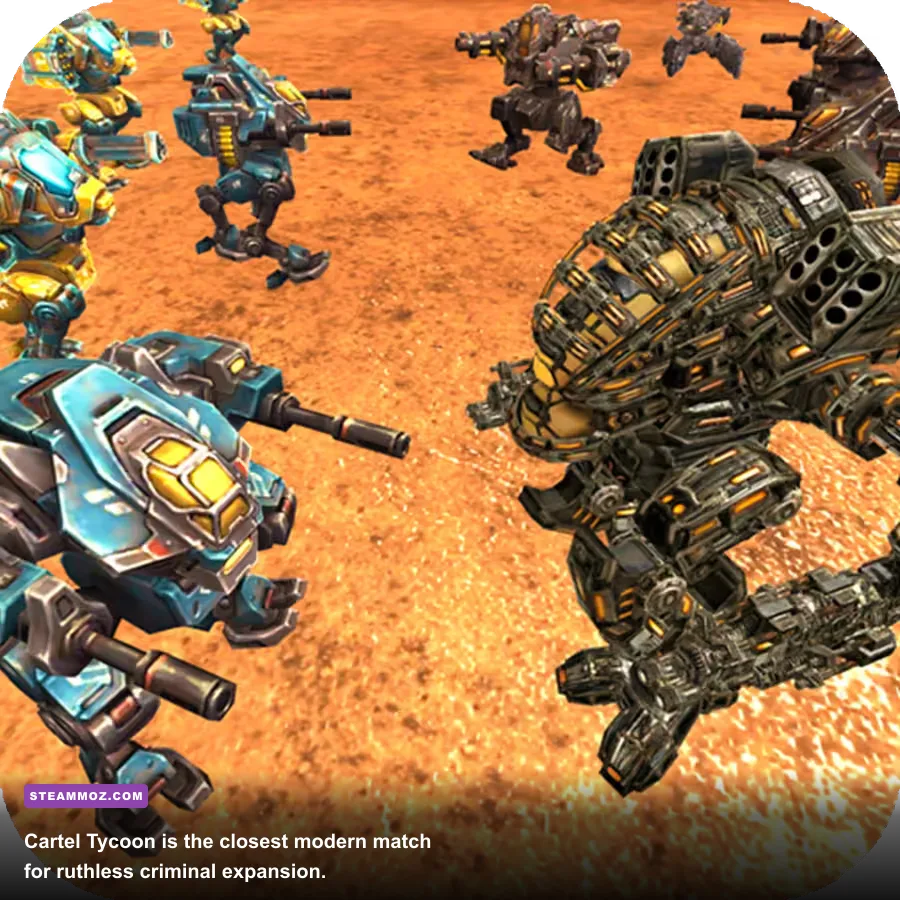
Cartel Tycoon is the easy S-Tier recommendation. SomaSim's game is about methodical growth, but Cartel Tycoon is about expansion under pressure. You build production facilities, warehouses, laboratories, safehouses, and distribution points while rival factions, law enforcement, and the game's death spiral constantly threaten your empire.
The key difference is that Cartel Tycoon makes leadership disposable. Lieutenants have traits, loyalty problems, and personal ambitions, so losing a valuable operator can collapse an entire route. Your first producer may be replaceable; the person connecting remote territory to a smuggling hub probably is not. That creates a sharper risk calculation than City of Gangsters, where the danger is usually a bad chain or rising police attention rather than a single betrayal.
Its roguelite structure also changes the rhythm. You are not simply building toward a perfect late-game city. You are learning which production lines can survive, when to establish a second base, and when expansion creates more exposure than profit. If you enjoy City of Gangsters because every new building creates another logistical problem, Cartel Tycoon gives you the same headache with a faster, more aggressive pulse. Check the official Cartel Tycoon Steam page for current editions and updates.
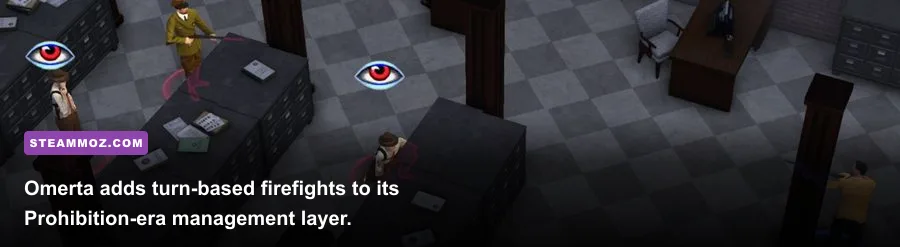
Omerta: City of Gangsters earns the other S-Tier slot because it understands the fantasy better than most games. Set in Atlantic City during Prohibition, it combines business management with turn-based tactical missions. Don Falcone leads a crew through rackets, illegal breweries, speakeasies, and territory disputes, while combat turns every alley and warehouse into a cover puzzle.
Omerta's campaign structure is more directed than City of Gangsters. You follow scenarios and objectives instead of freely shaping an entire procedural city, but that tighter design gives characters room to matter. Weapons, cover, flanking, and crew abilities make a mission feel distinct from the economic game. The downside is age: the interface is clunky, the AI can be inconsistent, and the business layer is not as deep as City of Gangsters' production webs.
| Game | Best Match For | Management Depth | Combat |
|---|---|---|---|
| Cartel Tycoon | Criminal expansion and fragile logistics | High | Indirect |
| Omerta: City of Gangsters | Prohibition atmosphere and missions | Medium | Turn-based tactical |
| Empire of Sin | Bosses, crews, and Chicago crime politics | Medium | Turn-based tactical |
| The Guild 3 | Dynasty building and social manipulation | High | Limited |
| Big Ambitions | Hands-on business logistics | High | None |

🎮 City of Gangsters
Looking to experience this game? Grab your digital key directly on our store for $5.99.
View on Steammoz Store →A-Tier picks with a different criminal strategy angle
Empire of Sin is the right choice if your favorite City of Gangsters moments involve people rather than spreadsheets. Romero Games' Chicago crime sim gives you a roster of bosses, including Al Capone, Stephanie St. Clair, and Dean O'Banion, each with a distinct starting position, ambition, and faction identity. The game supports 14 playable bosses, and your crew is assembled from specialists with relationships, loyalties, and combat roles.
Its strongest system is crew chemistry. A bruiser who excels at close range is not automatically useful in every mission. Pairing that character with a shooter who can control sightlines, a fixer who supports allies, and a leader whose abilities enhance morale produces a much more reliable squad. Weapons and cover matter, but so do rivalries. A technically powerful recruit can become a liability if they hate half your existing crew.
The economic layer includes breweries, speakeasies, hotels, casinos, and brothels, but it does not reach the same supply-chain precision as City of Gangsters. Empire of Sin is more concerned with who owns a neighborhood and how your people behave when the bullets start flying. Read the official Empire of Sin listing before buying, particularly if you expect a pure management sim.
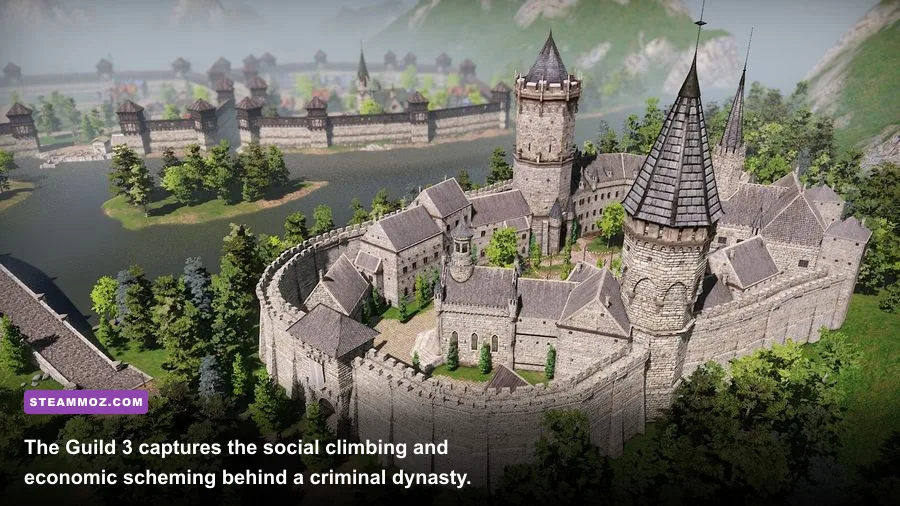
The Guild 3 is a surprising but excellent recommendation for players who liked the social pressure of City of Gangsters. It moves the action to a medieval European city, where you build a family dynasty through businesses, political influence, marriages, offices, and occasionally criminal activity. You are not running a 1920s bootlegging ring, but the underlying fantasy is familiar: become indispensable, manipulate local power, and turn an ordinary enterprise into a hereditary empire.
The Guild 3 is at its best when you stop treating it like a conventional city builder. Your character's career, relationships, and public reputation are strategic resources. A successful shop can finance a political campaign; a marriage can create an alliance; a rival's legal trouble can open a market. It is slower and less predictable than City of Gangsters, and its simulation quirks can still surface, but it offers the most interesting answer to the question of what happens after your criminal business becomes a dynasty.
Best games like City of Gangsters ranked by playstyle
There is no single winner for every player. City of Gangsters fans tend to split into three groups: logistics obsessives, crime-story players, and long-form empire builders. The ranking below reflects that divide rather than pretending every game solves the same problem.
S-Tier: Cartel Tycoon and Omerta: City of Gangsters
Cartel Tycoon ranks first for replayability and pressure. Its production, territory, and personnel systems constantly push back against careless growth. Omerta ranks alongside it because its campaign gives the period setting real texture and adds tactical missions without abandoning the business fantasy.
A-Tier: Empire of Sin, The Guild 3, and Big Ambitions
Empire of Sin has the best cast and most immediate combat, but its management layer is less intricate. The Guild 3 is broader and more systemic, though it takes patience and tolerance for simulation oddities. Big Ambitions is not a gangster game at all, yet it may be the best choice for anyone who spent hours in City of Gangsters optimizing delivery routes, inventory, worker assignments, and storefront locations.
B-Tier: Tropico 6 and Rise of Industry
Tropico 6 works if your favorite part was balancing factions, exports, and political pressure. You can play a corrupt island ruler, but it is satire and governance first, organized crime second. Rise of Industry is even more focused on supply chains. Its factories, warehouses, transportation links, and regional demand provide excellent logistics puzzles, but there are no rackets, gangsters, or heat mechanics to keep the fantasy alive.
| Rank | Game | Core Strength | Main Compromise |
|---|---|---|---|
| S-Tier | Cartel Tycoon | Expansion, production, and criminal risk | Less historical atmosphere |
| S-Tier | Omerta: City of Gangsters | Prohibition story and tactical combat | Older interface and simpler economy |
| A-Tier | Empire of Sin | Boss personalities and crew relationships | Shallower supply chains |
| A-Tier | The Guild 3 | Dynasties, politics, and emergent stories | Medieval setting and uneven simulation |
| A-Tier | Big Ambitions | Detailed retail and delivery logistics | No combat or crime systems |
| B-Tier | Tropico 6 | Faction management and exports | Political satire replaces gang warfare |
Why Big Ambitions deserves a closer look
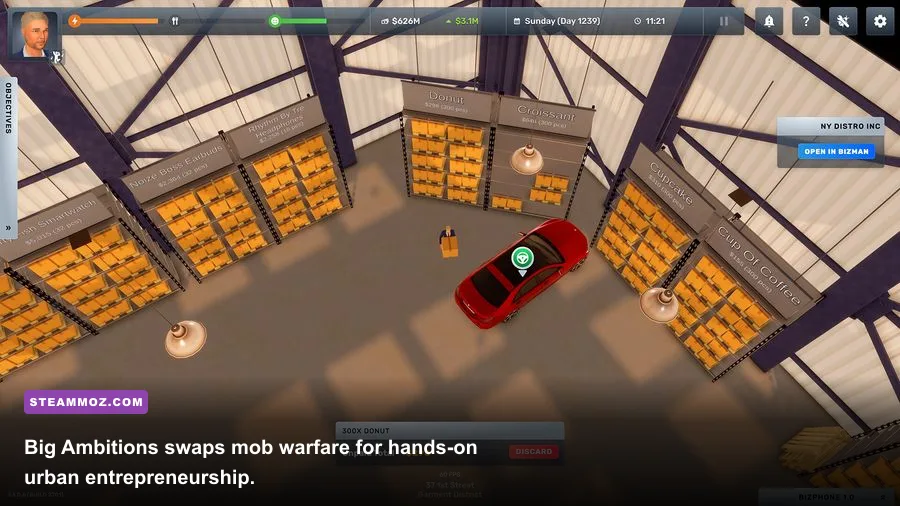
Big Ambitions looks like an odd inclusion until you compare the moment-to-moment decisions. You begin with modest capital in New York, establish businesses, buy stock, hire staff, plan deliveries, and gradually create a network of stores and warehouses. There is no Tommy gun, but there is the same satisfying question: can this operation make money without turning into an expensive mess?
The game rewards exact planning. A grocery store may need a reliable supply of products, enough shelving, employee coverage, and a location with sustainable foot traffic. Your character also has personal needs, transportation limits, energy, and skills to manage. Driving across the city to solve every small problem feels efficient at first; later, it becomes obvious that a dedicated employee, better storage, or a nearby supplier is worth the expense.
That is very close to City of Gangsters' economic lesson. Revenue is not the same as a healthy empire. A profitable speakeasy can still be a bad investment if its supply route is too long, its input costs keep climbing, or one disruption leaves it empty. Big Ambitions turns those same lessons into a legitimate-business sandbox, and its first-person errands make the logistics feel physical rather than abstract.
For technical tuning, prioritize simulation smoothness over visual effects. On a mid-range PC, a stable 60 frames per second matters more than maximum shadows when you are scrolling across a growing city or managing multiple businesses. The game is generally lighter than modern 3D strategy releases, but crowded city scenes and long sessions can still expose CPU limits. If your machine struggles with other management games, our PC performance fixes guide has useful troubleshooting habits that apply here too.
Build a better criminal economy in these games
The strongest shared lesson across this list is simple: expand only after your first chain is boringly reliable. In City of Gangsters, that means securing dependable inputs before opening another sales outlet. In Cartel Tycoon, it means protecting the connection between production and distribution before claiming more territory. In Empire of Sin, it means recruiting a crew that can win a fight before provoking a rival faction.
Use a three-layer plan. First, establish production: breweries, distilleries, laboratories, or legitimate storefront inventory depending on the game. Second, create a buffer with storage or a warehouse so one missed delivery does not stop every downstream operation. Third, open distribution only when you understand demand and exposure. Players often reverse that order because new storefronts feel more exciting, but empty businesses burn cash and attract attention without creating useful momentum.
Cartel Tycoon adds a fourth concern: personnel redundancy. Keep a backup lieutenant or alternative route available before you commit to a major expansion. If a key character dies or a rival cuts off your territory, the best plan can vanish instantly. In Empire of Sin, build crews around complementary ranges and status effects instead of hiring only the highest-damage characters. A balanced squad that controls movement and survives focus fire will outperform a collection of glass cannons.
Omerta rewards a more tactical routine. Scout the battlefield, identify hard cover, and avoid rushing a melee specialist into an exposed lane. Use overwatch and flanking where available, let durable characters absorb attention, and finish isolated enemies before spreading damage across the whole group. The same principle applies economically: focus on one vulnerable racket or neighborhood instead of creating five half-developed fronts.
| Early Priority | What to Build | What to Avoid | Why It Works |
|---|---|---|---|
| Stable income | One complete production-to-sales chain | Scattered side businesses | Creates predictable cash flow |
| Resilience | Storage, backup staff, or alternate routes | Single points of failure | Survives raids and supply disruptions |
| Controlled growth | Nearby territory with known demand | Premature citywide expansion | Limits travel time and exposure |
| Combat readiness | Mixed-range crew with support tools | Damage-only recruitment | Handles more mission types |