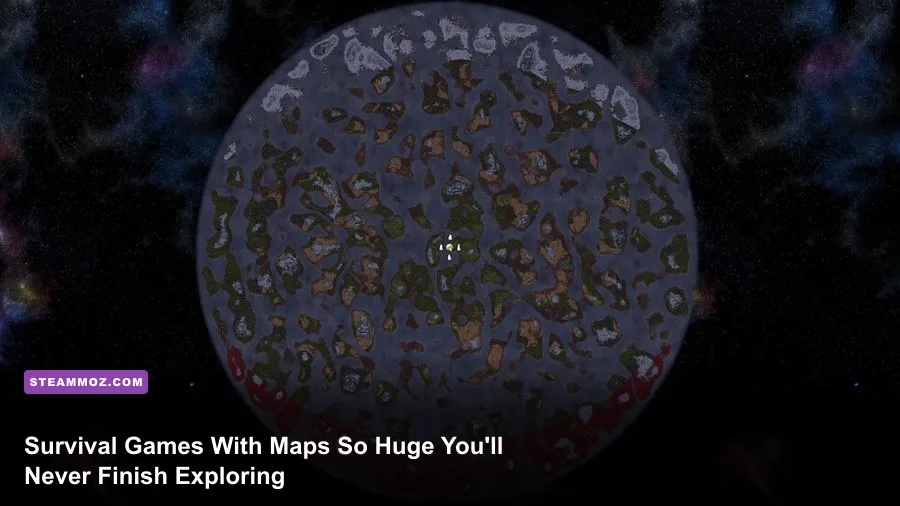
If you want the biggest bang for your exploration buck, five games dominate the conversation right now: Valheim for its handcrafted-feel procedural biomes, ARK: Survival Ascended for raw dinosaur-infested scale, No Man's Sky for a genuinely unfathomable procedural universe, Enshrouded for vertical fog-choked terrain, and Palworld for creature-collecting sprawl. Each one solves 'massive map' differently, and picking the right one depends on whether you want handcrafted density, procedural infinity, or something in between.
What Actually Makes a Survival Map Feel Massive
Size on a loading screen map doesn't mean anything if the terrain is empty filler. The games that nail exploration do three things: they gate progression behind biome-specific threats, they reward vertical and underground exploration equally, and they make travel itself a mechanic instead of a chore. Valheim's ocean crossings in a Karve canoe feel terrifying because the game wants you underprepared. ARK's cross-map dino taming forces you to learn terrain choke points. No Man's Sky just throws away the concept of 'edge of map' entirely by generating new star systems as you fly. That's the difference between a big map and a meaningful big map.
The Best Open World Survival Games Ranked by Map Scale
Here's how the current heavyweights stack up when you weigh raw square kilometers against how much of that space actually matters gameplay-wise.
| Game | Map Type | Approx. Explorable Size | Standout Exploration Hook |
|---|---|---|---|
| Valheim | Procedural, seed-based | ~10km radius per world (expandable seeds) | 9 handcrafted biomes with escalating boss gates |
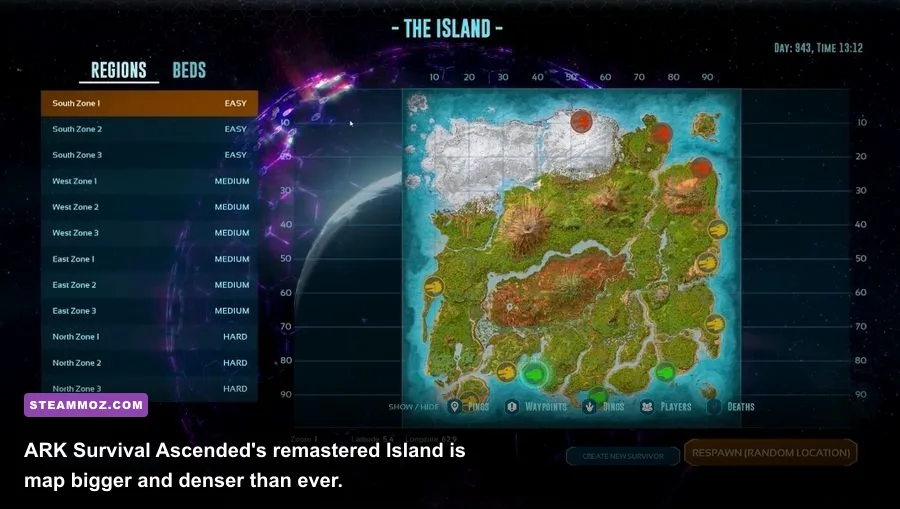
| ARK: Survival Ascended | Fixed, remastered | The Island (~48 km²), Scorched Earth, more DLC maps | Underground caves, obelisks, dino taming zones |
| No Man's Sky | Procedural universe | 18 quintillion planets | Seamless planet-to-space transitions, no loading screens |
| Enshrouded | Procedural + handcrafted POIs | Layered vertical map, ~64 km² surface footprint | Shroud fog mechanic gates altitude progression |
| Palworld | Fixed open world | Palpagos Islands, multiple biome zones | Creature capture ties exploration to base-building |
Valheim's Nine Biomes Are Still the Gold Standard
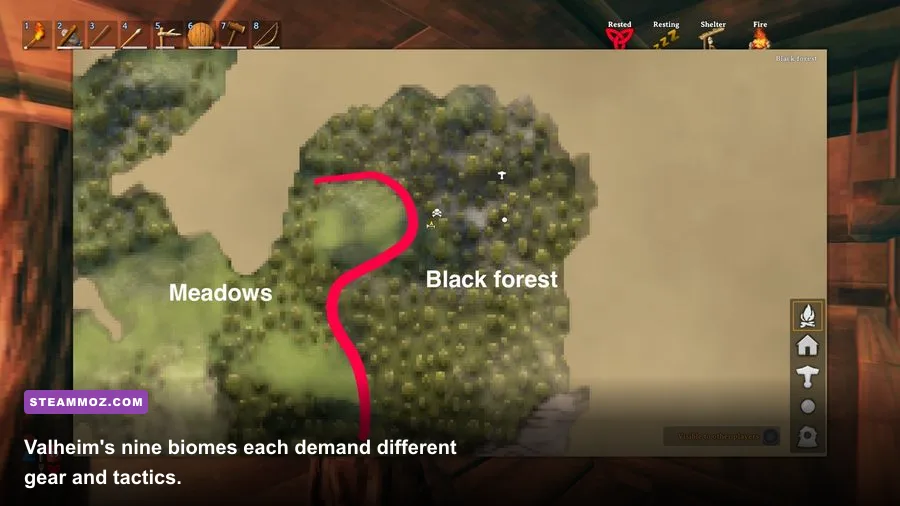
Valheim doesn't win on raw numbers, it wins on pacing. You start in the Meadows with a Flint Knife and a Club, and by the time you've killed Eikthyr and pushed into the Black Forest, you already understand the game's rhythm: every biome has a boss gatekeeper, and every boss drop unlocks the tools needed to survive the next zone. The Swamp forces you into Bronze armor because Draugr and Blobs shred cloth gear. Mountains demand Frost Resistance mead or Wolf armor before you even think about mining Silver. Plains introduces Fulings and Deathsquitos that one-shot underprepared players, which is Iron Gate's not-so-subtle way of telling you to stop rushing.
What makes the exploration loop addictive is the Karve and Longship progression — sailing further from spawn literally unlocks new biome types like Mistlands and Ashlands, both added post-launch and both dramatically expanding what 'the map' even means. If you're building a base, check the official Valheim Steam page for current build stats before you commit to a location, since terrain generation can wreck long portal networks.
ARK: Survival Ascended Turned Old Maps Into New Playgrounds
ARK's big trick with the Ascended remaster wasn't just a graphical facelift, it rebuilt cave systems and resource density across The Island so exploration actually rewards risk again. Redwood Forests now have denser wood and thatch nodes, the Swamp Cave is scarier with updated Titanoboa spawns, and the Volcano's lava mechanics got a genuine physics overhaul via Unreal Engine 5. Taming a high-level Argentavis to scout the map is still the fastest way to reveal obelisk locations, but Ascended added enough terrain verticality that even veteran ARK players get lost in caves they thought they'd memorized. Studio Wildcard's official ARK wiki and forums track current map rotations and DLC expansions if you want to plan a full server wipe strategy.
If you're the type who likes optimizing every frame while flying across a map this dense, our breakdown on Far Cry 6's GOTY upgrade settings has some overlapping lessons on balancing draw distance against FPS in big open-world titles.
No Man's Sky's Universe Doesn't Have an Edge
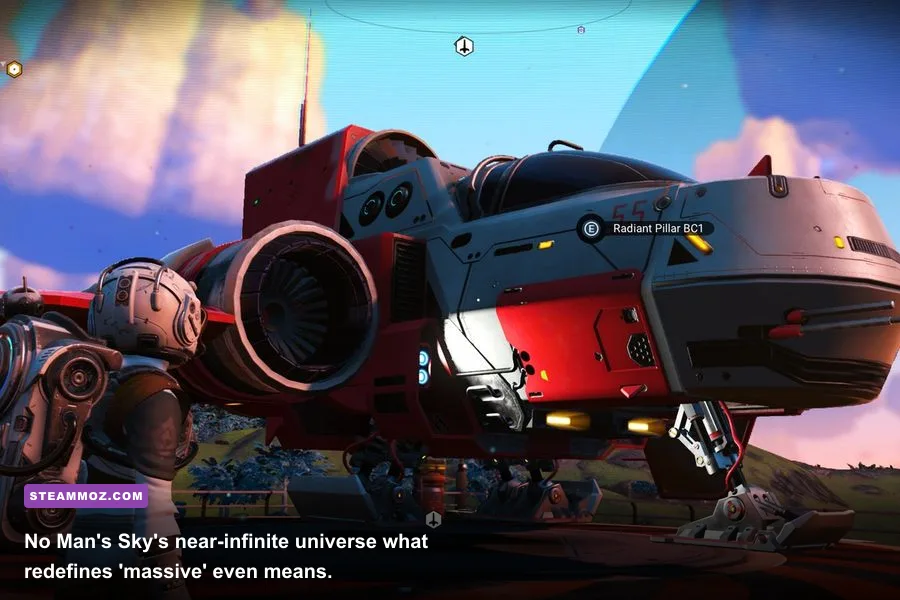
No other game on this list even attempts what Hello Games pulled off. There's no "edge of the map" in No Man's Sky because the galaxy is algorithmically generated on the fly — you can fly from a planet's surface straight into orbit and jump to another star system without a single loading screen. The Expeditions mode resets this scale into curated challenges, but Normal and Permadeath modes let you just keep flying. Practically, that means base-building decisions matter less about "best location" and more about "which biome hazard can I tolerate," since Extreme Sentinel worlds and Frozen tundra planets both offer unique resources like Activated Indium and Cryo-Sacs that fuel late-game tech trees. Check Hello Games' official No Man's Sky site for patch notes before diving into a new save, since exploration mechanics get major overhauls almost every major update.
Enshrouded and Palworld Are the New Contenders Worth Watching
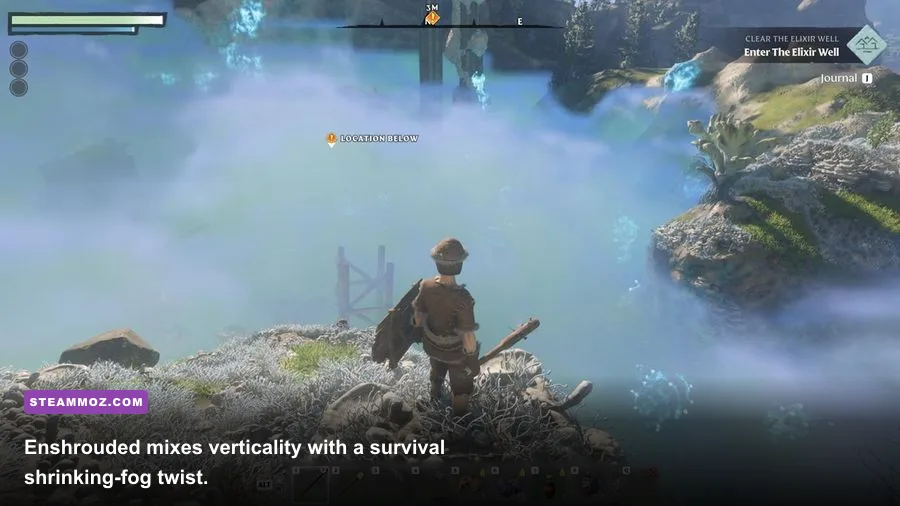
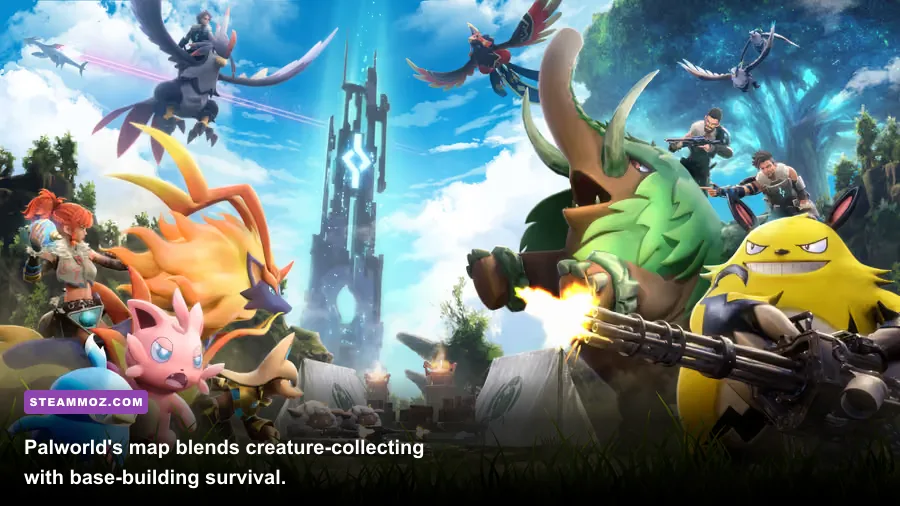
Enshrouded's Shroud fog mechanic is genuinely clever: it drains your health and vision the deeper you push into unexplored fog zones, forcing you to build Flame Altars as forward bases before pushing further. Combined with full verticality — flying, gliding, and climbing across floating islands — it makes exploration feel like a puzzle instead of a walk. Palworld takes a different angle, blending Pokémon-style creature capture with Valheim-style base survival, and its map rewards exploring specific biome clusters to find rare Pals like Jetragon in the desert zones. Both games are still getting content patches, so check Keen Games' official Enshrouded site for roadmap updates before planning a long-term base.
Performance Settings That Actually Matter for Big Open Worlds
Exploring a massive map tanks your FPS way faster than combat does, because draw distance and terrain LOD (level of detail) both scale with how far you can see, not how many enemies are on screen. Here's the settings breakdown that actually moves the needle across most of these titles.
| Setting | Recommended Value | FPS Impact | Visual Note |
|---|---|---|---|
| View Distance / LOD | Medium-High | High (10-20 FPS swing) | Biggest visual payoff for exploration, hits GPU hardest |
| Shadow Quality | Medium | Moderate (5-10 FPS) | Cave and forest lighting still readable at Medium |
| Foliage/Grass Density | Low-Medium | High in open fields | Reducing this helps spot enemies too |
| Water Reflections | Low | Moderate | Barely noticeable at distance while sailing/flying |
| Anti-Aliasing (TAA/DLSS) | DLSS Quality if available | Low impact, big clarity gain | Cleans up distant terrain pop-in |
These same principles carry over almost directly into troubleshooting sessions we've covered before, like our guide on ELEX PC fixes that stop crashes and rescue your FPS — open worlds crash way more from memory leaks during long exploration sessions than from combat spikes.
Final Verdict: Which Massive Map Should You Actually Start With
If you want handcrafted pacing with real progression stakes, start with Valheim — it respects your time and gates exploration in a way that always feels earned. If raw scale and dino taming chaos is your thing, ARK: Survival Ascended still can't be topped. Want something that genuinely never ends? No Man's Sky is the only game here where "massive" is basically meaningless because there is no ceiling. Enshrouded and Palworld are newer, rougher around the edges, but both are evolving fast and worth keeping on your radar if you're burned out on the old guard.
Whatever you pick, remember the golden rule of survival exploration: never sprint into a new biome without checking your gear tier first. That mistake has killed more promising runs than any boss fight ever has. For more genre-adjacent progression tricks, our piece on leveling fast and farming resources in Kakarot Master Edition covers similar efficient-grinding logic that transfers surprisingly well into these survival sandboxes.