
The best Metaphor ReFantazio beginner tips are to plan each calendar day, unlock Mage and Healer early, exploit enemy weaknesses before attacking normally, and spend MAG on useful Archetype lineages rather than spreading resources everywhere. Keep at least one fire, ice, wind, lightning, and healing option available, save before every major activity, and use dungeons efficiently by leaving when your MP is too low for the next boss.
Plan Every Day Around Royal Virtues
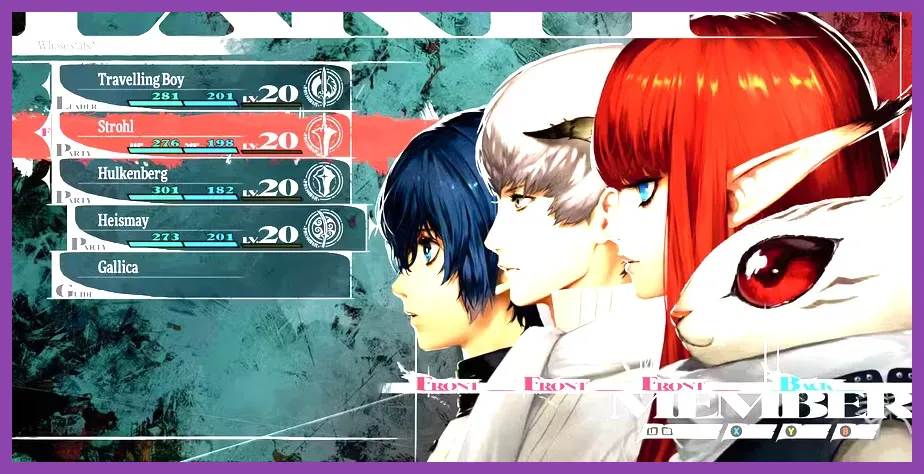
Metaphor ReFantazio gives you five Royal Virtues: Courage, Wisdom, Tolerance, Eloquence, and Imagination. They are not passive flavor statistics. Each one unlocks follower ranks, dialogue choices, shops, and activities, so ignoring them can block powerful rewards later. The protagonist’s action schedule is divided into daytime and evening opportunities, which means a wasted afternoon can be more damaging than a small amount of missed experience.
At the beginning, prioritize Wisdom in Grand Trad by studying at the Sunlumeo Street bench. Wisdom unlocks useful city interactions and contributes toward follower progress. Raise Courage through heroic activities and suitable quests, while Tolerance becomes especially important for progressing certain bonds. Do not obsess over maxing one Virtue immediately; instead, check the requirements for your next available follower rank and target the lowest requirement.
- Daytime: use it for dungeons, bounty quests, follower ranks, or expensive city activities.
- Evening: spend it on Royal Virtues, reading, cooking, cleaning, and other safe activities that do not consume another combat day.
- Travel days: use the Gauntlet Runner’s cooking and book options whenever no urgent follower or quest activity is available.
Always inspect the calendar and quest deadline before entering a dungeon. A deadline quest should be completed with time to spare, not on the final possible date. Side quests with generous deadlines can wait while a follower rank, Royal Virtue threshold, or limited shop opportunity is available. This calendar discipline is more important than farming every enemy.
Use the official Metaphor ReFantazio website for story and system information, and keep a manual save before accepting major errands. Players who enjoy optimizing schedules should also review our broader Steam Deck optimization guide if they are playing on handheld hardware.
Unlock These Archetypes Before Spending MAG
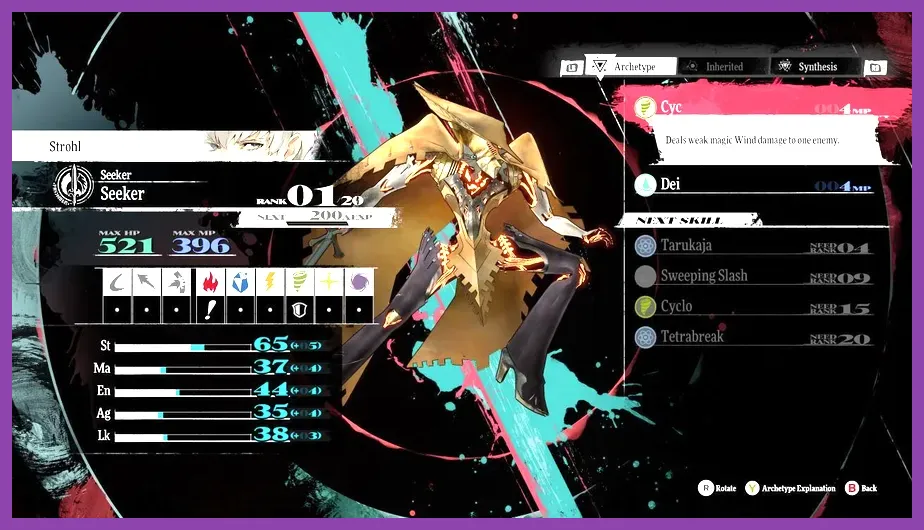
Archetypes are the central progression system, and early MAG is easy to waste. Your first priority should be a functional spread rather than a high-level version of one job. The Seeker is the protagonist’s starting Archetype and gives you reliable physical damage plus wind access. Unlock the Mage as soon as possible through the early progression with More; its Bot fire spell is crucial against enemies weak to fire and gives the party an answer that Seeker does not provide.
The early Healer is equally valuable. It supplies the Dia healing spell and eventually gives you access to light-based attacks such as Hama. Put Healer on Hulkenberg or another suitable party member when entering a dungeon with attrition-heavy fights. You do not need every party member to be a healer; one dedicated sustain option is enough if everyone carries a few medicines.
Early Archetype priorities
- Mage: unlock it early and level it enough to secure Bot and its inherited utility. Fire weakness checks appear frequently in early encounters.
- Healer: obtain Dia and keep a healing specialist ready for long dungeon routes and boss preparation.
- Knight: Hulkenberg’s Knight provides strong defense and the Proclamation skill, which helps control enemy targeting and protect fragile allies.
- Warrior: Strohl’s Warrior gives dependable physical damage and access to skills such as Slash and stronger single-target attacks as it levels.
- Merchant: its Gold Attack can convert money into damage and helps with critical-hit opportunities, but do not drain your entire wallet just to clear normal battles.
Use Skill Inheritance at Akademia to combine roles. A Knight with a healing skill, a Mage carrying a support spell, or a physical attacker inheriting an elemental attack is often more useful than a pure class. Keep one skill slot flexible for the dungeon you are entering. You can also use More’s Archetype study to strengthen the protagonist’s options without permanently locking him into one role.
Do not buy every available Archetype level at once. MAG is needed for new lineages, and later upgrades become expensive. Spend it when a new skill changes your tactical options, not merely when the level number increases. Our guide to respeccing skill points covers a different game, but the same principle applies here: plan before committing scarce progression resources.
Exploit Weaknesses Before Using Strong Attacks
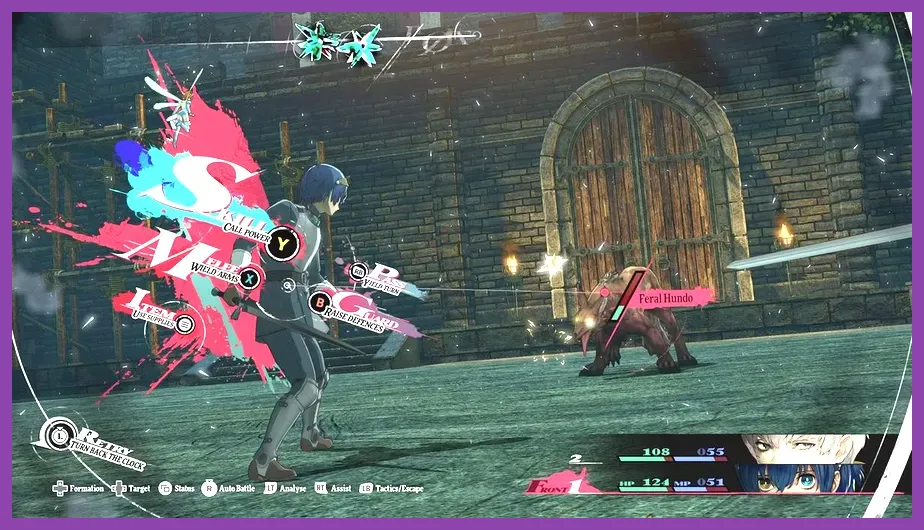
Combat revolves around the Press Turn-style action system. Hitting an enemy weakness grants an extra half turn icon, while missing, resisting, or striking an immunity can destroy your action economy. The correct opening is therefore not always your strongest attack. It is the cheapest accurate test that reveals how the enemy reacts.
Use Analyze whenever it is available, then rotate elemental coverage through the party. Seeker handles wind, Mage handles fire, and other Archetypes gradually add ice, lightning, physical, dark, and light options. Against an unknown monster, use a low-cost spell or a normal attack first. Once a weakness is confirmed, switch to that element and spend the bonus action on healing, buffing, guarding, or another weakness hit.
- Weakness: deal bonus damage and gain an additional half turn icon.
- Resistance: damage is reduced and your turn economy suffers, so change damage type.
- Repel or drain: stop using that element immediately; a reflected or absorbed attack can turn your advantage into a lost round.
- Critical physical hit: useful when no elemental weakness is known, but less reliable than a confirmed weakness.
Press the guard command when a boss is preparing a recognizable high-damage move. Guarding is not wasted time when it preserves a healer’s MP or prevents a character from being knocked out. Likewise, use buffs and debuffs before spending your extra half turn on another attack. Tarunda reduces an enemy’s attack power, while defensive and offensive support skills become much stronger when the whole party can act safely.
Watch the turn icons at the top of the screen before selecting a command. A weakness hit can create the exact action needed to cure, revive, or remove a status effect. Never assume a boss is vulnerable to the same element as its summoned minions. Test each phase separately, especially after a transformation or scripted attack.
Build a Party for Coverage, Not Favorite Characters
Each party member has a natural role, but Archetypes let you reshape them. Strohl is an excellent early physical attacker through Warrior, Hulkenberg is a durable Knight, and the protagonist should remain flexible because he can access the full Archetype system. Keep at least one physical attacker, one elemental caster, one healer, and one defensive or support option available before starting a major dungeon.
A practical beginner formation is protagonist as Mage or Seeker, Strohl as Warrior, Hulkenberg as Knight, and a fourth slot as Healer when sustain is needed. Against enemies that punish front-line attacks, move the physical character to the back row and let magic do the testing. Against bosses vulnerable to repeated physical hits, reverse that approach and conserve MP.
Use inherited skills to prevent dead turns. A Mage that cannot exploit the current weakness should still be able to cast Dia, use a support effect, or attack with a secondary element. A Knight can inherit healing or utility, while a Warrior can carry an elemental skill for emergencies. Avoid loading one character with every answer: if that character is stunned, silenced, or knocked out, the entire strategy collapses.
Equipment matters more than small stat gains. Visit the weapon and armor shops after reaching a new town, but compare the price against your remaining healing items and quest expenses. Upgrade weapons for your primary damage dealer first. Give defensive upgrades to the character expected to absorb attacks, and equip accessories that prevent the boss’s most dangerous status effect when you have identified it.
For more progression-focused reading, see our early-game character guide. The systems differ, but the same rule holds: a balanced roster with distinct jobs is better than four characters competing for identical damage.
Clear Dungeons Efficiently and Prepare for Bosses
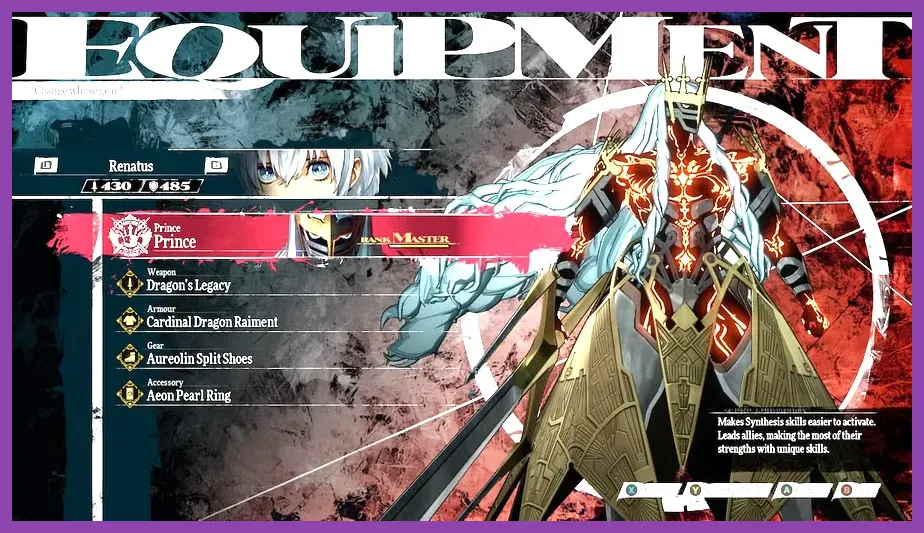
Do not treat a major dungeon as a single uninterrupted run. Enter with a full stock of medicines, reassess your party after every new Archetype level, and use safe rooms to create recovery points. Normal enemies are there to generate experience and MAG, but your real objective is reaching the boss with enough MP to exploit weaknesses for several turns.
Use the overworld action system before committing to a fight. Striking a stunned enemy can start combat with an advantage, while allowing a dangerous monster to hit first can cost a turn before the Press Turn phase even begins. If an enemy is taking too long to defeat, retreat and change Archetypes instead of burning through all your MP.
Boss preparation checklist
- Save at the last available save point and keep a second manual save outside the dungeon.
- Identify at least two damage types and one healing plan before entering the arena.
- Carry items for poison, sleep, paralysis, and other common status effects instead of assuming Dia will solve everything.
- Enter with the protagonist’s elemental coverage ready; changing Archetypes during a boss fight is not a substitute for preparation.
- Use buffs, debuffs, and Guard when the boss telegraphs a powerful attack.
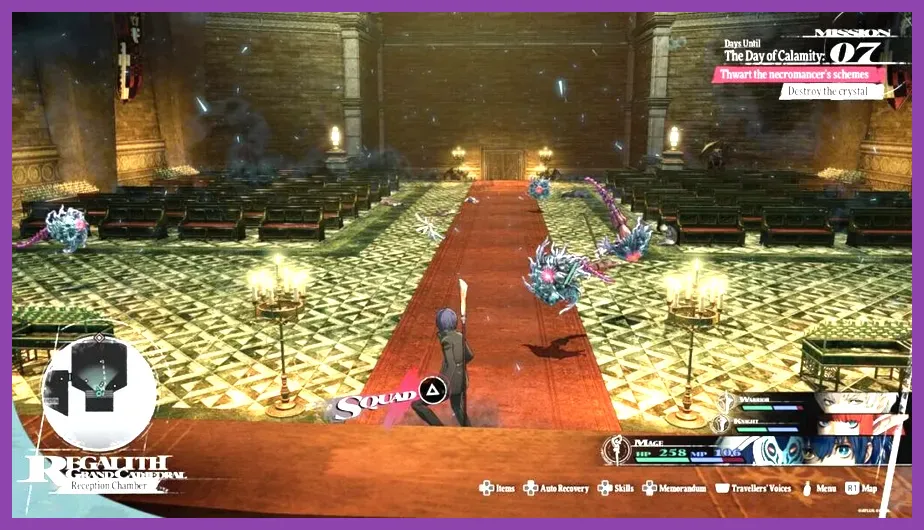
In the Regalith Grand Cathedral, do not rush past every side room. The dungeon teaches you to read enemy types, manage resources, and use the safe-room network. Before facing Zorba, make sure the party has healing, reliable single-target damage, and a plan for his summoned undead enemies. If the fight begins spiraling, prioritize survival and remove the immediate threat rather than chasing a perfect damage rotation.
Likewise, major encounters later in the story can change their attack patterns after scripted events. Recheck Analyze information and do not blindly repeat the element that worked in the first phase. The official Steam listing confirms the game’s turn-based Archetype combat, while SEGA’s official page provides additional game information.
Use Difficulty, Stats, and Saves Intelligently
For a first playthrough, Normal difficulty gives you enough pressure to learn weaknesses without making every mistake catastrophic. Story difficulty is useful if you mainly want the narrative, while higher settings are better reserved for a second run after you understand the calendar and combat systems. Difficulty can be changed in the system menu in supported modes, but lowering it should be a deliberate solution to a progression wall rather than a replacement for rebuilding the party.
When allocating the protagonist’s level-up points, choose a direction instead of spreading every point evenly. A Magic-focused build makes early elemental coverage and healing more effective; a Strength-focused build improves Warrior and other physical Archetypes. Endurance is the safest defensive investment, while Agility helps turn order and evasion. Luck has more specialized value and should not be your main beginner priority.
Magic is the most forgiving early plan because weaknesses are common and elemental spells remain useful across multiple Archetypes. A sensible approach is to put roughly two points into Magic for every one point in Endurance or Agility until your damage feels comfortable. If you prefer physical skills, prioritize Strength and add Endurance when enemies begin surviving your opening attacks. Do not respec mentally every time you obtain a new class; inherited skills let one focused protagonist cover several roles.
Finally, save often and use separate files for calendar decisions, dungeon entrances, and boss attempts. Metaphor ReFantazio rewards experimentation, but a backup save prevents one poor afternoon, wasted MAG purchase, or underprepared deadline battle from costing hours. Check the official Atlus news page for updates, then return to the core routine: plan the day, maintain elemental coverage, exploit weaknesses, and spend MAG only when it expands your options.