
The key to finding every Glitchhikers: The Spaces Between secret is simple: replay each journey, exhaust optional conversations, and revisit routes after major story progress. This isn't a collectible hunt with glowing pickups or a traditional map. Its hidden rewards are mostly alternate dialogue, returning characters, surreal encounters, and achievements triggered by curiosity. The Deluxe Glitchpod Edition adds the game's bonus digital material, but it does not turn the Glitchpod into a magic item that reveals every secret in-game.
That distinction matters. Glitchhikers is built around observation rather than inventory management. You move through four major spaces—the highway, subway, airport, and forest—and decide which strangers, objects, songs, and odd detours deserve your attention. Miss one conversation and the game usually won't punish you. It simply lets the moment pass. This guide explains where the hidden content is concentrated, what to do when you reach each area, and how to clean up missed rewards without restarting blindly.
What Counts as a Secret in Glitchhikers?
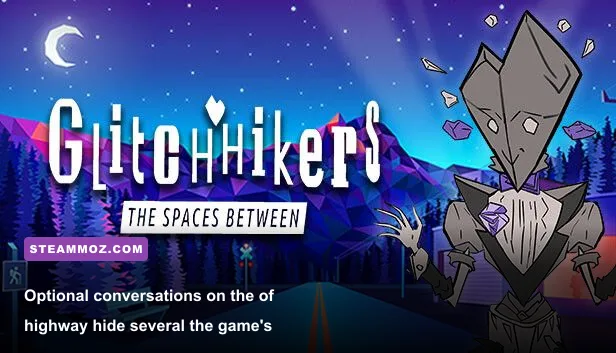
Glitchhikers has no conventional secret rooms, combat loot table, or stat-based reward ladder. A “secret location” is usually a section of a journey where an optional interaction becomes available if you wait, look around, or choose a particular conversational direction. Some discoveries are completely missable during a first run because the game moves forward once you stop engaging with the environment.
The safest rule is to treat every transition as a checkpoint. Before boarding, driving on, entering a new terminal, or following the next obvious path, look for anything that can be examined. If a character offers another line, take it. If a song, sign, window, seat, or strange object invites interaction, don't dismiss it as decoration.
The official Steam page describes the experience as a journey through the spaces between places, and that is the best way to approach its secrets. The “reward” is often a new piece of context rather than a powerful item. You can also check Silverstring Media's official site for information about the developer and the game's creative background.
| Discovery Type | Where It Appears | What You Receive | Best Strategy |
|---|---|---|---|
| Optional dialogue | All four journeys | New character lines and context | Exhaust every response before moving on |
| Environmental interaction | Highway, airport, forest | Visual clues and unusual scenes | Scan seats, windows, signs, and side paths |
| Recurring encounter | Across multiple journeys | Callbacks and altered conversations | Replay after completing another journey |
| Achievement trigger | Specific dialogue or exploration moments | Steam achievement | Use a clean-up run instead of skipping scenes |
🎮 Glitchhikers: The Spaces Between Deluxe Glitchpod Edition
Looking to experience this game? Grab your digital key directly on our store for $13.43.
View on Steammoz Store →Highway Secrets and the First Glitchpod Encounters
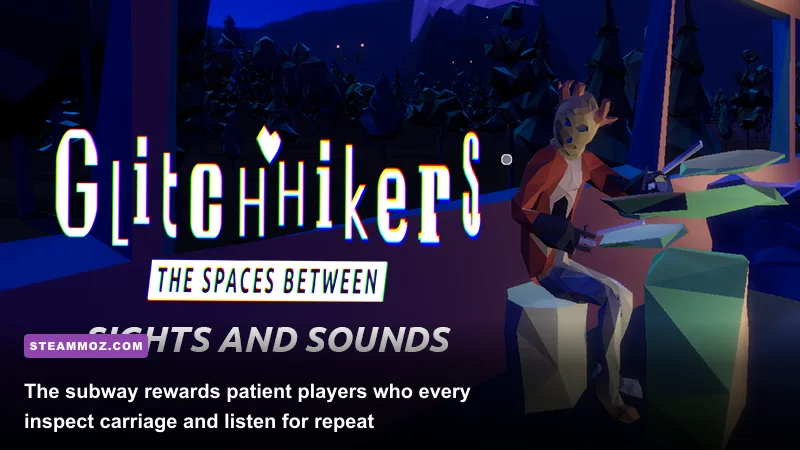
The highway is where most players learn the wrong lesson about exploration. Because the road appears linear, it is tempting to watch the scenery and wait for the next prompt. Instead, pay attention to the passenger beside you. The first journey establishes the game's rhythm: ask questions, follow unusual conversational branches, and keep talking even when the subject appears to drift away from the trip.
How to clear the highway without missing dialogue
At every stop, exhaust the available conversation before accepting the obvious next step. When the passenger changes topic, choose the response that asks for more detail rather than the one that closes the exchange. There is no combat build or morality meter to protect here, so experimentation is safe. You won't lock yourself out of a different ending by being curious.
Watch the roadside scenery during quiet stretches. The game places visual ideas—lights, signs, silhouettes, and distant structures—where the camera naturally encourages you to look. If the interface presents an interaction prompt, use it before advancing. These moments are easy to overlook because they don't resemble collectibles. They are closer to micro-scenes, and they help establish the recurring themes that return in the subway and forest.
The highway also teaches an important cleanup trick: replay the full journey rather than loading a supposed “secret checkpoint.” Glitchhikers' scenes are paced as one continuous trip, and some optional lines only make sense after you have heard earlier context. A second run is faster because you already know the route, but don't mash through dialogue if your goal is completion.
Subway Secrets: Inspect Every Carriage Before Moving On
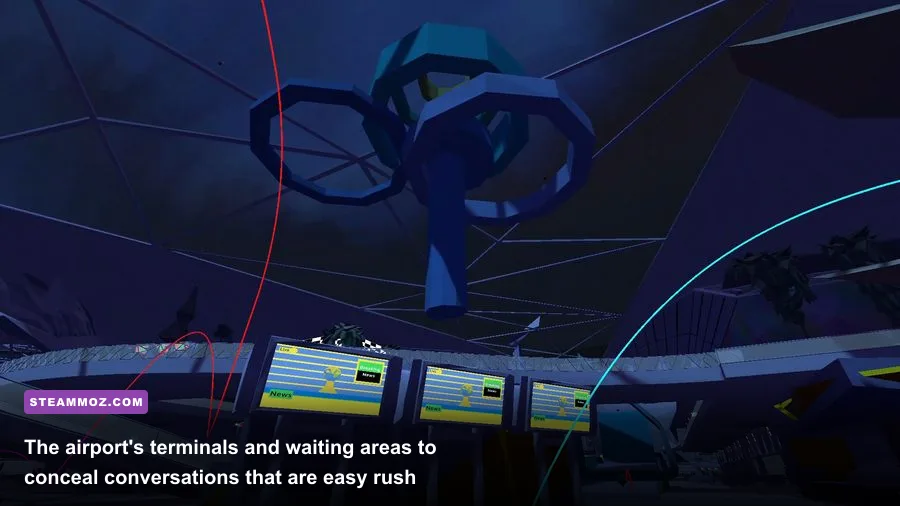
The subway is the most reliable place to farm missed optional interactions. Its repeating carriages create a false sense that every section is identical, but passengers and prompts can change depending on what you have already heard. Walk through each available carriage, check the visible points of interest, and return to anyone who still has a response available.
The subway route checklist
Start by speaking to the nearest passenger, then work across the carriage instead of following the most dramatic conversation first. When a stranger offers a story, keep selecting responses until the exchange naturally ends. After a transition, repeat the sweep. A character who seemed finished may gain another line after the train reaches a new section.
Don't treat the subway's ambient sound as background noise. Music, announcements, and pauses are part of the route's storytelling. If the game gives you a chance to listen or observe rather than immediately interact with a person, take it. These low-key moments are among the easiest hidden scenes to skip, especially when replaying quickly for achievements.
For a completion run, use a simple three-pass method: first inspect the carriage, second speak to every available stranger, and third check the environment again after dialogue ends. It sounds slow, but the subway's compact layout makes this far more efficient than restarting repeatedly because one prompt was ignored.
| Subway Pass | Action | Why It Matters | Common Mistake |
|---|---|---|---|
| Pass one | Inspect the carriage and visible objects | Activates environmental prompts | Walking straight to the next transition |
| Pass two | Speak to every passenger | Unlocks optional dialogue branches | Ending a conversation after one response |
| Pass three | Recheck the carriage after dialogue | Finds follow-up lines and changed prompts | Assuming an empty prompt stays empty |
Airport Hidden Rewards and the Waiting Areas
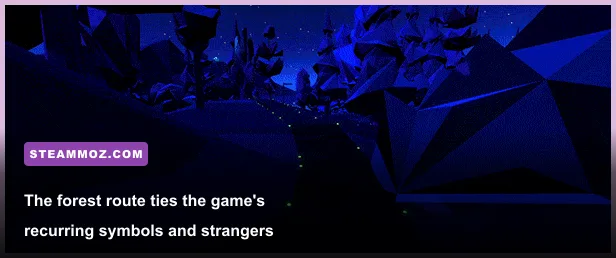
The airport is built around waiting, and rushing through it is the fastest way to miss its secrets. Search the terminal before following the next obvious objective. Talk to people who look incidental, listen to announcements, and inspect the spaces around seats and counters. Glitchhikers often hides its strongest writing in the conversations that seem unrelated to the central trip.
The airport's biggest trap is visual repetition. Rows of seats and corridors can make exploration feel pointless, but the game uses that repetition to create small changes in mood and dialogue. If you have already completed another journey, revisit the airport and look again. Familiar themes may appear in a new context, and recurring strangers can make later exchanges feel like direct callbacks rather than random encounters.
How to avoid missing airport scenes
Before each major transition, finish every conversation that remains active. Then pan across the room and test any prompt that appears near furniture, windows, signs, or public-area objects. Don't assume an item is merely scenery because it has no obvious reward attached. In this game, a brief observation can be the hidden reward.
If you're cleaning up achievements, keep a written note of which airport conversations you completed. The game doesn't provide a traditional chapter checklist, and the surreal presentation makes it easy to confuse a scene from one run with a scene from another. Notes such as “terminal left side inspected” are more useful than trying to remember a character's exact wording.
The official Fellow Traveller site is also worth checking for publisher information, while the game's Steam community hub can help compare achievement progress with other players. Use community reports as confirmation, not as a replacement for checking every interaction yourself.
Forest Secrets and the Final Layer of the Journey
The forest is less about finding a single hidden object and more about recognizing what the earlier journeys were preparing you to notice. Take the side paths when the game presents a choice, stop for environmental prompts, and let conversations reach their natural endpoint. The forest's atmosphere encourages you to move cautiously; trust that instinct.
Look for changes in sound and lighting. A sudden shift in ambience is often a signal that the game wants you to observe rather than advance. If you see a path, clearing, light source, or object that feels slightly out of place, investigate it before continuing. These moments are not marked with a treasure icon, and several can be passed simply by choosing the forward route too quickly.
Why replaying earlier journeys matters here
Some of the forest's best payoffs depend on your familiarity with recurring ideas and characters. You don't need to make one perfect series of dialogue choices, but you do need to experience the surrounding conversations. If a scene feels cryptic on the first visit, that isn't necessarily a sign you missed a key. It may be deliberately echoing something from the road, train, or airport.
After completing the forest, revisit the earlier routes in order. This gives you the clearest chance to catch callbacks and finish achievements without randomly jumping between scenes. The game is short enough that a deliberate replay is usually quicker—and more satisfying—than searching for a nonexistent universal secret map.
Deluxe Glitchpod Edition Bonus Content Explained
The Deluxe Glitchpod Edition is easy to misunderstand because “Glitchpod” sounds like an in-game device. Treat it as an edition label and bonus-content package, not as a gameplay gadget that unlocks a separate secret room. Your core route, conversations, and exploration rules remain the same. The edition's value is tied to the included digital extras rather than a different combat system, character class, or collectible economy.
Before buying or upgrading, compare the exact package description on Steam, since bundled extras can vary by storefront and platform. The base game is the important purchase if your goal is to experience every hidden conversation. The Deluxe package is for players who want the accompanying Glitchpod-themed bonus material and supporting digital content.
| Goal | Recommended Edition | What You Need | Best Approach |
|---|---|---|---|
| See every story route | Base game or Deluxe | Access to all four journeys | Replay and exhaust conversations |
| Find environmental secrets | Base game or Deluxe | Curiosity and careful scanning | Inspect areas before each transition |
| Collect Steam achievements | Base game or Deluxe | Repeatable story access | Use focused cleanup runs |
| Own the bonus digital material | Deluxe Glitchpod Edition | The Deluxe package | Verify included extras on Steam |
The Fastest Full-Completion Route
For a clean sweep, play the journeys once without skipping anything, then replay them in the same order. On the first pass, prioritize understanding the conversations. On the second, use the checklist below and focus on prompts you ignored. This avoids the common mistake of restarting the highway repeatedly while forgetting that a missed airport interaction is the real gap.
- Highway: exhaust the passenger's dialogue, inspect every available roadside prompt, and avoid advancing while an interaction remains active.
- Subway: make three passes through each accessible carriage—environment, passengers, then a final recheck.
- Airport: inspect waiting areas, speak to incidental characters, and revisit the terminal after major story progress.
- Forest: investigate side paths and changes in ambience before choosing the obvious forward route.
- Cleanup: replay the specific journey where a prompt or achievement was missed instead of assuming the whole game must be reset.
Keep your own notes, especially for conversations that feel complete. Glitchhikers doesn't present completion with the clarity of a loot-heavy RPG, so a paper checklist is genuinely useful. For comparison, the same note-taking habit helps in other discovery-focused games; our confirmed secret-locations guide for Chionophile uses a similar approach, while Earth Defense Force 5's hidden rewards guide shows how different a traditional reward hunt can be.
What You Should Not Waste Time Searching For
There are no conventional weapon stats, hidden armor sets, skill trees, damage multipliers, or missable combat drops to optimize here. Glitchhikers doesn't suddenly become an RPG because the Deluxe edition includes extra material. If a guide claims that a secret weapon, currency stash, or stat-boosting Glitchpod module is required, it is describing a different game or inventing mechanics.
Likewise, don't spend hours hunting for a single coordinate-based secret room. The meaningful discoveries are contextual: a conversation you allowed to continue, an object you chose to observe, a route you revisited, or a recurring figure you recognized. That design is why the game can feel mysterious without hiding hundreds of icons across a map.
For broader Steamoz reading, the Botanicula collector tips are useful if you enjoy environmental discovery, while these run-saving exploration tips cover a more traditional failure-based structure. Glitchhikers is gentler, but the same principle applies: slow down whenever the game makes an unusual detail feel important.
Bottom line: the complete Glitchhikers secret-location route is the highway, subway, airport, and forest played with patience—not a hunt for hidden loot rooms. Exhaust dialogue, inspect every transition, revisit the subway and airport after progressing, and treat the Deluxe Glitchpod Edition as bonus content rather than a gameplay key. Do that, and you’ll uncover the game's real rewards: the strange callbacks, optional encounters, and quiet moments that make the spaces between destinations worth exploring.