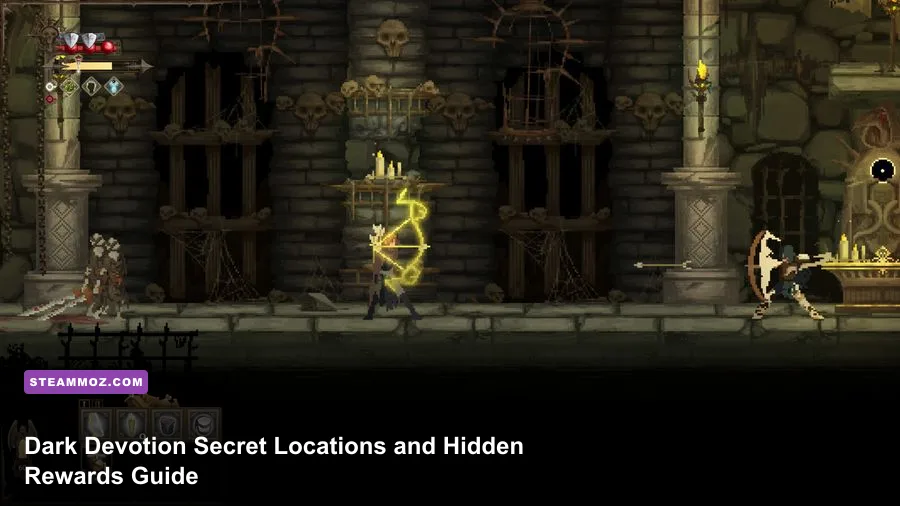
Dark Devotion’s secret rewards are found by treating every suspicious wall, dead-end corridor, and locked side route as part of the map rather than wasted space. The most reliable targets are hidden rooms in the Temple, alternate branches around the Crypt and Library, and reward chambers opened after you clear nearby threats or return with the right progression item. Because room layouts shuffle between runs, there are no universal tile coordinates; this guide gives you the fixed landmarks, visual tells, and routing habits that consistently reveal them.
That distinction matters. Dark Devotion isn’t a traditional Metroidvania with one permanent world map. Its rooms are assembled into changing runs, while major zones, NPC functions, bosses, and progression gates remain recognizable. If you want a broader look at secret-heavy action RPG design, our Everspace 2 secrets guide covers a very different game but makes the same important point: exploration rewards attention, not random wandering.
How Dark Devotion’s Secret Rooms Actually Work
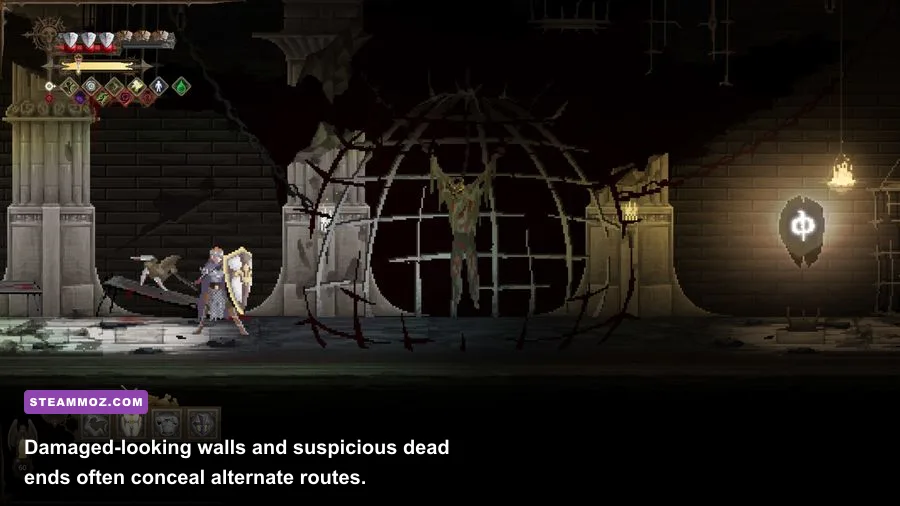
Most hidden locations follow one of three rules. First, a breakable or visually damaged wall opens into a compact reward room. Second, an apparently optional branch loops around to a chest, altar, or NPC interaction. Third, a room remains inaccessible until you have advanced the Temple’s progression and returned through a newly available route. The game rarely announces these discoveries, so your map discipline matters more than memorizing a single walkthrough.
Start by checking the edges of every room. A normal wall has a consistent stone pattern, while a secret entrance often has a darker seam, missing masonry, a shallow vertical crack, or an oddly clean section where the surrounding architecture is heavily damaged. Strike suspicious sections with your current weapon before leaving. You don’t need to waste consumables, and regular attacks are enough to test most concealed passages.
Listen as well as look. Hidden rooms can sit behind a wall that appears completely solid, particularly in the Temple’s darker chambers. If a corridor ends one character-width short of an outer boundary, test the wall. Likewise, if the map shows a blank pocket beside a room you have already cleared, assume it is worth investigating rather than assuming the area is decorative.
| Secret Tell | Where to Check | Likely Reward | Best Habit |
|---|---|---|---|
| Cracked or discolored masonry | Outer walls and dead ends | Chest, relic, weapon, or currency | Attack every suspicious panel once |
| Unexplained map gap | Beside cleared combat rooms | Alternate route or sealed chamber | Return after opening the next shortcut |
| Branch with no immediate objective | Temple and Crypt side corridors | Altar, lore, NPC, or upgrade material | Clear the branch before progressing |
| Locked or inactive interaction | Progression rooms and shrines | Permanent unlock or later shortcut | Mark it mentally and revisit it |
Don’t confuse every breakable object with a secret. Decorative debris, pottery, and ordinary background damage are common. The useful test is route logic: a suspicious wall beside a dead end is far more likely to hide something than an isolated crack in a room’s backdrop.

🎮 Dark Devotion
Looking to experience this game? Grab your digital key directly on our store for $1.99.
View on Steammoz Store →Temple Secret Locations You Should Check First
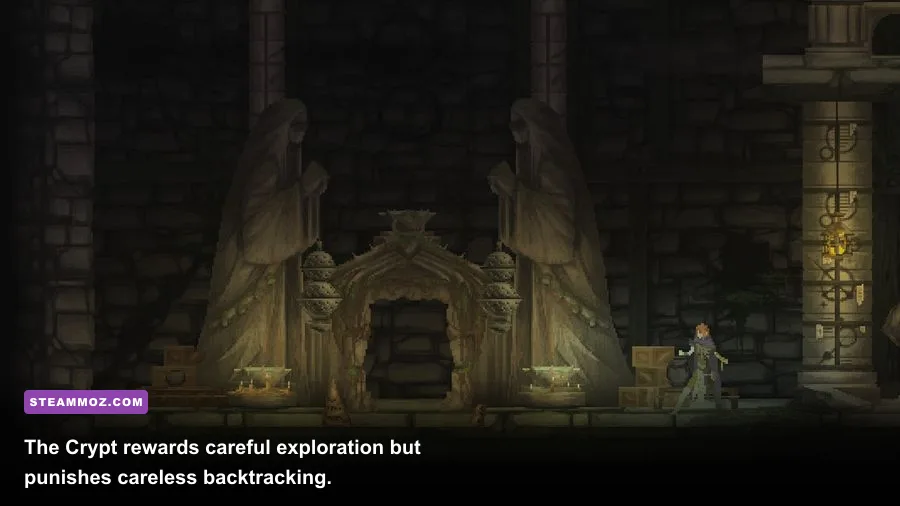
The Temple is the game’s main exploration test and the best place to build a secret-hunting routine. Search the first branch that does not lead directly toward the current objective. These side rooms frequently contain a chest or consumables, but their real value is learning the game’s visual language before the combat becomes more punishing.
The entrance-side dead ends
After entering a new Temple section, sweep the short corridors around the initial combat rooms before committing to the main route. Check corners behind staircases and walls bordering empty map space. These rooms are often small, which makes them easy to overlook, yet they can provide early equipment that changes your first boss attempt.
Combat rooms with a second exit
When a room has two exits and one looks like the obvious forward path, clear both sides before moving on. The less direct branch commonly loops behind the main route or ends at a reward chamber. This is particularly important when one doorway is above or below the room’s central platform. Dark Devotion’s vertical framing can make a branch look like scenery until you physically walk toward it.
Locked Temple interactions
Some Temple features are not immediate loot rooms. You may find inactive doors, altar-like objects, or routes that cannot be used on your first visit. Don’t burn time attacking them repeatedly. Record the room’s position relative to a landmark, then revisit after defeating a major boss or unlocking the next progression step. The game’s permanent advancement is designed to make earlier spaces worth rechecking.
The Penitent’s combat kit also affects how safely you search. A fast weapon lets you test walls without surrendering much momentum, while a slower heavy weapon makes blind checks riskier near enemies. Clear the room first, heal if necessary, then investigate. Secret rewards are never worth taking a hit from a monster you could have eliminated beforehand.
Crypt and Library Hidden Rewards
The Crypt is where impatient exploration starts costing runs. Its corridors encourage forward movement, but the most valuable branches are often tucked behind rooms you have already cleared. Search the outer perimeter after every major encounter, especially where the architecture creates a narrow return passage. A secret chamber here may contain a stronger weapon, a relic, or resources that make the next boss much more manageable.
The Crypt’s safest method is “clear, sweep, continue.” Kill the visible enemies, inspect both side walls, then check the map for an unvisited pocket. Do not dash through a room just because its exit is visible. Dark Devotion’s enemy placement is built to punish that exact impulse: a missed side branch often forces you to backtrack through enemies while low on healing.
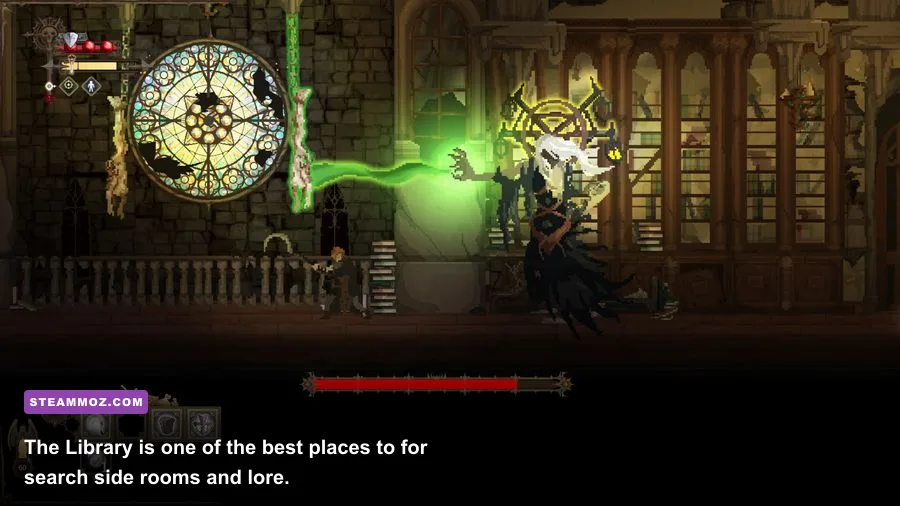
The Library uses a different visual trick. Tall shelves and dark framing can hide the borders of a room, so watch for corridors that appear to terminate between bookcases. Check the wall behind isolated shelves and inspect every room with a central object but no obvious reward. These spaces are often connected to lore or useful equipment rather than a dramatic treasure vault, but that still matters because better gear improves your odds of reaching the deeper Temple.
| Zone | Highest-Value Search Area | Common Threat | Recommended Approach |
|---|---|---|---|
| Temple | Dead ends beside early combat rooms | Missing a branch before moving on | Sweep each room perimeter |
| Crypt | Outer corridors and return passages | Backtracking into respawned danger | Clear enemies before wall checks |
| Library | Walls behind isolated shelves | Confusing scenery with a route | Walk the full boundary of each room |
| Boss approach rooms | Optional branches before the arena | Entering the fight under-equipped | Search before crossing the final threshold |
If you enjoy mapping obscure routes, compare this rhythm with our Dungeons 4 hidden-reward guide. Dark Devotion is far less forgiving, though: you’re not just collecting secrets for completion. A single relic or weapon can determine whether a run reaches the next permanent unlock.
Boss Routes and Secret-Room Preparation
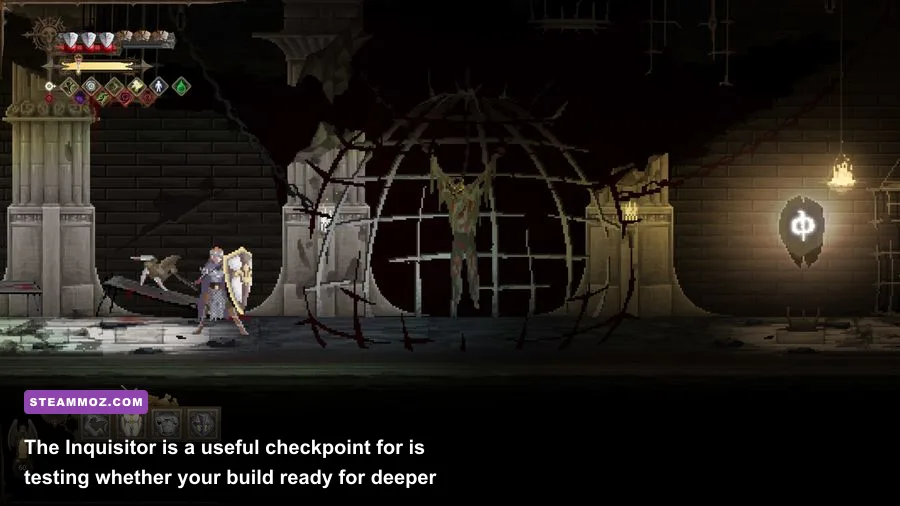
Never sprint straight to a boss after discovering the entrance. The rooms immediately before major encounters are your last chance to check optional branches, stock consumables, and fix a weak equipment pairing. The Inquisitor, The Abbot, The Disgraced Queen, and The Old One each demand different spacing, so a secret weapon is valuable only if you can use its range and attack speed without abandoning your defensive rhythm.
The Inquisitor is a good early benchmark. His attacks are designed to punish panic movement, so favor a weapon that lets you land damage and retreat cleanly. A fast blade or balanced one-handed weapon is usually safer than committing to a long animation while you are still learning his telegraphs. Against The Abbot, prioritize patience and room control; the fight becomes much more dangerous when you chase damage through an unsafe attack window.
Before any boss, spend a few seconds checking the arena approach for a side exit, cracked wall, or small room behind the final combat encounter. If you find a healing resource, use it strategically rather than automatically. Entering a boss with full health is useful, but preserving a defensive item for the actual phase transition can be even more valuable.
| Boss | Dangerous Moment | Counter Strategy | Secret-Reward Priority |
|---|---|---|---|
| The Inquisitor | Attacking during his commitment animation | Wait for the recovery window, then punish once | Fast weapon or reliable defensive relic |
| The Abbot | Chasing damage across unsafe space | Hold your position and dodge late | Healing resources and consistent damage |
| The Disgraced Queen | Misreading movement and spacing | Keep an escape lane open | Reach, mobility, and burst windows |
| The Old One | Greed during extended attack patterns | Take short punish windows | Best available scaling weapon and relic pairing |
For another perspective on route preparation, our Everspace 2 performance guide covers a different kind of optimization, but the principle transfers: remove avoidable problems before the high-pressure encounter begins.
Best Rewards to Prioritize and What to Ignore
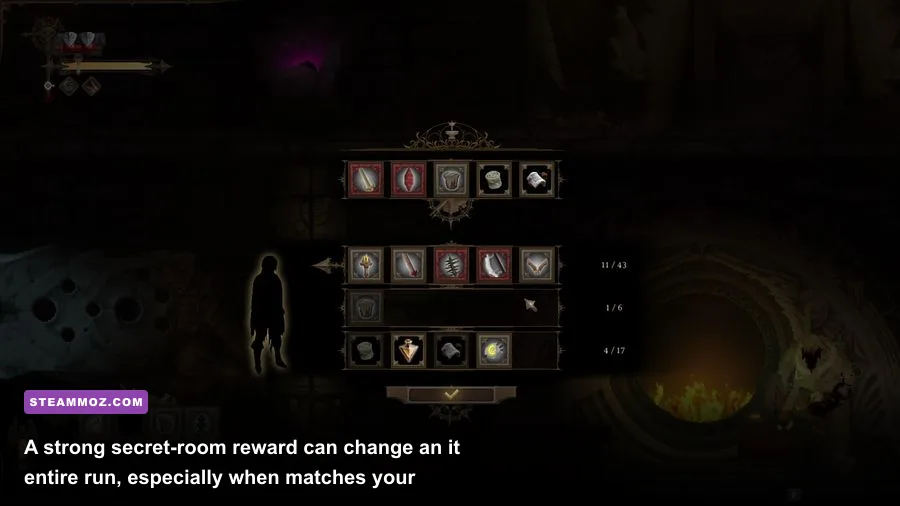
Not every secret chest deserves a dangerous detour. Early in a run, prioritize weapons that improve your safe damage range, relics that support your current attack pattern, and permanent progression items. A modest upgrade you can use immediately is better than a theoretically stronger item that forces you into an unfamiliar animation during a boss attempt.
Weapon choice should follow consistency first and raw damage second. Fast weapons are excellent for testing walls and punishing short recovery windows. Heavy weapons can outperform them when an enemy gives long openings, but their commitment makes exploration mistakes more expensive. Ranged options are useful for controlling dangerous targets, although ammunition or resource pressure can make them less attractive in a long route.
Use the Blacksmith when you have a clear primary weapon rather than spreading resources across every new drop. The Alchemist is most valuable when your run lacks sustain or when a consumable can cover a known boss weakness. The Confessor and other Temple interactions are worth revisiting because they tie exploration to the game’s broader progression rather than simply handing out disposable loot.
| Reward Type | Priority | Why It Matters | When to Skip It |
|---|---|---|---|
| Permanent progression item | S-Tier | Improves future runs and unlocks routes | Almost never skip |
| Weapon matching your current style | A-Tier | Raises damage without changing your rhythm | When reaching it costs most of your health |
| Synergistic relic | A-Tier | Multiplies a build’s existing strength | When it conflicts with your weapon plan |
| Small currency or consumable cache | B-Tier | Useful but replaceable | When enemies have respawned nearby |
| Lore-only interaction | C-Tier for survival | Adds context and completion progress | During a low-health boss rush |
A Reliable Secret-Hunting Route for Every Run
Use this five-step loop and you’ll find far more hidden rooms without turning every run into a tedious pixel hunt.
1. Clear before you search
Remove enemies from the current room first. Dark Devotion’s combat is too deliberate for safe wall-checking under pressure, and taking damage while testing a dead end is one of the easiest ways to throw away a promising run.
2. Sweep clockwise around the room
Pick a direction and inspect every wall, corner, staircase, and shelf boundary. A consistent clockwise sweep prevents the classic mistake of checking the obvious side and forgetting the return route.
3. Read the map for missing pockets
Any blank space beside a cleared room deserves a second look. If the route is impossible now, remember the landmark and revisit after a boss, shortcut, or permanent progression unlock.
4. Spend rewards according to the run
Don’t hoard every resource while carrying weak gear. A secret weapon that keeps you alive through the next zone is worth more than currency sitting unused. For broader build discipline, our beginner build guide offers a useful reminder about committing to a plan instead of collecting everything.
5. Revisit old rooms after major progression
Dark Devotion rewards memory. Previously inactive objects and blocked routes can become meaningful later, so keep track of unusual doors and altars rather than writing them off as decoration. The best hidden rewards are often the ones you find on a return trip with more of the Temple unlocked.
For the game’s current PC version, check the official Dark Devotion Steam page for updates and platform details. You can also follow Hibernian Workshop’s official site and the publisher information on The Arcade Crew. The key takeaway remains simple: clear rooms, inspect the perimeter, mark blocked interactions, and return after progression. Dark Devotion’s secrets aren’t random miracles—they’re rewards for players willing to slow down and read the Temple.