
The fastest way to level in Cloud Chasers – Journey of Hope is not blindly collecting every cloud or spending every coin the moment you get it. Build a safe water buffer, use Amelia’s cloud runs to target high-value rewards, take only profitable encounters, and save your money for glider upgrades that reduce future travel risk. Gold farming works best as a side effect of efficient five-chapter progress, not as a repetitive grind.
That distinction matters because Cloud Chasers is a survival roguelike with a deliberately unforgiving economy. You guide Francisco and Amelia across a dangerous desert toward the floating cities, balancing water, food, health, equipment, and the condition of your cloud-chasing machine. A good run compounds: every successful trip gives you more room for exploration, better upgrade choices, and stronger returns. A greedy run collapses quickly when one bad event turns a full inventory into a desperate retreat.

How progression and gold actually work
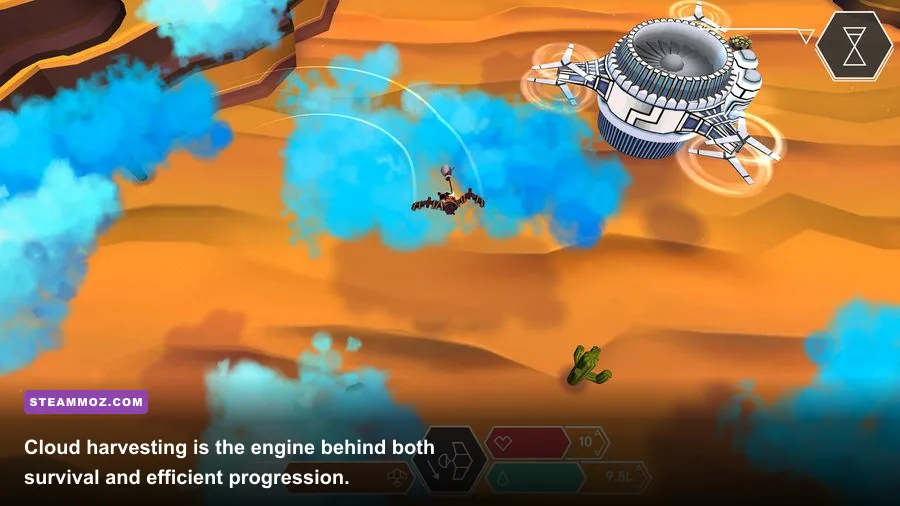
Cloud Chasers does not use a conventional RPG experience bar with enemies dropping piles of currency. Progress is tied to survival, story advancement, discoveries, encounters, and the upgrades you can afford between dangerous stretches. In practical terms, “leveling fast” means improving the party’s ability to complete profitable routes without consuming more supplies than they earn.
Francisco and Amelia have different roles. Francisco is your ground-side survivor, handling travel, conversation, item use, and the decisions that determine whether a route pays off. Amelia pilots the cloud chaser in the short aerial sequences, harvesting water from moving clouds while avoiding hazards. Treating those two layers as separate mini-games is a mistake. The water Amelia brings back determines how aggressively Francisco can explore, while Francisco’s equipment and condition determine whether Amelia can be sent out again.
The game is divided into five chapters, and each chapter raises the pressure through harsher routes and more expensive mistakes. You should think in three progression thresholds:
| Progression threshold | Practical target | Why it matters | Gold priority |
|---|---|---|---|
| Early desert | Keep 3-4 usable water units in reserve | Prevents one unlucky encounter from ending the run | Basic survival supplies and the first glider improvement |
| Midgame route | Finish a trip with supplies left, not empty pockets | Creates a buffer for optional encounters | Cloud-chaser efficiency over cosmetic purchases |
| Late chapters | Enter each major stretch with a full repair and food plan | Reduces attrition from repeated travel checks | High-impact upgrades and emergency reserves |
Those numbers are route targets rather than hidden developer constants. The game’s procedural structure means exact supply costs vary, but the principle is consistent: a reserve of three or four water units is far more valuable than one extra low-value trinket. For a broader look at resource pacing in harsh RPGs, Steamoz’s Decay: The Mare progression guide offers a useful comparison.

🎮 Chaser
Looking to experience this game? Grab your digital key directly on our store for $1.24.
View on Steammoz Store →The safest fast-leveling route
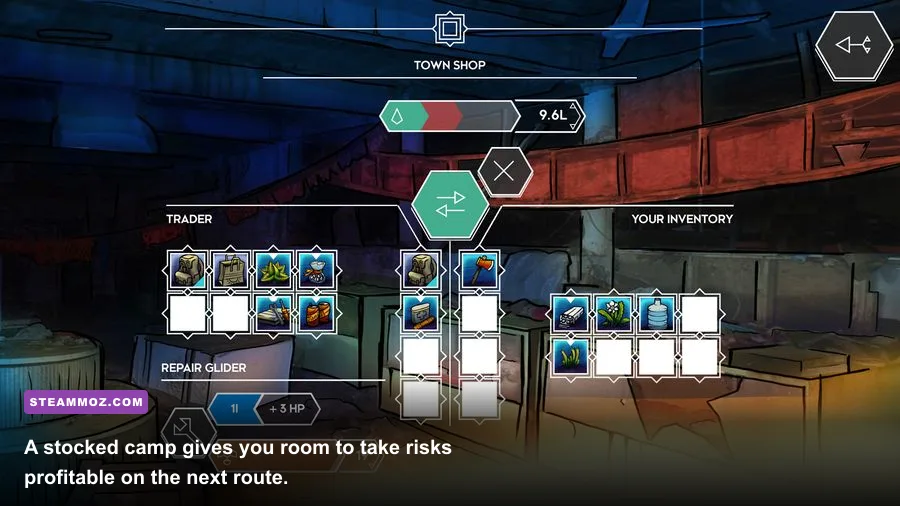
Your first objective is to create a repeatable route rather than chase the highest possible payout. At the beginning of a chapter, inspect every available path and mark the options that offer supplies, equipment, or a clear recovery opportunity. Avoid stacking multiple uncertain encounters before you know how much water the next travel segment will consume.
Step 1: Stabilize before exploring
Start with the obvious but frequently ignored rule: do not spend your opening money on a marginal item if Francisco or the cloud chaser is damaged. A repaired machine and a healthy party let you attempt another cloud run, which can generate several times the value of a single shop purchase. Your first shopping decision should improve the number of safe actions you can take, not simply increase your inventory count.
Step 2: Harvest clouds for efficiency, not perfection
During Amelia’s flying sections, take the safest cloud pickups first. The temptation is to chase every visible resource, but a missed pickup costs less than a collision or a damaged craft. Learn the movement rhythm of each cloud pattern, make short corrections, and leave the sequence with enough machine condition to justify the next run. If an aerial section becomes chaotic, secure the easy water and stop gambling.
Step 3: Take profitable encounters
Encounters are where your gold-per-minute improves, but only when you read the cost. Favor choices that trade a manageable amount of food, water, or health for equipment, multiple supplies, or a future advantage. Reject outcomes that provide a tiny immediate reward while adding a lingering penalty. A one-time coin payment is usually easier to recover from than reduced health before a long travel segment.
Step 4: Convert surplus into progression
Once you have your reserve, use surplus resources to explore side paths. This is where experience-like progression and better loot emerge. The best run is not the one with the most gold at one checkpoint; it is the one that reaches the next chapter with enough equipment and supplies to keep making optional decisions.
New players often overvalue the apparent safety of a direct route. Direct routes can be efficient, but they also leave you under-equipped if the next chapter begins with an expensive event. The better approach is to take one or two low-risk detours when your reserve is healthy, then return to the main path before your supplies fall into the danger zone.
Best cloud chaser upgrades for farming

Cloud-chaser upgrades are the closest thing Cloud Chasers has to a farming build. Prioritize anything that improves the reliability of Amelia’s runs: stronger survivability, better control, and increased harvesting efficiency. The exact shop inventory can vary, so don’t wait for a perfect upgrade name. Judge each option by whether it lets you return with more water while taking fewer risks.
| Upgrade type | Tier | Best use | Farming verdict |
|---|---|---|---|
| Cloud capacity | S-Tier | Long routes and chapter transitions | Highest priority when available |
| Flight control | S-Tier | Dense cloud patterns and hazard-heavy runs | Excellent because fewer mistakes preserve every future run |
| Craft durability | A-Tier | Repeated exploration and risky optional paths | Essential when the route offers valuable encounters |
| Harvesting efficiency | A-Tier | Gold-focused loops with frequent cloud sections | Strong long-term return, especially early |
| Pure convenience upgrades | B-Tier | Comfort and flexibility | Buy after survival and earning power are secure |
Capacity and control form the strongest combination. Capacity increases the reward ceiling, while control protects you from turning that ceiling into a repair bill. Durability is slightly weaker for a cautious player but becomes more valuable when you’re deliberately farming optional routes. If you must choose between a small capacity increase and a major control improvement, take control first. A theoretical larger haul means nothing if Amelia cannot finish the flight.
Do not build around a single lucky shop visit. The game’s changing encounters mean your upgrade plan needs a priority order, not a fixed shopping list. Keep a cash reserve for the next meaningful improvement, and avoid spending gold simply because the store has an item available. This is the same kind of discipline that makes the early economy in Din’s Curse manageable: survival infrastructure beats flashy short-term power.
Gold farming without killing the run

Gold farming in Cloud Chasers is a risk-management exercise. The most profitable loop is to harvest easy clouds, complete favorable encounters, sell or exchange low-priority loot when the opportunity is safe, and then spend the proceeds on upgrades that increase the next loop’s success rate. Farming becomes inefficient when you burn water and health to reach a reward that barely covers the recovery cost.
Use the three-wallet rule
Separate your money mentally into three wallets. The first is emergency cash for food, water, repairs, or a forced recovery decision. The second is upgrade cash for the next cloud-chaser improvement. The third is optional spending for risky encounters or convenience items. If your emergency wallet is empty, you are not rich, even if the visible gold counter looks impressive.
Farm at chapter boundaries
The safest farming windows appear before committing to a new chapter or after reaching a stable checkpoint. At those moments, you can evaluate your supplies and decide whether one more detour is affordable. Farming immediately before a major transition is especially useful because it lets you purchase an upgrade while still retaining a reserve for the unfamiliar route ahead.
Sell with a purpose
Never sell an item just to make the counter look better. Sell when the money completes a purchase that changes your expected survival rate. A weak item converted into half an important upgrade is productive; a weak item converted into a random consumable while your cloud chaser is already healthy is usually not. Keep unique or unusual items until you understand whether a later encounter can use them.
There is also a hidden gold multiplier in choosing better decisions. Every avoided repair, failed flight, and wasted food unit is currency you effectively kept. That is why patient play often out-earns aggressive play. A clean route with a modest payout can outperform a dangerous route with a large reward because the clean route leaves you ready to repeat the process.
If you enjoy games where route planning matters more than raw combat damage, compare this approach with the careful early decisions in Deponia’s progression guide. Cloud Chasers is harsher, but the same lesson applies: momentum is more valuable than a single jackpot.
Combat, health, and encounter decisions
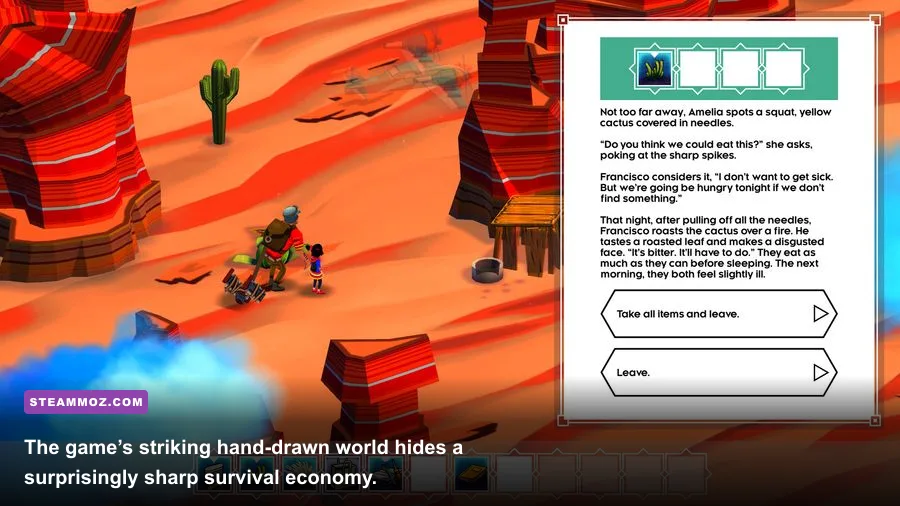
Cloud Chasers is not a combat-focused RPG, so “build” choices are mostly about preserving health and supplies through events. Francisco should enter optional encounters only when the party can absorb a bad result. A low-health character with no water reserve should take the safest resolution, even when the reward is poor. That choice may feel slow, but it protects the run’s accumulated value.
Use health as a budget, not a resource you casually refill later. If an encounter offers a reward for sacrificing health, compare that cost against the next known travel demand. Losing a small amount before a short, well-supplied section can be acceptable. Losing health before an uncertain route is how profitable runs turn into restart screens.
| Situation | Recommended decision | Reason | Common mistake |
|---|---|---|---|
| Full supplies, healthy party | Take one profitable optional encounter | You have room to absorb a bad roll | Taking every risky event in succession |
| Low water, damaged craft | Choose recovery or direct travel | Another cloud run may fail or cost more than it earns | Chasing a distant high-value reward |
| Strong upgrade within reach | Protect cash and sell only excess loot | The upgrade improves every later route | Spending on temporary comfort |
| Low health before a new chapter | Stock supplies and repair first | Unknown events punish depleted parties | Entering the chapter with zero reserve |
Watch the difference between a bad outcome and a bad decision. Procedural events can still hurt you when you do everything right, but you can control how often you expose yourself to that risk. This is why an experienced player may appear to gain gold slowly at first and then accelerate dramatically in the middle chapters. Their route is not luckier; it simply wastes fewer resources.
A repeatable five-chapter farming plan
For the opening chapter, prioritize learning the cloud-chaser movement and preserving enough water to test optional paths. Buy survival improvements before luxury items. In the second chapter, begin targeting encounters that return equipment or multiple supplies, and keep enough cash for a meaningful craft upgrade.
By the third chapter, your goal is consistency. Enter each route with a repair plan, a food reserve, and a clear reason for every detour. This is usually the best point to farm because your upgraded machine can produce better returns, while the later chapters have not yet reached their most punishing pressure.
The fourth chapter rewards restraint. Don’t confuse a larger possible payout with a better route. Take profitable clouds, avoid unnecessary damage, and preserve money for the final stretch. The fifth chapter is about conversion: turn your remaining supplies and equipment into safe progress rather than searching for one last speculative haul.
For another perspective on planning around progression systems, Steamoz’s Delta Zeal starting build guide is worth reading, even though its combat loop is completely different.
Before starting a serious run, check the official Steam page for Cloud Chasers – Journey of Hope for platform details and updates. The developer’s Blindflug Studios website is also the best place to confirm information about the studio and its catalog. The game’s official Steam community hub can help you compare route discoveries with other players, though always account for procedural variation before copying someone else’s exact path.
The short version is simple: protect water, upgrade the machine, and farm only when your reserve can absorb failure. Amelia’s safest cloud run is usually worth more than a reckless jackpot, and Francisco’s best decision is often the one that leaves the next route open. Play that way and your gold income, upgrade quality, and chapter progression will all improve together.