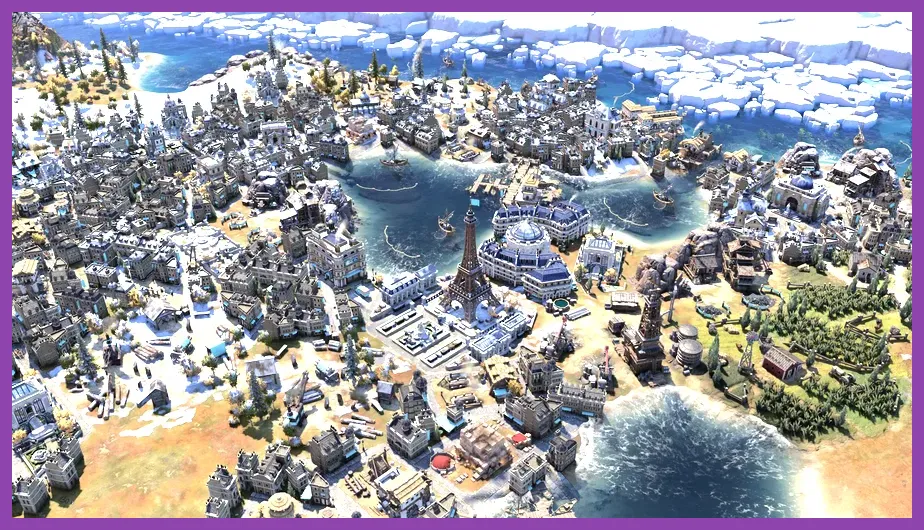
The best Civilization 7 endgame build is a flexible Modern Age empire with one specialized victory capital, three to five productive supporting cities, a protected gold reserve, and a combined-arms army. Prioritize Production first, then the yield that matches your victory: Science for the final research chain, Culture and Influence for heritage objectives, Gold for economic milestones, or Production and combat strength for a military finish. Do not spread every building across every settlement; concentrate your strongest bonuses where the last victory project will be completed.
This approach matters because Civilization 7 does not let an early civilization choice carry your entire campaign unchanged. Each Age asks you to plan around a new civilization, new technologies, new civics, and a different set of Legacy Paths. Your endgame is therefore decided before the Modern Age begins. A good Antiquity and Exploration foundation gives you the settlement capacity, infrastructure, gold, and diplomatic position needed to convert a lead into a win instead of stalling during the final turns.
The Core Modern Age Endgame Setup
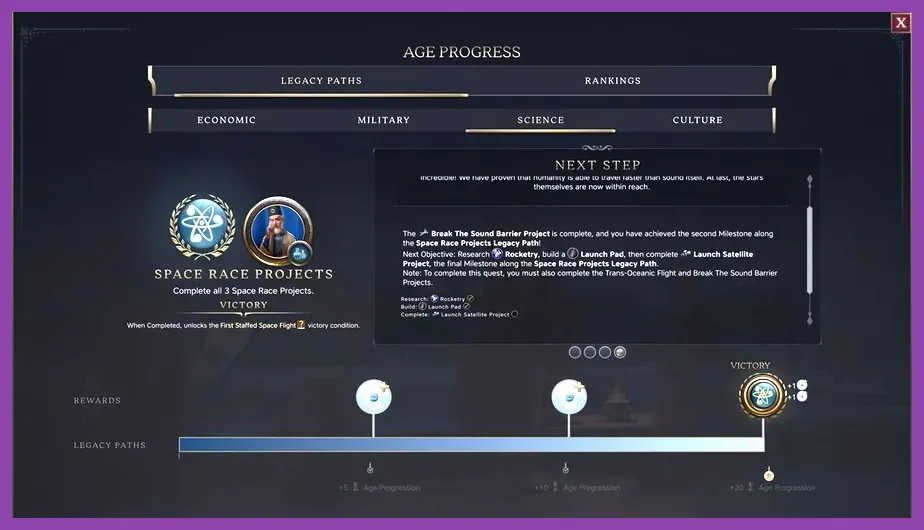
Start the Modern Age with a clear division of labor. Designate one city as your victory capital. It should have the highest Production or the best combination of Production, Science, Culture, and available specialists. This city completes your final victory project, produces advanced units, or rushes the key wonder and buildings that unlock your chosen Legacy Path.
- Victory capital: Place your best Production improvements and every relevant victory building here. Keep it inside your strongest defensive ring.
- Research city: Build the University, Research Lab, and other science infrastructure in the settlement with the best Science tiles and specialist potential.
- Industrial city: Concentrate Factory-style production buildings, resource improvements, and railway or logistics bonuses here. Use it to produce Infantry, Tanks, Rocket Artillery, and defensive units.
- Trade towns: Specialize several towns around Food, Gold, or resources that support your main cities. Their job is to feed specialists, provide yields, and maintain trade connections rather than build expensive armies.
- Border settlements: Fortify cities near rivals, narrow passes, and contested resources. A border city that survives prevents a surprise war from cancelling a victory project.
In the last third of the Age, stop founding settlements unless a location secures a critical strategic resource or blocks an enemy. New settlements require time to develop, while a mature city can finish a decisive building, unit, or project immediately. Move population and specialists toward your victory capital rather than trying to make every city equally strong.
Your government and policies should reinforce this specialization. Choose policies that increase Production, Science, Culture, Gold, or Influence in the cities actually performing the final objective. A flat empire-wide bonus is useful, but a focused bonus in a high-output city is often stronger. Keep enough Influence to respond to emergencies, diplomatic actions, and city-state or independent-power opportunities instead of spending every point as soon as it appears.
Before committing to the final build, check the official Civilization VII information hub and the current Steam page for patch notes and system changes. Balance updates can alter building yields, victory requirements, and the value of individual policies.
Best Science Endgame Build
Science is the cleanest endgame route when your empire already leads in research and can protect one high-Production city. The essential build is not simply a collection of Campuses. You need a research network, a project city, enough Gold to buy missing infrastructure, and an army that stops rivals from pillaging the districts that generate your advantage.
Science priorities
- Finish the Modern research chain: Select technologies that unlock the final science objective before taking optional military or wonder detours. Advanced military technologies still matter if a rival can invade, but do not delay the technologies that open your victory project.
- Build the science stack: Put a University and Research Lab in your best research city. Add science-boosting improvements and specialists there rather than scattering them across low-output settlements.
- Prepare the project capital: Your highest-Production city should already have its industrial buildings completed. If the science capital is also your production capital, protect it with walls, a garrison, and nearby modern units.
- Buy time with Gold: Maintain a reserve for emergency units, a rushed building, or a diplomatic response. Spending every coin on tile purchases can leave the capital unable to start the final project safely.
Use a three-layer research economy. Your main research city supplies the largest raw Science total, trade towns provide Food and Gold to support specialists, and the rest of the empire supplies Production and strategic resources. Avoid converting every settlement into a science city: a weak military and low Production increase the chance that a rival catches you before the final objective completes.
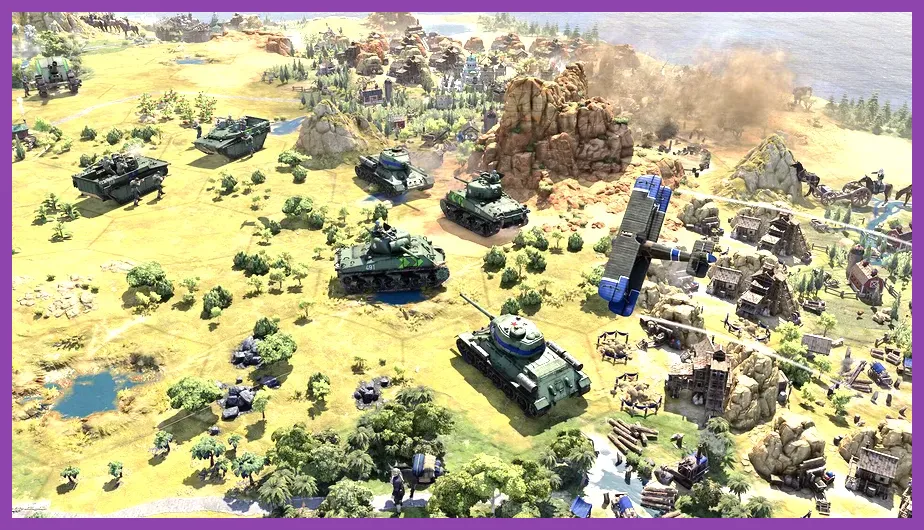
For combat, pair Infantry with Tanks or Modern Armor and Rocket Artillery. Infantry hold cities and defensive terrain, Tanks provide mobility and flanking pressure, and Rocket Artillery removes fortified targets before the melee attack. Jet Fighters are valuable when air power is available, especially against exposed siege units and enemy fleets, but they should support the ground army rather than replace it.
When the final science project becomes available, stop starting optional wonders. Queue the project in the city with the highest net Production, move builders and defensive units into position, and protect every road or route connecting it to the rest of the empire. If a rival is within striking distance, use your army to create a defensive screen rather than launching a distracting conquest. The winning move is usually completing the project uninterrupted, not taking one more enemy city.
Culture and Influence Endgame Build

The strongest Culture endgame build combines heritage output with Influence. Culture unlocks the civic and policy tools that accelerate the final path, while Influence lets you shape diplomatic decisions, secure independent powers, and prevent rivals from receiving the same advantages. A culture empire that ignores Production will still lose time building wonders, heritage structures, and defensive units.
Culture priorities
- Choose a heritage capital: Use the city with the best Culture tiles, wonders, and specialist capacity. Concentrate museums, monuments, great works, and other heritage-related infrastructure there.
- Maintain an Influence reserve: Save enough Influence to contest diplomatic actions, support favorable resolutions, and react to rival attempts to control independent powers. Do not treat Influence as a currency that must be spent every turn.
- Finish civic prerequisites: Research the civics that unlock your final cultural objective and its required buildings or projects. Avoid filling the queue with military civics that do not address an immediate threat.
- Use Production deliberately: Build wonders only when they advance your path or provide a major empire-wide benefit. A wonder that consumes twenty turns while your rival advances the objective is not automatically a good investment.
Culture needs a wider yield base than Science because your empire must often maintain diplomatic relationships while competing for heritage and influence. Assign Food-focused towns to support population, Gold-focused towns to fund purchases, and Production-focused cities to finish key wonders. Keep at least one modern army near cultural districts. Cultural capitals are attractive targets because pillaging them can erase several turns of progress.
Policy selection should favor Culture, Influence, specialist output, and Production toward wonders or heritage projects. If a policy offers a modest empire-wide culture increase but another improves the exact city completing your final objective, choose the focused option. Check the victory panel every few turns so you can identify whether the remaining requirement is a civic, a building, a wonder, a diplomatic condition, or a project.
Do not declare unnecessary wars while pursuing Culture. War exhaustion, damaged trade connections, and emergency Production costs can cancel a lead. If a rival is close to a Military or Economic victory, fight a short containment war against the specific city, resource, or route enabling that victory. Capture only what you can defend, then return to Culture and Influence production.
Military and Economic Endgame Builds
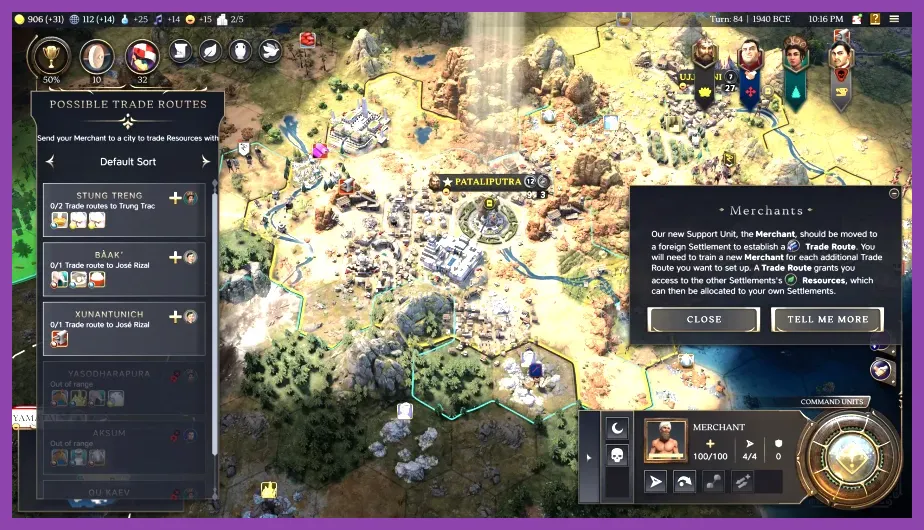
Military and Economic victories require opposite-looking economies, but both depend on the same foundation: high Production, reliable Gold, strategic resources, and secure routes. Military players convert Production into modern units and use Gold to reinforce the front. Economic players convert trade and resource control into wealth while maintaining enough force to protect their network.
Military build and combat rotation
Build a core army before the final Modern Age conflict begins. A practical formation includes Infantry for city capture and holding terrain, Tanks or Modern Armor for breakthroughs, Rocket Artillery for ranged damage, and air or naval support when the map requires it. Keep damaged units rotating backward instead of repeatedly attacking with units below full strength. The combat sequence is simple: artillery attacks first, aircraft or naval units soften exposed targets, Tanks exploit open terrain, and Infantry occupy the city or hold the captured position.
Target the opponent's production and research cities rather than spreading attacks across the entire empire. Pillage roads, resource improvements, and industrial improvements only when doing so slows reinforcement or removes a strategic resource. Bring Builders or equivalent improvement units behind the front so captured territory becomes useful quickly. A narrow, defended advance is stronger than a large occupation force that cannot be supplied.
Before declaring war, identify the enemy capital, second production center, strategic resources, and reinforcements route. Move units into staging positions, upgrade the army before the declaration, and keep Gold available for emergency purchases. Once a city falls, heal and reinforce before beginning the next siege unless the enemy has no meaningful counterattack. This rotation prevents the common late-game failure where a winning army loses its momentum to attrition.
Economic build and trade rotation
For an Economic finish, select your highest-Gold cities and connect them through trade routes. Build commercial and resource infrastructure first, then improve the settlements that supply the goods or strategic materials required by the economic objective. Towns are especially useful when they can specialize around Gold, Food, or a valuable resource while a nearby city handles expensive production.
Keep trade routes active even during diplomatic tension. Protect merchants and routes with naval escorts, border units, and friendly agreements where possible. If a rival repeatedly pillages your network, use the military build's containment principles: secure the key corridor, remove the attacking base, and restore routes immediately. Gold is only valuable when it arrives consistently enough to fund purchases, diplomacy, upgrades, and the final economic requirement.
Do not sacrifice all other yields for wealth. Maintain a research floor so the empire can unlock modern units and infrastructure, and maintain enough Culture to reach the civics that improve trade or complete the Legacy Path. The best economic empire is a rich, technologically current empire with a credible deterrent, not a collection of undefended markets.
Final 20-Turn Checklist
The final twenty turns should be managed like a production schedule. Open the victory panel and write down the exact remaining requirements. Then remove anything from city queues that does not contribute to that list, defense, or an urgent yield bottleneck.
- Lock the victory city: Confirm its highest-yield tiles, specialists, production buildings, and defensive status. Do not reassign citizens for a small Food gain if it adds turns to the final project.
- Count strategic resources: Check that your army has the resources required for upgrades and that a rival cannot cut the supply through a single raid.
- Protect the economy: Secure trade routes, repair pillaged improvements, and keep Gold for emergency purchases. A reserve is more useful than a final luxury improvement.
- Stop avoidable diplomacy: Do not accept obligations that open a new front or force a costly war. Use Influence for protection, leverage, and the exact diplomatic actions your victory requires.
- Watch rival progress: Check every opponent's Legacy Path and victory status. If one rival is close, redirect one or two cities to defense or targeted disruption instead of abandoning your own final objective.
- Finish safely: Move modern units around the victory capital, garrison vulnerable cities, and keep ranged units behind the front line. Begin the final project only when a surprise attack cannot immediately cancel it.
Performance problems can also cost an endgame if late turns become slow or battles stutter. For PC troubleshooting, Steamoz's guides to optimizing games on low-end PCs and reducing lag and low FPS cover the same practical steps: lower demanding effects, update drivers, close background applications, and verify game files.
If you need a simple default, use Science as the primary plan: one Research Lab city, one high-Production project city, three or four productive support settlements, a modern combined-arms army, and a protected Gold reserve. Pivot to Culture when your Influence and heritage output are already dominant, to Military when your Production and strategic resources clearly exceed a rival's, or to Economic when trade routes and resource control are producing a sustained Gold advantage. This focused approach is the most reliable Civilization 7 endgame build because it preserves flexibility without diluting the city that actually wins the game.
For official mechanics and updates, consult the official Civilization VII website, the 2K support page, and the current in-game victory panel before committing to a patch-sensitive project or policy choice.