The best Chivalry 2 Epic Edition weapons are the Greatsword, Messer, War Axe, Polehammer, and Heavy Mace, but the right pick depends on reach, class, and whether you're dueling or surviving a 64-player objective fight. This ranking focuses on real battlefield performance rather than training-yard damage charts: S-Tier weapons control space, punish mistakes, and still feel useful when the fight turns into complete medieval chaos.
One important clarification comes first. The Epic Edition doesn't create a separate competitive weapon pool or give its owner stronger damage values. Weapon access still follows the same class and subclass progression as the standard game, while cosmetic or bundle content doesn't change hitboxes, stamina, swing speed, or damage. If you're installing through the official Epic Games listing, expect the same combat sandbox used by every other Chivalry 2 player.
Chivalry 2 weapon tier list at a glance
This list assumes standard team objective play, where you need to handle mixed armor, crowded chokepoints, archers, and enemies attacking from several angles. A weapon that dominates a clean duel can be a poor choice beside a battering ram. I’m also ranking complete weapons, not just raw damage. Reach, cleave, recovery time, overhead threat, special attack utility, and class synergy all matter.
| Tier | Weapons | Why they rank here | Best users |
|---|---|---|---|
| S-Tier | Greatsword, Messer, War Axe, Polehammer, Heavy Mace | Excellent reach or damage with reliable crowd-control potential | Vanguard, Knight, Footman |
| A-Tier | Battle Axe, Halberd, Poleaxe, Executioner’s Axe, Longsword, Dane Axe | Powerful specialists with clearer weaknesses | Vanguard, Knight, Footman |
| B-Tier | Falchion, Sword, Mace, Morning Star, War Club, Spear | Strong in the right hands but less forgiving or more matchup-dependent | Footman, Knight, Vanguard |
| C-Tier | Hatchet, Dagger, Rapier, Short Sword, Knife | Fast and lethal in narrow situations, but poor reach or limited pressure | Ambusher, Man-at-Arms, Raider |
Tier placement isn't a verdict on fun. The Hatchet can shred an isolated target, and the Rapier can make a patient duelist miserable to fight. They simply demand cleaner footwork than the Greatsword or War Axe. For a first serious loadout, start with S-Tier or forgiving A-Tier choices, then move into faster weapons once you understand dragging, countering, and stamina management.

🎮 Chivalry 2 Epic Edition
Looking to experience this game? Grab your digital key directly on our store for $7.99.
View on Steammoz Store →S-Tier weapons and the classes that unlock them
Greatsword
The Greatsword is the most complete two-handed weapon in the game. Its long slash arcs let Vanguard punish clustered enemies, while heavy overheads threaten Knights and other armored targets. The weapon feels slow only when you swing it on autopilot. Use a short step forward during a slash, then drag the camera through the target so the hit lands late. That timing disrupts counters and makes the blade’s reach feel even longer.
Its biggest weakness is recovery. Missing a heavy slash in a tight corridor gives enemies a clean counterattack, so don't throw repeated horizontals into a shield wall. Pair it with Vanguard’s Raider subclass when you want two primary weapons, or use Devastator when you prefer a straightforward damage-focused frontline role. The Greatsword also benefits enormously from a teammate holding attention; you can attack around the edge of a melee scrum without standing in the center of it.
Messer
The Messer is a superb compromise between speed, reach, and damage. It has enough range to contest polearms and enough cleave to punish two enemies standing too close together. The slash is your bread-and-butter opener, but the real trick is mixing in overheads after an enemy begins expecting horizontal attacks. Its animations can look familiar to experienced players, so deliberate feints are more valuable than frantic combo spam.
Messer belongs near the top because it stays useful in almost every mode. In Team Objective, you can clear foot soldiers around a gate; in Team Deathmatch, its spacing makes it less awkward than the heaviest swords. It is especially comfortable on Vanguard, whose stamina and mobility let you keep the weapon at its preferred mid-range.
War Axe
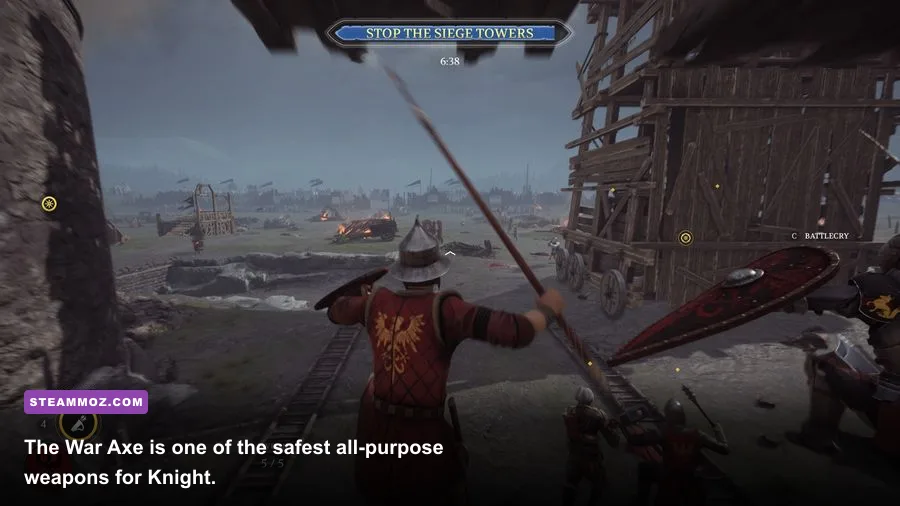
The War Axe is the Knight’s reliable answer to armored opponents. Its damage profile makes heavy attacks particularly unpleasant for enemy Knights, and the compact head is easier to use around doorways than a Greatsword. The short reach is the trade-off: you must step into danger to connect, and missed swings can leave you surrounded.
Play War Axe with the Guardian subclass when your team needs a shield-bearing objective anchor. Begin with a shield jab or kick against a blocking opponent, then use a slash or overhead before they recover. With Crusader, the same weapon becomes much more aggressive, especially when you’re comfortable using the special attack to catch targets who retreat from your normal range.
Polehammer
The Polehammer is the Footman’s armor-cracking specialist. It doesn't have the effortless cleave of the Greatsword, but its overheads and special attack are devastating when aimed at armored targets. Use it to punish Knights who assume their health pool makes them safe. The weapon also has enough reach to let you fight behind a teammate rather than taking every hit yourself.
The Polehammer rewards a simple rhythm: jab or slash to force a reaction, counter the return swing, then commit to an overhead when the opponent’s guard is open. Don't chase nimble Ambushers through open ground. Let them come through your range, where the weapon’s reach and heavy impact matter more than their speed.
Heavy Mace
The Heavy Mace is less glamorous than the Greatsword, but it is brutally dependable. It hits hard, works well against armored classes, and performs beautifully in cramped objective areas. The weapon's shorter range forces disciplined footwork, yet that limitation becomes an advantage inside stairwells, gates, and siege engines where long blades constantly collide with walls and allies.
| Weapon | Primary advantage | Main weakness | Recommended use |
|---|---|---|---|
| Greatsword | Long cleaving slashes | Slow recovery after misses | Vanguard frontline and multi-target pressure |
| Messer | Balanced reach and speed | Needs varied attack timing | All-purpose objective fighting |
| War Axe | Reliable armored-target damage | Shorter effective range | Knight duels and tight objectives |
| Polehammer | Heavy overhead and special attacks | Less comfortable against fast flankers | Footman anti-Knight pressure |
| Heavy Mace | Compact, hard-hitting attacks | Requires close positioning | Chokepoints and shield pushes |
A-Tier weapons are deadly with the right game plan
A-Tier doesn't mean second-rate. These weapons can outperform S-Tier picks when the map, class, or player suits them. The Battle Axe and Dane Axe are excellent Raider choices because the subclass can carry two primary weapons, letting you switch between a long-range threat and a compact finisher. The Battle Axe has fearsome damage and strong cleave, but its rhythm is easier to read than Messer pressure.
The Halberd and Poleaxe are excellent when your team fights in formation. Both let you poke around allies and punish enemies trying to walk through the frontline. They lose value when a fast enemy gets inside your preferred distance, so keep moving backward rather than repeatedly turning your camera in panic. A clean counter into a riposte buys the space needed to reset.
The Executioner’s Axe is a satisfying Vanguard choice for players who understand spacing. It can deliver huge punishment and clear groups, but the weapon's commitment is unforgiving. Use it after an ally lands a hit or when an opponent has just completed a missed heavy. Swinging first into a fresh enemy is how you donate health.
The Longsword is the best A-Tier teaching weapon. It has a clean moveset, respectable speed, and enough reach to teach proper counter timing without hiding mistakes behind giant hitboxes. Pick it if you’re learning the difference between a slash counter, a jab interrupt, and a dodge. The Dane Axe is more explosive, but the Longsword gives you better neutral control.
Weapon choice should also follow the objective. On Darkforest, long weapons help around open cart lanes, while compact axes and maces shine during the final village push. On Coxwell, expect packed infantry fights where cleave matters more than elegant dueling range. On Falmire or Rudhelm, defensive corridors make heavy weapons far more comfortable than they feel in open fields.
B-Tier and C-Tier picks still have a battlefield role
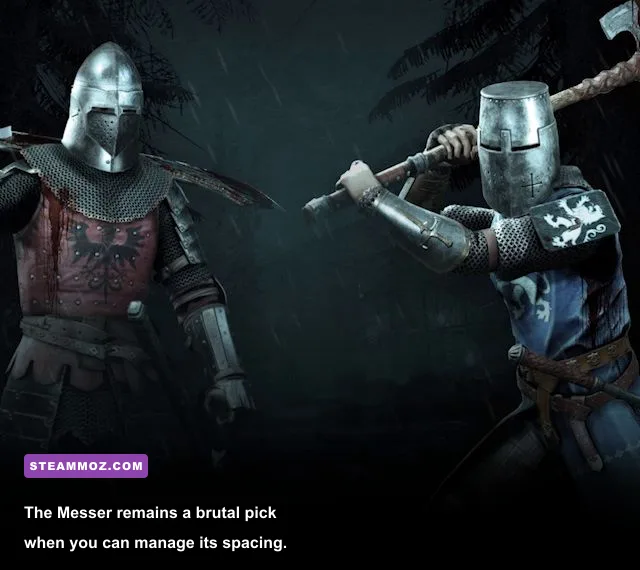
B-Tier weapons are often better for specialists than beginners. The Falchion and Sword offer quick one-handed pressure and pair naturally with Man-at-Arms, especially when a shield lets you survive long enough to exploit their speed. The Mace and Morning Star are excellent against armored targets, but their range and animation timing demand closer positioning than the Longsword.
The Spear can be nasty in a coordinated group because its reach lets you stab through gaps. It drops down the list because crowded fights can make its narrow attacks unreliable, and opponents who close distance can make the weapon feel helpless. Keep a sidearm ready, use horizontal movement, and never let a fast class dictate the range.
C-Tier weapons are not useless; they are opportunity weapons. The Ambusher’s Dagger, Short Sword, and Knife can erase wounded enemies from behind, but they struggle in a fair frontal duel. The Rapier is fast and excellent for players who constantly circle, jab, and counter, yet a single spacing error against a heavy axe can end the fight instantly. Hatchets are great finishers and throwable tools, but their short range makes them rough as a primary weapon in open ground.
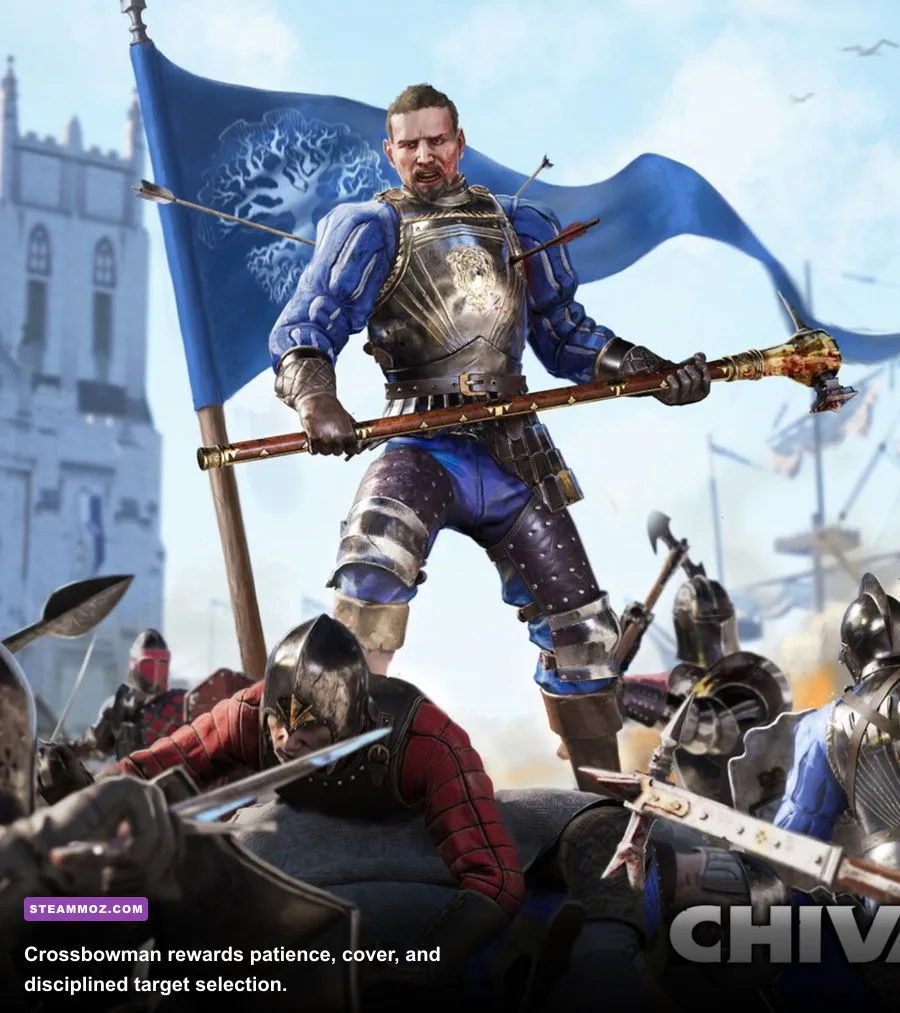
Archer equipment deserves a separate warning. The Crossbow is the stronger team-oriented ranged choice because it rewards deliberate shots against armored enemies and can pressure Knights from cover. The Longbow offers a more active firing rhythm, but you’ll need better target selection and positioning. Neither replaces a frontline weapon: once an enemy reaches you, switch quickly, jab to interrupt, and move toward teammates instead of trying to win a duel beside your own spawn.
| Weapon category | Best situation | Common mistake | Fix |
|---|---|---|---|
| One-handed sword | Shield fights and fast counters | Trading into heavy weapons | Use speed to flank, not to block damage |
| Blunt weapon | Fighting Knights and cramped areas | Chasing agile enemies | Hold a doorway and force them to enter range |
| Polearm | Second-line team formation | Allowing enemies inside the shaft | Backstep, jab, and reposition behind allies |
| Light weapon | Ambushes and wounded targets | Starting a frontal team fight | Attack from a side or rear angle |
| Ranged weapon | Covering objectives and armored targets | Standing alone after firing | Rotate positions and keep a melee escape route |
Best class and weapon combinations in Epic Edition
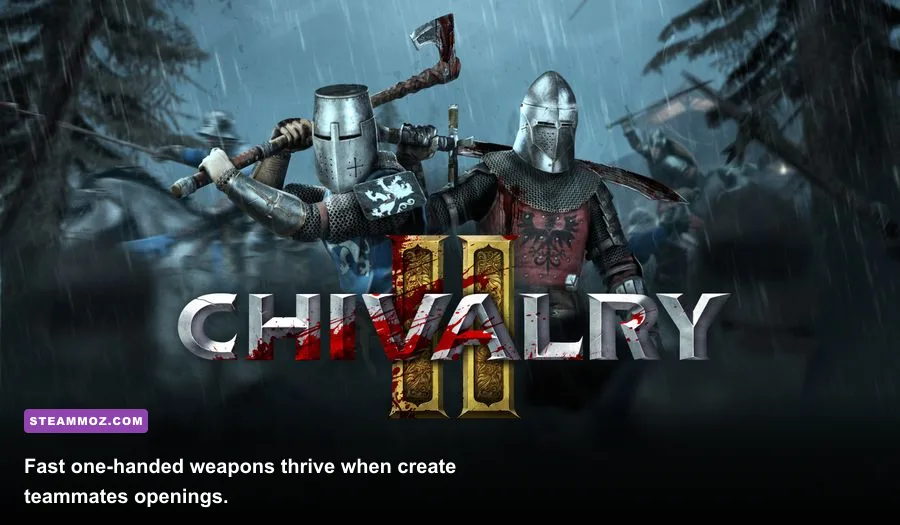
For the strongest all-round setup, choose Vanguard with Greatsword or Messer. Vanguard's health and mobility make it ideal for learning spacing, and Raider’s two-primary loadout gives you a practical answer to different ranges. Carry a long weapon for open fights and a Dane Axe or Battle Axe for tight spaces. Don't treat the second primary as decoration; swapping before entering a corridor is often more valuable than landing one extra hit.
Knight is the safest class for objective players. Guardian with War Axe or Heavy Mace can hold a capture point while teammates respawn, and the shield lets you absorb pressure that would delete a Vanguard. Crusader suits players who want more damage, with War Axe, Executioner’s Axe, or Messer as strong choices. Knight’s slower movement means you should rotate early rather than trying to catch every flanker.
Footman is the team-fight utility class. Polehammer and Poleaxe give Poleman a strong second-line identity, while Man-at-Arms with Sword, Falchion, or Mace thrives in close objective spaces. Use the healing banner where allies are actually fighting, not beside a quiet spawn. Your weapon matters, but keeping a group alive creates more kills than chasing one retreating enemy.
Archer should be selected with restraint. Crossbowman is the clearest anti-armor option, while Skirmisher can contribute more actively at medium range. The class is strongest when it supports a push and weakest when several teammates are already standing behind the same wall. If your team has enough ranged players, swap to a frontline class and create the pressure those archers need.
For broader build habits, Steamoz’s beginner build advice and survival-focused tips both reinforce the same useful principle: build around the situation, not a single favorite button.
Combat settings and mechanics that change weapon rankings
Chivalry 2 feels dramatically better at a stable frame rate. A 60 FPS baseline makes counter timing and target tracking much more consistent than a fluctuating 35–50 FPS experience. On PC, disable motion blur, use a field of view around 90–100, and lower shadows or effects before sacrificing resolution. Higher frames won’t make a weak counter magically work, but they reduce the visual delay that makes late attacks look impossible to read.
| Setting or habit | Recommended value | Gameplay impact | Why it matters |
|---|---|---|---|
| Frame rate | Stable 60 FPS or higher | Improves visual consistency | Helps read feints and release timing |
| Motion blur | Off | Sharper camera movement | Makes dragging and target swaps easier |
| Field of view | 90–100 | Wider peripheral awareness | Useful against flankers in 64-player battles |
| Shadows | Medium or low on weaker PCs | Often a meaningful FPS gain | Preserves responsiveness with limited visual loss |
| Attack habit | Counter before riposte | Reduces stamina loss | Stops you from blocking every incoming strike |
Learn the four essential attacks: slash, overhead, stab, and special. Slash is the broad crowd tool; overheads are excellent for armored targets and opponents hiding behind shields; stabs interrupt and reach through narrow gaps; specials are powerful but punishable. A counter requires matching the incoming attack direction, while a riposte follows a successful block or counter and gives you a faster response window. Kicks break a stationary block but lose to attacks, and jabs interrupt windups at close range.
That system explains why tier lists aren't pure damage rankings. Greatsword is S-Tier because its reach lets you choose safer counters. War Axe is S-Tier because it converts a successful opening into huge armored damage. Rapier is lower because its user must win more exchanges before its speed becomes decisive. The weapon amplifies your fundamentals; it doesn't replace them.
Use the official Steam community hub for patch discussions, and check Torn Banner’s official Chivalry 2 site for updates that may adjust balance or progression. The official support portal is also the right place for platform and account issues rather than relying on random forum fixes.
Finally, spend a few minutes in the tutorial before judging a weapon. Practice holding a counter, releasing late drags, and switching from slash to overhead when an enemy begins crouching or dodging. Then take your chosen loadout into a 40-player match before jumping into the largest maps. If you want more game-specific learning habits, Steamoz’s combat-focused review approach and PC performance troubleshooting guide are useful adjacent reads.
Bottom line: pick Greatsword or Messer for the safest high-ceiling start, War Axe or Heavy Mace if you prefer Knight, and Polehammer when you want to make enemy armor feel irrelevant. Once you’re consistently countering instead of panic-blocking, the A-Tier weapons open up quickly. The best Chivalry 2 Epic Edition equipment is ultimately the weapon whose range and tempo you can control under pressure.