
The fastest route through Chicken Assassin: Reloaded is not simply pushing the highest stage. Build Mean Mcallister around damage and attack speed, keep your weapon upgraded before chasing flashy gear, and farm the strongest stage you can clear repeatedly without dying. For most saves, that means a short, reliable combat loop beats a risky boss run: clear ordinary enemies, collect the gold, upgrade one damage source at a time, then return to progression only when the next stage can be beaten consistently.
This is a compact idle-action RPG, but its economy punishes unfocused spending. Gold disappears quickly when you upgrade weapons, skills, and equipment together. The winning approach is to treat every upgrade as a time-saving investment. If an upgrade does not reduce your average kill time or prevent a death, it can wait.
The leveling loop that actually works
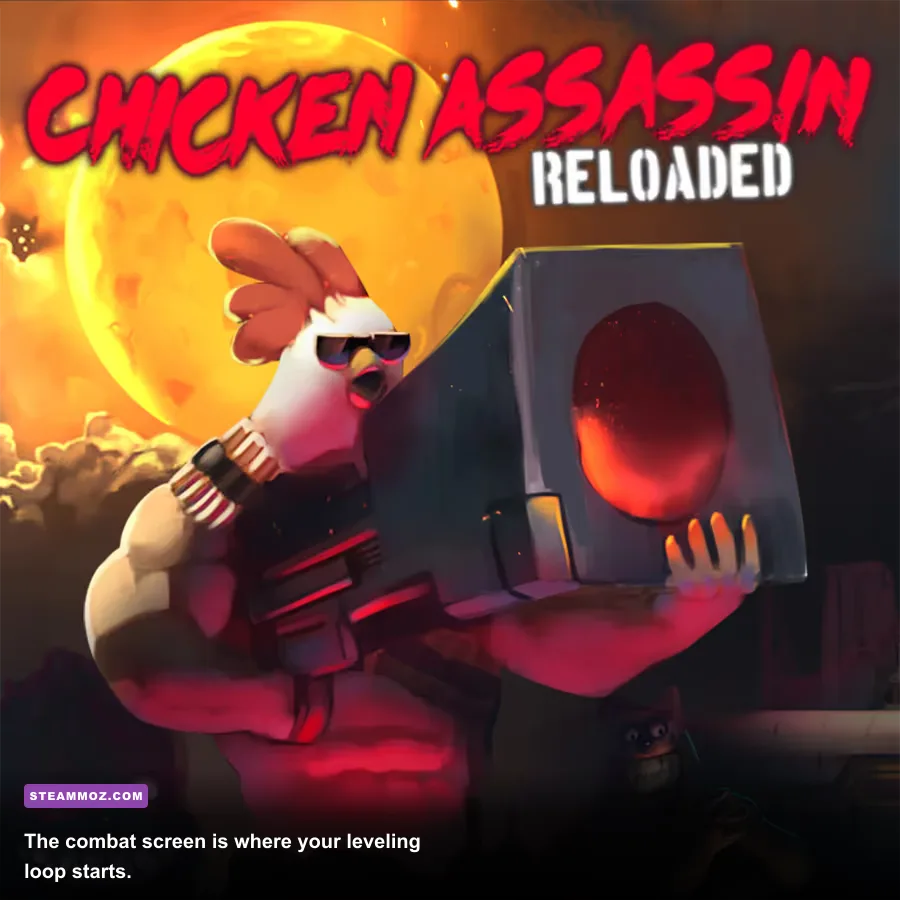
Chicken Assassin: Reloaded rewards repetition more than heroic one-off victories. Your experience comes from defeating enemies, while gold fuels the upgrades that make those defeats faster. That creates a simple progression test: measure how long one complete fight takes, then compare that time with the reward. A stage that grants slightly less gold but ends 30 percent faster is usually the better farm.
Start by clearing the newest normal encounter once. If Mean Mcallister survives with a comfortable health margin and the battle does not drag, repeat it several times. If you are forced to use recovery items or the fight becomes a long exchange of missed attacks, drop back one encounter. Farming below your maximum is not failure; it is how you build the damage needed to make the next jump permanent.
Use this three-step loop:
- Scout the next encounter. Fight it once to check incoming damage, enemy health, and clear time.
- Choose the best repeatable stage. Prefer the highest encounter that ends quickly and leaves enough health for the next run.
- Spend after a farming block. Complete several fights before opening the upgrade screen, so you can make one meaningful purchase instead of scattering small amounts of gold everywhere.
Experience is effectively wasted when you spend long periods dying. A dead run gives you no useful farming rhythm, while a stable stage continues generating both experience and gold. That principle also appears in other progression-heavy games, including our fast leveling and gold farming guide for Empires of the Undergrowth.

🎮 Chicken Assassin: Reloaded
Looking to experience this game? Grab your digital key directly on our store for $1.49.
View on Steammoz Store →Spend gold in the right order
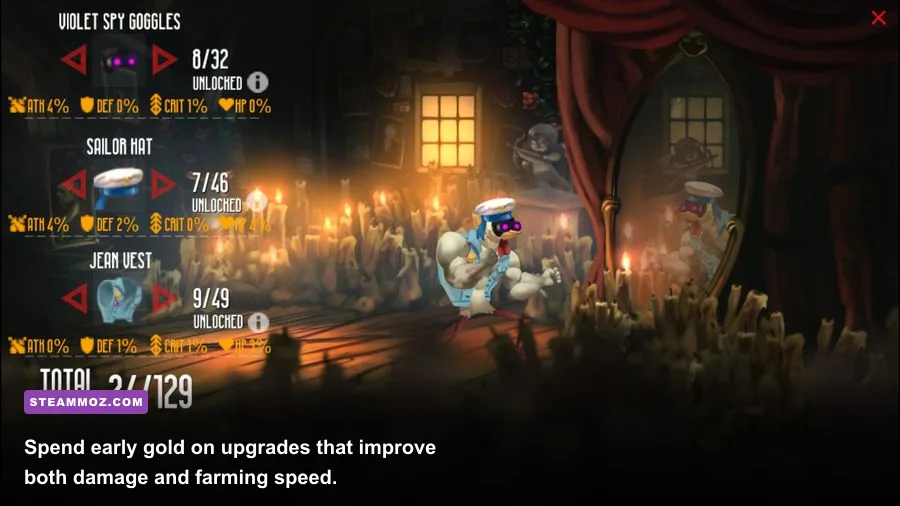
The early economy is where most new players lose time. Buying one level in every available category feels productive, but it rarely changes the combat math. Concentrate purchases until a clear breakpoint appears. In practical terms, your first gold should improve the statistic that affects every second of combat: weapon damage or attack speed. Health is valuable, but it should solve a survival problem rather than become your default purchase.
| Upgrade priority | Why it matters | When to buy it | Common mistake |
|---|---|---|---|
| Weapon damage | Raises the damage of every ordinary attack | First purchase after a farming block | Replacing a strong weapon too early |
| Attack speed | Shortens fights and improves sustained damage | When enemies survive several attack cycles | Ignoring speed because the number looks smaller |
| Active skill damage | Helps finish elites and bosses faster | After basic attacks are stable | Using it on weak trash enemies |
| Health or defense | Prevents deaths during progression checks | When survival, not damage, is the bottleneck | Buying defense before testing a damage upgrade |
| Utility upgrades | Improves convenience rather than immediate clear speed | After your core damage loop is established | Prioritizing comfort over progression |
Weapon damage and attack speed work together, but they do not have equal value at every point in the run. If enemies die in one or two hits, additional attack speed may do very little. If enemies consistently survive long enough to reach a second or third attack cycle, speed becomes much more attractive. Watch the battle rather than blindly following a tier list.
Keep a small reserve of gold for the next weapon or equipment threshold. Spending down to zero can leave you trapped in a slow farming stage. A good rule is to bank enough for one major upgrade, then spend only the amount above that reserve. The game is more forgiving when you preserve options.
Build Mean Mcallister for clear speed
There is no reason to build a farming character like a boss-only tank. Your regular route contains far more ordinary encounters than bosses, so the best general setup emphasizes fast basic attacks, dependable weapon damage, and one active skill that can erase an elite before it extends the fight.
Early game priorities
Use the strongest available weapon rather than holding gold for a perfect replacement. A modest weapon upgrade that saves several seconds per fight pays itself back quickly. Put the first skill investments into the attack or damage option that can be activated frequently. Avoid spending heavily on a long-cooldown burst skill while ordinary enemies still die quickly without it.
Mid-game priorities
Once enemies survive multiple hits, attack speed becomes a major part of your build. Pair it with weapon damage instead of choosing one statistic exclusively. The goal is to compress the entire fight: faster attacks reduce incoming damage, speed up experience collection, and increase gold earned per minute.
Boss-ready adjustment
Before a boss attempt, shift one or two purchases toward health or defense only if the boss is killing you after you have already dealt meaningful damage. If the boss remains near full health when Mean Mcallister falls, defensive spending will not fix the problem; return to farming and increase offense first.
| Build phase | Core stats | Skill approach | Best use |
|---|---|---|---|
| Early farming | Weapon damage, basic attack speed | Frequent low-cost attack skill | Fast ordinary encounters |
| Mid-game push | Attack speed, weapon damage | Attack skill plus elite finisher | Stages where enemies survive several hits |
| Boss check | Damage first, health if necessary | Save burst for the boss window | Short, repeatable boss attempts |
| Gold farming | Clear speed over maximum defense | Use skills only on dangerous targets | Highest stable gold-per-minute stage |
For a useful comparison, our beginner build breakdown for Dungeons 2 follows the same principle: pick a core that improves the majority of encounters, not a flashy setup designed for one perfect fight.
Gold farming without wasting your time
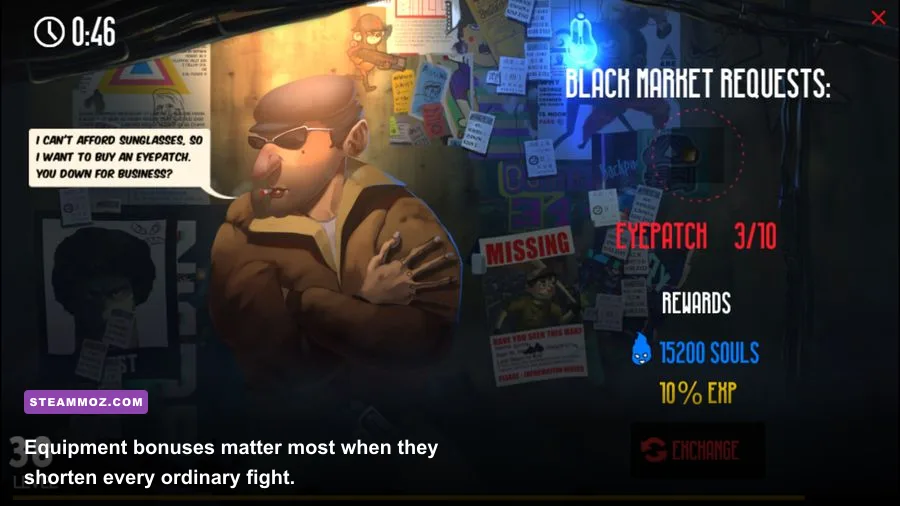
Gold-per-minute is the metric that matters. The displayed reward is only half the equation; the other half is how quickly you can start the next encounter. A stage paying 100 gold in 20 seconds produces a better farming rhythm than a stage paying 150 gold in 50 seconds. Include loading, menu time, healing, and failed attempts when you compare routes.
Run a simple test. Farm one encounter for five minutes, record the gold gained, then test the previous stage for the same amount of time. Repeat the better route once after buying an upgrade. If the upgrade makes the newer stage faster, stay there. If not, the older stage remains your income engine.
- Farm normal enemies for dependable income. Their rewards are predictable and the fights rarely interrupt your rhythm.
- Use elites as progress checks. They can be worthwhile, but only when their extra health does not double your clear time.
- Do not force bosses for gold. Bosses are progression gates, not automatically the best farming targets.
- Spend in batches. One large upgrade usually changes your clear time more than several unrelated minor upgrades.
- Bank before a major purchase. Avoid ending a run with too little gold to improve the stat that is holding you back.
Equipment should be judged by its effect on the loop, not by rarity alone. A lower-level item with damage or speed that improves every fight can outperform a defensive item that only helps during a boss. Keep older gear until you have tested the replacement for several encounters.
Boss attempts and progression checks

Bosses in a farming game are tests of efficiency as much as power. Enter with a full health bar, your active skill ready, and enough gold already spent to make the attempt meaningful. Do not burn your strongest ability on the last ordinary enemy before the boss. That is free damage you have thrown away before the fight begins.
Watch the boss battle in three sections. During the opening, learn the attack rhythm and confirm whether your basic damage is sufficient. In the middle, use your active skill when the boss has committed to an attack animation or when an elite-style defense window ends. Near the finish, avoid greedy damage if one more hit could kill Mean Mcallister; surviving preserves the value of the entire run.
| Progression problem | What it usually means | Best response | Do not do this |
|---|---|---|---|
| Ordinary enemies take too long | Offense is below the farming breakpoint | Upgrade weapon damage or attack speed | Buy defense first |
| You die early | Health or defense is genuinely too low | Add survival after checking offense | Repeat the same failed attempt |
| Boss is nearly defeated | A small damage or health increase may finish it | Farm one short stage and retry | Overhaul the entire build |
| Boss remains healthy | Your damage threshold is far away | Return to a faster gold route | Sink all gold into recovery |
Take screenshots or note your best weapon and stage before experimenting. That sounds excessive for a small Steam RPG, but it stops unlucky gear swaps from sending you backward. Our hidden-rewards guide for Everspace 2 makes a similar point: progression becomes much easier when you track what actually changed instead of trusting a single impressive number.
Performance settings and practical cleanup
Chicken Assassin: Reloaded is not a demanding modern 3D release, so performance problems are usually caused by background applications, display scaling, overlays, or an unstable resolution rather than a weak graphics card. Start with the game's native display resolution and use fullscreen if windowed mode introduces input delay. If the game stutters, disable Steam Overlay and browser overlays before lowering visual quality.
| Setting or check | Recommended value | Expected impact | Why it helps |
|---|---|---|---|
| Display mode | Fullscreen | Low | Can reduce focus and presentation issues |
| Resolution | Native monitor resolution | Low to moderate | Avoids blurry scaling and unnecessary rendering changes |
| Steam Overlay | Disable for testing | Low | Rules out overlay-related hitching |
| Background apps | Close browsers and launchers | Moderate on older PCs | Frees memory and CPU time |
| Frame pacing | Use a stable system refresh target | Low | Smoother input matters more than peak FPS |
Check the official Chicken Assassin: Reloaded Steam page for current files, announcements, and system information. The Steam Community hub is useful for comparing version-specific quirks, while the official Steam discussions can help identify a save or display issue before you start reinstalling.
Finally, keep your expectations sensible. This is not a game where perfect micro-optimization replaces upgrades. The biggest gains come from choosing a repeatable stage, concentrating gold into clear-speed improvements, and refusing to confuse the highest unlocked encounter with the best farm. If you keep that loop intact, Mean Mcallister's level climbs quickly, the next weapon arrives sooner, and even the game's grind starts feeling surprisingly fair.
For more progression-focused reading, see Steamoz's Dins Curse survival tips and our Dungeon Siege progression retrospective.