
Chef Life: A Restaurant Simulator doesn’t have a secret open-world map packed with locked chests. Its hidden rewards are tucked into optional missions, supplier visits, recipe milestones, kitchen upgrades, and special requests that are easy to ignore while you rush toward the next service. This guide maps the meaningful locations, explains what each one can unlock, and shows how to avoid wasting days on rewards that only appear after the right campaign trigger.
That distinction matters. Searching every corner of the restaurant won’t uncover a hidden room, and there’s no conventional collectible list comparable to an action RPG. Instead, Chef Life hides progression behind menus and calendar events. Some rewards appear only after you speak to the right character, while others are tied to ingredient quality, dish mastery, or your Michelin Guide rating. If you’re missing a recipe or upgrade, the answer is usually a neglected activity rather than a secret button.

🎮 Get Chef Life: A Restaurant Simulator
Ready to dive in? Grab your copy today for just $4.49.
Check OfferWhere Chef Life’s hidden rewards actually are

The first place to check is the world map between services. The map is your campaign hub, and its destinations become more useful as your restaurant develops. Your restaurant handles preparation and service, the market supplies fresh ingredients, suppliers provide specific product categories, and the workshop expands your kitchen. Depending on your campaign progress and installed DLC, additional destinations or requests may appear as new icons rather than as permanent locations from the beginning.
Open the map after every important campaign conversation. A new visit can be available even when the main story marker points somewhere else. This is especially easy to miss after completing a themed menu or raising your restaurant’s reputation. The game often treats these events as optional errands, but their rewards can include new recipes, ingredients, equipment choices, or access to a higher-quality version of a product.
There are four reward categories worth tracking:
- Recipe rewards: new dishes, preparation techniques, or menu options gained from campaign characters and culinary objectives.
- Ingredient rewards: access to better-quality products or new ingredient types from markets, suppliers, and events.
- Equipment rewards: workstation options that improve preparation speed, capacity, or the quality ceiling of a dish.
- Progression rewards: reputation, Michelin Guide progress, staff development, and new activities rather than a physical item.
For a useful second opinion on hidden-progression hunting, compare the structure with our Dragonkin hidden rewards guide. Chef Life is far less combat-driven, but the same rule applies: check progression gates before assuming an item is bugged or permanently missable.
| Location or activity | What to check | Typical reward | Best time to revisit |
|---|---|---|---|
| Restaurant | Campaign dialogue, staff tasks, recipe objectives | Recipes, reputation, service improvements | After each story milestone |
| Market | Available product quality and rotating stock | Fresh ingredients and stronger dish potential | Before a themed menu |
| Suppliers | New categories and premium versions | Special ingredients and menu flexibility | When a recipe asks for an unfamiliar product |
| Workshop | Unlocked kitchen stations and equipment options | Preparation capacity and quality upgrades | Before investing in a new menu |
| Special events | Optional objectives and guest requests | Recipes, money, reputation, and Michelin progress | Before ending the current day |
🎮 Chef Life: A Restaurant Simulator
Looking to experience this game? Grab your digital key directly on our store for $4.49.
View on Steammoz Store →Restaurant secrets most players miss
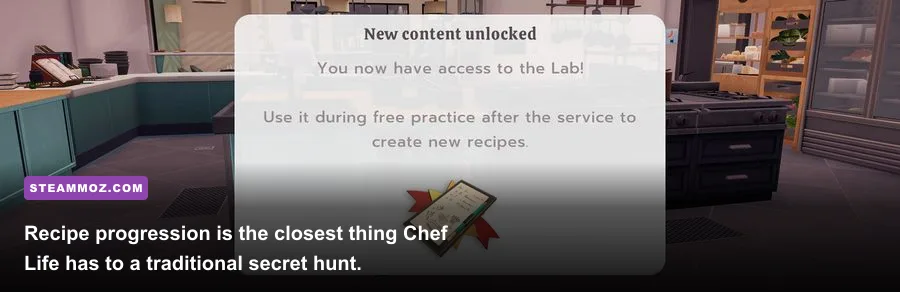
Your restaurant is more than a service stage. It is also the game’s most reliable reward filter. Walk through the kitchen before opening and inspect every workstation. A new recipe may require a particular preparation station, and an equipment upgrade can remain invisible until the relevant campaign objective has been completed. Buying furniture or decorative items won’t substitute for functional equipment, so prioritize stations that support your intended menu.
Pay close attention to staff conversations. Characters don’t just deliver flavor text; they often point toward the next unlock condition. A request involving a cuisine, ingredient, or technique can open a follow-up activity after you finish the service successfully. If a staff member mentions a new product, don’t immediately skip the conversation. Return to the map and check whether a supplier or market destination has appeared.
The restaurant also hides rewards behind quality consistency. A single excellent plate may not be enough. Repeatedly serving dishes with clean preparation, correct cooking, seasoning, and plating raises the value of your menu and helps unlock later objectives. Chef Life grades the complete dish, so rushing the final presentation can undermine a recipe even when the cooking stage was perfect.
Use the pause between services to review your recipe book and dish requirements. Ingredients with different quality levels can change the ceiling of a dish, while missing equipment can prevent you from reaching its best result. This is why a recipe that looks “unlocked” may still feel incomplete: unlocking the dish and mastering its quality are separate progression steps.
The dialogue reset trick
If a location seems empty, finish the current day properly, save, and check the map after the next campaign update. Don’t repeatedly reload the same service expecting an icon to appear. Most event-based rewards are triggered by a completed objective or day transition, not by entering and leaving the destination several times.
Also avoid ending a day before checking optional requests. Some errands are presented alongside the main objective and are easy to treat as disposable. They may not give a flashy item immediately, but the reputation they provide can be the requirement for a later recipe or equipment tier.
Market and supplier rewards decoded
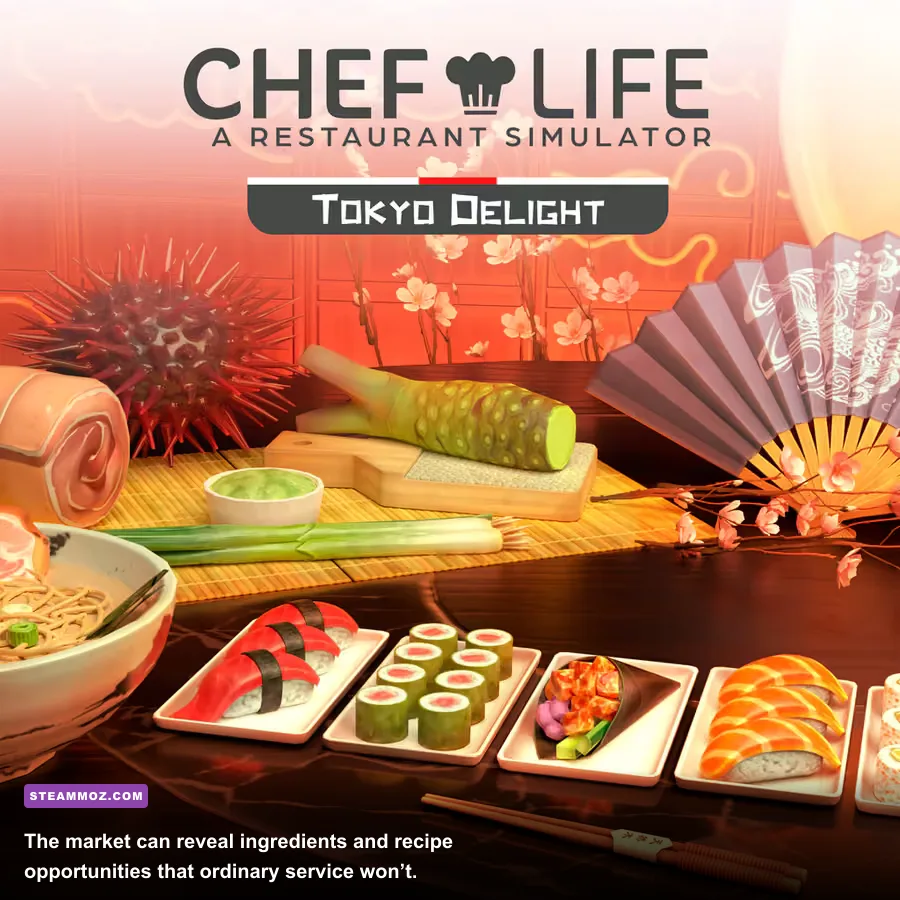
The market and suppliers serve different purposes, and confusing them is a common reason players think they’ve missed a secret location. The market is where you inspect currently available fresh products and make short-term purchasing decisions. Suppliers are more closely tied to product access and campaign progression. When a dish calls for an ingredient you’ve never seen, check both rather than assuming the recipe is locked forever.
Ingredient quality matters because it affects the result you can achieve, not merely the appearance of your pantry. A premium product gives you more room to recover from a slightly imperfect preparation or seasoning step. That doesn’t mean expensive ingredients automatically produce a top score. Overcooking, poor plating, or an unbalanced flavor profile can still drag the dish down.
Before a special menu, make a shopping list from the recipe book. Buy enough for practice and service, but don’t spend the entire restaurant budget chasing the highest quality tier. Chef Life’s progression curve rewards a stable menu more than one extravagant dish. A dependable starter, main course, and dessert can generate the money and reputation needed to reach the next hidden activity.
| Problem | Location to inspect first | What usually fixes it | Common mistake |
|---|---|---|---|
| Recipe requests an unknown ingredient | Supplier, then market | Complete the next campaign or supplier objective | Assuming the recipe is permanently missable |
| Dish quality stops improving | Workshop and recipe book | Upgrade the required workstation and use better stock | Buying decoration instead of equipment |
| Optional event never appears | Restaurant dialogue and map | Finish the current day and revisit after the next milestone | Reloading the same day repeatedly |
| Menu is profitable but earns weak reviews | Restaurant service | Improve seasoning, timing, and plating consistency | Blaming ingredient quality for execution errors |
For a broader look at planning routes and resource efficiency, our fast leveling and gold route guide covers the same basic lesson in a different genre: efficiency comes from sequencing objectives, not simply spending faster.
How to unlock recipe and equipment milestones
Recipe unlocks usually come from three overlapping systems: campaign progress, optional requests, and cooking performance. Advance the main story far enough to open the relevant activity, complete the optional request when it appears, and then cook the resulting dish instead of leaving it in the book. That final step helps reveal whether the recipe is fully usable or still needs a station, ingredient, or technique.
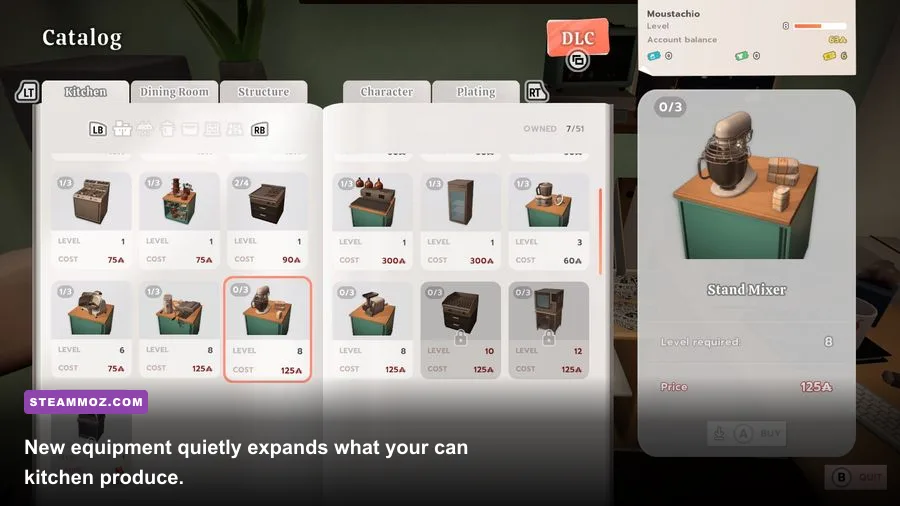
Equipment progression works in a similar way. The workshop is the key destination, but not every upgrade is available at once. If an appliance or station is missing, inspect the workshop after a major story objective, after improving the restaurant’s rating, and after completing a request tied to the relevant cuisine. The game’s menus can make this feel random, but the unlocks are generally progression-gated.
Spend early money on bottlenecks. A faster or more capable preparation station is usually more valuable than a cosmetic upgrade when you’re trying to reach hidden rewards. Prioritize equipment that reduces the number of tasks competing for your attention during service. Better workflow means fewer rushed actions, and fewer rushed actions mean higher-quality dishes, stronger reviews, and faster reputation growth.
Keep one manageable menu while testing a new recipe. Adding several unfamiliar dishes at once creates a timing problem rather than a discovery advantage. Practice the new preparation chain during a quiet service, identify where the dish fails, then upgrade only the station responsible for that failure. This turns each hidden reward into a practical improvement instead of another expensive obligation.
Optional objectives and Michelin rewards
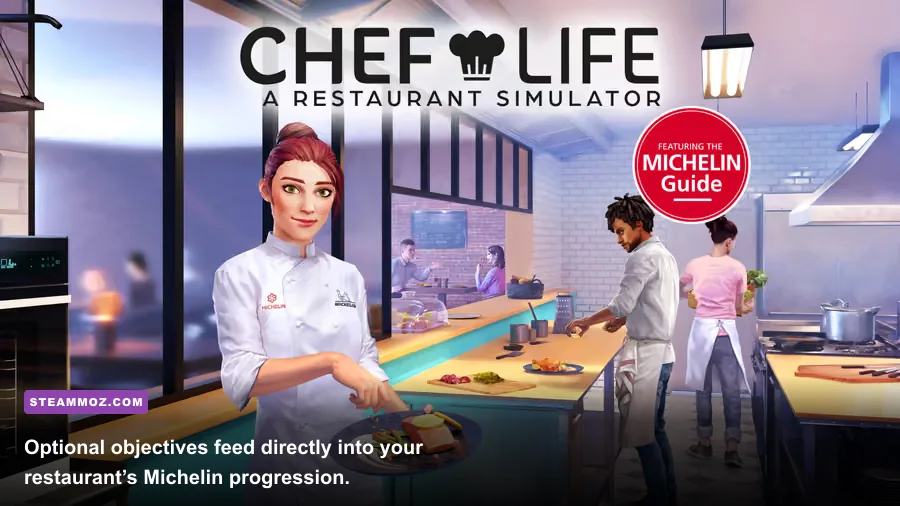
Some of Chef Life’s most important hidden rewards are invisible because they arrive as rating progress. Michelin Guide objectives, guest satisfaction, and service quality can unlock content without placing an obvious item in your inventory. Treat every optional objective as a potential key. Serving a requested dish, maintaining a clean service, or meeting a menu condition may be more valuable than simply completing the headline goal.
Read the objective wording carefully. “Prepare” may not mean “serve,” and “serve” may not mean “serve once.” If the game asks for a quality threshold, ingredient substitution or rushed plating can invalidate the attempt. Prepare mise en place before opening, assign staff sensibly, and leave enough time for the final plate. The reward is tied to the completed condition, not to how close you came.
Michelin progress also rewards consistency. A spectacular plate surrounded by mediocre service won’t carry the whole restaurant. Build a menu that your current kitchen can execute repeatedly. Once your stations and staff can handle it comfortably, add the next ambitious dish. That progression path is slower than chasing every new recipe, but it exposes more optional events and protects your finances.
Keep manual saves before major events when possible. Chef Life is not designed around a traditional missable-collectible system, but a failed optional objective can delay a reward until another campaign cycle. A backup lets you test a menu without sacrificing the entire day’s progress.
A clean route for finding every hidden reward
Use this route whenever you reach a new chapter. First, speak to every available character in the restaurant. Second, open the recipe book and mark dishes containing unfamiliar ingredients or techniques. Third, visit the market and each unlocked supplier. Fourth, inspect the workshop for functional equipment. Finally, check the map again before beginning the next service and complete any optional request you can afford.
- Finish the current service: don’t abandon a day while an optional objective is still active.
- Review dialogue: talk to staff and campaign characters after the service result is recorded.
- Check the recipe book: identify missing ingredients, stations, and quality requirements.
- Visit the market and suppliers: compare product access before spending restaurant funds.
- Inspect the workshop: buy upgrades that solve a real preparation or service bottleneck.
- Reopen the map: new events often appear after the day transition rather than immediately.
- Test the reward: cook the new dish or use the new equipment so you know the unlock is active.
There’s one final myth worth clearing up: Chef Life does not currently hide a set of universal secret rooms, developer chests, or collectible tokens across every restaurant map. If a guide promises a fixed list of ten hidden buildings, treat it skeptically. Content can also vary with platform updates and DLC, so check the official Steam listing for the version and add-ons you own.
The safest reference points are the official NACON game page and Cyanide Studio. For performance troubleshooting on PC, our PC fixes guide has useful general advice, while our Everspace 2 secret-location guide shows what a genuine collectible map looks like compared with Chef Life’s event-driven design.
Follow the restaurant, market, supplier, workshop, and optional-objective loop, and you’ll uncover virtually every meaningful hidden reward without burning money or replaying random days. Chef Life’s secrets aren’t hidden behind walls; they’re hidden behind the next conversation, the next quality milestone, and the discipline to check the map before you close the kitchen.