
Chef Life: A Restaurant Simulator doesn’t have weapons, weapon damage, or combat tiers. The useful version of this search is a kitchen equipment tier list: knives and prep tools sit at the top for early efficiency, while the best ovens, stoves, mixers, and specialty appliances become essential once your menu and service load expand. Upgrade for shorter preparation chains and better workflow, not for a bigger-looking kitchen.
That distinction matters because equipment in Chef Life affects how quickly you complete recipes and how many tasks you can juggle before service collapses. The game’s menus don’t present a universal attack-style stat sheet, so there’s no honest “+20% damage” ranking to copy. Instead, this ranking weighs three practical factors: how often an item is used, how many recipes it supports, and how much walking or repeated interaction it removes from a service.
For the official baseline, check the Chef Life Steam page, the publisher’s Chef Life page, and Cyanide’s official site. Those sources are useful for feature details, but the tier list below is built around actual restaurant play rather than marketing language.

🎮 Get Chef Life: A Restaurant Simulator
Ready to dive in? Grab your copy today for just $4.49.
Check OfferChef Life equipment tier list at a glance

The strongest equipment is the gear you touch constantly. A better knife or core cooking station improves nearly every service, while a niche appliance can sit unused if your current recipes don’t require it. That’s why the S-tier list is deliberately practical rather than glamorous.
| Tier | Equipment category | Why it ranks here | Best timing |
|---|---|---|---|
| S-Tier | Chef’s knife and primary prep tools | Used across a wide range of ingredients and recipes; reduces the friction of repeated preparation | First meaningful upgrade cycle |
| S-Tier | Stove, frying pan, and saucepan setup | Supports sauces, reductions, sautéing, and many core dishes during every service | As soon as the menu adds multiple hot dishes |
| A-Tier | Oven | Opens dependable baking and roasting capacity, but matters most when the menu actually uses it | Before adding oven-heavy recipes |
| A-Tier | Mandoline and precision prep tools | Excellent for repeated vegetable preparation and consistency, though less universal than a knife | When prep queues become the bottleneck |
| B-Tier | Mixer | Strong for pastry and dough workflows, but low value on menus built around sauces or pan cooking | After committing to pastry recipes |
| B-Tier | Blender and food processor | Useful for soups, purées, and sauces, but often specialized rather than universally essential | When several menu items share blended components |
| C-Tier | Specialty equipment with one narrow use | Can be valuable for a specific dish, but ties up money and space if bought too early | Only after confirming recipe demand |
The important caveat is that tiers are menu-dependent. An oven is A-tier for a restaurant selling roasted dishes and pastries, but it’s closer to B-tier if your current menu revolves around pans and saucepans. Likewise, a mixer jumps from B to A when your restaurant is built around dough-based recipes.
🎮 Chef Life: A Restaurant Simulator
Looking to experience this game? Grab your digital key directly on our store for $4.49.
View on Steammoz Store →S-tier gear you should prioritize first
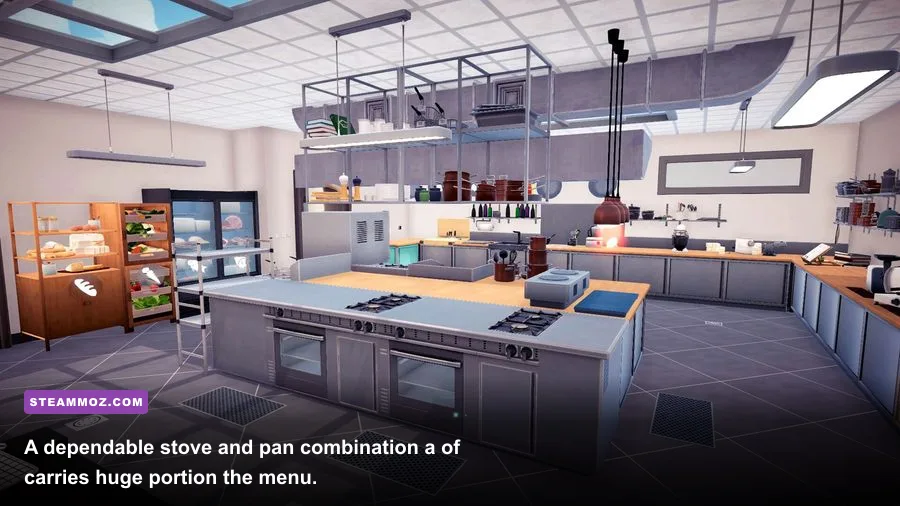
Chef’s knife and preparation equipment
The knife is the closest thing Chef Life has to a universal weapon. You’ll use it for cutting, trimming, slicing, and other ingredient preparation steps, so improvements here echo through almost every recipe. A knife upgrade won’t magically finish a dish for you, but it makes the most repetitive part of the game less punishing and helps you reach the cooking stage before a service queue gets ugly.
Prioritize knife improvements before buying a beautiful but rarely used appliance. This is especially true early on, when your budget is tight and your kitchen is compact. Keep your knife station close to storage and the main cooking area. The ideal route is ingredient pickup, prep, then stove or oven without crossing the full room. A few saved steps per plate become a serious time advantage across a full service.
Mandolines and similar precision tools are also excellent once vegetable-heavy recipes enter your rotation. Their value comes from consistency and reduced repetition, not raw speed alone. If you’re repeatedly preparing the same garnish or sliced component, the tool pays for itself in attention saved. If the menu uses one such ingredient once per evening, leave the purchase for later.
Stove, frying pan, and saucepan
Your primary hot-food station deserves S-tier status because it handles the restaurant’s most common live tasks: sautéing, boiling, reducing, and preparing sauces. A frying pan is a workhorse for ingredients that need direct heat, while a saucepan supports liquids and reductions. Together, they create a flexible core that can carry a menu before you can afford a room full of specialized stations.
Don’t judge this setup by the number of recipes it unlocks on paper. Judge it by service overlap. If two or three dishes all ask you to cook components on the stove, a dependable hot station prevents the classic failure where one delayed sauce holds up an otherwise finished plate. Start sauces early, keep an eye on cooking stages, and avoid wandering off to begin a low-priority prep task while a pan is reaching a critical point.
Players coming from combat games often search for a “weapon” that gives them a universal advantage. The closest equivalent is a reliable hot station paired with a short menu. It improves timing, reduces panic, and lets you repeat a successful service instead of gambling on too many simultaneous techniques.
A-tier equipment for expanding menus
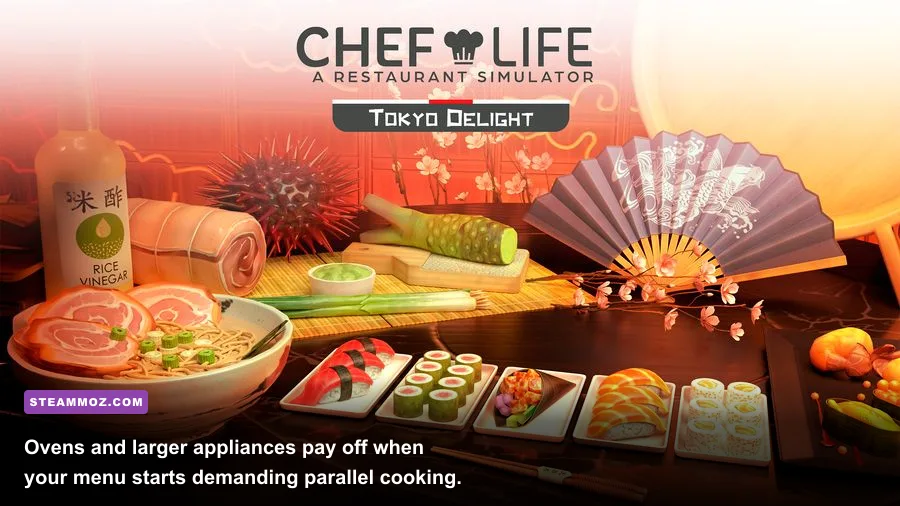
Oven
The oven is one of the best expansion purchases, but it shouldn’t automatically be your first one. It becomes A-tier when your menu includes roasting, baking, or dishes that can cook while you perform another preparation task. That parallel value is the real benefit: an oven can keep one component progressing while your hands handle another recipe.
Buy it when you have recipes that justify its footprint and cost. Purchasing an oven merely because it looks like a professional kitchen upgrade can leave your cash trapped in equipment that contributes little to current service. Once it becomes part of your routine, place it where you can check it without creating a long loop between the prep bench, storage, and pass.
Mandoline and precision prep tools
Precision prep equipment belongs in A-tier because it solves a specific problem extremely well: repeated ingredient processing. It shines on menus that ask for similar cuts, garnishes, or vegetable components across several dishes. The more frequently a task appears, the more valuable the dedicated tool becomes.
There’s a trap here. A tool can feel fast during free-roam preparation but provide little benefit during a menu that barely uses it. Before buying, inspect your active recipes and count shared ingredients. A tool serving three dishes is a strategic upgrade; one serving a single occasional plate is a luxury.
B-tier appliances and when they become essential

Mixer
The mixer is a specialist, not a universal upgrade. It ranks B-tier for a general restaurant because its impact depends heavily on dough, pastry, and dessert recipes. If those recipes are central to your concept, the mixer can become A-tier immediately. If your restaurant is focused on grilled, pan-cooked, or sauce-led dishes, it can wait.
Use the same rule as a real kitchen: buy for throughput, not fantasy capacity. A mixer is worth prioritizing when hand preparation repeatedly delays other tasks or when several dishes share a dough-based component. Keep it near ingredient storage, because the time saved by the machine can disappear if every batch requires a long walk across the room.
Blender and food processor
Blenders and food processors are strong choices for soups, purées, emulsions, and blended sauces. Their ranking depends on recipe overlap. If three menu items use the same purée or sauce base, the equipment can reshape your prep routine. If only one dish needs it, the purchase is harder to justify than another improvement to your main stove or knife workflow.
These appliances also reward batch planning. Prepare shared components together before service rather than stopping mid-rush to process one portion. That approach reduces workstation switching and keeps your attention on cooking stages that can actually fail if ignored.
How to spend your upgrade budget without wrecking service

The most efficient progression is not a fixed shopping list. It’s a response to your current bottleneck. During preparation, watch what repeatedly consumes time. If cutting dominates the day, improve knives and prep tools. If sauces and pan work create a queue, strengthen the stove, frying pan, and saucepan setup. If recipes spend too much time waiting for baked or roasted components, move the oven higher.
| Observed bottleneck | Recommended priority | Why | Common mistake |
|---|---|---|---|
| Ingredients take too long to prepare | Chef’s knife, prep tools, storage placement | Improves the repeated opening stage of many recipes | Buying a specialty appliance first |
| Sauces or sautéed components delay plates | Stove, frying pan, saucepan | Strengthens the most common live-cooking chain | Adding more menu items before fixing timing |
| Roasting or baking holds up orders | Oven and nearby ingredient storage | Creates parallel cooking capacity and shorter routes | Placing the oven far from the pass |
| Dough or pastry prep dominates the day | Mixer | Removes repeated manual work from a specialized menu | Buying it for a menu with no pastry demand |
| Purées and blended sauces are repeated | Blender or food processor | Speeds shared components and supports batch prep | Processing one portion at a time during service |
Menu design is an equipment upgrade too. A smaller menu with overlapping ingredients is often stronger than a sprawling menu that demands every appliance at once. Keep dishes that share prep components, then add a new category only when the kitchen can support it. This is the same kind of efficiency mindset behind our fast leveling and gold route guide: eliminate wasted actions before chasing bigger numbers.
Layout deserves equal attention. Put storage near prep, prep near cooking, and cooking near the pass. Don’t block your main route with decorative objects or place a high-use machine behind a station you constantly circle. Chef Life rewards a kitchen that feels slightly boring but works every time.
The best equipment loadout for each restaurant phase
Early game
Start with the knife and the most flexible hot-food tools available to you. Keep the menu compact and learn which preparation steps appear most often. Early money should improve the actions you repeat every day, not chase a complete professional kitchen before the restaurant has enough demand to use it.
Mid game
Add the oven when roasted or baked recipes become a regular part of service. Bring in a mandoline when vegetable preparation creates a queue, then choose a mixer or blender based on the recipes you actually serve. This is the point where equipment specialization starts paying off, but only if your menu has clear shared demands.
Late game
Late-game spending should polish throughput and reduce walking. Upgrade specialist equipment around your signature dishes, reorganize the kitchen after menu changes, and avoid leaving old equipment in prime positions just because it was once important. Your best setup is the one that supports your current menu’s busiest three or four steps.
For more management-game reading, Steamoz’s Dungeon management tips and resource-focused strategy guide cover the same broader lesson: efficiency compounds. In Chef Life, the “best weapon” is a kitchen where every tool has a job, every route is short, and every purchase supports the food you’re actually serving.