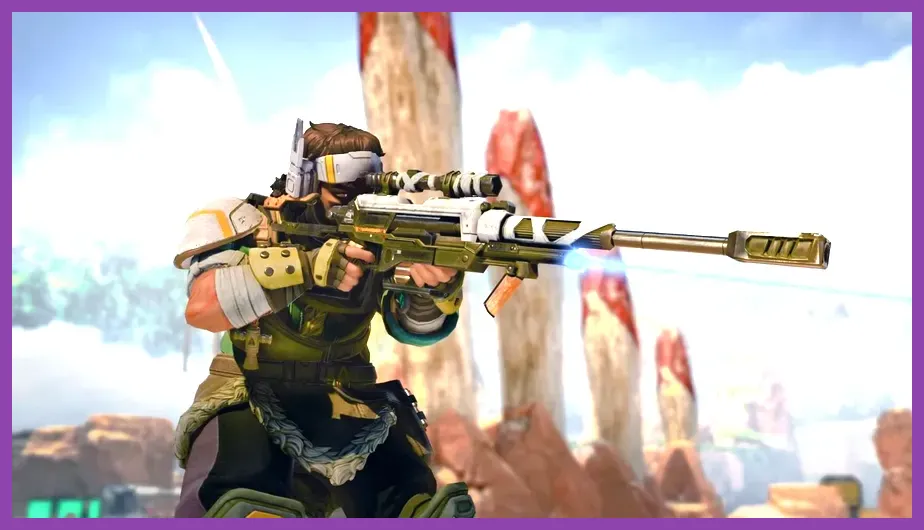
The best Apex Legends beginner tips are simple: land with your squad, use cover before shooting, carry the right amount of healing and ammunition, and rotate before the Ring forces you into the open. Learn one assault rifle, one close-range weapon, and one easy Legend such as Bangalore, Bloodhound, or Lifeline before worrying about advanced movement or ranked play.
Apex Legends rewards decisions more than raw aim. Every match asks you to choose where to land, when to fight, when to retreat, and how to use three different abilities as one squad. The advice below is built for new players who want practical habits that immediately improve survival, damage, and win rate.
1. Start With the Right Legends and Weapons
Choose a forgiving beginner Legend
Bangalore is one of the strongest learning choices because Smoke Launcher creates cover while Double Time gives you a speed boost after incoming fire. Smoke can rescue a teammate, block a sniper angle, or hide a revive. Do not fire smoke randomly at enemies; use it to break a line of sight, then move to hard cover.
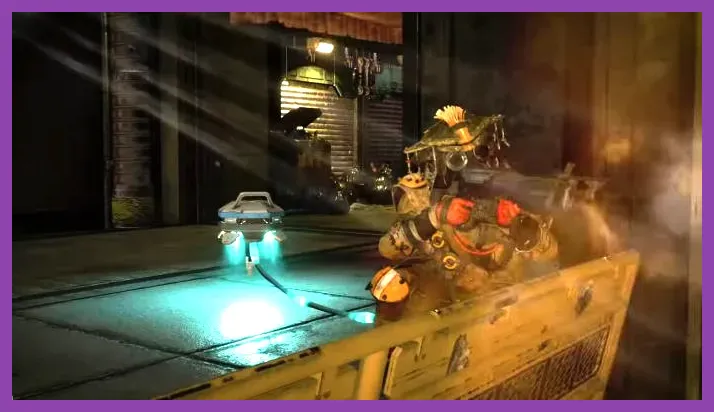
Bloodhound teaches information gathering. Eye of the Allfather briefly reveals enemies, traps, and clues in a cone, while Beast of the Hunt improves visibility and gives you a faster combat tempo. Scan before entering a building, not after your squad is already being shot. Bloodhound’s scan also informs nearby enemies, so relocate quickly once it is used.
Lifeline is useful for learning support fundamentals. D.O.C. Heal Drone saves syringes and cells between fights, while Combat Revive lets D.O.C. revive a teammate as you continue defending. Place the drone behind cover and do not start a revive in the open simply because the ability is available.
Other accessible choices include Gibraltar, whose Dome of Protection can stabilize a bad fight, and Pathfinder, whose Grappling Hook teaches vertical repositioning. Avoid switching Legends every match. Play one character for at least ten games so your tactical and ultimate decisions become automatic. The official Apex Legends page lists the current Legend roster and ability descriptions.
Use a reliable two-weapon loadout
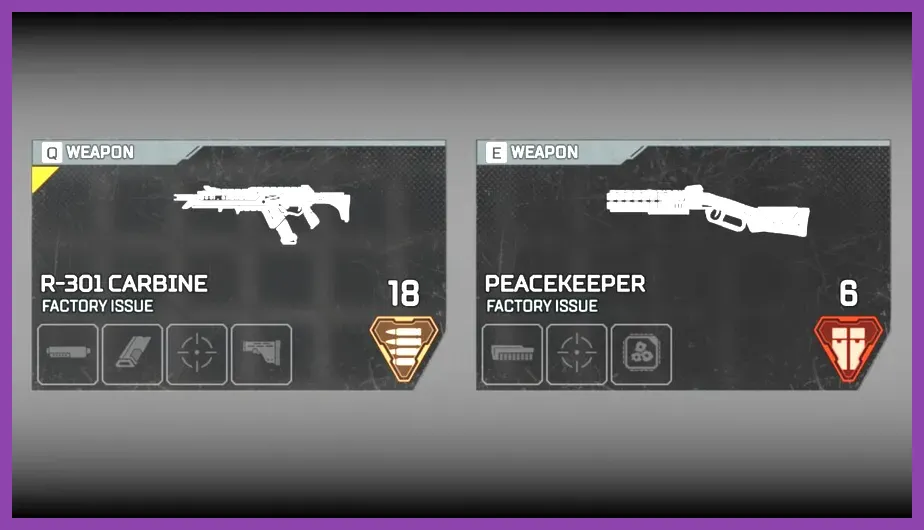
For your first matches, pair the R-301 Carbine with the Peacekeeper or EVA-8 Auto. The R-301 has controllable recoil and works at close and medium range. The Peacekeeper rewards deliberate shots around doors and corners, while the EVA-8 is more forgiving when an enemy is directly in front of you.
A second excellent setup is the Volt SMG with the 30-30 Repeater. The Volt is stable at short range, and the 30-30 teaches you to hold angles without requiring the precision of a Wingman. Once your tracking improves, try the Flatline, Hemlok Burst AR, or Nemesis Burst AR. Do not carry two weapons that use the same ammunition unless you have no alternative; running out of ammo becomes much more likely.
Test recoil in the Apex Legends Firing Range. Fire a full magazine into a wall, then practice controlling the first ten bullets. Learn reload timing, hip-fire distance, and how quickly each weapon draws after swapping.
2. Land Safely and Loot With a Plan
Follow your Jumpmaster’s route
New players often lose before the first minute by splitting from the squad. Stay close enough to help, but do not land on the exact same supply bin. A good squad lands in one named location, divides into nearby buildings, and regroups after collecting basic gear. If you are Jumpmaster, choose a location near the flight path rather than dropping into the busiest named point every game.
Hot drops such as Fragment East on World’s Edge, Estates on Olympus, and Fragmented areas on Storm Point can provide immediate fights, but they also create chaotic contests where a new player may not find a weapon. For consistent improvement, land at a quieter POI, loot two buildings, and rotate toward the first Ring. You need a weapon, body shield, helmet, backpack, and healing—not a perfect purple attachment set.
Use a strict loot priority
Your first priority is any usable weapon. Your second is ammunition, then a body shield, helmet, backpack, and healing. A basic weapon in your hands is more valuable than an unclaimed gold attachment on the floor. Mark useful items with the ping button instead of opening your inventory to explain every find.
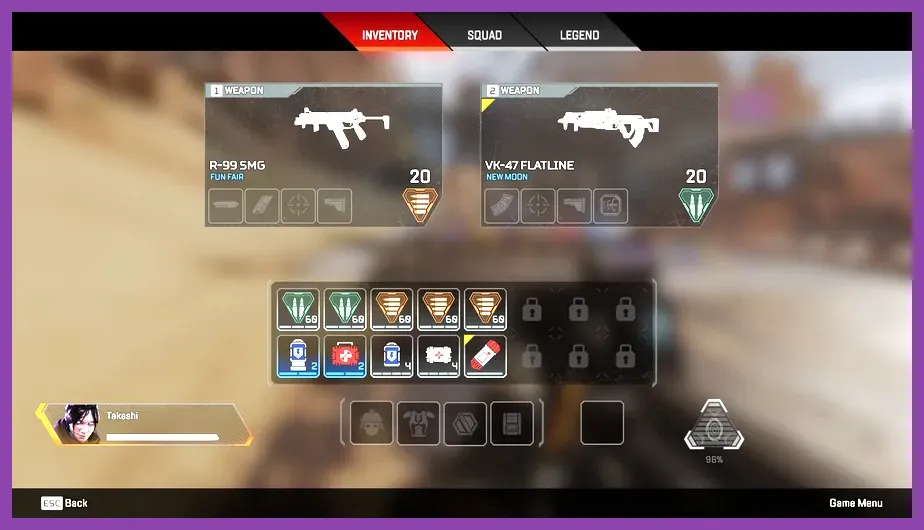
A practical early inventory is four to six stacks of ammunition, four Shield Cells, eight to twelve Syringes, two Shield Batteries, and one or two Med Kits. Carry a Phoenix Kit only when you have spare space; its ten-second activation time is dangerous during an active fight. As your backpack improves, add Heat Shields, Mobile Respawn Beacons, or grenades according to your Legend and squad plan.
Do not spend 60 seconds searching one building for a 2x Bruiser optic. Apex Legends is a rotation game. Once you have a weapon pair, roughly 120 rounds for your main weapon, a few cells, and armor, move. The official Apex Legends news and patch notes are worth checking when weapon loot pools or map rotations change.
3. Win More Gunfights With Cover and Team Fire
Always fight from a position
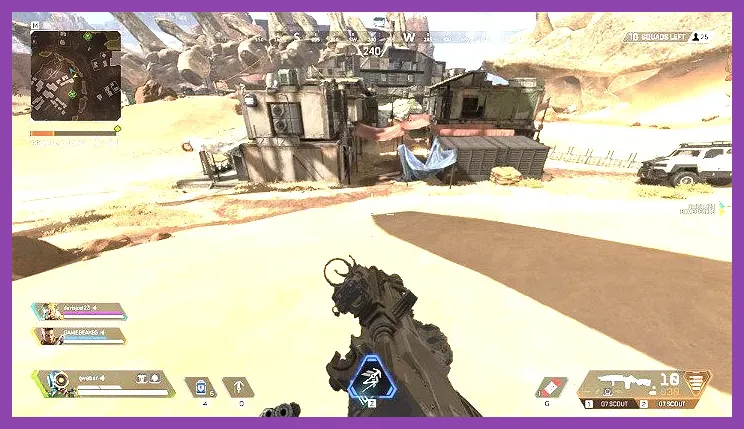
Before firing, identify the object you will retreat behind. Rocks, walls, crates, doors, and terrain ridges are cover; a tree that leaves most of your body exposed is only partial protection. Peek from the left or right side of cover, fire a short burst, and return to safety. Standing in the open while reloading is one of the fastest ways for a beginner to be eliminated.
Use the damage indicator to make decisions. A white, blue, purple, or red shield flash tells you the enemy’s armor level, while a red damage number means you hit health after breaking the shield. If you crack an enemy, say “cracked” and push only if your squad is close enough to trade damage. A cracked opponent may still have a Peacekeeper, Arc Star, or teammate holding the angle.
Focus one target
Three players shooting three different enemies usually produce three weak opponents who survive. Ping a target, call the direction, and concentrate fire. If you hit an enemy for 70 damage and your teammate adds 80, that player is likely one burst from being knocked. Prioritize an isolated player, a team crossing open ground, or the enemy who has already used their escape ability.
Do not chase a one-shot enemy around a building without checking for a second squad. Apex third parties arrive quickly because gunshots are easy to hear. After a knock, heal your shield if possible, reload both weapons, and scan the surroundings. A knock is an advantage, not an automatic signal to sprint away from cover.
Understand armor swaps and resets
When a fight ends, death boxes can provide a fast armor swap. Equip a stronger intact body shield rather than spending five seconds using a Battery in a dangerous area. Otherwise, take cover and use Shield Cells for small damage or a Shield Battery for a heavily damaged armor bar. Cells are faster and should be your default between engagements.
For more combat fundamentals, compare your positioning habits with the team principles used in our co-op build guide. The game is different, but the same rule applies: coordinated roles outperform three players making separate decisions.
4. Master Movement Without Overcomplicating It
Learn the essential movement loop
Apex Legends movement starts with sprinting, sliding, and jumping. Sprint downhill or across open ground, press crouch to slide, then jump near the end of the slide to preserve momentum. This slide-jump is enough to rotate faster and make you harder to hit. Do not spam crouch during every gunfight; predictable crouch patterns make your head easy to track.
Use doors intelligently. Close a door while healing, kick it open when an enemy is holding it, or place a defensive ability around it. You can climb normal walls by jumping toward them and holding the forward input, but wall climbs are for reaching a ledge or changing an angle—not for staying exposed while an enemy tracks you.
Separate travel movement from combat movement
During rotations, holster your weapon to run faster, but draw it before entering a likely fight. Never holster while crossing a narrow choke point or approaching a building with open doors. Use ziplines, gravity cannons, jump towers, and Tridents when they shorten a dangerous route, but remember that loud movement advertises your location.
Strafe left and right while shooting, especially with the R-301 or Volt. At close range, alternate hip-fire and aiming down sights based on distance. Aim down sights for a controlled medium-range burst; hip-fire when an enemy is within shotgun or SMG range. Sensitivity is personal, but a new player should avoid changing mouse or controller settings after every poor match. Give one setup several sessions.
Practice movement in the Firing Range by sliding around the weapon platforms, climbing the central structures, and shooting dummies while strafing. Later, try Mixtape modes such as Team Deathmatch or Control. They provide more gunfights per minute than Battle Royale and let you practice without waiting through a full loot cycle.
5. Rotate, Read the Ring, and Survive Endgames
Rotate before the Ring forces you
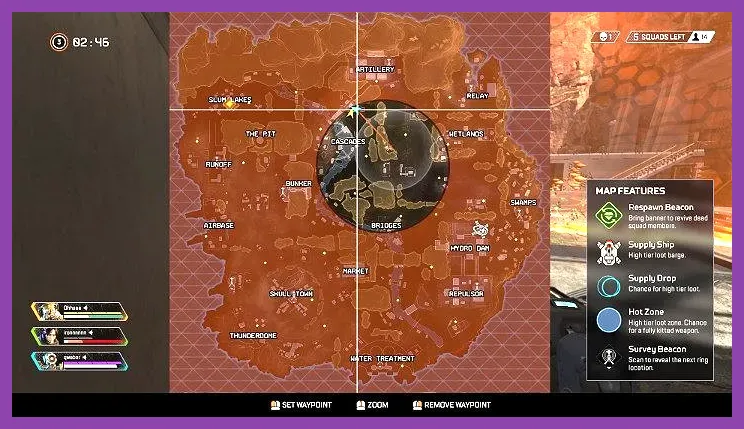
Open your map after landing, identify the first Ring, and plan a route through cover. You do not need to run directly to the center. A strong edge position with a building, rock, or elevated ridge is safer than crossing the middle while every squad rotates. Leave early when the next zone is far away, particularly on maps with long chokes or vertical terrain.
Listen for footsteps, ziplines, doors, and distant gunfire. If you hear a fight while rotating, decide whether your squad has a clear advantage. Third-party only when you know the approach and have enough ammunition and healing. Arriving late to an existing fight with no cover often turns your squad into the next third party.
Take height and protect your escape
High ground gives you better visibility and often forces opponents to climb while exposed. However, height without cover is not automatically strong. A roof with no exit can become a trap when another squad throws Arc Stars or pushes with Horizon’s Gravity Lift. Before committing, locate a fallback route, a door, a zipline, or terrain you can drop behind.
In the final five squads, avoid unnecessary fights. Hold a defensible position, let other teams weaken each other, and watch the kill feed. When the Ring closes, move first if your location is exposed. Save your ultimate for the final rotation when possible: Bangalore’s Rolling Thunder can deny a push, Bloodhound’s Beast of the Hunt can lead a close-range entry, and Gibraltar’s Defensive Bombardment can force enemies away from cover.
Use communication that helps
Ping enemy locations, armor, weapons, and rotation paths. A simple enemy ping followed by “one cracked” is more useful than constant voice chatter. Tell teammates before you leave, announce when you need a Battery, and ping the building you intend to hold. If a squadmate is down and the banner is safe, recover it; do not risk three players for a banner sitting in an enemy-controlled building.
For additional multiplayer decision-making practice, our solo-player class guide explains how to prioritize roles and resources, while the Rust weapon guide offers another useful look at weapon range and engagement choices.
6. Build a Simple Improvement Routine
Use a 15-minute routine before serious matches. Spend five minutes in the Firing Range controlling the R-301 and Volt recoil. Spend five minutes practicing slide-jumps, climbing, and shield swaps. Spend the final five minutes shooting moving dummies while changing direction. This develops repeatable mechanics without turning practice into a second job.
After each death, identify one specific cause: poor landing, no cover, missed reload, isolated rotation, or a push without a knock. Do not label every loss as an aim problem. If you died with a full magazine because you were standing in the open, better positioning will produce a larger improvement than changing sensitivity.
Play Mixtape to sharpen aim and Battle Royale to improve rotations. Once you consistently survive early fights and understand why you lost, try Ranked. The Apex Legends Steam page provides the PC version and current system information, while EA’s competitive information explains the broader ranked ecosystem.
Finally, keep your settings stable, stay with your squad, and value information over loot. The fastest beginner progress comes from mastering one Legend, two weapons, cover usage, and early rotations. Once those habits are reliable, advanced techniques such as tap strafing, super glides, recoil patterns, and specialized team compositions become useful additions instead of distractions.