
The fastest way to level up in Bear and Breakfast is to treat reputation as your real experience bar and money as a reinvestment tool. Finish the main quests that unlock new regions, open only the rooms your current guest pool can support, and spend early profits on comfort, hygiene, and food before decorative luxuries. The best gold-farming loop is simple: run a compact lodge, satisfy every guest need, collect completed bookings, then funnel the profit into facilities that raise your rating and unlock higher-paying visitors.
There is one important correction before you start: Bear and Breakfast doesn't use a traditional RPG level system for Hank. You won't grind enemies for XP or distribute combat stats. What players often call “leveling” is the game's progression through quests, resort ratings, new blueprints, staff, and regions. That changes the strategy completely. A bigger building isn't automatically better; a clean, comfortable, properly staffed lodge makes more money and pushes your progression forward faster.
What Counts as Leveling in Bear and Breakfast?
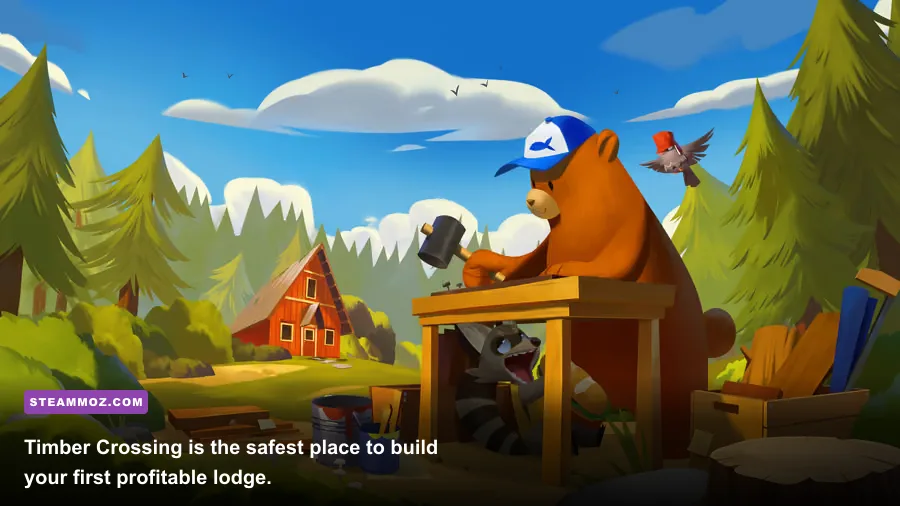
Your progression is tied to three connected systems: story quests, resort reputation, and blueprint access. Story objectives introduce new areas and characters, while successful bookings improve the quality of guests you can attract. Better guests generally have stronger demands, but they also create better earning opportunities when your facilities are ready.
Don't confuse a high room count with a high-quality resort. Every extra bedroom adds cleaning, maintenance, and supply pressure. If you build five rooms before unlocking a reliable bathroom, food source, or entertainment option, your lodge becomes a money sink. The game rewards a balanced property more than a sprawling one.
Quest progress should remain your first priority because many useful blueprints arrive through characters such as Fin, Beanie, and other regional NPCs. If a quest sends you to gather materials or repair a facility, complete it before obsessively decorating. New recipes, appliances, and resort options are usually worth more than a few early pieces of furniture.
| Progression Goal | What Actually Advances It | Best Early Action | Common Mistake |
|---|---|---|---|
| Unlock regions | Main quests and story objectives | Follow the active quest chain | Ignoring NPC requests to decorate |
| Improve resort rating | Guest satisfaction, cleanliness, comfort | Upgrade weak needs first | Building rooms without support facilities |
| Earn more money | Completed bookings and satisfied guests | Run a compact, efficient lodge | Overspending on cosmetic furniture |
| Unlock better blueprints | Quest rewards and regional progression | Finish repair and delivery tasks | Hoarding resources instead of progressing |
If you're coming from an RPG, this is closer to the measured progression in our Deponia progression guide than a conventional level grind. The game wants smart routing and steady upgrades, not repetitive farming.

🎮 Bear and Breakfast
Looking to experience this game? Grab your digital key directly on our store for $6.99.
View on Steammoz Store →The Fastest Early-Game Gold Farming Route
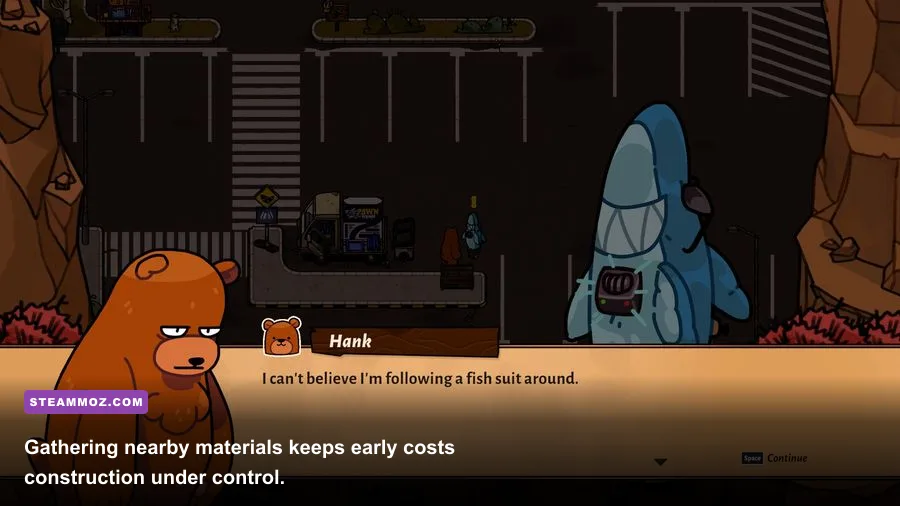
Start in Timber Crossing and keep your first lodge deliberately small. A practical early layout is two bedrooms, one bathroom, a reception area, and the minimum facilities required by the current guest requests. This setup gives you enough booking capacity to generate cash without creating a cleaning and supply crisis.
Before opening the lodge, walk the surrounding area and collect every useful material you can safely reach. Wood, stone, scrap, and plant resources respawn or become available through nearby gathering points, and collecting them before construction reduces the amount of money you burn at vendors. Check containers and side paths as well; some materials are tucked away from the obvious road.
Use a booking cycle instead of random spending
Run each booking as a three-step cycle:
- Prepare: refill fuel, stock food ingredients, repair facilities, and confirm that every room has the required furniture.
- Host: monitor guest needs and fix the lowest rating immediately. A dirty bathroom or empty food station can drag down the entire stay.
- Reinvest: spend the payout on the weakest need, not the most attractive blueprint.
The fastest profits usually come from improving the reason guests are unhappy. If comfort is low, add better beds or comfort furniture. If hygiene is failing, improve bathroom capacity and cleaning coverage. If hunger is the problem, prioritize a functional kitchen and dependable recipes. The upgrade that removes a recurring complaint beats a new bedroom almost every time.
| Investment Priority | Why It Makes Money | When to Buy | Skip It If |
|---|---|---|---|
| Bathroom capacity | Prevents hygiene bottlenecks across multiple rooms | Guests queue or hygiene drops repeatedly | You only operate one room |
| Bed and comfort upgrades | Raises room quality and guest satisfaction | Comfort is your lowest resort need | Food or hygiene is critically low |
| Kitchen and recipes | Supports hunger requirements and better bookings | Guest requests begin demanding meals | No current booking needs food |
| Entertainment | Improves leisure-focused guest experiences | Entertainment is repeatedly the weak link | Your basic facilities remain incomplete |
| Decorations | Can improve atmosphere and room appeal | Core needs are already stable | You are short on construction money |
For another management game perspective, our Dins's Curse town-saving tips make the same point in a different genre: a stable foundation beats flashy expansion.
How to Build a Lodge That Levels Fast
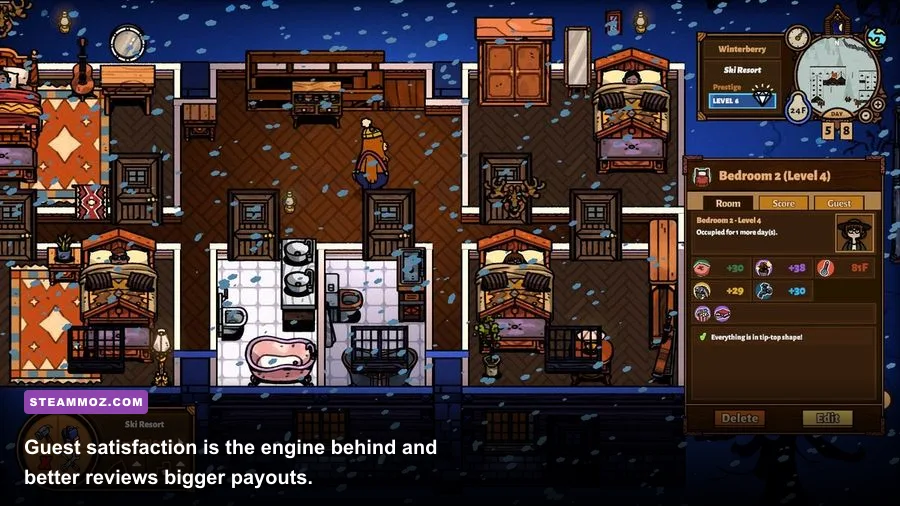
Think of each resort as a production line. Guests enter through reception, use bedrooms and bathrooms, consume food, seek entertainment, and leave behind the money that funds your next upgrade. The shorter the distance between those needs and their facilities, the less time your staff wastes and the easier the lodge is to keep clean.
Place bathrooms close to bedroom clusters rather than scattering them around the property. Keep the kitchen near the dining area and make sure staff can reach storage without crossing the entire map. A compact pathing layout is more valuable than a huge open floor plan because staff travel time quietly determines how quickly messes and empty stations get resolved.
Rooms should also be designed around the guest type you are targeting. A cheap, basic room is excellent for generating early cash because it has a lower upgrade cost. A premium room only becomes profitable when your overall resort can support the guest's expectations. Building luxury bedrooms while the bathroom is still struggling is the classic trap.
Use guest complaints as a diagnostic tool
Don't treat negative feedback as a random penalty. It's a shopping list. A low comfort result points toward beds and comfort furniture. A poor hygiene result usually means insufficient bathrooms, slow cleaning, or a layout that forces long staff routes. Hunger problems identify kitchen, pantry, or recipe weaknesses. Entertainment complaints tell you exactly when to add leisure facilities.
This makes the review screen more useful than any spreadsheet. Run two or three bookings, identify the repeated failure, and buy the cheapest upgrade that fixes it. That approach lets your rating climb without draining your reserves.
Gold Farming After Timber Crossing

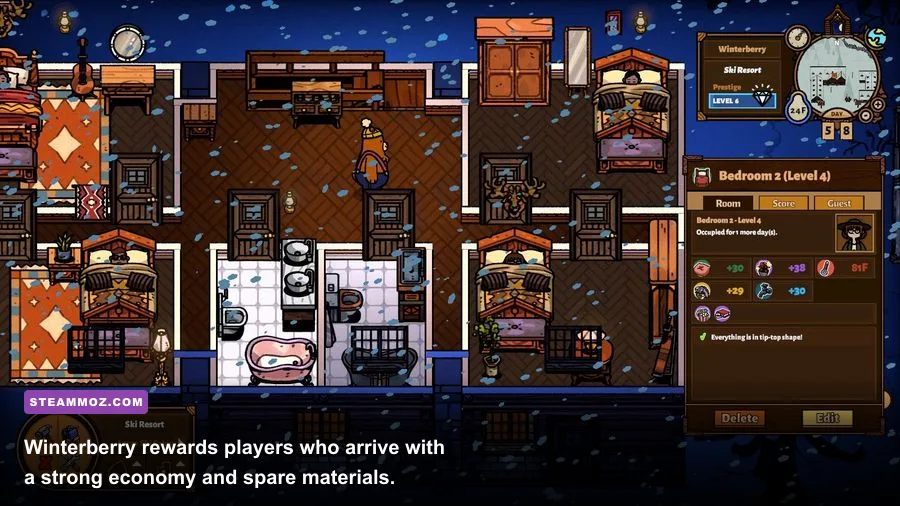
Once you reach areas such as A24 and later regions including Winterberry, the economy gets more demanding. New locations introduce stronger guest expectations and more expensive construction, so carrying a large cash reserve becomes important. Don't arrive with just enough money for one blueprint. Leave room for fuel, repairs, food production, and at least one emergency facility upgrade.
Regional progression is fastest when you keep the earlier lodge operational while developing the new one. Your old resort can continue producing income, giving you a financial cushion while the new location is being repaired and stocked. If the game allows you to shift attention between properties, use the established resort as your bank and the new resort as your investment project.
Resource farming also becomes more valuable than blindly chasing cash. Before committing to an expensive build, make a gathering circuit around the current region. Collect construction materials, check respawning nodes, and complete nearby errands in one trip. The time saved on vendor purchases can equal several booking payouts, especially when a new building requires multiple material types.
Keep an eye on your operating costs. More rooms mean more beds to maintain, more surfaces to clean, and more guests generating demands. If a larger lodge produces worse satisfaction than a smaller one, temporarily stop accepting bookings for the weakest rooms and repair the service bottleneck. A smaller property with excellent reviews is a stronger gold farm than a large resort hemorrhaging rating.
Staff, Food, and Supply Management
Staff are not a luxury once your resort grows. They are what lets you scale without personally chasing every dirty room or empty station. Assign workers according to the bottleneck you can see, not according to the order you unlocked them. If hygiene collapses, cleaning coverage matters more than adding another food worker. If guests are waiting for meals, kitchen support takes priority.
Food deserves special attention because it can create a chain reaction. Empty ingredients or an inefficient kitchen leaves guests hungry, which lowers satisfaction, which reduces the value of your next booking. Keep a buffer of ingredients and check supplies before opening the lodge. Cooking only what the current guest group needs is safer than mass-producing meals that may sit unused.
Likewise, don't unlock every available recipe immediately. New recipes can be useful, but they also complicate inventory management. Build around the dishes your active guests request, then expand once your supply chain is stable. This is especially important when moving into regions where travel and gathering take longer.
The official Bear and Breakfast Steam page is worth checking for current updates, while the Gummy Cat developer site provides the game's official development background. For broader economy-focused habits, compare this approach with Steamoz's fast progression breakdown.
Endgame Expansion Without Going Broke
In Pinefall, Highlake, Winterberry, and other later areas, stop thinking in terms of “build everything.” Instead, build around the booking you can actually satisfy. A region's expensive facilities can be tempting, but a blueprint is only profitable when your staff, supplies, and room quality are ready for it.
Use this expansion order: repair the required property, establish basic bedrooms and hygiene, add food support, stabilize guest satisfaction, then invest in entertainment and premium decoration. That sequence keeps your revenue climbing while preventing a single weak category from poisoning the resort's rating.
Save a reserve before every major regional upgrade. A good rule is to avoid spending your final cash on a decorative project or an extra bedroom. Keep enough for at least one essential facility, a supply refill, and unexpected repair costs. The game rarely punishes patience; it punishes expansion that outruns your infrastructure.
Finally, remember that the fastest “leveling” route is the one that keeps quests moving while every resort earns consistently. Follow NPC objectives, gather materials during travel, improve the lowest guest need, and reinvest booking payouts into measurable quality. For more progression-focused reading, Steamoz's beginner build guide has a similar lesson: specialize early, then expand when the core loop is paying for itself.
The winning Bear and Breakfast economy is deliberately boring: compact lodge, high satisfaction, controlled bookings, smart staff assignments, and no vanity spending until the essentials are stable. Follow that loop and Hank's resorts will unlock new regions quickly without leaving you broke whenever the next big blueprint appears.