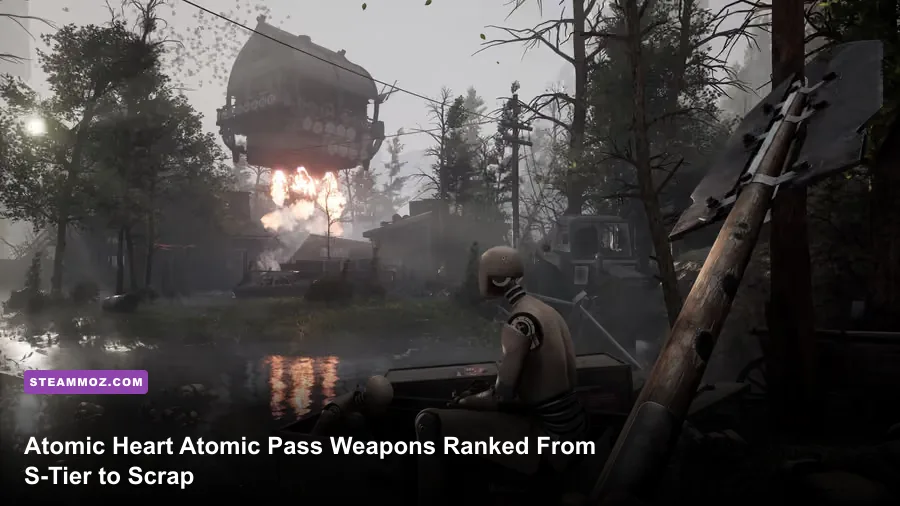
The best Atomic Heart Atomic Pass loadout is built around Zvezdochka or Klusha for melee, Kalash or Secateur for reliable ranged damage, and Frostbite plus Mass Telekinesis for control. Zvezdochka is still the safest all-purpose damage dealer, while Klusha is the more aggressive DLC pick. Secateur earns A-Tier because it handles armored targets and elemental setups beautifully, but it doesn't replace the Kalash when you need cheap, consistent ammunition. Fat Boy and Dominator can erase crowds, yet their scarcity, charge times, and awkward close-range behavior keep them below the most dependable weapons.
This ranking covers the Atomic Pass experience alongside the base-game arsenal, including the weapons most players carry into the DLC areas. The key point is that Atomic Heart doesn't expose a simple damage number for every upgrade level. Weapon performance changes with blueprint quality, cartridge type, elemental enhancement, and the specific NORA node you unlock. So this is a practical tier list based on damage uptime, ammo economy, stagger potential, upgrade value, and how well each weapon survives the game's tougher robot encounters.
If you're returning after a long break, the official Atomic Heart Steam page is the best place to verify which Atomic Pass editions and DLC packs are attached to your account. For broader PC optimization advice, Steamoz's PC fixes guide is also useful when a demanding game starts stuttering after updates.

Atomic Pass weapon tier list at a glance
The table below ranks practical combat value rather than novelty. A weapon that produces spectacular burst damage but consumes rare ammunition every few shots isn't automatically better than one that keeps working through a long facility. Atomic Heart's best weapons also have to fit the game's rhythm: freeze a target, break its armor, finish with melee, and conserve the heavy cartridges for machines that genuinely demand them.
| Tier | Weapon | Primary strength | Best use |
|---|---|---|---|
| S-Tier | Zvezdochka | Huge melee damage and reliable stagger | Elite robots, bosses, and general exploration |
| S-Tier | Kalash | Stable sustained damage with common ammunition | Mixed enemy groups and armored targets |
| S-Tier | Frostbite | Fast freeze application and control | Stopping rushers before a melee punish |
| A-Tier | Klusha | Fast, aggressive melee strings | Mobile players fighting isolated targets |
| A-Tier | Secateur | Flexible ranged pressure and elemental synergy | Atomic Pass encounters and medium range |
| A-Tier | KS-23 | Excellent close-range burst and stagger | Charging machines and panic situations |
| B-Tier | Dominator | High output against exposed targets | Open arenas and controlled boss windows |
| B-Tier | Fat Boy | Large explosive area damage | Groups of slow enemies |
| B-Tier | Electro | Ammo-free energy damage | Weak targets and resource conservation |
| C-Tier | Swede and Fox | Useful early-game melee tools | First hours before better blueprints arrive |
There are two important caveats. First, the tier list assumes a normal or hard playthrough rather than a speedrun. Second, upgrades can move a weapon up by roughly half a tier in practical terms. An upgraded Electro with the right energy-management nodes is far more useful than an untouched Kalash, while an unmodified Zvezdochka can feel clumsy until its core damage and charge attack are improved.
🎮 Atomic Heart - Atomic Pass
Looking to experience this game? Grab your digital key directly on our store for $27.99.
View on Steammoz Store →S-Tier picks that carry the entire Atomic Pass
Zvezdochka
Zvezdochka is the best melee weapon for most players because it combines reach, stagger, and damage without asking you to perform a complicated rotation. Its charged attack gives you a way to punish large machines after a freeze or telekinetic lift, and its standard swings are strong enough to finish common VOV-A6 and MFU units without wasting bullets.
The ideal Zvezdochka upgrade path prioritizes raw physical damage first, then the branch that improves the charged attack. Don't rush into elemental modifications just because the menu offers them. Physical damage is universal, and it remains dependable against enemies that resist or shrug off a particular effect. The weapon becomes especially nasty after Mass Telekinesis lifts a group: hold the charge while targets are suspended, release as they drop, and you'll often stagger the survivors.
Its weakness is stamina. Swinging wildly into a shielded enemy leaves Major Nechaev exposed, and Zvezdochka's broad animation can tempt you to stay in range too long. Use a short two- or three-hit string, sidestep, then re-enter after the enemy telegraph finishes. This is a weapon for disciplined aggression, not button mashing.
Kalash
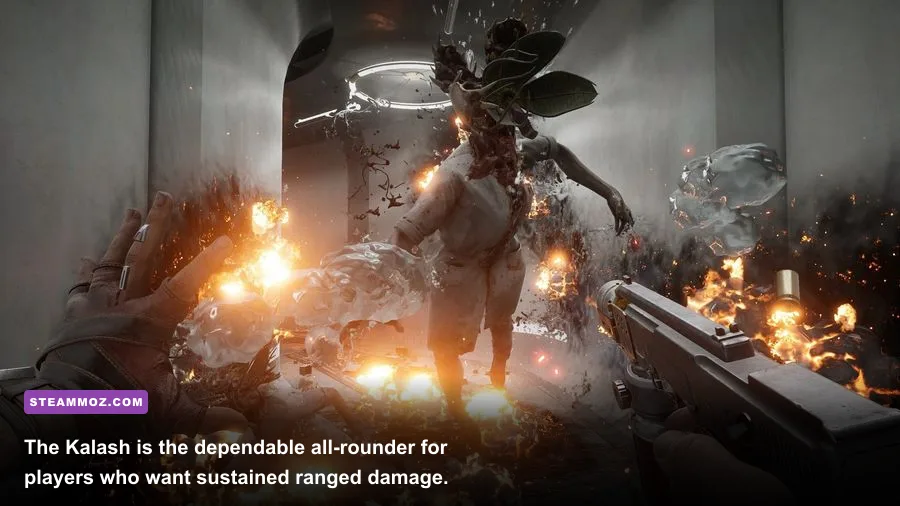
The Kalash is the best ranged recommendation because it solves the ammunition problem that undermines several flashy alternatives. Its cartridges are common enough to support regular use, its recoil is manageable, and it can chew through robots while you wait for Polymer abilities to recharge. The best general-purpose loadout pairs Kalash with a shotgun rather than another automatic weapon: rifle for sustained pressure, KS-23 for emergencies.
Install the magazine and damage upgrades as soon as their blueprints become available. Capacity matters because reload interruptions are dangerous in corridors, while damage improves every bullet rather than only the final shot in a burst. Against armored machines, aim for exposed components after a shock or freeze. Emptying a magazine into a protected torso is one of the fastest ways to waste ammunition.
The Kalash isn't glamorous, and that is exactly why it ranks so highly. It works in the VDNH, the underground complexes, the open Polygon routes, and the Atomic Pass's more demanding combat spaces. If you only upgrade one automatic weapon, upgrade this one.
Frostbite and Mass Telekinesis
Strictly speaking, Frostbite is an ability rather than a weapon, but excluding it from an equipment ranking would miss how Atomic Heart combat actually works. Freeze turns dangerous encounters into controlled damage windows. Cast it on a fast melee unit, move behind the target, and use Zvezdochka or Klusha before the enemy can recover. Against larger machines, use the freeze to interrupt a wind-up rather than firing it randomly at the start of a fight.
Mass Telekinesis is the other S-Tier investment. Its value isn't just damage; it groups enemies, interrupts attacks, and creates clean space for a heavy weapon. The upgrade that improves slam damage is excellent when paired with explosive weapons, while increased duration helps melee-focused builds. A Kalash burst into lifted enemies is safer and more efficient than trying to duel every robot separately.
A-Tier Atomic Pass weapons worth upgrading

Klusha
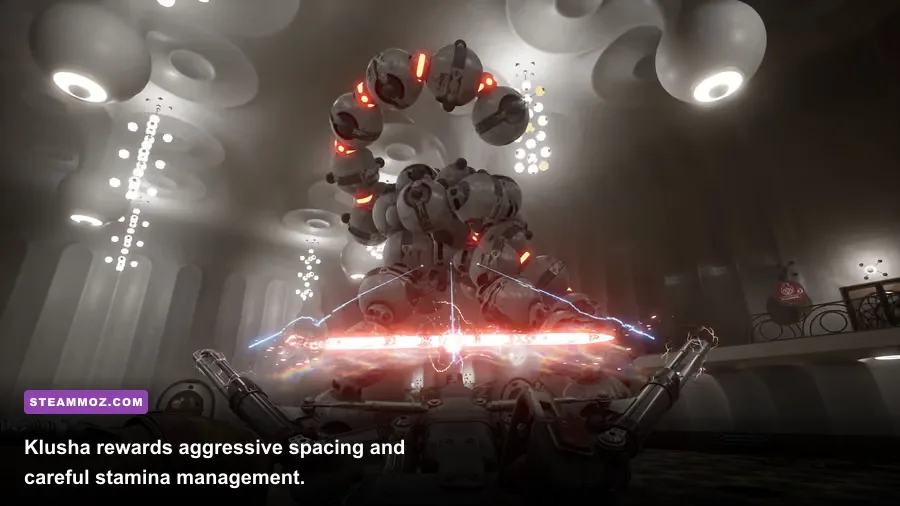
Klusha is the DLC melee weapon for players who prefer speed over the Zvezdochka's heavier rhythm. It feels better in tight spaces because its attacks recover quickly, letting you dodge out before a robot's counterattack. That speed makes it particularly effective against targets that punish long animations, including shielded enemies and machines that lunge after a brief pause.
Klusha's best synergy is Electric Current or Frostbite. Apply the status effect first, then use short melee strings while the target is slowed or staggered. The mistake is treating Klusha like a pure DPS button and repeating the full combo against a group. It has less room for error than Zvezdochka, so isolate one target with Mass Telekinesis or a cornering dodge before committing.
Upgrade the weapon's basic damage and handling branch before chasing a highly specific finisher. Klusha's entire advantage is uptime. Any node that lets you return to neutral faster, spend less stamina, or land a charged hit safely is worth more than a flashy bonus you rarely activate.
Secateur
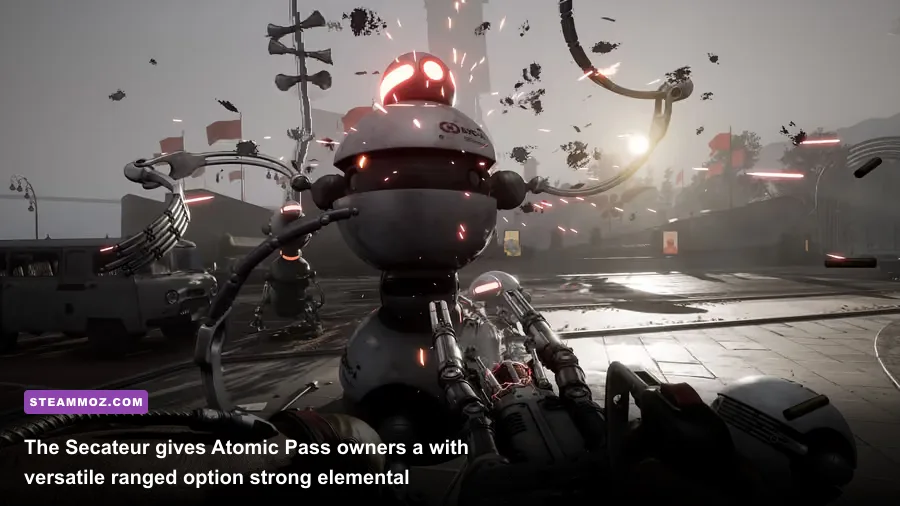
Secateur is a strong Atomic Pass ranged option because it gives you a flexible answer at medium distance. It rewards accurate targeting and works especially well when you combine elemental damage with the Glove's abilities. Freeze a machine, fire into its vulnerable component, and swap to Klusha while the status effect creates the opening. Against groups, use Mass Telekinesis first so the weapon's shots produce more value before the enemies spread out.
Secateur falls short of the Kalash as a universal rifle because its handling and ammunition profile are less forgiving. Missing shots hurts more, and players who use it as a panic weapon may find themselves empty at the worst moment. It also demands more awareness of enemy composition. If a room contains several durable machines, carry Kalash; if it contains mobile threats and you enjoy deliberate target selection, Secateur becomes much more attractive.
KS-23
The KS-23 is still the best emergency button in the arsenal. One close-range blast can stagger a charging robot and create enough breathing room to reload, heal, or switch to melee. Its damage falls sharply with distance, so don't use it like a slow assault rifle. Close the gap only after a telegraph, dodge through the attack, and fire into the enemy's exposed side.
Its major drawback is ammunition economy. Shotgun shells feel plentiful early, then disappear quickly once larger machines start appearing in every other room. Keep the KS-23 upgraded, but don't make it your only ranged option. The strongest pairing is KS-23 for interruption, Kalash for sustained fire, and a melee weapon for finishing.
| Loadout slot | Recommended choice | Backup choice | Why it works |
|---|---|---|---|
| Melee | Zvezdochka | Klusha | High damage or fast recovery for finishers |
| Primary ranged | Kalash | Secateur | Reliable sustained damage or precise medium-range pressure |
| Emergency ranged | KS-23 | Fat Boy | Instant stagger or area burst |
| Control ability | Frostbite | Polymer Jet | Freeze is universal; Jet amplifies elemental setups |
| Control ultimate | Mass Telekinesis | Polymer Shield | Group control or survival during unavoidable pressure |
B-Tier weapons and the situations where they shine
Dominator
Dominator can produce remarkable damage when enemies are grouped or immobilized, but its charge-based firing pattern makes it awkward in a chaotic room. Use it after Mass Telekinesis, during a boss's recovery animation, or from a safe platform overlooking an arena. The weapon is at its best when you already understand the encounter and can predict where targets will stand.
It drops to B-Tier because the setup cost is real. You need time, distance, and a clear line of fire. A Kalash can start dealing damage immediately, while Dominator often asks you to charge, aim, and avoid interruption. Save its ammunition for bosses or durable targets rather than spending it on basic robots you can handle with melee.
Fat Boy
Fat Boy is the obvious crowd-control pick. Its rockets punish clusters, damage large targets, and can turn a nasty hallway into a manageable one. The weapon is most effective when you first freeze or lift enemies so they can't scatter. Fire at the floor or a wall near the group if direct impact is unreliable; the explosion is often more valuable than a perfect body shot.
Fat Boy's problems are weight, reload downtime, and ammunition. It is also dangerous at close range, especially when enemies rush through the blast radius. Carry it for arenas with multiple durable machines, not as a permanent replacement for the KS-23. Heavy weapons should solve a problem, not become the problem.
Electro
Electro is the resource-saving specialist. Because it uses energy rather than conventional ammunition, it lets you preserve Kalash rounds for harder encounters. It performs well against weaker robots and becomes more useful when you invest in the character's energy capacity and regeneration options. The catch is that its damage feels underwhelming against elite machines unless you have already exposed a weak point or applied a status effect.
Use Electro between fights, not because it is secretly stronger than every gun, but because it protects your inventory. A fully stocked player who reaches a boss with Kalash and shotgun shells has effectively gained more power than someone who spent every bullet clearing disposable enemies.
Best abilities, cartridges, and equipment pairings

Atomic Heart's equipment ranking changes dramatically once abilities enter the equation. The weapon menu gets most of the attention, but the Glove determines whether you control the fight or simply trade damage. Frostbite is the cleanest universal choice. Polymer Jet is more specialized and becomes excellent when paired with fire or electricity. Shok is useful for interrupting machines and exploiting exposed electronic parts, while Polymeric Shield is the safety net for players learning a boss's attack cycle.
For a general Atomic Pass build, spend Polymer on Mass Telekinesis and Frostbite first. Keep Shok available for machines that expose an electrical weakness, then use the remaining capacity to improve survivability. Character upgrades that increase health, dodge utility, and energy recovery offer more consistent value than highly conditional bonuses.
Cartridges should match the encounter rather than your favorite color effect. Fire is strong when enemies are vulnerable to burning and when Polymer Jet can spread the effect. Ice is better for control and safe melee follow-ups. Electricity is a practical answer to mechanical targets and pairs naturally with Electro or Shok. Don't waste rare elemental ammunition on basic enemies that die to two melee hits.
| Combat situation | Opening move | Best damage tool | Safe finisher |
|---|---|---|---|
| Fast melee robot | Frostbite | Klusha or Zvezdochka | Dodge away after two or three hits |
| Armored machine | Shok or Mass Telekinesis | Kalash at exposed components | KS-23 when it begins a charge |
| Dense enemy group | Mass Telekinesis | Fat Boy or Dominator | Frostbite on the survivor |
| Long corridor | Freeze the front target | Secateur or Kalash | Retreat through a doorway |
| Boss recovery window | Wait for the telegraph to end | Charged Zvezdochka or Dominator | Polymeric Shield if the phase repeats |
For another look at how a tier list should account for progression rather than just raw damage, see Steamoz's Winter weapon ranking. The same principle applies here: the strongest item is the one that remains useful when resources, positioning, and enemy behavior start pushing back.
Upgrade order and resource traps to avoid
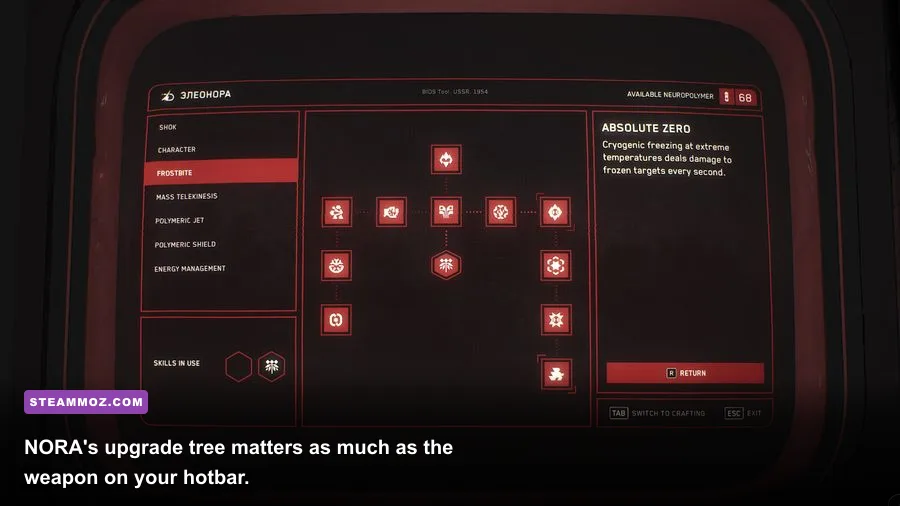
NORA lets you recycle weapons, attachments, and unwanted materials, but that doesn't mean every blueprint deserves immediate investment. Early resources are tight, and spreading upgrades across six weapons creates a loadout that is technically versatile but weak everywhere. Pick one melee weapon, one dependable rifle, and one emergency tool.
For most players, the cleanest order is Zvezdochka damage, Kalash capacity and damage, KS-23 damage, then Frostbite and Mass Telekinesis upgrades. If you own the Atomic Pass and prefer DLC equipment, replace Zvezdochka with Klusha, but keep Kalash unless you strongly prefer Secateur's playstyle. After those foundations are established, invest in elemental branches that match your ability choices.
Don't dismantle a weapon just because it ranks lower on this list. Swede and Fox are perfectly respectable before better blueprints arrive, and Electro can save enough ammunition to justify a permanent slot. Likewise, don't chase every attachment. A bonus that improves an attack you rarely use is weaker than a basic damage node you activate in every fight.
Upgrade materials also have opportunity costs. Polymer is needed for both weapons and abilities, so decide whether your current problem is insufficient damage or insufficient control. If you keep dying while surrounded, another rifle attachment won't fix the issue; Mass Telekinesis or Polymeric Shield probably will. If you control rooms easily but enemies take too long to kill, then raise weapon damage and magazine capacity.
Players who enjoy tuning visuals and frame pacing can also compare the approach used in Steamoz's performance settings guide. Atomic Heart feels dramatically better when input is consistent, especially during dodge timing. On PC, prioritize a stable frame rate over maximum ray-traced effects, reduce volumetric fog or shadow quality first if performance dips, and keep motion blur off if you need clearer telegraph reads.
The final Atomic Pass loadout recommendation
The safest all-purpose setup is Zvezdochka, Kalash, KS-23, Frostbite, and Mass Telekinesis. It covers close-range damage, sustained fire, emergency interruption, crowd control, and boss punish windows without consuming every rare resource. Replace Zvezdochka with Klusha if you prefer rapid attacks and confident dodging. Replace Kalash with Secateur if you enjoy precise elemental setups and are willing to manage ammunition more carefully.
Keep Fat Boy or Dominator in reserve rather than carrying both. Heavy weapons are encounter tools, not everyday equipment. Use one when a room contains several durable targets, then return to your economical weapons once the threat is gone. That simple discipline makes the Atomic Pass areas feel far less punishing.
Ultimately, the tier list rewards consistency. Zvezdochka and Kalash sit at the top because they perform across nearly every situation, not because they produce the largest single hit. Klusha and Secateur are excellent Atomic Pass upgrades for players who want a more active, technical style. Master Frostbite timing, use Mass Telekinesis to create your own openings, and the rest of Atomic Heart's arsenal becomes much easier to judge—and much harder for its robots to survive.
For official DLC availability, patch details, and developer announcements, check the Mundfish official site and the game's Steam news feed. If you want another equipment-focused Steamoz breakdown afterward, the Everspace weapon upgrade guide is a good next read.