The best beginner build in A-Train: All Aboard! Tourism is a compact, two-station rail corridor supported by buses, one modest hotel, and a single attraction-focused destination. Start with reliable passenger flow instead of a sprawling network: connect a residential area to shops or a tourist spot, run two trains on a simple timetable, and keep enough cash for operating costs, land, and the first fiscal year.
This approach works because the game rewards accessibility and steady city activity, not raw track mileage. Your opening goal isn't to own half the map. It's to make one district visibly useful, then let rising land value and tourism demand finance the next branch. The official Steam page for A-Train: All Aboard! Tourism is worth checking for updates, but the practical build below is designed for a fresh beginner scenario.
Build the First Corridor Around Demand
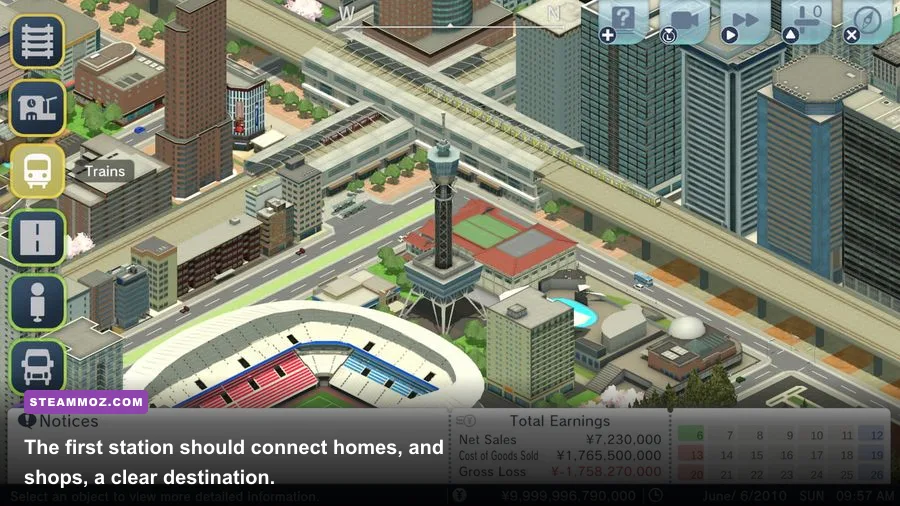
Pause immediately and inspect the map's residential blocks, commercial areas, factories, roads, and marked tourist destinations. Don't place a station because it looks central. Place it where passengers already have a reason to start or finish a trip. A strong opening corridor has three ingredients: homes at one end, commercial activity near the middle, and a tourist attraction or scenic destination at the other end.
Use two stations rather than a complicated through-route. Keep the track straight wherever possible and avoid expensive bridges, tunnels, and unnecessary crossings. A beginner-friendly distance is roughly 8 to 15 map tiles between stations. That gives trains enough route length to generate useful movement without turning every departure into a long, low-frequency journey.
Place each station so its catchment area touches as many buildings as possible. A station beside one large road may look convenient, but a slightly offset position can cover several residential blocks and a shopping street at once. Check the displayed coverage before confirming construction. If a station barely reaches the destination you care about, move it now; rebuilding after development begins wastes both cash and momentum.
| Opening Asset | Recommended Amount | Why It Works | When to Add More |
|---|---|---|---|
| Rail stations | 2 | Creates a simple origin-to-destination passenger loop | After both stations show consistent activity |
| Rail track | One direct corridor | Minimizes construction and maintenance costs | When a second district has proven demand |
| Passenger trains | 2 identical trains | Improves frequency without timetable chaos | When platforms regularly fill or waiting time rises |
| Bus stops | 2 to 4 | Feeds nearby homes and shops into the rail line | When station coverage misses dense blocks |
| Tourism subsidiary | 1 modest hotel or attraction | Converts passenger access into tourism revenue | After cash flow survives a full fiscal year |
For trains, choose a basic passenger model with sensible capacity rather than the fastest available option. Speed is useful on long intercity routes, but your first line is short. Two affordable trains running frequently usually outperform one premium train that leaves passengers waiting. Keep the first fleet visually and operationally identical; mixed vehicle performance makes early scheduling harder to read.

🎮 A-Train: All Aboard! Tourism
Looking to experience this game? Grab your digital key directly on our store for $29.99.
View on Steammoz Store →Use Buses to Feed the Railway

Buses are the cheapest way to fix a station that almost works. They shouldn't replace the opening railway. They should collect passengers from blocks outside the station's walking range and deliver them to the rail corridor. Build one feeder route on each side of the network, with two to four stops per route. More stops sound helpful, but a bus that zigzags across the whole district spends too long moving empty.
Make the residential feeder short and direct. A useful pattern is home district, local shopping street, station, then back to the home district. For the destination side, connect the station to the attraction, hotel, and commercial area. This creates a clean transfer chain: residents board a bus, transfer to rail, then reach the tourism district without a second complicated route.
Watch the passenger numbers after several operating days. If buses remain nearly empty, don't panic and don't immediately delete them. Check whether the stops actually cover buildings and whether the schedule overlaps the train departures. If the bus arrives just after the train leaves, the route can look unprofitable even though the idea is sound. Shift the bus departure or add a second bus only when the first route is consistently crowded.
Road placement matters too. A new road can unlock access to homes, shops, and a subsidiary, but every construction decision has a maintenance cost. Early roads should serve multiple buildings. Avoid decorative loops and dead-end streets until your first profitable year is secure.
Set a Timetable You Can Actually Manage
The timetable is where many new players accidentally destroy a promising opening. Use a simple repeating schedule with two trains on the same line and stagger their departures. The exact clock times depend on the scenario's daylight and operating settings, so build around the route's displayed travel time rather than blindly copying a schedule.
Start by recording one complete trip. Send the first train from the residential station to the tourism station, let it complete the return journey, and note the arrival times. Then place the second train roughly half a cycle behind it. This prevents a long gap followed by two trains arriving together. If the game offers departure, stop, or wait controls, use a small holding period at the terminal station to spread the service.
Run trains during the hours when passengers actually travel. A service that operates all day and all night may increase coverage, but it also burns operating expenses while demand is low. For a first build, prioritize a dependable daytime and evening window, then extend hours only after passenger counts justify it. Tourism routes deserve later service than commuter-only routes because visitors often return from attractions after the working day.
| Route Problem | Visible Symptom | Likely Cause | Best Fix |
|---|---|---|---|
| Long passenger queues | Station is busy between departures | Headway is too wide | Stagger a second train or shorten terminal waits |
| Two trains together | One arrival is crowded, the next is empty | Schedules are synchronized | Offset the second departure by half a cycle |
| Empty trains | Low occupancy across the whole day | Service hours exceed demand | Reduce late-night runs and improve feeder coverage |
| Tourist district underperforms | Passengers reach the station but not the attraction | Weak walking or bus connection | Add a short destination-side feeder route |
| Rising costs | Cash falls despite decent ridership | Too many vehicles or expensive infrastructure | Pause expansion and remove redundant services |
Save before applying a large timetable change, then let the simulation run long enough to compare passenger counts and cash flow. The game's pause and fast-forward controls are your best testing tools. Treat each adjustment like a controlled experiment instead of changing trains, stations, buses, and subsidiaries at the same time.
Turn One Attraction Into a Tourism Engine
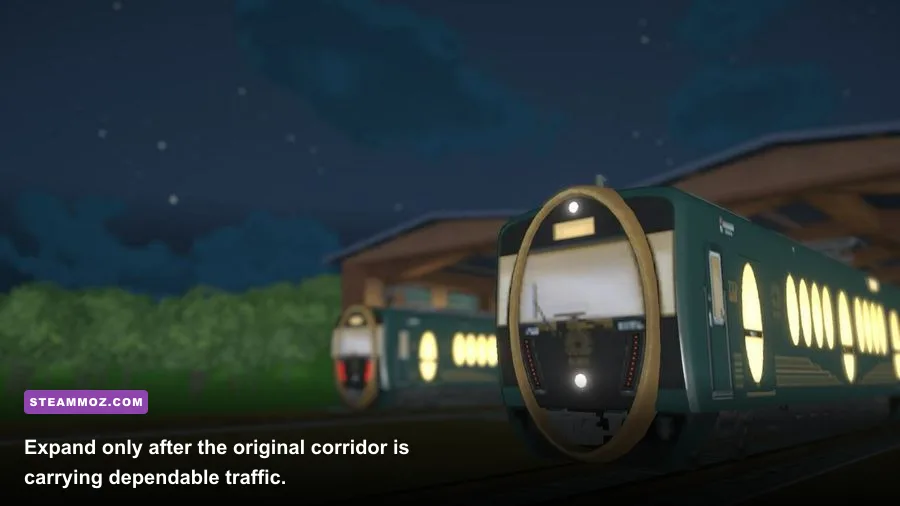
Tourism becomes much stronger when the visitor's entire journey is convenient. A tourist attraction alone doesn't guarantee success. The attraction needs a station or bus stop nearby, a route from populated districts, and enough surrounding commercial activity to make the area feel like a destination rather than a dead-end platform.
Build one hotel or tourism-oriented subsidiary near the destination station, but don't cover the entire district with businesses immediately. Subsidiaries tie up capital and may carry ongoing costs, so your first property should support the route you already operate. A hotel beside the attraction is usually easier to justify than a random shop near the starting station because it gives visitors a reason to stay and creates a visible tourism cluster.
Use the in-game subsidiary information and financial reports to judge performance. Look at purchase price, expected revenue, operating expenses, and the surrounding land value before committing. If the hotel is losing money, the answer may not be to demolish it. Check whether the railway actually delivers passengers during its opening hours. A profitable attraction with poor access is a transport problem; an accessible attraction with weak demand may need a different location.
Public relations and nearby development can help, but they shouldn't substitute for transport. Promotion is most effective after the basic route works. Spend on visibility when trains are arriving consistently, buses connect the surrounding blocks, and the destination has something worth visiting. Otherwise, you're paying to advertise an inconvenience.
The best early tourism loop is therefore residential station to destination station, destination station to hotel or landmark, then back through the commercial district. Keep transfers short. A visitor who must cross a large empty area or wait through several timetable gaps is far less valuable than one who can step off the train and reach the attraction quickly.
Expand Only After the First Fiscal Year
Don't build the second railway branch the moment the first line becomes busy. Let the network prove itself through a full fiscal year, then inspect the financial statements, passenger volumes, subsidiary results, and debt position. Japanese-style city simulations can punish expansion that looks affordable on the construction screen but becomes painful once maintenance, wages, vehicle costs, and financing are included.
Before expanding, keep a cash reserve equal to several months of operating expenses. If you need a loan, borrow for an asset that creates a clear new flow of passengers, not for cosmetic upgrades. A branch should connect a specific underserved district to the existing network. If you can't explain where its passengers come from and where they're going, it isn't ready.
The safest second phase is usually a short branch from the original residential station toward a dense commercial pocket or a second attraction. Add one station first. Run a feeder bus before laying more track; if the bus route cannot attract passengers, the expensive rail extension probably won't either. Once the branch has demand, add a second train only if the current service cannot handle the extra traffic.
| Expansion Stage | Trigger | Investment | Risk Control |
|---|---|---|---|
| Stage 1 | Two stations and stable passenger flow | Basic trains, buses, one destination subsidiary | Keep routes short and avoid premium infrastructure |
| Stage 2 | First full fiscal year is sustainable | One branch station or second feeder district | Test demand with buses before building rail |
| Stage 3 | Tourism district has consistent visitors | Second hotel, attraction, or commercial cluster | Compare subsidiary profit with land opportunity cost |
| Stage 4 | Multiple lines have dependable occupancy | Longer intercity route and upgraded fleet | Upgrade only when distance makes speed valuable |
For more PC simulation troubleshooting, Steamoz's Industry Empire coverage offers a useful comparison point, while the site's Food Truck Simulator performance guide covers the same kind of practical PC-first problem solving.
Keep the network readable as it grows. Name or color routes if the interface allows it, use consistent train types, and avoid crossing lines unless the traffic benefit is obvious. If you want broader technical reference material, the developer's official A-Train: All Aboard! Tourism site provides the game's original information.
The beginner build succeeds because every piece reinforces the next one: homes create commuters, buses widen station coverage, trains connect the corridor, and one well-placed hotel or attraction gives visitors a reason to travel. Once that loop is profitable, expansion stops being a gamble and becomes a decision backed by real passenger data. Start compact, watch the reports, and let the city tell you where the next track belongs.